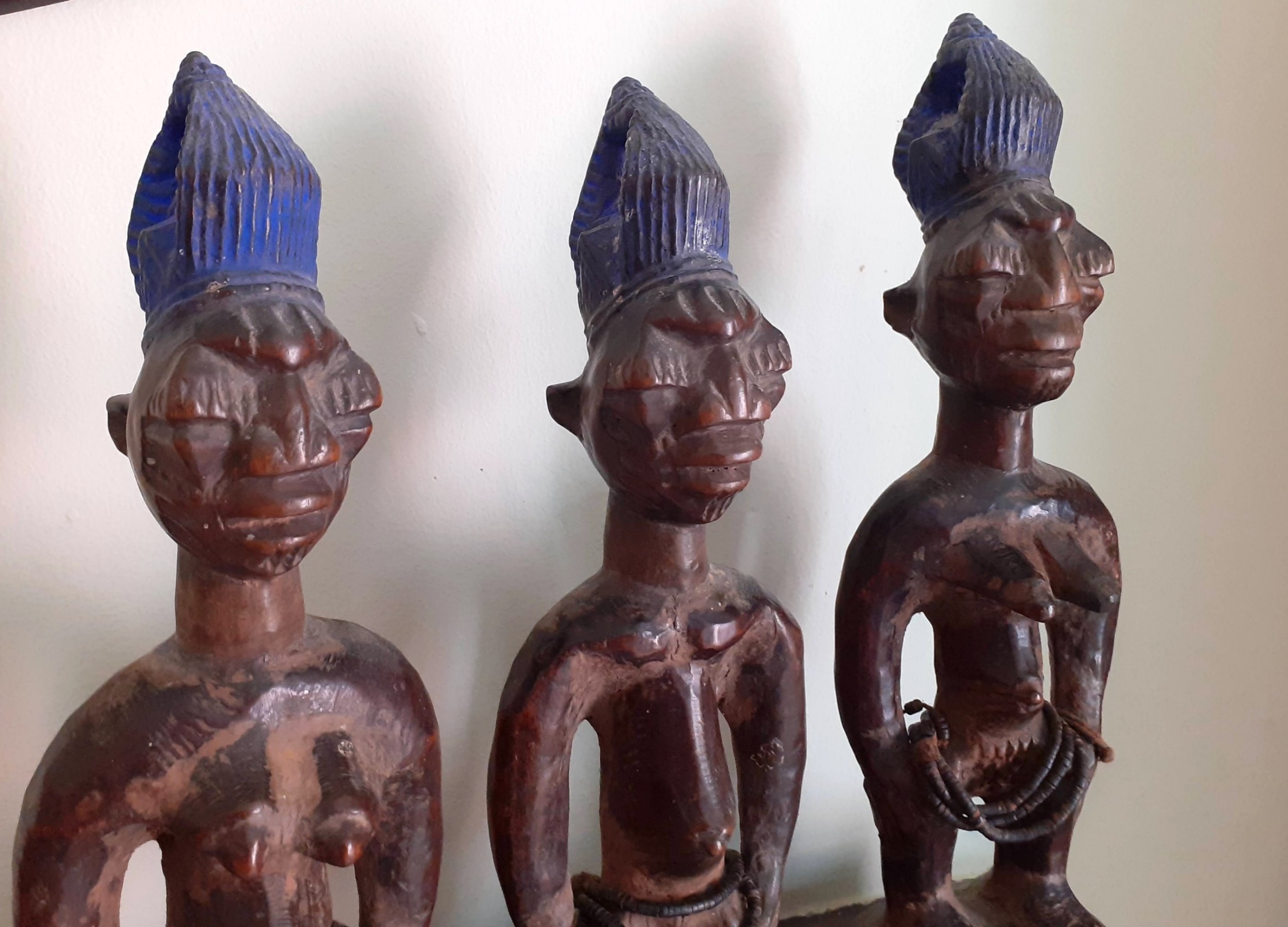
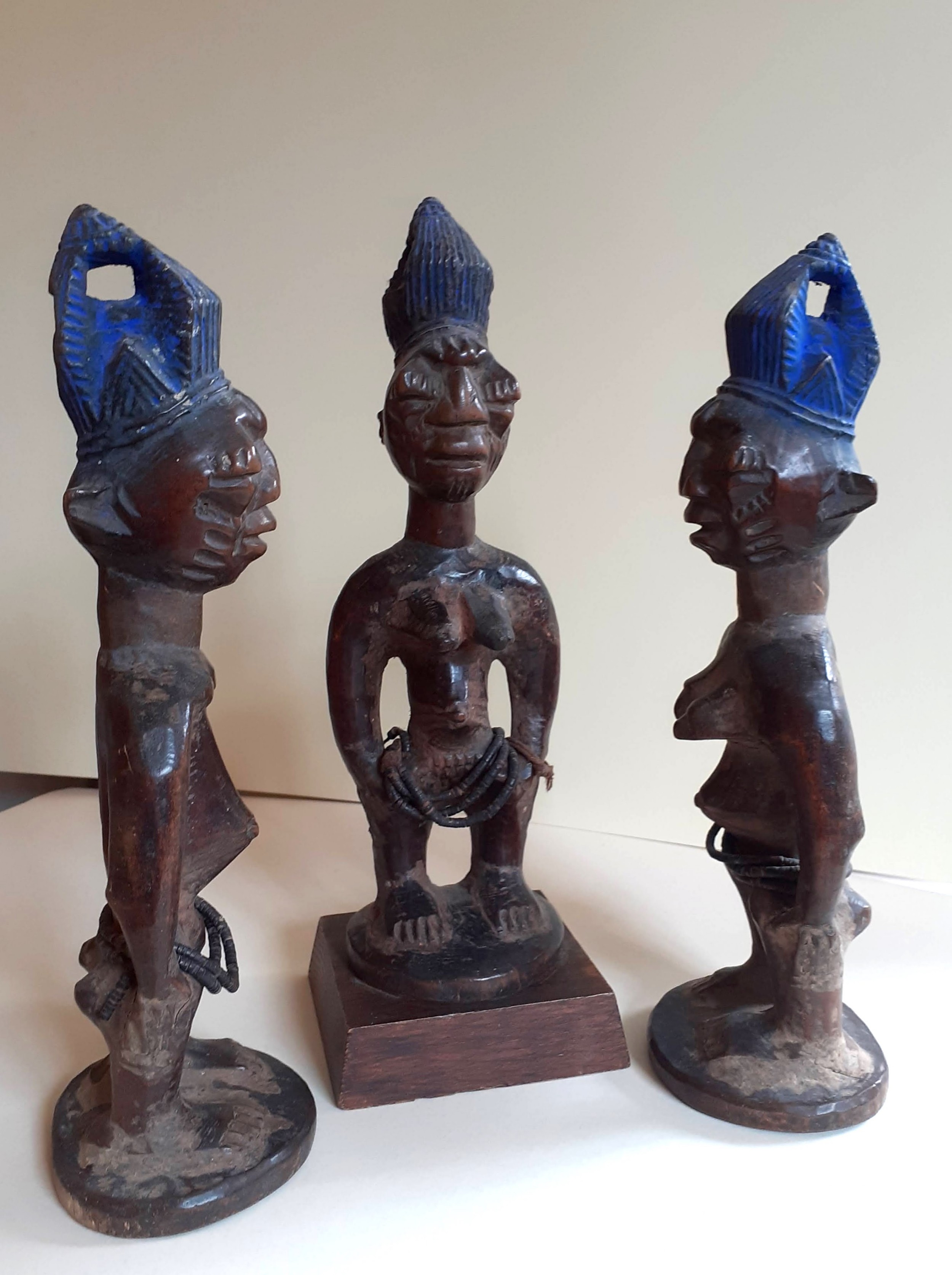
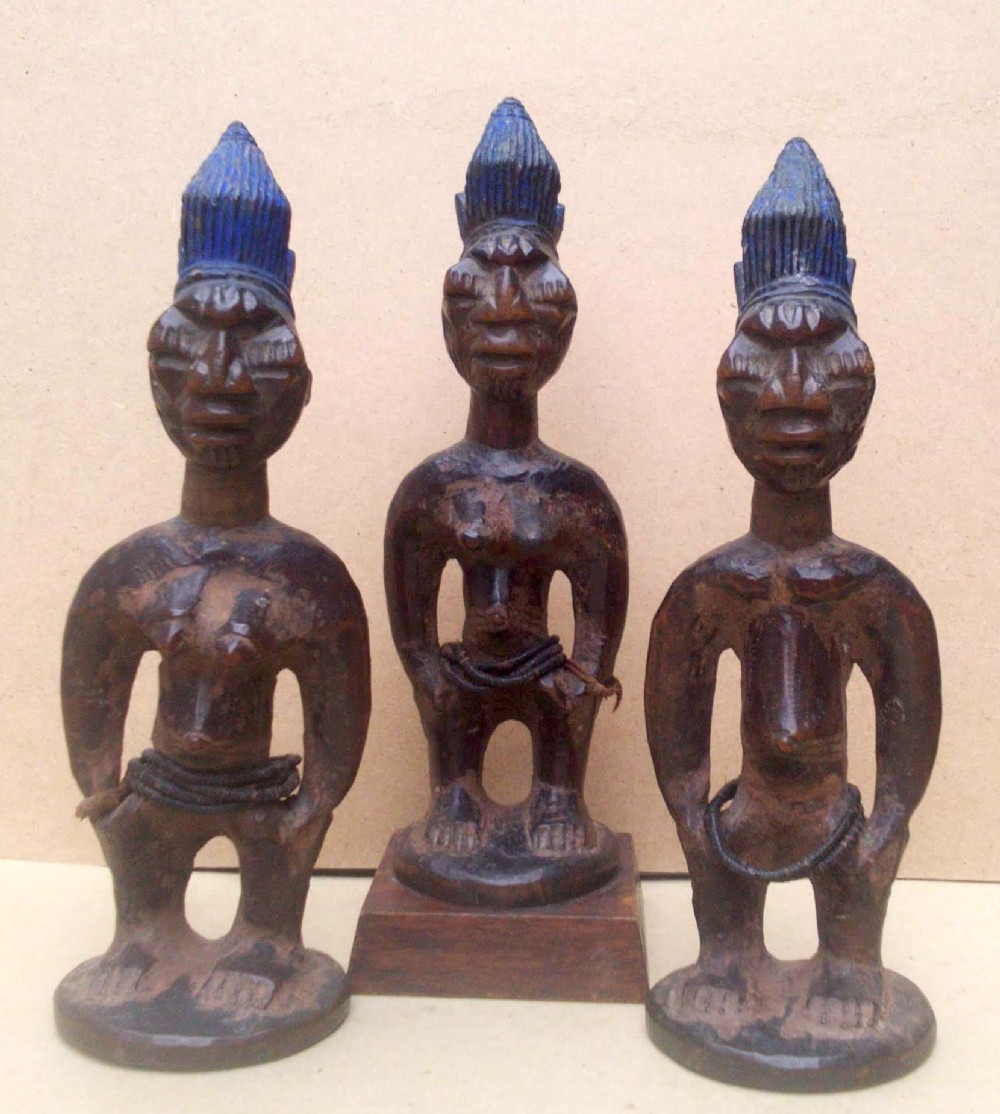
Skippings Fine Arts has dated these Yoruba Oyo Ibeji Figures to the 1930s.
Ibeji is name of a very specific type of carved wooden figure from Yorubaland in Nigeria.
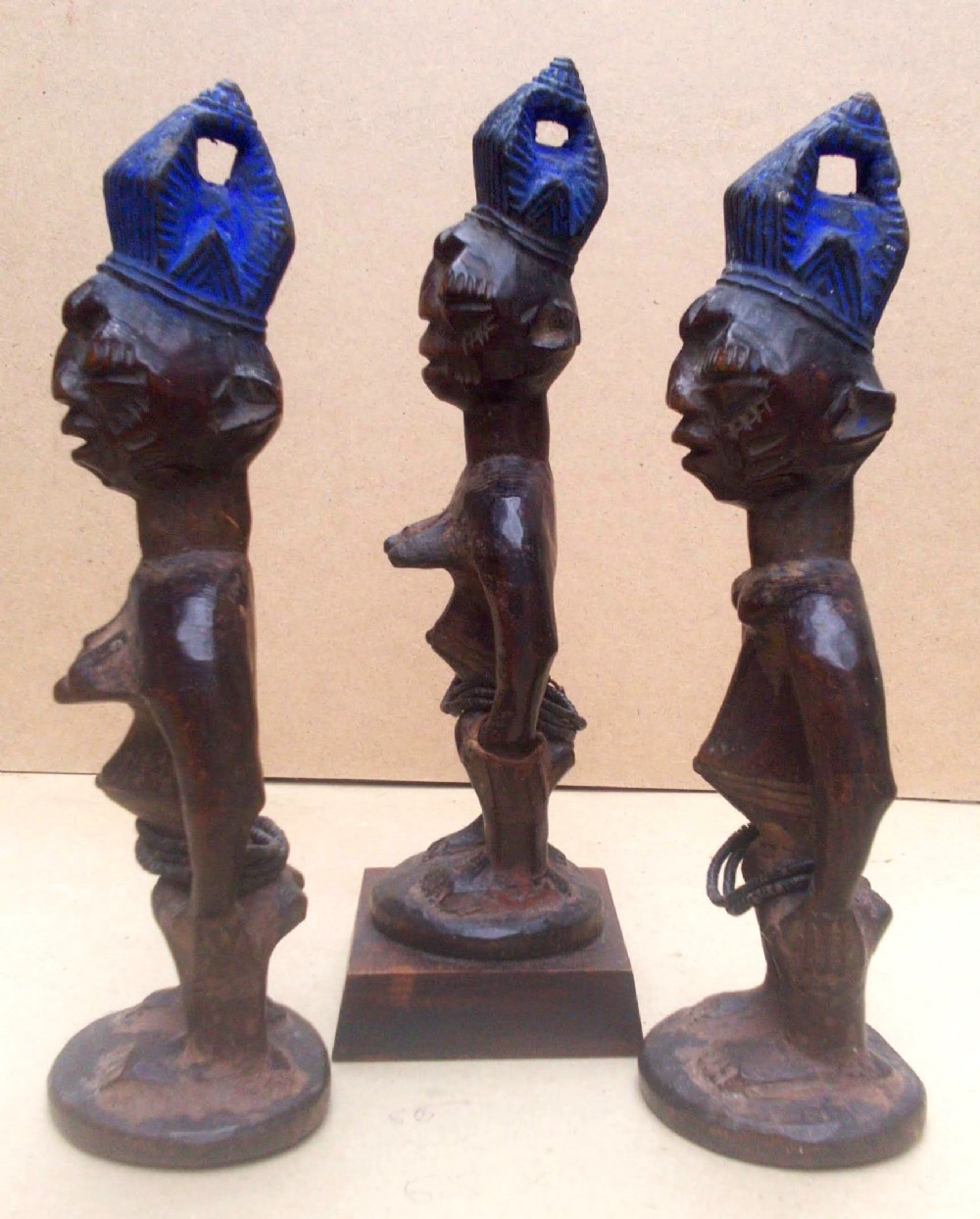
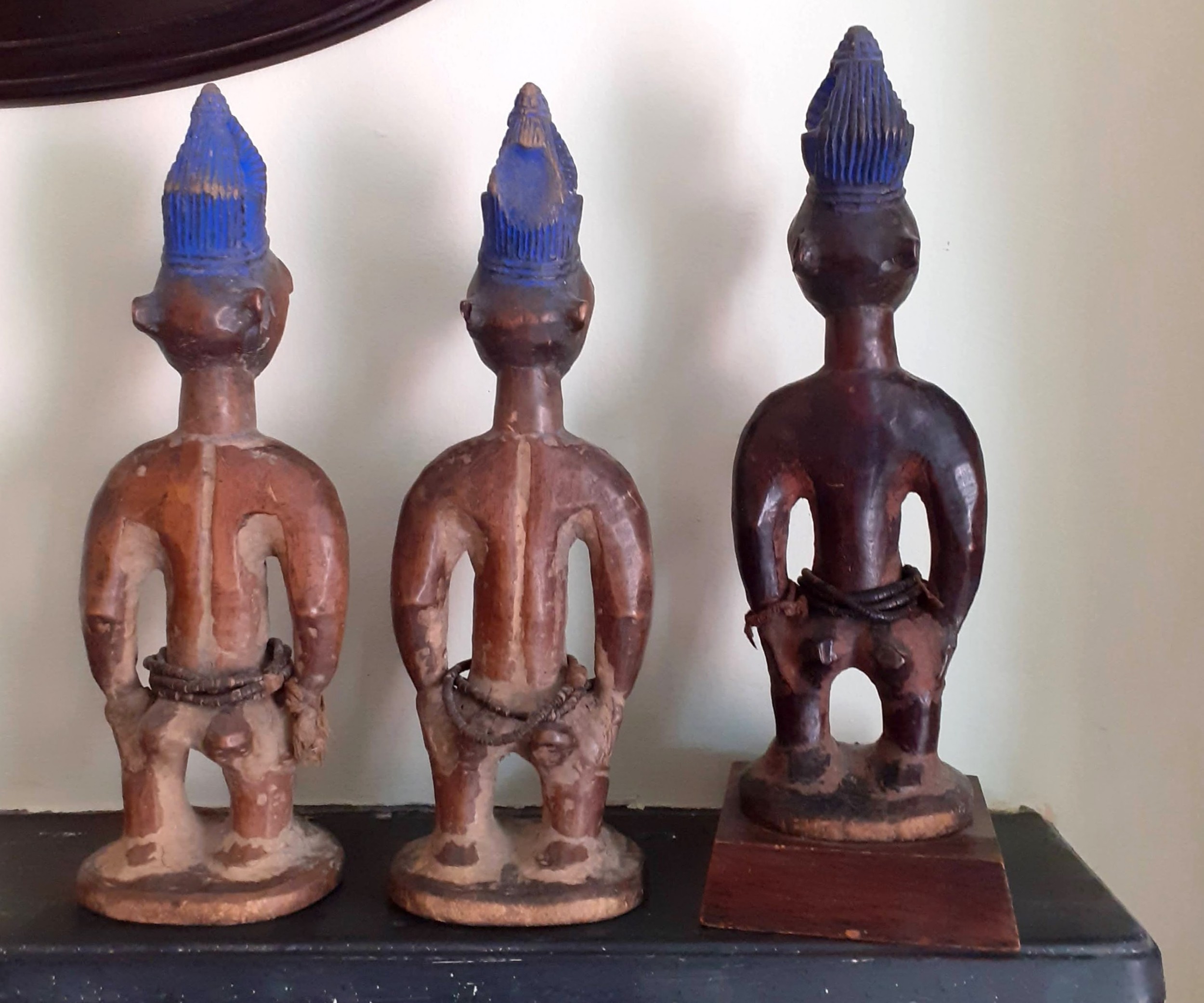
Ibejis represent essentially late (twin or triplet) children, and are treated like actual children. They are carried around, bathed, powdered, given jewellery. Note the trade beads which adorn our figures' waistlines. One of the female figures is also wearing a bracelet.
An Ibeji was the first authentic tribal object I acquired in 2002.
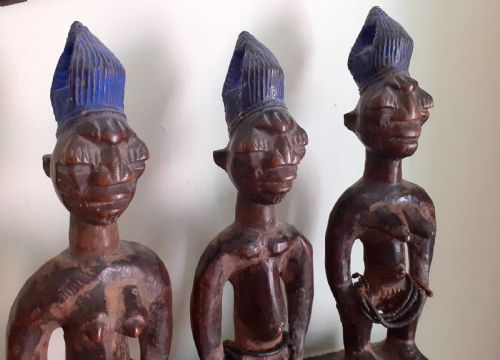
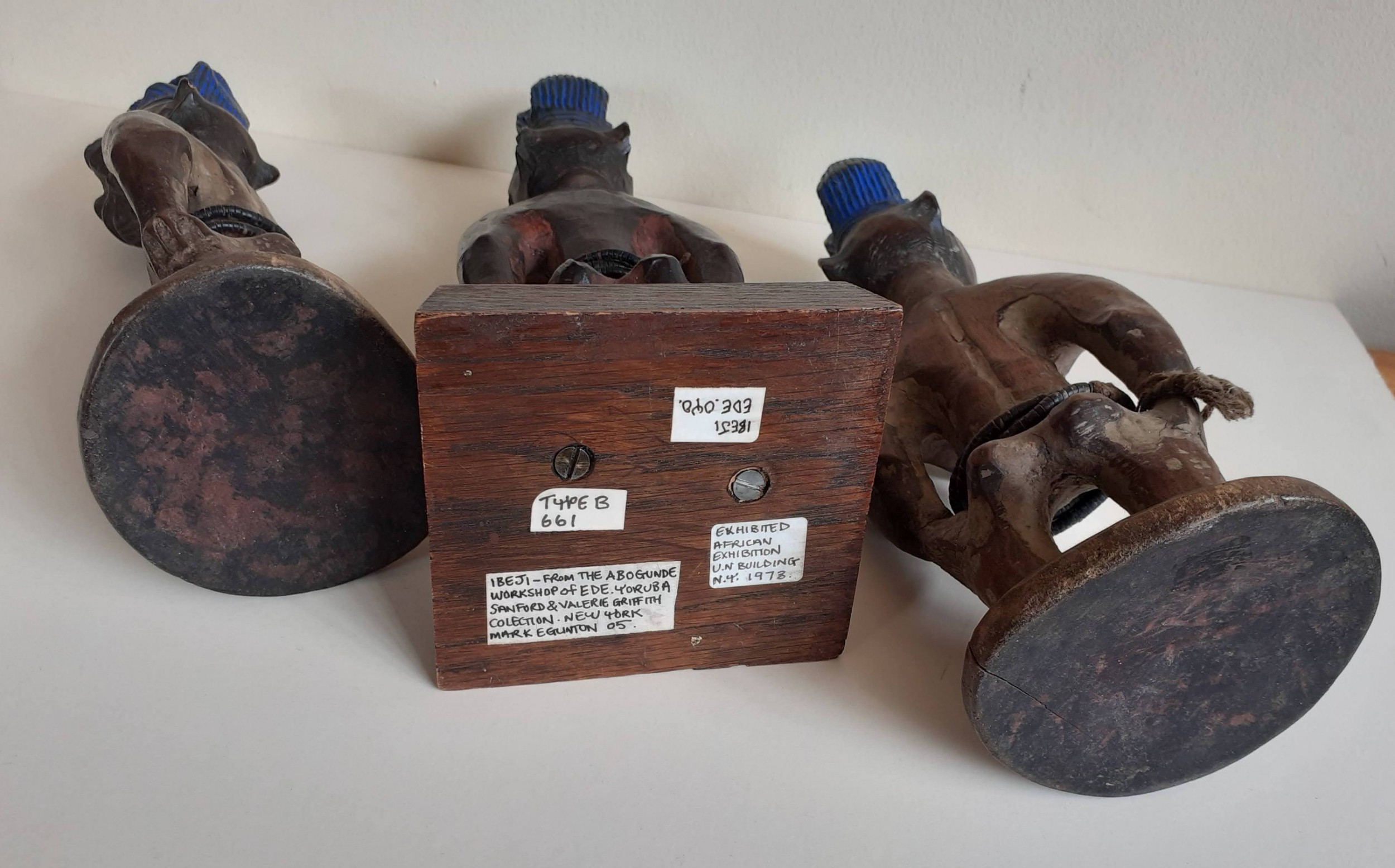
The sculpture of an Ibeji - headdress, scarifications, shape of eyes - varies from region to region in Yorubaland, and allow the collector to situate the area, or even the town, where the artwork was carved. The three Ibejis presented here come from the town of Ede. In Ede worked the master carver Abegunde who worked in a very distinctive style, and our figures can be attributed to him or his workshop. One of our triplets has a particularly prestigious provenance: it belonged to the American collector Sanford Griffith, an authority on African Art (even according to the New York Times!). The figure featured in an exhibition of African Tribal Art at the UN Building in New York in 1978. It was subsequently sold by New York tribal art dealer Mark Eglinton in 2005.
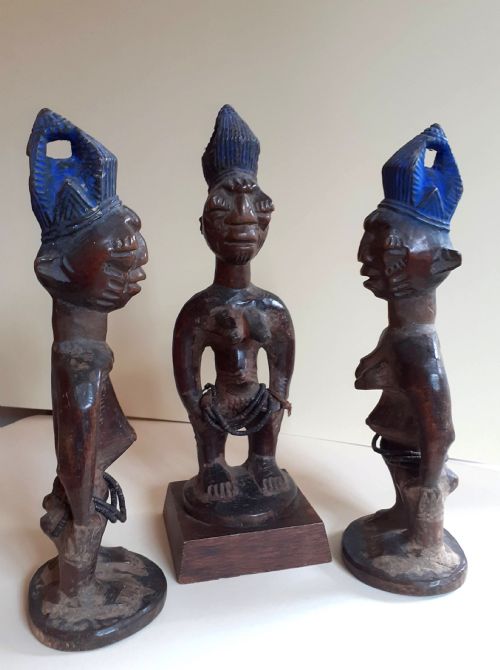
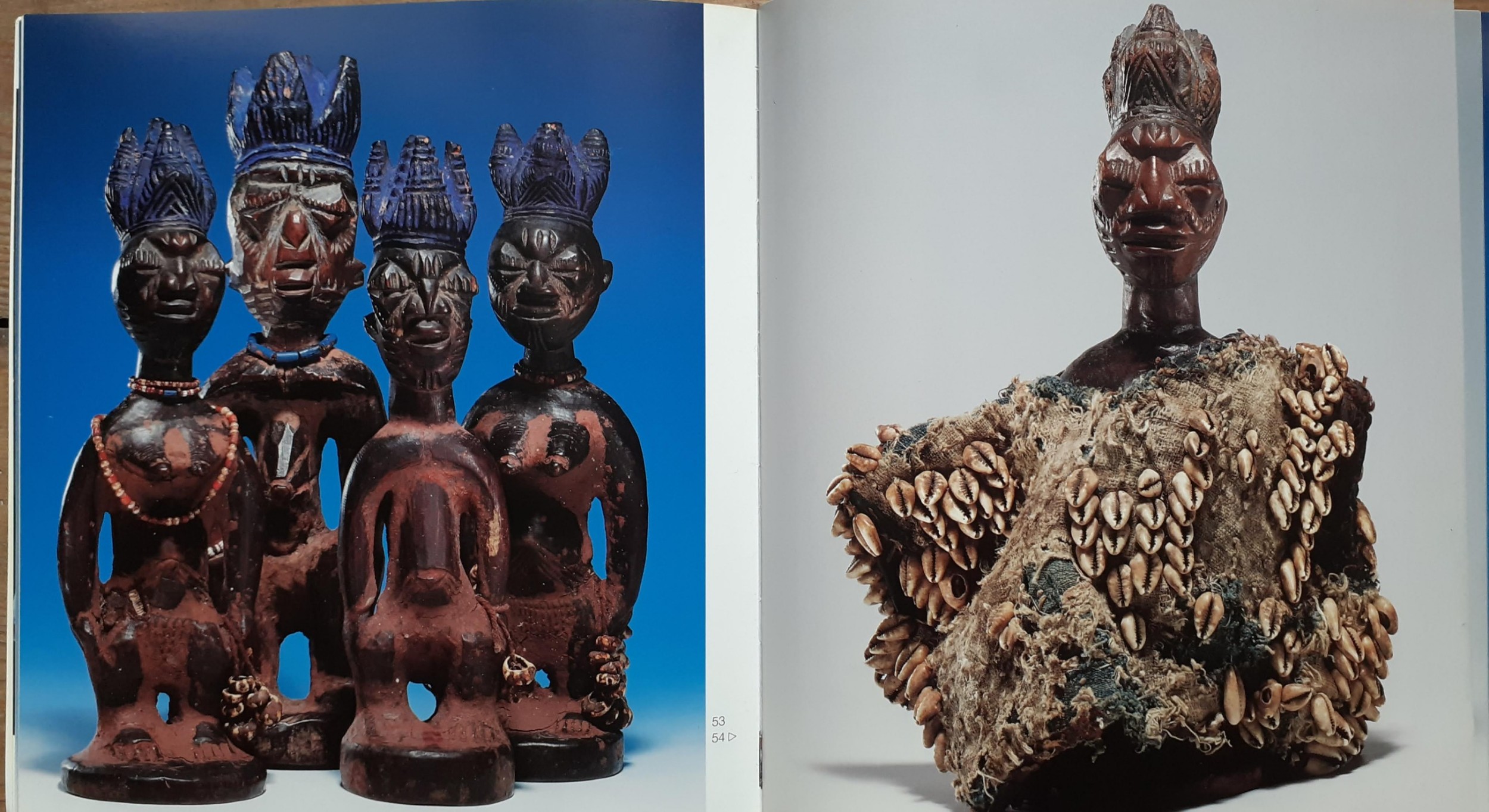
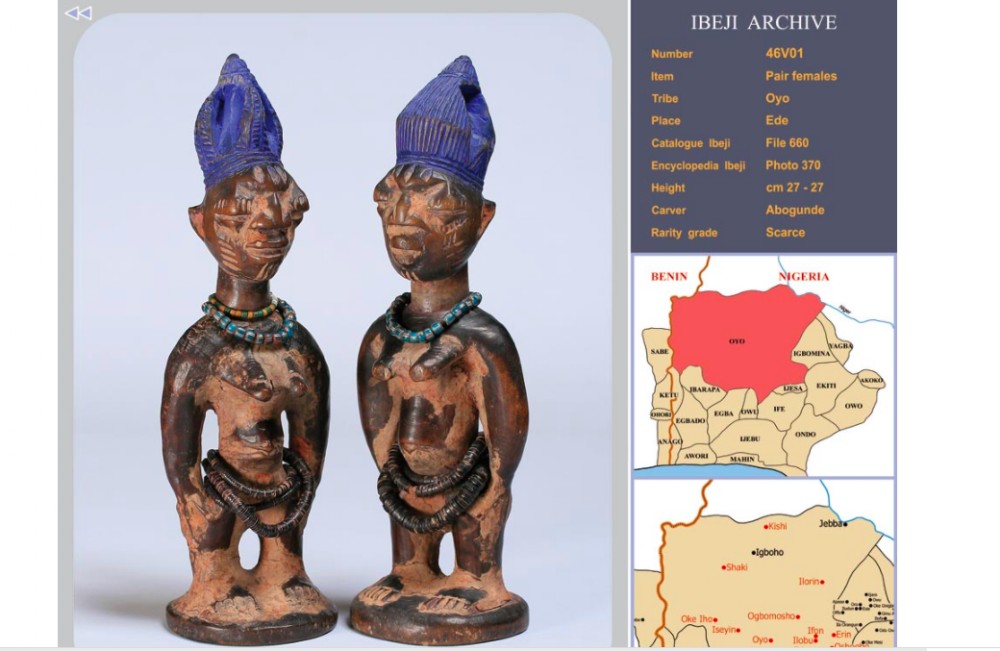
For reference purposes, the final photo in this listing comes from specialist Fausto Polo's "Ibeji Archive" where a very similar pieces are catalogued. The second-to-last photo comes from the book: "Doppelleben-Ibeji_Zwillingsfiguren der Yoruba". To the right, you will see a number of ibejis from the town of Ede carved by less skilful sculptors. The ibeji on the right is a work by Abegunde.
Skippings Fine Arts has dated these Yoruba Oyo Ibeji Figures to the 1930s.
Modern french & continental pictures selected by a former french auction house expert
You can view the stock and full dealer information on the Skippings Fine Arts Profile Page
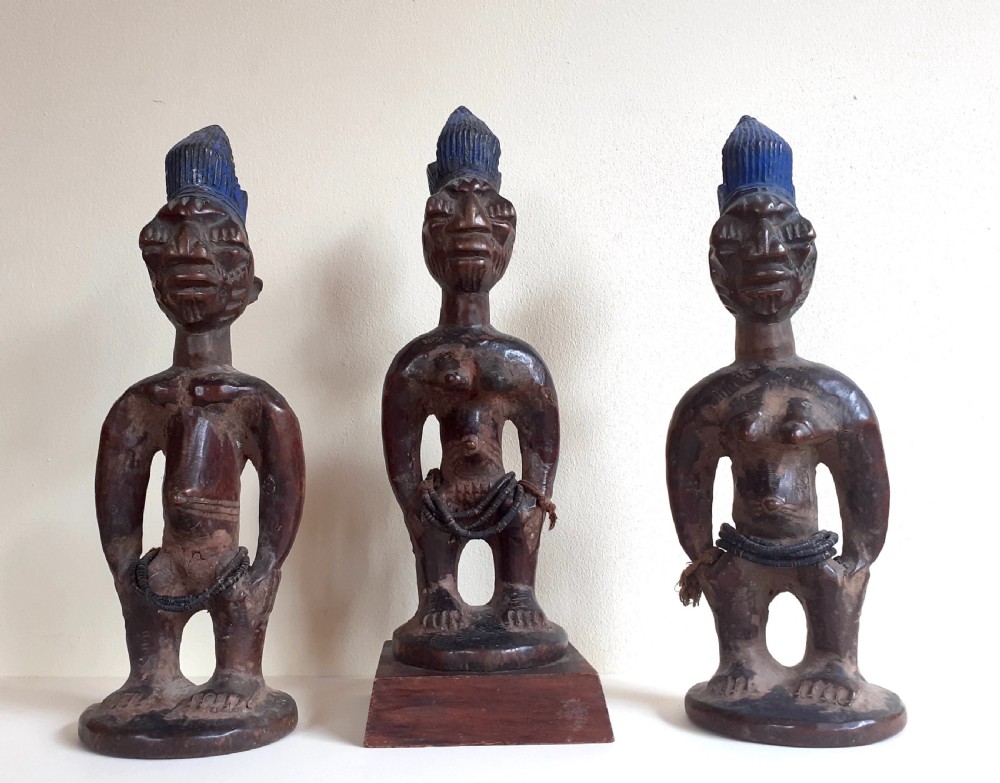
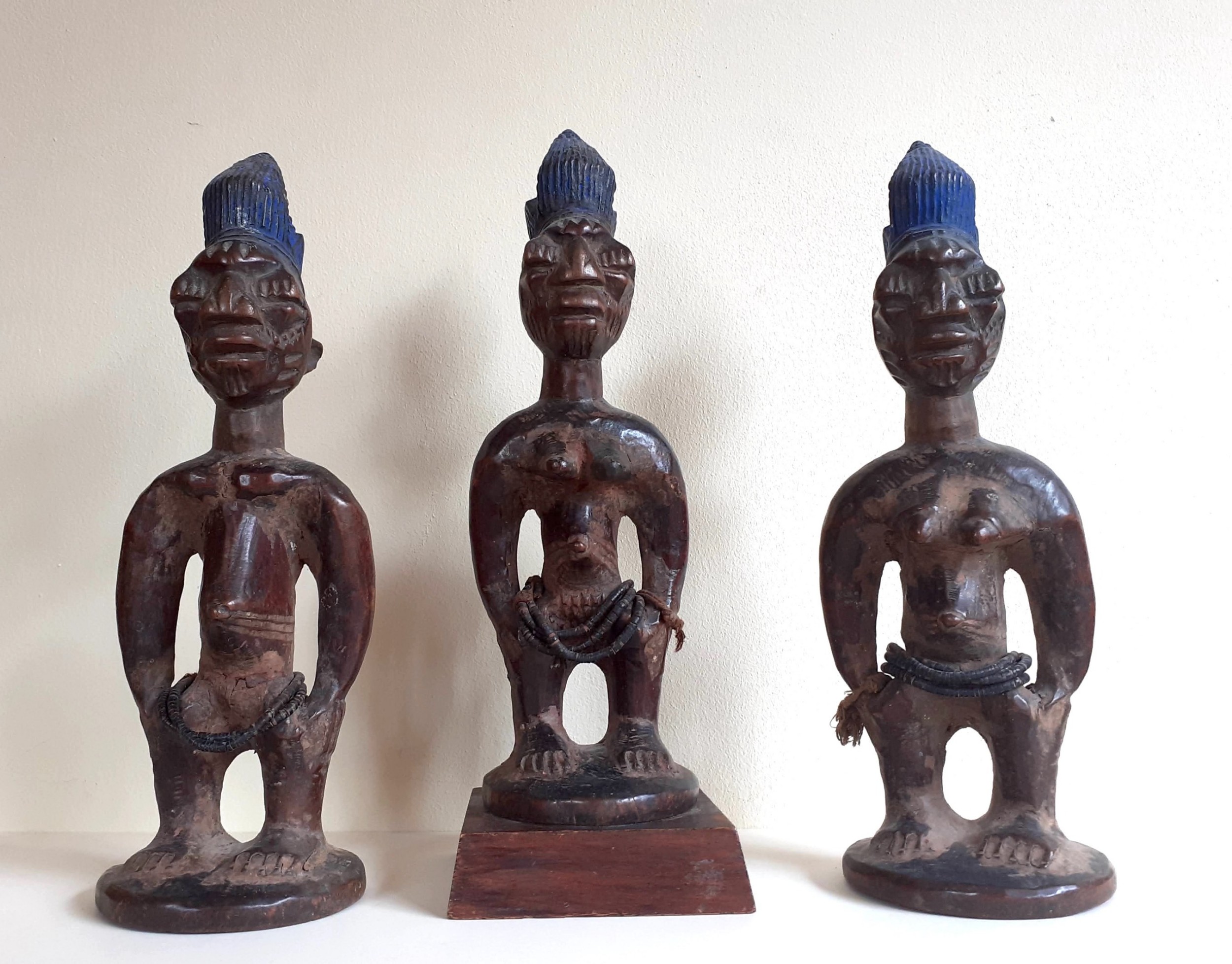
Yoruba Oyo Ibeji Triplets, Master Carver Abegunde of Ede African Tribal Art Prestigious Provenance Nigeria Antique Ibedji