
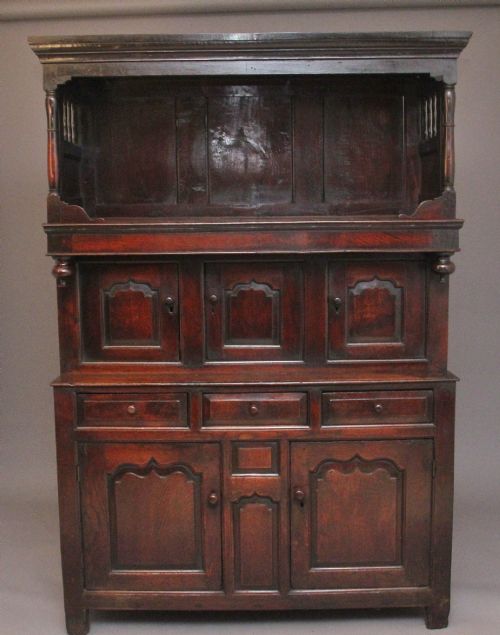


Welsh Oak Press
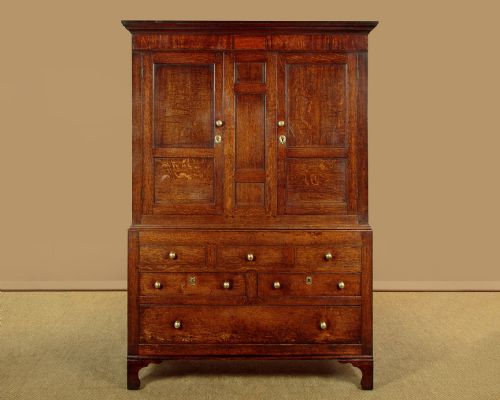
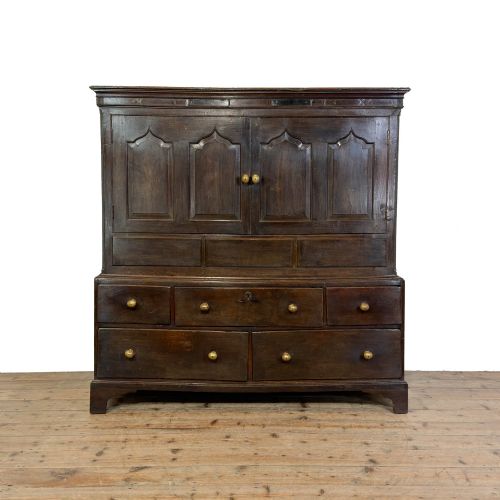
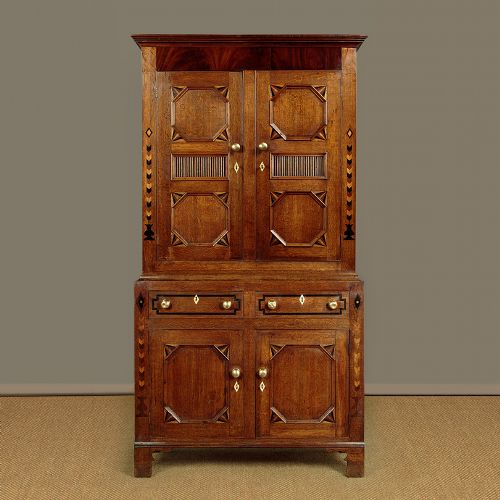
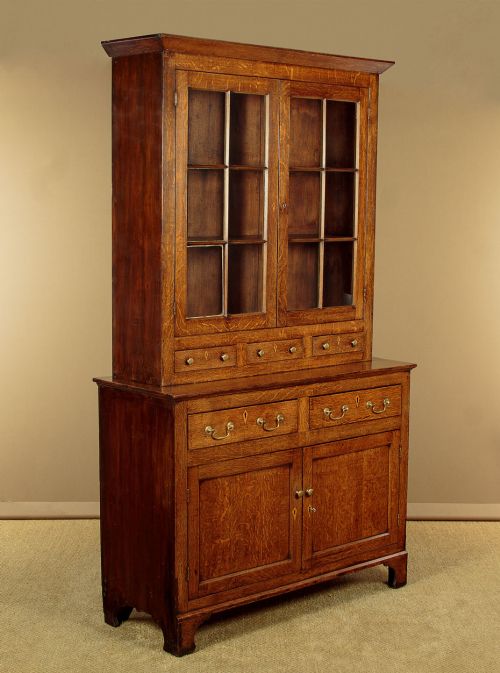
When you search for a welsh oak press, you seek a substantial piece of vernacular furniture built to store linens, clothes, and provisions.
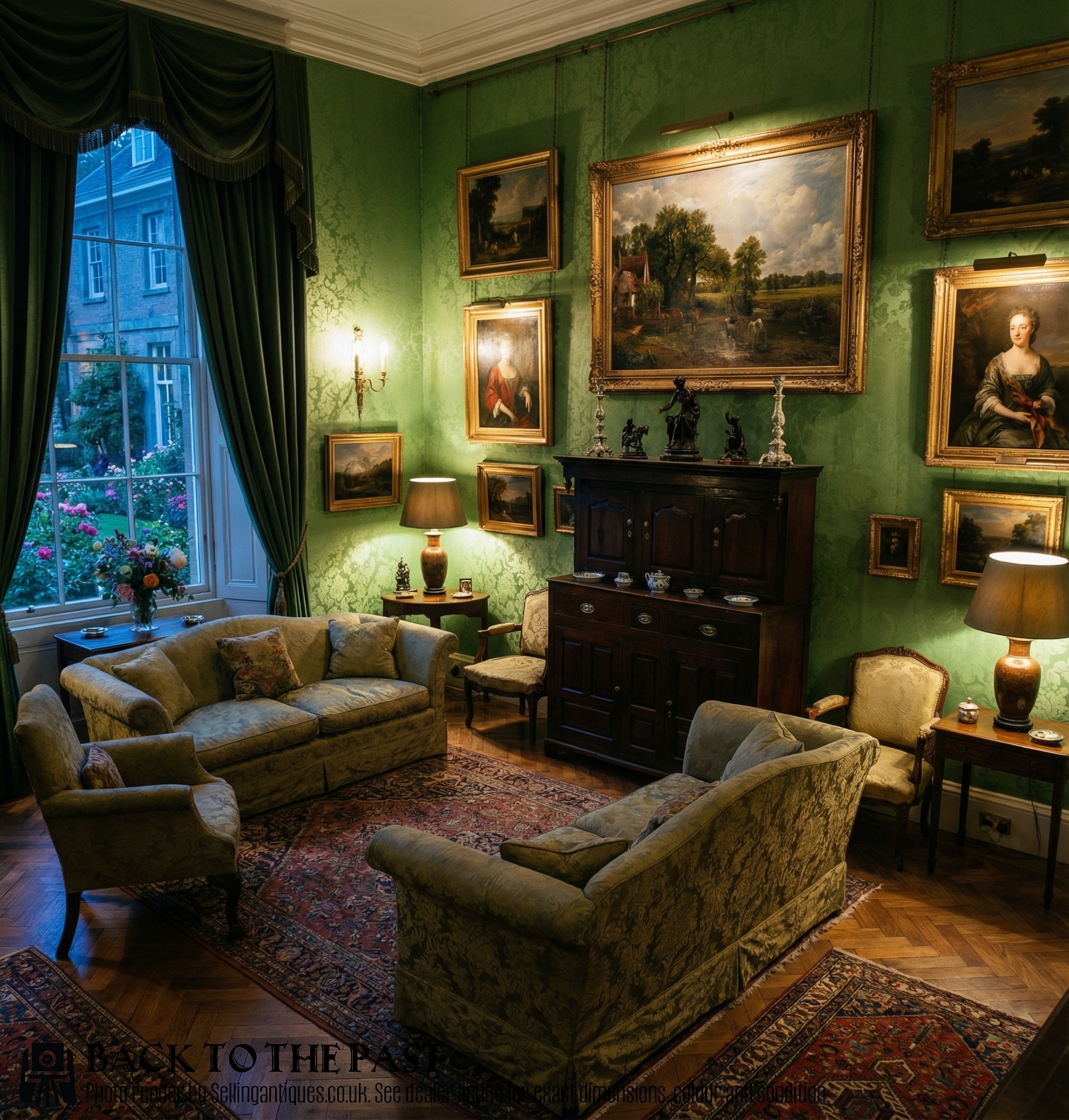
Welsh Oak Press
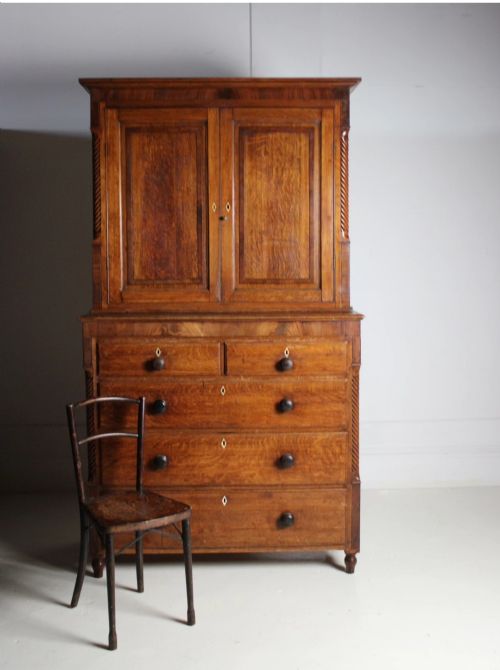
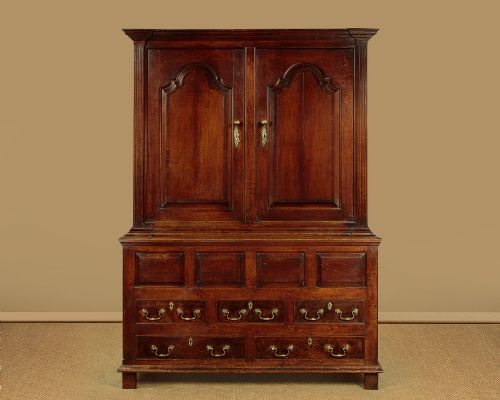
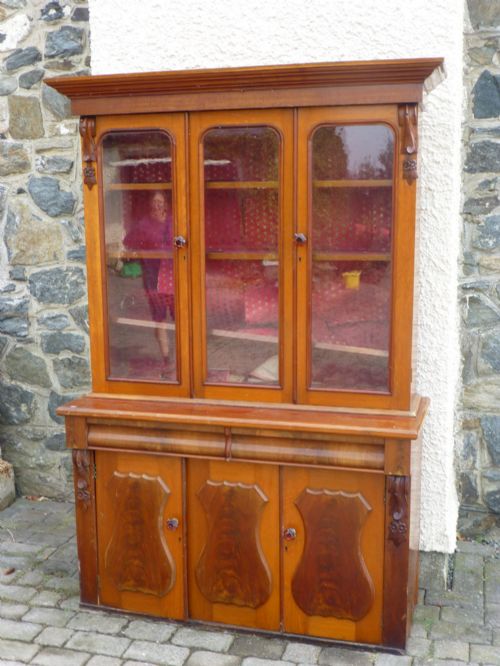
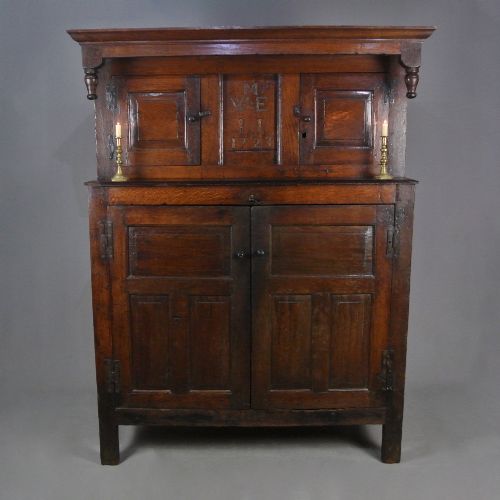
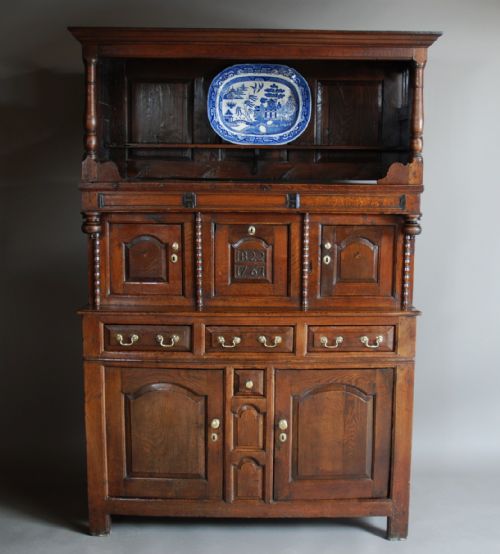
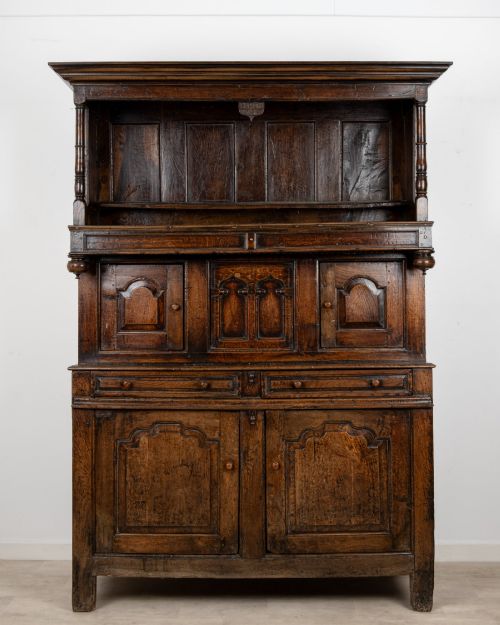
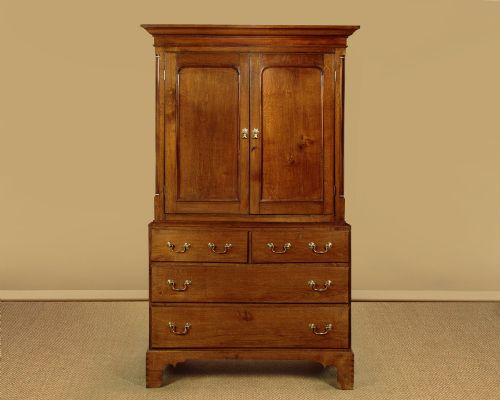
A welsh oak press encompasses a variety of forms including multi-stage cupboards like the tridarn and deuddarn, along with linen presses and food cupboards.
These items originate primarily from the seventeenth, eighteenth, and nineteenth centuries, reflecting Georgian and Welsh vernacular styles.
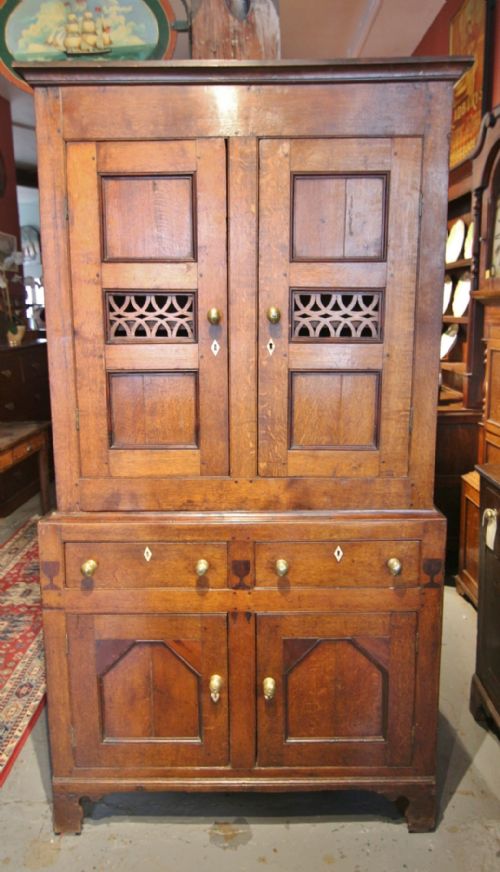
The most common formats met on this page are two-stage press cupboards and food storage pieces featuring panelled doors and internal shelving or hanging space.
How they were made
Local timber forms the primary structure, predominantly solid oak, sometimes combined with secondary elements of mahogany or inlaid wood.
Joinery methods rely on traditional pegged framing, panelled construction, and hand-carved details characteristic of country workshops.
Metalwork details such as brass handles, iron hinges, and occasional glass panels or bone inlay complete the construction of these cupboards.
Bread and cheese cupboards feature perforated panels designed to let the dairy breathe while keeping hungry farmhands at bay.
What varies in quality
The standard of a welsh oak press depends heavily on the depth of the wood's patina and the crispness of any carved or panelled ornamentation.
Proportion and regional character dictate desirability, with rarer multi-tier configurations such as tridarns commanding greater interest than standard later linen presses.
The integrity of original brasses, hinges, and internal hooks preserves the historical authenticity of the piece.
The Welsh Oak Press Glossary
- Cwpwrdd Tridarn
- A traditional Welsh three-piece cabinet featuring an upper canopy, a middle section with a small cupboard, and a larger base cupboard. This form evolved during the seventeenth and eighteenth centuries.
- Cwpwrdd Deuddarn
- A two-part Welsh press or cupboard featuring upper and lower sections enclosed by panelled doors. It represents a slightly simpler configuration than the tridarn.
- Livery Cupboard
- A storage piece traditionally used for food, clothes, or household provisions, often ventilated with turned spindles or pierced panels.
- Linen Press
- A tall piece of furniture featuring upper sliding trays for folded textiles and lower drawers for hanging garments. They frequently incorporate Georgian architectural mouldings.
- Vernacular
- Architecture and furniture built by local craftsmen using regional materials and traditional methods rather than adhering to formal academic pattern books.
Welsh Oak Press: Frequently Asked Questions
What is a welsh oak press used for?
These large cupboards served historic households as primary storage for folded linen, household garments, and dry food provisions. Their compartmentalised shelving and hanging spaces kept textiles protected from damp.
Today, owners utilise them in living spaces and kitchens to store tableware, books, or everyday household items while adding distinct period character to a room.
How do I tell a tridarn from a deuddarn?
A tridarn is distinguished by its three-tier structure, which includes an open canopy top supported by turned posts above a middle cupboard and a lower base. This makes it taller and more complex in its architectural silhouette.
A deuddarn consists of only two main sections, lacking the top canopy tier entirely. Both forms utilise traditional pegged oak construction from Welsh regional workshops.
How do I care for antique oak furniture?
Solid oak furniture requires stable indoor humidity levels away from direct heat sources and strong sunlight to prevent timber movement or splitting. Regular dusting with a dry, soft cloth maintains the surface.
Applying a traditional beeswax polish occasionally helps nourish the wood and preserve the deep historic patina built up over centuries of use.
Are these cupboards suitable for modern homes?
Their substantial proportions make them ideal statement pieces for hallways, bedrooms, or large kitchens. Internal configurations of shelves and hanging space accommodate contemporary storage needs while retaining authentic period charm.
Measuring ceiling height and access routes remains essential before introducing these heavy timber cabinets into modern domestic spaces.