
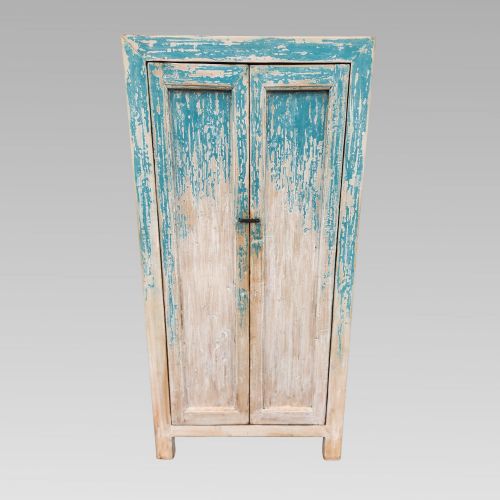
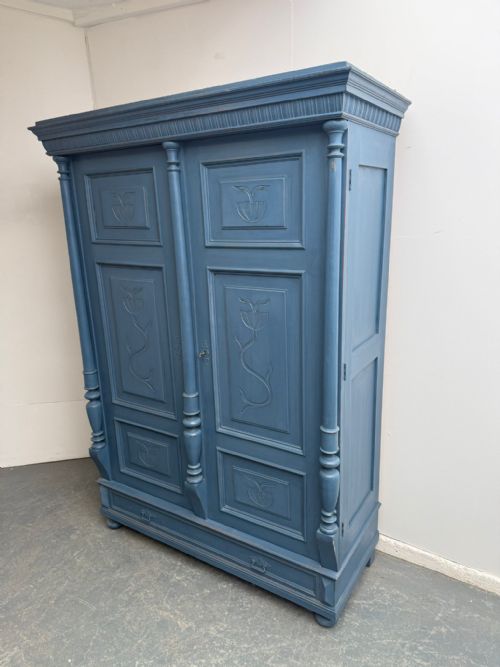


Blue Painted Armoire
A blue painted armoire brings colour and presence to a room, offering substantial storage within regional painted traditions from the eighteenth century onward.
Blue Painted Armoire
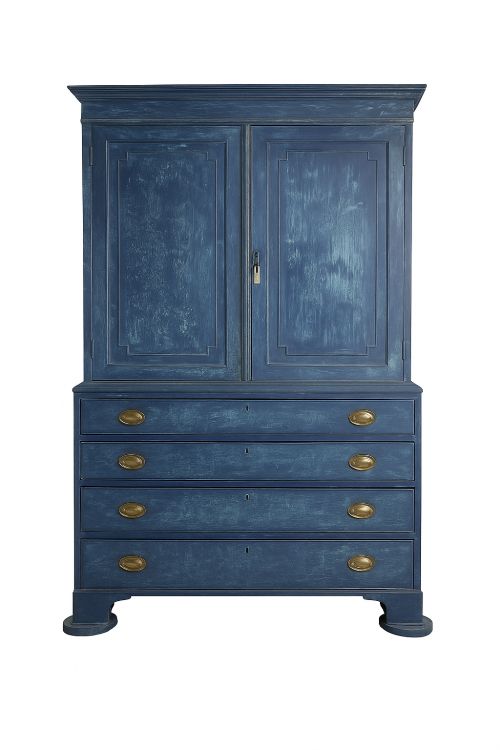
When you search for a blue painted armoire, you find large storage pieces encompassing wardrobes, linen presses, and cupboards from various European and international traditions. The pieces span periods from the eighteenth century through the nineteenth century, including Georgian, Regency, and Victorian eras.
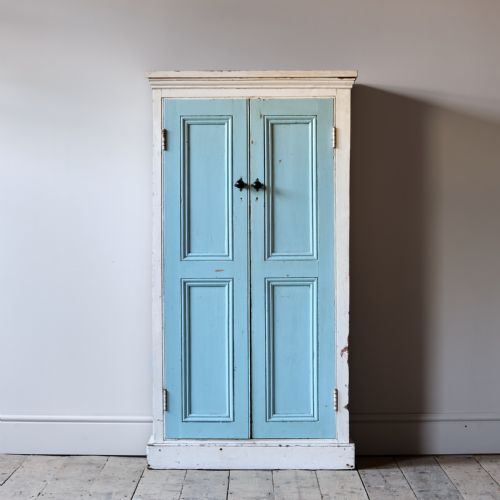
You are most likely to meet nineteenth century pine and painted wood cupboards originating from Scandinavia, Hungary, and Britain. These regional pieces range from rustic country examples to formal Gustavian designs.
Formats include double door linen cupboards, hall wardrobes, and kitchen cabinets, often retaining their original or historic blue painted surfaces.
How they were made
Construction relies primarily on solid pine and painted wood, joined with traditional carpentry techniques appropriate to each region and period. Iron, brass, and metal hardware such as hinges and locks secure the heavy doors.
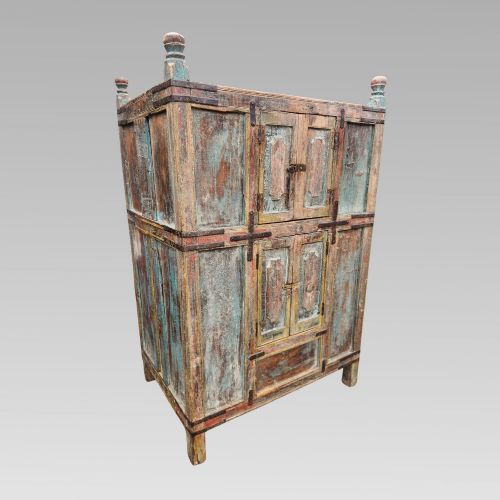
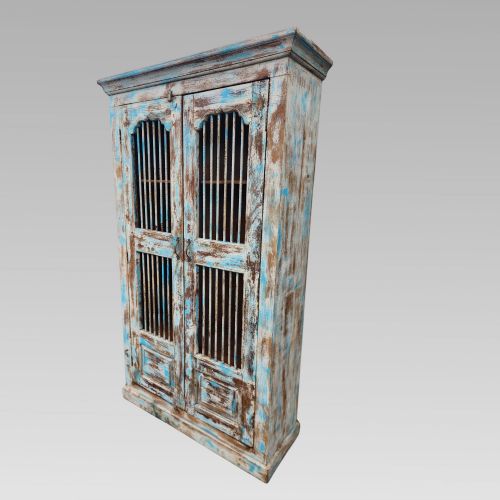
Surfaces are finished with hand-applied paint, sometimes featuring folk art details or decorative carving in wood. The materials reflect local availability, utilising cedar and teak in Indian examples alongside European pine and hardwoods.
An Austro-Hungarian marriage armoire from Bohemia brings a nineteenth-century vow straight into your hallway, ready for your socks.
What varies in quality
Quality rests in the integrity of the original construction and the character of the painted surface. Pieces that retain their original pigment show greater authenticity than later repainted surfaces.
The refinement of the joinery and the subtlety of regional decorative details distinguish standard country utility items from exceptional formal commissions like Gustavian cabinets or Austro-Hungarian marriage armoires.
The Blue Painted Armoire Glossary
- Armoire
- A large wardrobe or cupboard used for storing clothes and textiles. These tall pieces often feature double doors enclosing shelves or hanging space.
- Gustavian
- The Swedish interpretation of French neoclassical style, characterised by restrained carved ornamentation and light painted finishes. It dates predominantly from the late eighteenth and nineteenth centuries.
- Linen Press
- A tall piece of furniture traditionally used for storing pressed linen and garments, typically combining upper cupboard space with lower drawers.
- Almirah
- A regional term for a freestanding cupboard or wardrobe, commonly found in Indian domestic contexts and constructed from teak or cedar.
- Folk Art
- Decorative painting and craftsmanship executed within traditional community styles, often featuring vernacular motifs applied to utilitarian pine furniture.
Blue Painted Armoire: Frequently Asked Questions
Where did these cupboards originate?
The pieces originate from diverse regions including Sweden, Britain, Hungary, France, and India. Each area developed distinct proportions and decorative vocabulary.
European pieces frequently utilise pine and display folk art or classical revival influences, while Indian examples incorporate native hardwoods like teak.
How do I care for the painted surface?
Historic painted finishes require gentle maintenance using dry dusting or a soft cloth. Avoid modern chemical solvents that can damage aged pigments.
Keep the timber away from direct heat sources and excessive moisture to prevent warping and flaking of the paint.
Are the interiors fitted with shelves?
Interiors vary significantly depending on the original function of the piece, whether as a linen press, hall wardrobe, or kitchen cabinet. Some contain fixed shelves while others provide open hanging space or modular compartments.
Reviewing the specific description ensures the internal layout suits modern storage needs.
How do I distinguish regional styles?
Regional identity appears in the construction methods, mouldings, and pigment choices. Scandinavian pieces often favour pale blue palettes and Gustavian symmetry.
Hungarian and Austro-Hungarian examples frequently exhibit vibrant folk painting or architectural cornices characteristic of Central Europe.