

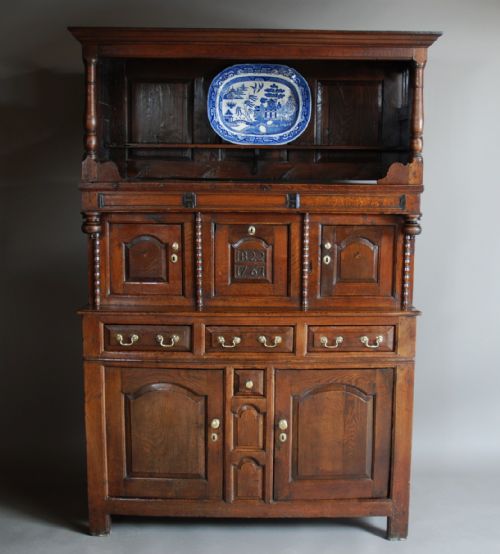
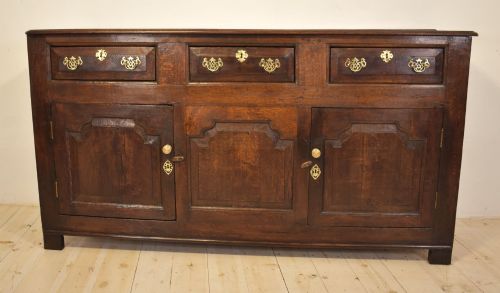
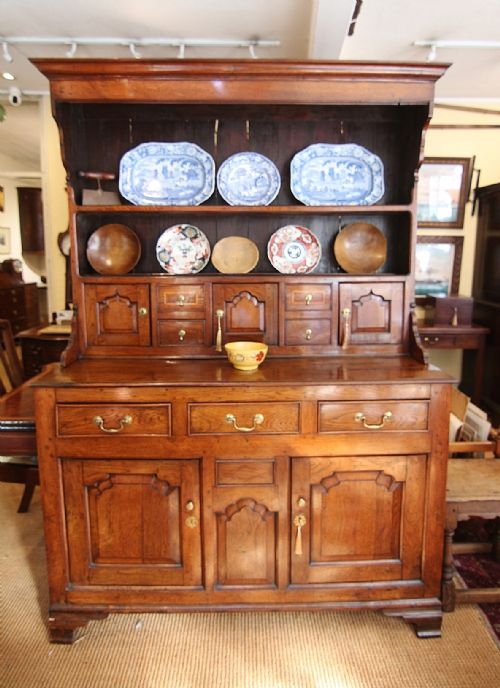
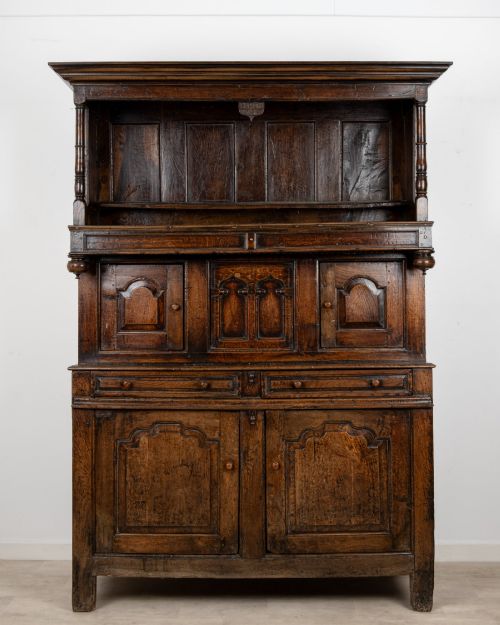
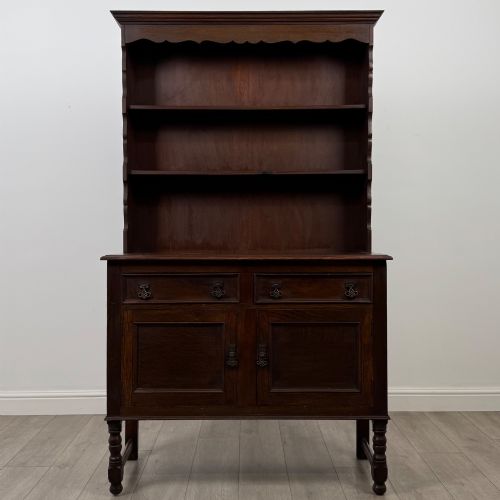
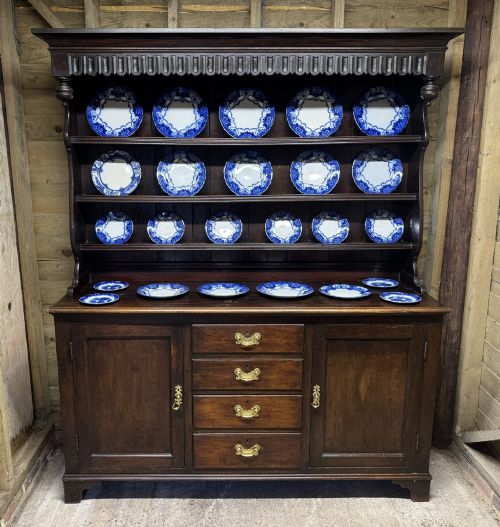
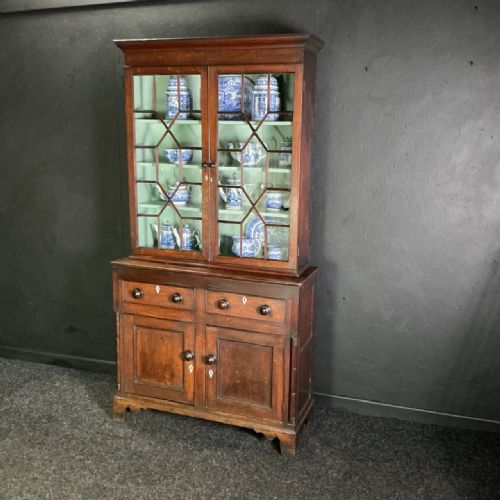
Welsh Oak Dresser Cupboard
When you seek a welsh oak dresser cupboard, you enter a tradition of regional rural craftsmanship that combined utilitarian storage with display.
Welsh Oak Dresser Cupboard
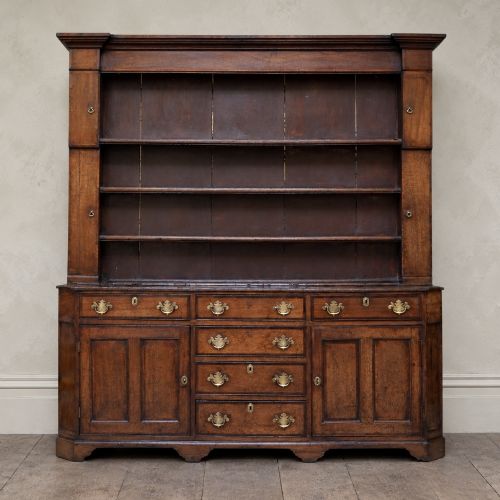
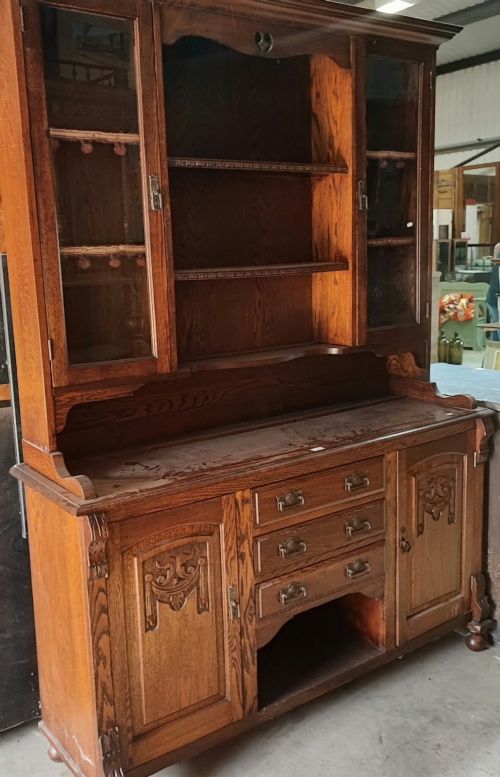
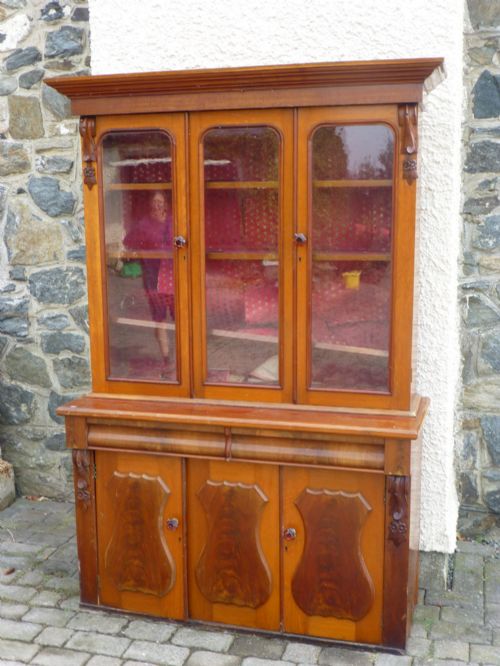
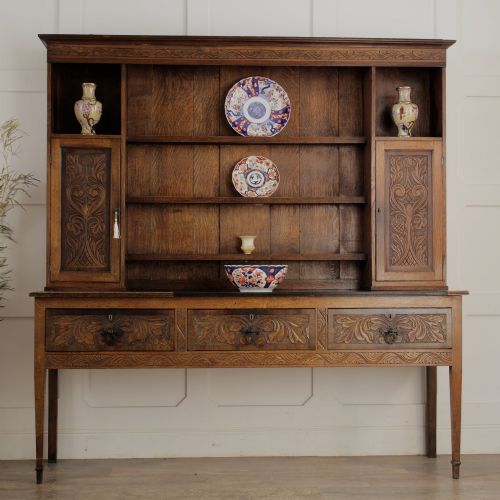
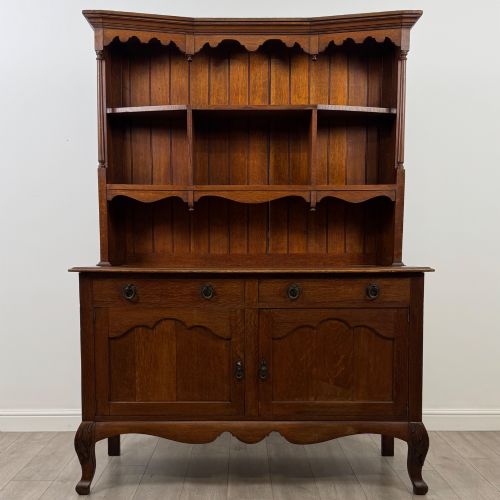
A welsh oak dresser cupboard is a substantial piece of domestic furniture designed to store provisions, crockery, and household goods while displaying prized tableware on open racks or behind glazed doors. These items emerge from various periods, predominantly spanning the eighteenth and nineteenth centuries, reflecting the domestic habits of country households.
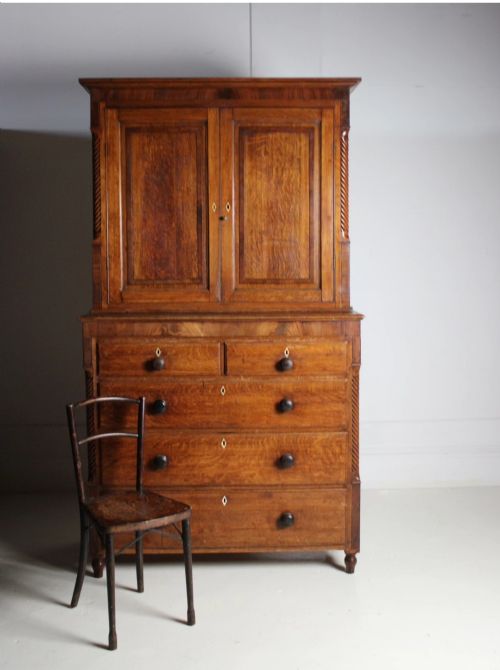
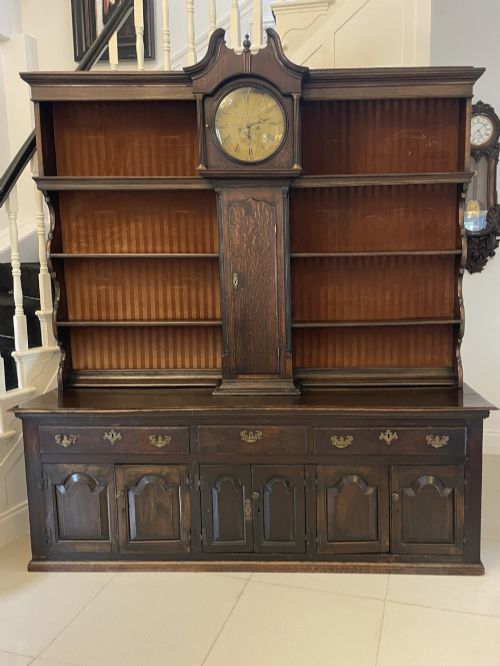
The most common forms on this page include open-backed plate rack dressers, dresser bases, and multi-tiered cupboards such as the cwpwrdd tridarn and cwpwrdd deuddarn. Regional variations range from Snowdonia and Llanrwst to Anglesey and North Wales, exhibiting distinct local joinery traits and structural proportions.
Makers utilised native timber, frequently combining primary structural oak with secondary woods like pine and mahogany for internal elements or contrasting details. Surviving pieces present a continuum from simple cottage furniture to imposing architectural forms with integrated clock cases or glazed bookcase tops.
Materials and Construction Methods
Cabinet makers built these pieces primarily from solid oak planks, often seasoned locally and joined using traditional mortise and tenon techniques secured with wooden pegs. Secondary woods such as pine appear in drawer linings and backboards, while brass hardware and iron fittings provide functional hinges and pulls.
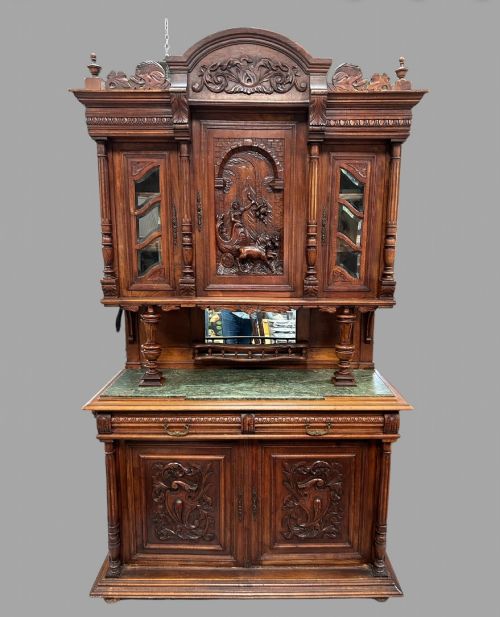
Surface finishing relied on hand-planing and repeated waxing rather than modern synthetic sealers, allowing the timber to develop a deep natural patina over centuries of use. Inlaid details, carved panels, and applied mouldings demonstrate the hand of individual country joiners working within established regional vernacular styles.
Listings span the eighteenth, nineteenth, and early twentieth centuries, featuring oak, mahogany, walnut, and pine constructed in Georgian, Victorian, and vernacular styles.
Evaluating Quality and Authenticity
The grade of a piece rests on the integrity of its timber, the depth of its original surface patina, and the proportion of authentic regional structural elements remaining intact. Early examples featuring pegged joinery, original board backs, and undisturbed regional formats command attention for their historical honesty.
Subtleties in carving execution, the crispness of mouldings, and the survival of original brass or iron hardware distinguish superior workshop output from simpler utilitarian items. The presence of regional markers, such as specific cornices or integrated food cupboards, indicates the standard of local craftsmanship.
The Welsh Oak Dresser Cupboard Glossary
- Cwpwrdd Tridarn
- A traditional Welsh three-tier cupboard featuring an enclosed upper section, an open middle stage with turned balusters, and a lower base cupboard. This regional form evolved during the seventeenth and eighteenth centuries for household storage.
- Cwpwrdd Deuddarn
- A two-part Welsh press cupboard comprising a recessed upper section above a larger lower cupboard base. It served as a primary storage unit in rural homes before the widespread adoption of fitted kitchens.
- Pot Board
- An open lower shelf built into the base of a dresser, positioned close to the floor for storing pots, pans, and heavy kitchen utensils. This architectural feature distinguishes certain country vernacular forms.
- Bread and Cheese Dresser
- A specialised regional cupboard style, particularly associated with Llanrwst, featuring built-in pierced ventilation panels or slats to keep provisions like cheese and bread fresh.
- Patina
- The deep, lustrous surface sheen developed on wood over long periods through oxidation, handling, and waxing. It indicates age and honest use rather than modern mechanical finishing.
Welsh Oak Dresser Cupboard: Frequently Asked Questions
How do I date an oak dresser?
Dating relies on examining construction methods, timber preparation marks, hardware types, and stylistic details. Hand-cut peg joints and vernacular panel styles point toward earlier centuries.
Later Victorian and Edwardian examples often incorporate revival motifs, machine-sawn backing boards, and different secondary woods like pine or mahogany.
Where were these dressers made?
These pieces originate from rural workshops across Wales, with specific regional styles emerging from areas such as Snowdonia, Anglesey, and Llanrwst. Local joiners utilised native timber and traditional regional designs.
Some items reflect wider British country styles, including West Country and Georgian provincial furniture traditions.
How should I care for antique oak?
Maintenance requires keeping the timber away from direct heat sources and sudden humidity fluctuations to prevent wood shrinkage and splitting. Regular gentle waxing helps preserve the natural surface patina.
Avoid silicone-based sprays and modern polishes, which can build up and dull the historic finish over time.