
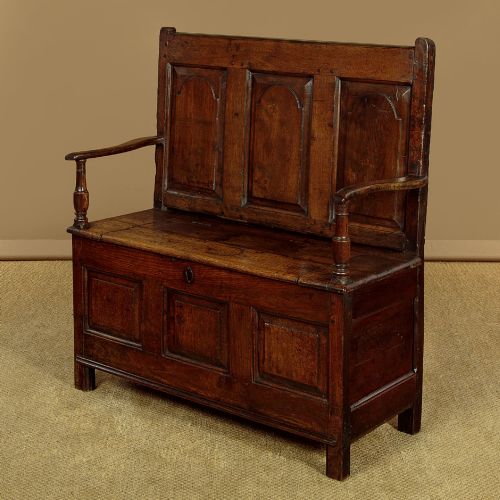
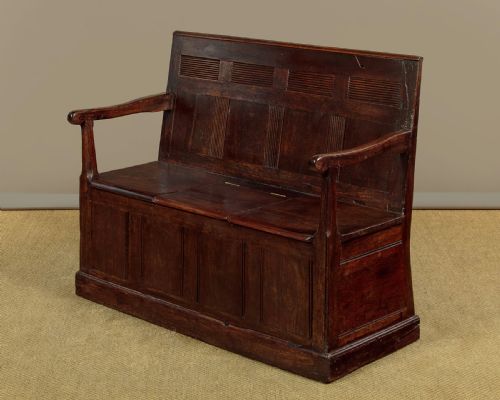


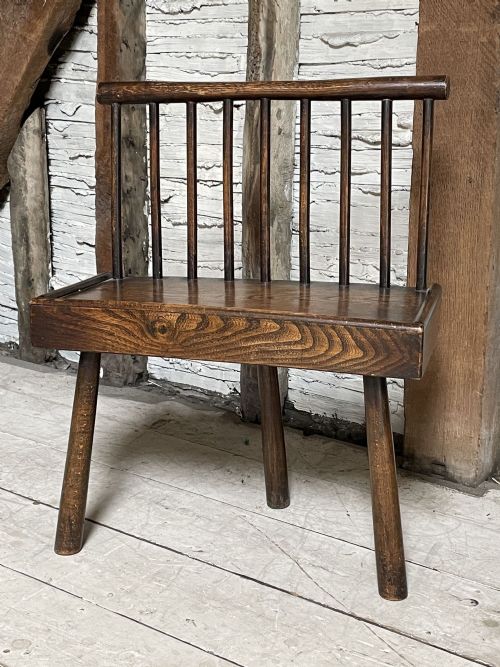
Welsh Oak Bench
These welsh oak bench examples offer sturdy vernacular utility and honest country craftsmanship, making them timeless additions to any traditional hallway or kitchen.

Welsh Oak Bench
When searching for a welsh oak bench, buyers encounter robust domestic seating spanning from the sixteenth century to the early twentieth century. The selection ranges from long tavern refectory forms to high back settles and primitive estate pieces.
Box settles with integrated storage compartments appear frequently among these listings, alongside slab pig benches and low hall seating. Vernacular country styles dominate, showing straightforward construction intended for everyday rural use rather than formal display.
How they were made
Makers utilised solid timber, principally oak, supplemented by iron and wrought iron for structural reinforcement and hinges. Six-plank construction and heavy trestle joints provide the underlying stability for these domestic forms.
Joinery methods rely on traditional pegged joints and heavy planks rather than intricate veneers, reflecting the pragmatic approach of regional carpenters working within the welsh vernacular tradition.
Styles represented across the archive include Elizabethan, Jacobean, Georgian, and regional Welsh vernacular country designs.
What varies in quality
The standard of a welsh oak bench depends upon the integrity of the timber and the proportion of original material remaining in the piece. Early examples from the sixteenth and seventeenth centuries demonstrate heavier structural timbers compared to later nineteenth century iterations.
Proportion and regional idiosyncrasies separate provincial work from standard output, with untouched surface patination enhancing the character of older country furniture.
The Welsh Oak Bench Glossary
- Box settle
- A high backed wooden seat featuring a storage compartment or chest beneath the bench base. This dual purpose form kept occupants warm by blocking drafts while storing household goods.
- Refectory table bench
- A long, narrow seating form designed to accompany a communal dining table. These long boards sit on trestle supports.
- Six-plank chest
- An early storage chest constructed from six individual boards joined simply at the edges. It represents a foundational method of vernacular cabinet making.
- Chair-table
- A convertible item of furniture featuring a large back that tilts down over the seat to form a table. This clever space saving device was common in early country interiors.
- Pig bench
- A low, heavy wooden bench traditionally used for farm or butchery tasks. In domestic settings they serve as low seating or occasional tables.
Welsh Oak Bench: Frequently Asked Questions
How do I date a welsh oak bench?
Dating relies on examining the construction methods, such as pegged joints, hand sawn timber marks, and the overall joinery style characteristic of specific centuries. Earlier pieces often display heavier proportions and simpler six-plank or boarded assembly.
Secondary woods, tool marks, and historical wear patterns also help establish the approximate period of manufacture when records are absent.
Where were these benches used in the home?
Historical welsh oak bench examples typically stood in hallways, farmhouse kitchens, or taverns where durable, heavy seating was required. Box settles specifically stood near hearths to shield residents from cold drafts.
In modern interiors, they function well in entryways, alongside dining tables, or as standalone statement pieces in living spaces.
Are box settles comfortable to sit on?
Box settles offer upright seating with high wooden backs designed primarily for utility and draught exclusion rather than lounging. Adding fitted squab cushions provides extra comfort for everyday use.
The solid timber construction remains supportive and sturdy despite the lack of modern upholstery.
What is a pig bench?
A pig bench is a low, sturdy wooden form originally utilised on farms for agricultural or butchery tasks rather than domestic sitting. Their low height and thick slab tops make them distinctive items within country furniture.
Today collectors value them as coffee tables or low decorative benches.