
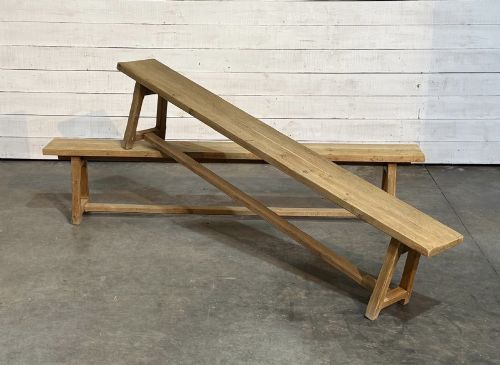
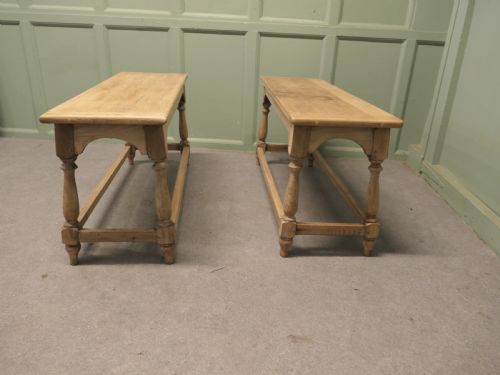


Country Oak Form
A country oak form is a utilitarian long seat built for heavy everyday service, offering honest timber and hard-wearing construction that grounds a modern interior.

Country Oak Form
When you search for a country oak form, you are looking at sturdy seating built for communal halls and farmhouses across several centuries. The examples here span from seventeenth-century pieces to twentieth-century workshop items, encompassing benches, dining benches, children's furniture, and joint stools.
You are most likely to meet substantial dining benches and long hall seats in this selection, often reaching lengths of eight or nine feet. These forms display regional English characteristics, including specific architectural provenances from historic ecclesiastical palaces.
The styles range from stark rustic farmhouse and primitive folk art to formal Georgian country, Gothic revival, and seventeenth-century revival designs. This variety reflects how rural makers adapted traditional joinery techniques to suit changing domestic needs over generations.
Materials and Construction
These pieces rely on solid timber construction, utilising oak alongside bleached oak, painted wood, and natural wood finishes. The wood was selected for its structural density and durability, capable of withstanding constant daily use without failing.
Makers employed traditional joinery methods appropriate to the period, creating boarded stools of trestle construction and joint benches with pegged joints. Surfaces often display the natural grain and wear of the material, sometimes altered by later bleaching or simple painted finishes.
Several heavy oak benches trace their working lives directly to Bishopthorpe Palace in York.
Assessing Quality and Character
Quality in a country oak form rests on the integrity of the timber and the honesty of the construction rather than refined decorative carving. Pieces featuring thick, uncompromised boards and original pegged joints command greater interest than heavily restored examples.
Proportion and scale dictate the visual weight of the piece, with longer examples requiring careful balance in their trestle or leg placement to remain stable. Provenance and clear domestic or institutional history also elevate certain items above standard utilitarian seating.
The Country Oak Form Glossary
- Joint stool
- A low wooden seat built with pegged mortise and tenon joints rather than turned legs. These sturdy items served as general household seating and tables before chairs became common.
- Trestle form
- A long seat supported by vertical frame assemblies or uprights connected to a central beam. This structural arrangement distributes weight evenly across the length of the bench.
- Bleached oak
- Timber that has been chemically or naturally lightened to reduce the dark tones typical of aged oak. This treatment appears frequently on twentieth-century interpretations of older furniture styles.
- Primitive folk art
- Objects made by non-professional rural artisans working within local vernacular traditions. These pieces prioritise straightforward utility over academic stylistic rules.
Country Oak Form: Frequently Asked Questions
What is a country oak form?
A country oak form is a long, backless wooden seat traditionally used in farmhouses, halls, and communal dining spaces. These benches were designed for heavy daily use by multiple occupants.
They range from simple boarded trestle designs to refined Georgian examples and substantial nineteenth-century hall seating.
How were these benches used historically?
Historically, long forms provided flexible seating around large dining tables in great halls and farmhouses. Their lack of backs allowed them to be tucked completely under tables when not in use.
Shorter versions and children's stools served various domestic tasks near hearths and work areas.
How do I style a long oak bench at home?
A long oak bench works effectively as dining seating paired with a large refectory table, or placed against a hallway wall as a seat for putting on shoes. The linear form adds architectural weight to modern or traditional rooms alike.
Keeping the surface clear or adding simple wool textiles allows the grain and construction of the timber to remain the visual focus.
How can I tell the period of an oak form?
Dating relies on examining the tool marks, joinery methods, and timber patination developed over centuries of handling. Earlier pieces often display pegged joints and adzed surfaces, while later Victorian and twentieth-century versions show different mechanical sawing traces.
Comparing the proportions and stylistic details against documented regional examples helps narrow down the era of manufacture.