
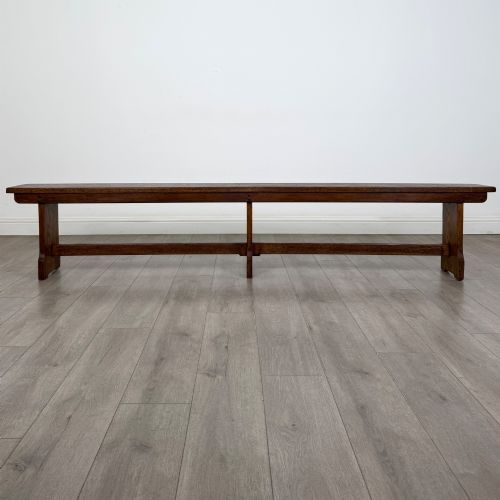
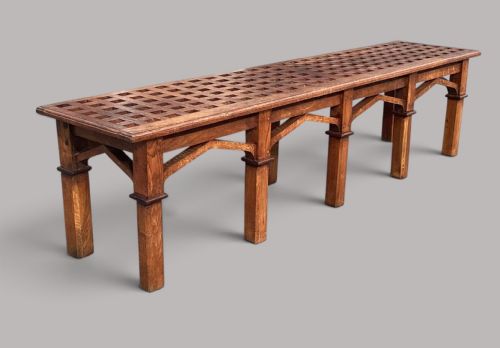
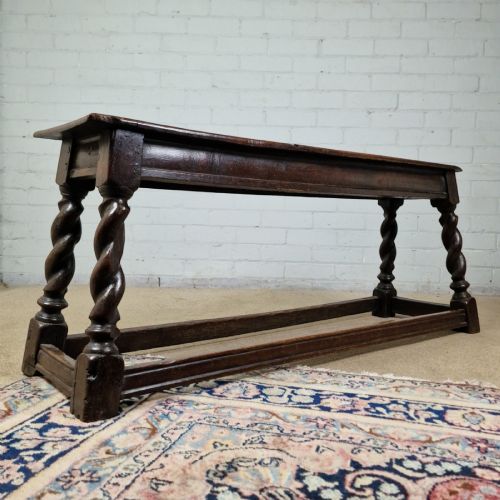
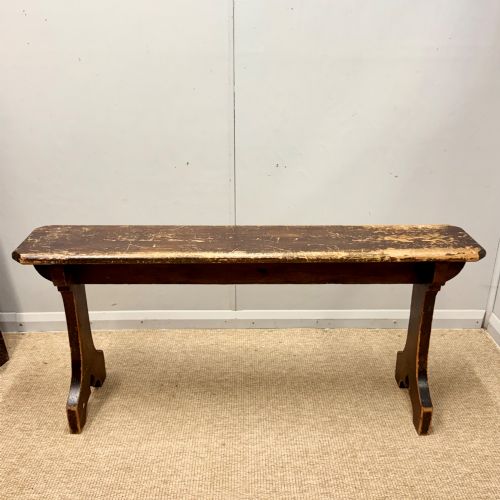
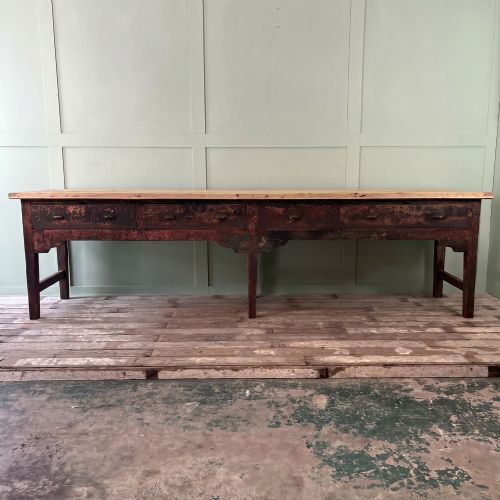

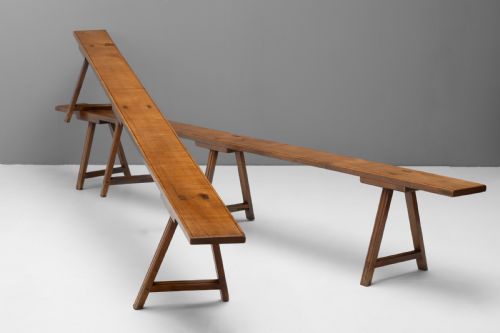

Long Rustic Bench
A long rustic bench brings genuine warmth to a hallway or dining table, offering honest construction and centuries of practical use.

Long Rustic Bench
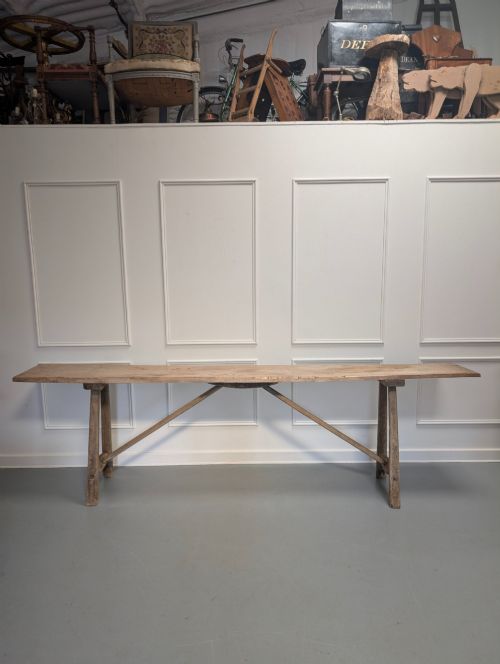
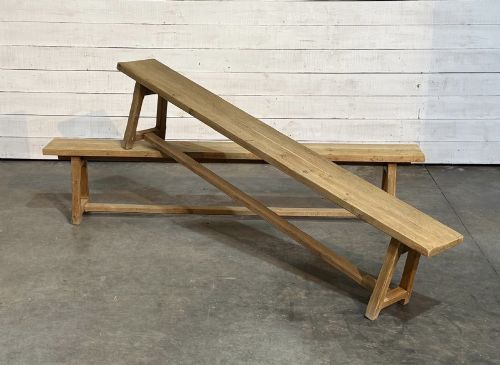
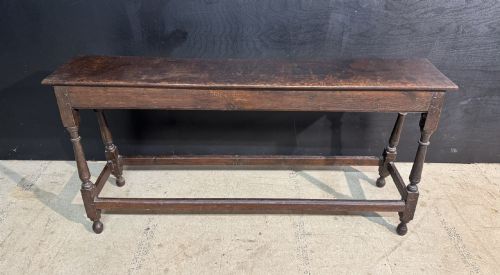
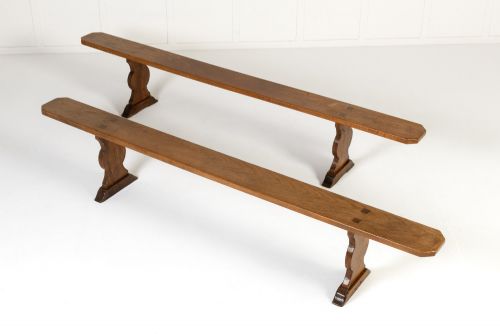
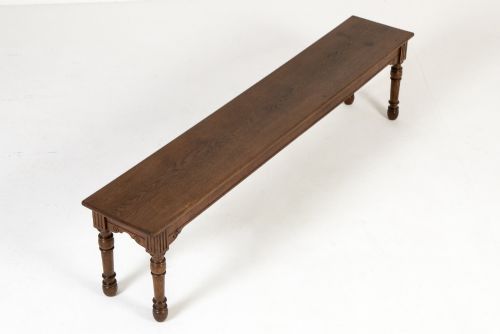
A long rustic bench provides a linear seating solution shaped by utility, appearing frequently in oak, pine, elm, and cherry wood across periods from the eighteenth century to the early twentieth century. These pieces emerge from domestic, tavern, church, and school environments, taking forms such as refectory, hall, and railway benches.
The version most commonly met on this page is a nineteenth-century or early twentieth-century pine or oak example, often displaying the marks of heavy daily service. Lengths vary considerably, with substantial pieces stretching across several feet to accommodate multiple sitters in farmhouse kitchens or long dining rooms.
Stylistically, these items align with country, provincial, and farmhouse traditions from England, France, Wales, Scandinavia, and Hungary. Buyers select them for their unpretentious lines and the immediate sense of history they introduce to contemporary interiors.
How they were made
Makers relied primarily on solid timbers such as oak, pine, elm, fruitwood, and cherry wood, selecting indigenous woods suited to heavy loads and daily friction. Joinery was robust and straightforward, utilising pegged mortise and tenon joints to ensure stability without complex machinery.
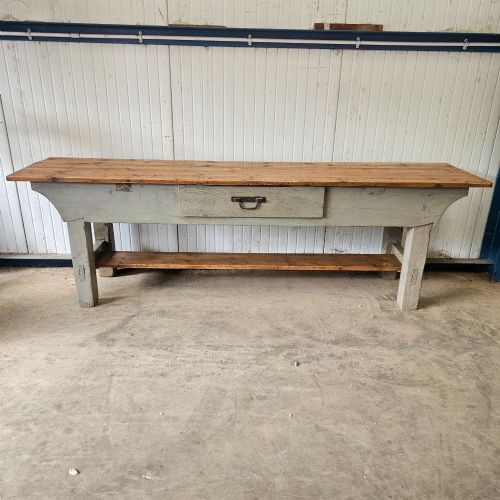
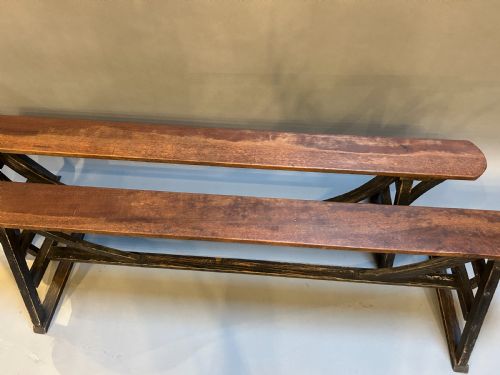
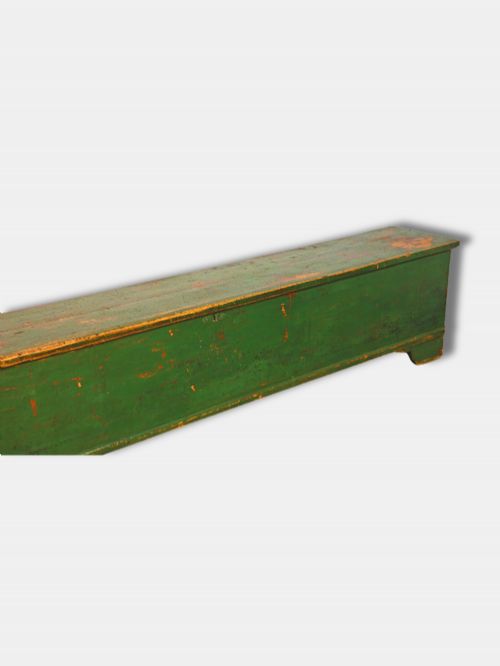
Surfaces often retain traces of original paint or show years of wax application, developing rich patination through repeated handling and cleaning. Iron bracing or fixings appear on functional workshop or tavern variants to reinforce high-stress joints.
Some railway benches retain the flip-over back mechanism designed for commuters changing direction at the terminus.
What varies in quality
Integrity of the timber and the honesty of the surface condition set pieces apart, distinguishing items that retain their original structure from those altered by extensive later restoration. Timber selection matters profoundly, with dense old-growth oak or tightly grained elm offering superior durability compared to softer or heavily replaced woods.
Proportion and restraint define the finer examples, where structural members remain balanced and untampered by over-zealous cleaning that strips away historical character. The depth of patination and the harmony of the grain reflect the quality of the original commission and the environment the piece inhabited.
The Long Rustic Bench Glossary
- Patina
- The surface sheen and coloration developed through age, handling, and wax polishing. This quality indicates the length of time a piece has been used and cared for.
- Refectory
- A long dining hall style associated with communal eating spaces. Pieces bearing this descriptor typically offer extended length and sturdy trestle or four-leg underframes.
- Joint stool
- An early form of domestic seating constructed with pegged mortise and tenon joinery. These sturdy items preceded more complex chair-making techniques.
- Pew
- Long bench seating originally built for ecclesiastical or institutional interiors. They often incorporate high backs or enclosed ends designed for communal halls.
- Trestle
- A structural support system consisting of horizontal beams held by pairs of sloping legs. This framework maximises legroom along the length of the seat.
Long Rustic Bench: Frequently Asked Questions
How do I choose the right length for a dining table?
Select a bench that measures slightly shorter than the span of your table to allow easy tucking when not in use. Consider the leg placement of both the table and the seat to ensure sitters can clear the underframe comfortably.
Measure the available floor space carefully, leaving clearance at either end for movement in busy hallways or dining rooms.
Were these benches originally made for dining?
Many examples served utilitarian roles in workshops, taverns, schools, or churches before finding a second life in domestic settings. Only specific refectory or farmhouse variants were designed expressly for seated dining.
Their robust construction and generous proportions make them naturally adaptable for modern dining tables despite their varied origins.
How should I care for an old wooden surface?
Apply traditional beeswax sparingly and buff with a soft cloth to nourish the timber and protect the historic surface. Avoid modern silicone polishes, which can build up and alter the natural appearance of the grain.
Keep wooden seating away from direct heat sources and radical humidity shifts to prevent timber splitting or joint movement.
How can I tell an 18th-century piece from a 20th-century one?
Examine the tool marks, nail types, and joint construction for consistency with period hand-working methods. Eighteenth-century examples typically display pegged joinery and hand-sawn boards with irregular dimensions.
Twentieth-century items often show mechanical sawmill marks and more uniform structural components, reflecting industrial production methods.