
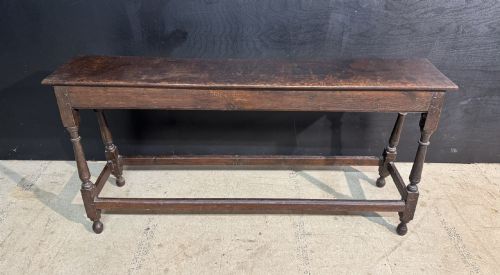
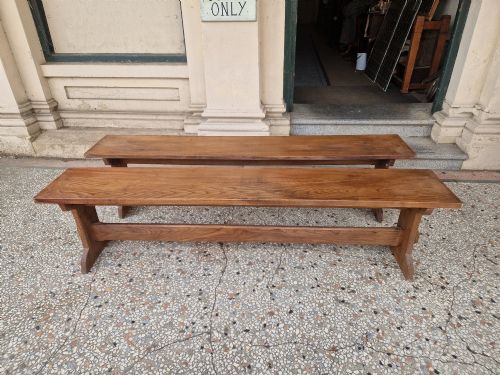


Solid Oak Trestle Bench
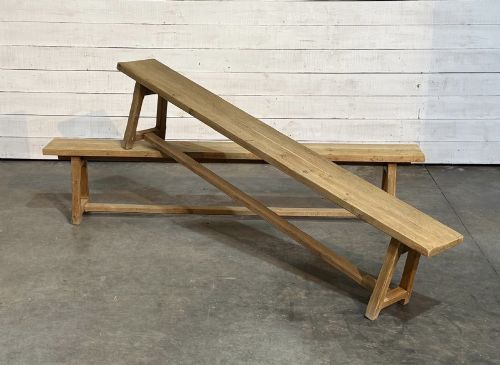
A solid oak trestle bench provides sturdy seating with historic character, bringing enduring practicality and rustic charm to a dining space.
Solid Oak Trestle Bench
A solid oak trestle bench is a practical seating option often associated with rustic farmhouse and refectory dining arrangements. These pieces provide long, linear seating designed to accompany large dining tables.
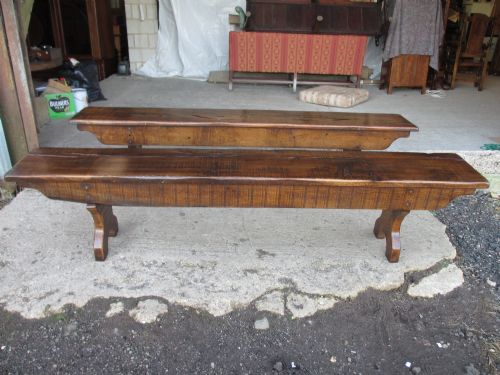
The versions met on this page include heavy Edwardian examples with shaped trestle ends, matching dining bench forms, and lengthy nineteenth-century tavern refectory pieces. Shoppers also encounter nineteenth-century Flemish carved oak dining sets complete with benches.
Makers utilised durable timbers across various historical periods, including the Georgian era, the Edwardian period, and the nineteenth century. These forms serve modern interiors just as they served past communal dining halls.
How they were made
Craftsmen built these benches primarily using solid oak, occasionally combining oak and elm to achieve robust structural integrity. The reliance on dense hardwoods ensured that these long seats could withstand daily use in domestic and tavern settings.
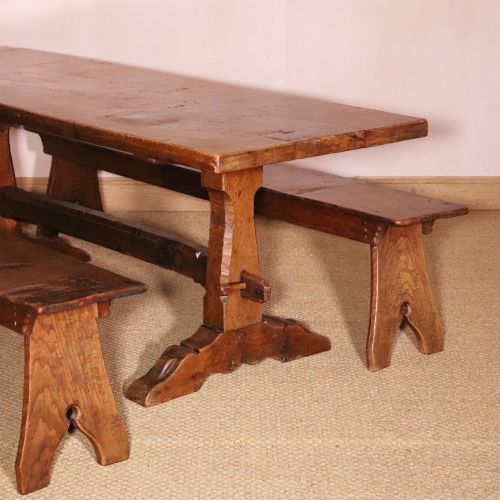
Construction techniques involved sturdy trestle ends for support, sometimes accompanied by shaped woodwork or intricate carvings such as green man motifs seen in Flemish Renaissance Revival pieces. Traditional joinery methods secured the heavy timber components without relying on modern adhesives.
Some nineteenth-century oak benches come accessorised with unexpected green man carvings, watching silently over your dinner guests.
What varies in quality
The distinction between standard examples and superior pieces rests on the weight of the timber and the complexity of the woodwork. Heavier construction and purposeful shaping of the trestle ends elevate a piece above simpler utility furniture.
Carving detail also determines the grade of the bench, moving from plain rustic planks to elaborate nineteenth-century Flemish ornamentation. The integrity of the solid oak and the historical character of the surface finish dictate the overall standard.
The Solid Oak Trestle Bench Glossary
- Trestle
- A structural support consisting of a horizontal beam fixed to two splayed legs. This design provides maximum legroom beneath long dining benches and tables.
- Refectory
- A term describing long dining tables and associated benches traditionally used in monastic or communal dining halls. These forms are built for communal gatherings.
- Joint stool
- A sturdy wooden stool constructed with mortise and tenon joints, representing early joinery traditions. These precursors share structural DNA with heavy benches.
- Arts and Crafts
- A design movement valuing traditional craftsmanship, simple forms, and honest materials. Pieces from this style emphasise the natural grain of oak and elm.
Solid Oak Trestle Bench: Frequently Asked Questions
How do I style a solid oak trestle bench?
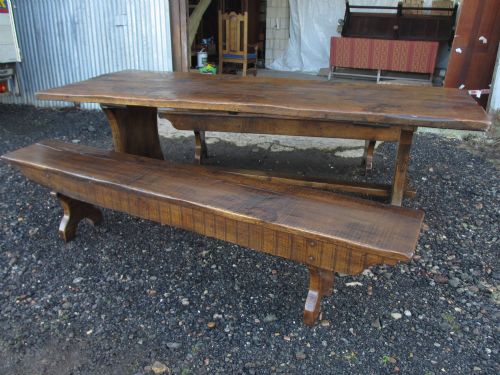
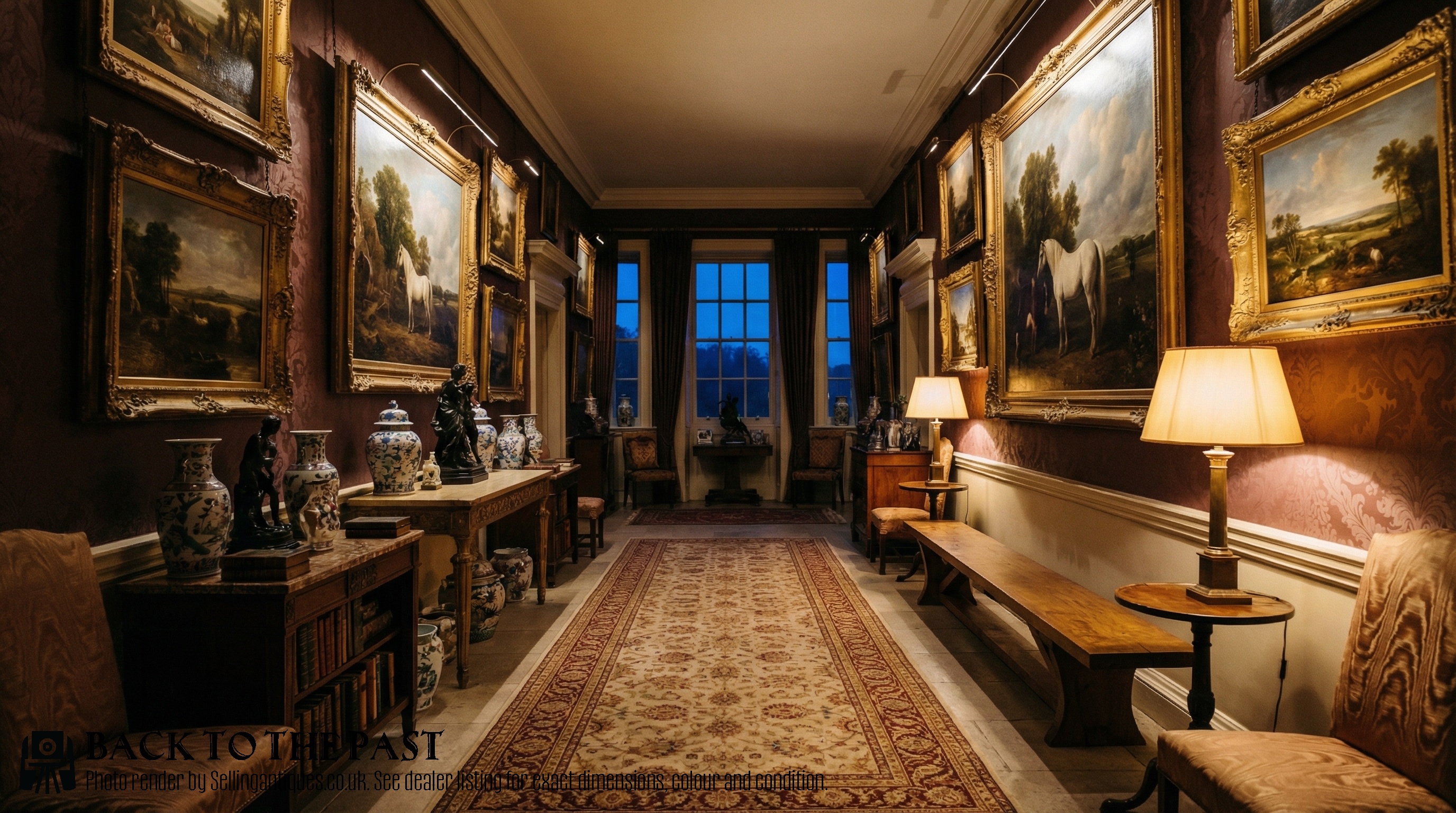
Pair your bench with a matching refectory or farmhouse dining table for a cohesive look. They also function well placed against a hallway wall or beneath a window.
Allow the natural grain of the solid oak to remain visible rather than covering it completely. Adding simple cushions can soften the firm wooden seat for longer dining sessions.
Are these benches suitable for daily dining use?
These pieces were built for heavy use in domestic and tavern settings, utilising dense hardwoods like oak and elm. Their robust construction handles daily sitting without structural compromise.
Ensure you measure the height of your existing table against the bench clearance. A proper pairing guarantees comfortable posture during meals.
How do I tell Edwardian benches apart from nineteenth-century pieces?
Edwardian examples often feature standardised heavy oak forms with cleanly shaped trestle ends produced during the early twentieth century. Nineteenth-century variants frequently incorporate more rustic charm or elaborate stylistic revivals.
Look closely at the joinery methods and the patina of the timber. Earlier pieces often display deeper signs of historical use and distinct regional woodworking traits.
What is the difference between a refectory bench and a standard dining bench?
Refectory benches are typically longer and heavier, designed to accompany long dining tables used in large halls or taverns. They rely on substantial trestle supports rather than four corner legs.
Standard dining benches may offer lighter proportions or distinct stylistic influences like Arts and Crafts or Flemish carving. Both serve the same primary seating function but carry different historical design weights.