

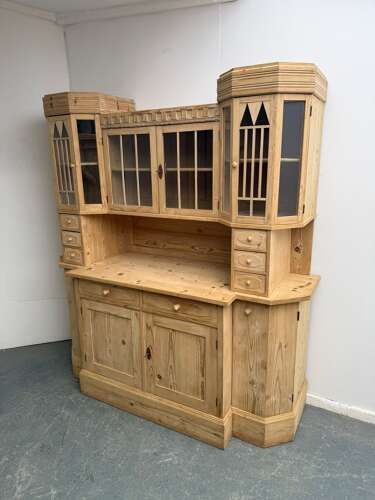
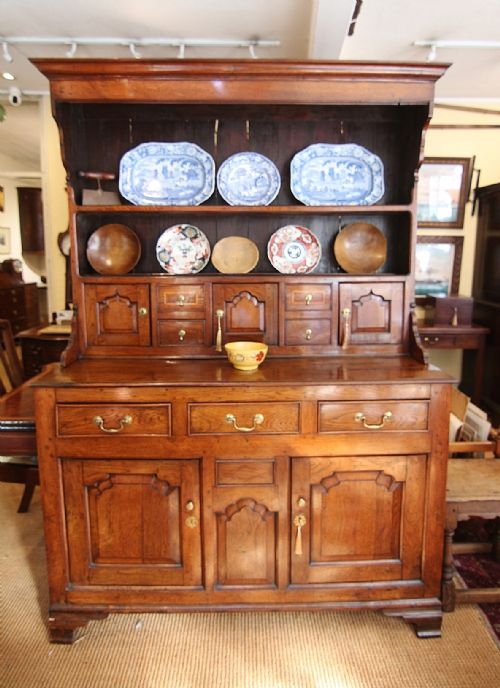
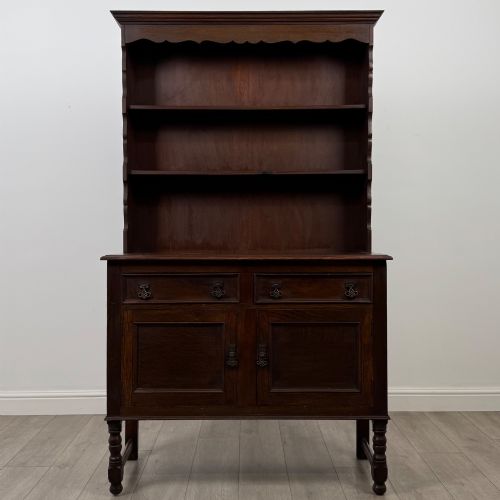
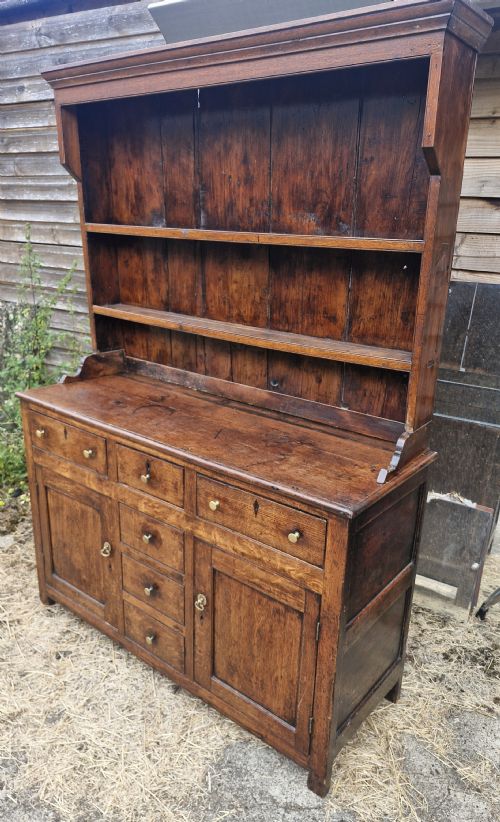
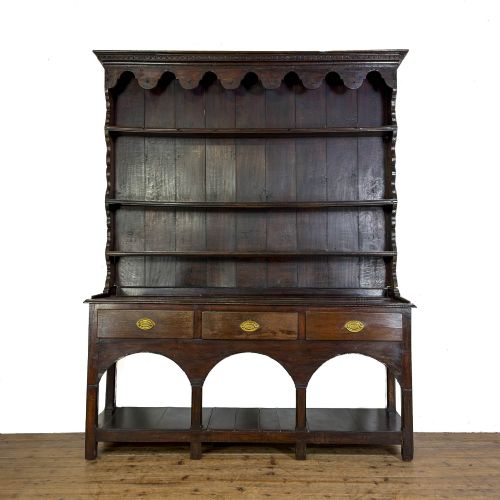
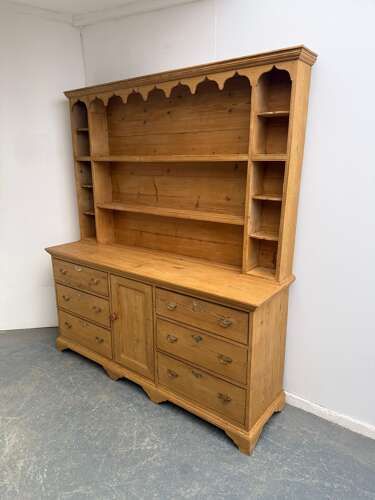

Welsh Kitchen Hutch
Welsh kitchen hutch pieces are sturdy timber storage units with open plate racks that anchor a country interior.
Welsh Kitchen Hutch
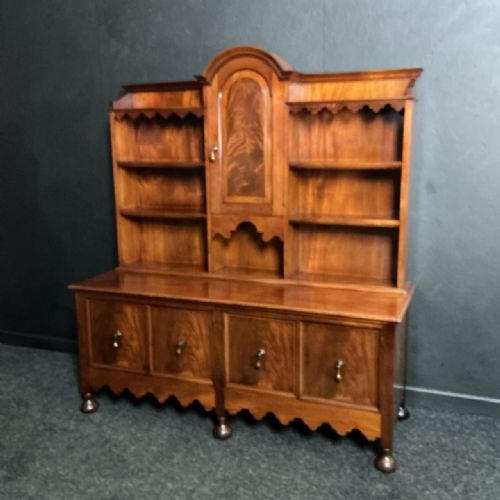
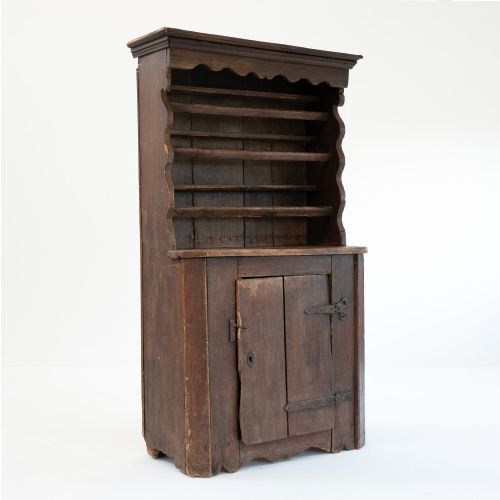
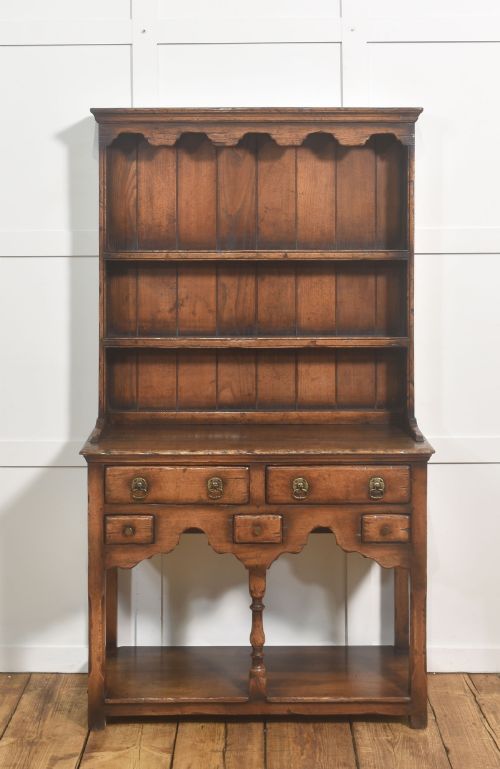
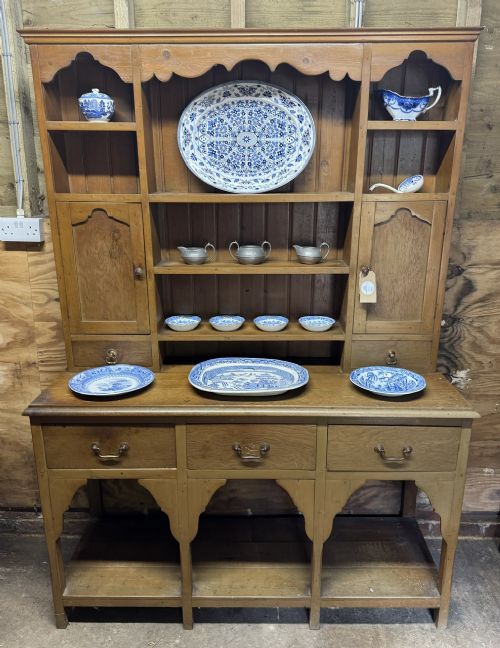
A Welsh kitchen hutch combines a lower base of drawers and cupboards with an upper plate rack for displaying ceramic tableware. These pieces emerge from periods spanning the eighteenth and nineteenth centuries into the Edwardian era.
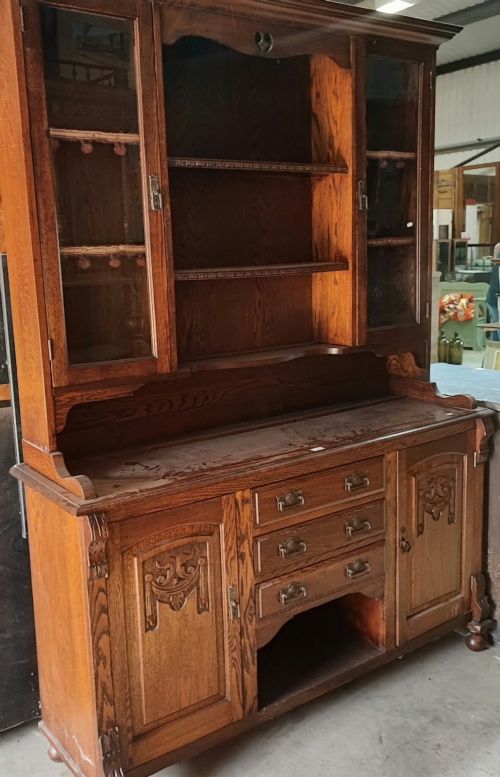
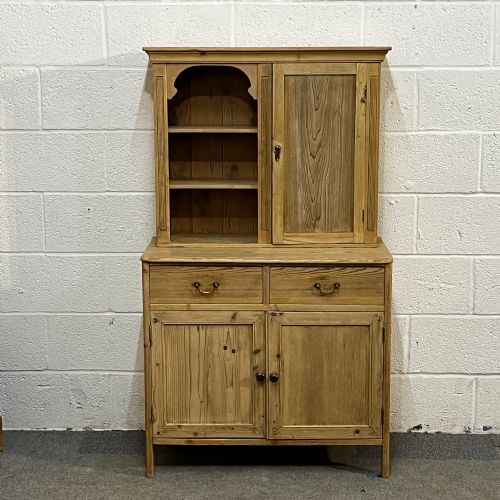
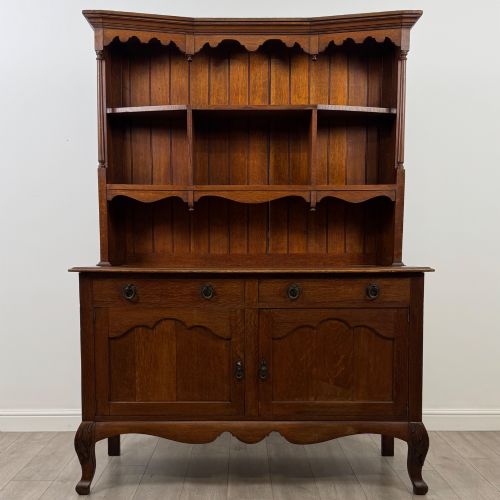
The version you meet most often on this page is constructed from oak or pine, often displaying regional vernacular details such as pot-boards or belly racks. Forms range from compact cottage cupboards to large Georgian and Victorian examples with extensive shelving.
How they were made
Cabinet makers relied primarily on solid oak and pine, supplemented by walnut, mahogany, and elm for structural timbers and decorative veneers. Brass and iron hardware such as drop handles and hinges secure the doors and drawers.
Surfaces are finished with traditional wax, paint, or original patinas that record decades of domestic use. Construction methods involve panelled doors, dovetailed drawer boxes, and pegged joinery suited to heavy daily service.
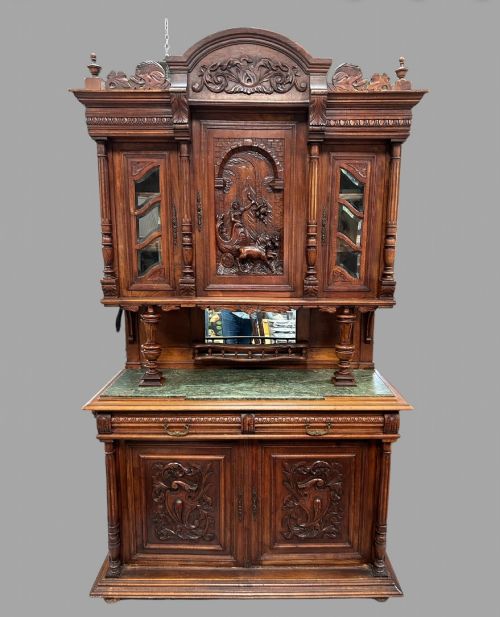
Certain Victorian oak dressers feature mischievous Green Man carvings hiding among the foliage.
What varies in quality
The standard of a Welsh kitchen hutch depends upon the integrity of its timber and the preservation of its original surface. Pieces retaining their matching plate racks and unblemished patinas command greater attention from collectors.
Proportion and regional character also define the better examples, such as those with crisp carvings, inlaid details, or balanced breakfront drawers. Finer specimens show careful selection of grain, particularly in walnut or figured oak applications.
Heals of London
The Welsh Kitchen Hutch Glossary
- Pot-board
- An open lower shelf built between the feet of a dresser, originally designed for storing heavy pots and pans. This feature is particularly characteristic of eighteenth-century Welsh examples.
- Plate rack
- The upper shelving unit attached to the back of a hutch, featuring grooved plate rails and vertical slats to display ceramic dishes safely. Many survive as original pairings with the base.
- Belly rack
- A swollen or curved lower rack profile found on specific regional dressers. It provides extra clearance or visual weight to the upper section.
- Vernacular
- Furniture made by local country joiners using regional traditions rather than urban pattern books. These pieces reflect the specific domestic needs of Welsh and English rural communities.
- Patina
- The surface sheen and colour developed by timber over centuries of handling, polishing, and exposure to light. Original patinas are prized for their depth and warmth.
Welsh Kitchen Hutch: Frequently Asked Questions
What is a Welsh kitchen hutch used for?
These units served as the central storage and display hub for rural kitchens. The lower cupboards and drawers held everyday utensils, linens, and provisions.
The upper rack displayed ceramic plates, platters, and mugs for easy access and decorative effect during daily domestic life.
How do I date an antique dresser?
Dating relies on examining construction methods, timber choice, and hardware styles. Eighteenth-century pieces often feature hand-pegged joinery and distinct regional vernacular proportions.
Later Victorian and Edwardian examples introduce machine-sawn timbers, standardised fixings, and different decorative carver motifs such as Green Man masks.
Are the plate racks original?
Many hutches retain their matching upper racks, which is evident from consistent timber ageing, wear patterns, and mounting points. Collectors look closely at how the rack joins the base.
Some pieces were separated or paired with replacement racks over time, making surface continuity a key indicator of originality.
How do I care for an oak or pine hutch?
Keep wooden furniture away from direct heat sources and drastic humidity changes to prevent timber splitting or warping. Feed dry surfaces with appropriate traditional wax.
Avoid harsh modern chemical cleaners that strip the historic wax or paint finishes and compromise the natural patina.