


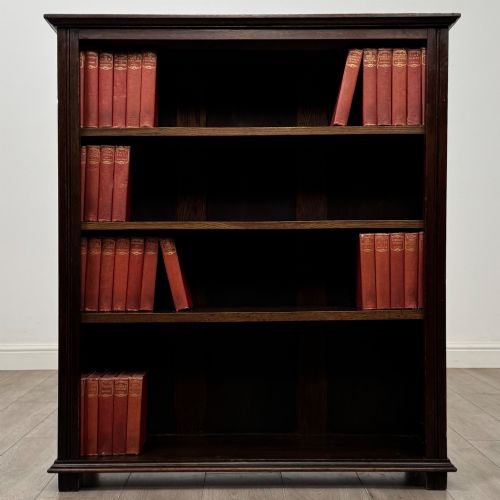
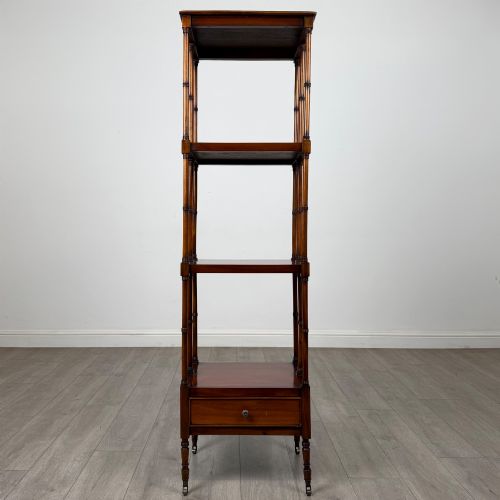
Wooden Display Shelving
Wooden display shelving spans centuries of cabinetmaking, offering sturdy ledges for cherished volumes and ornaments.
Wooden Display Shelving
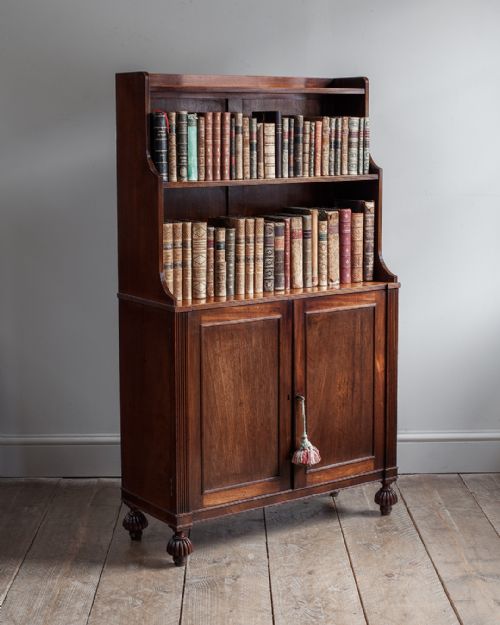
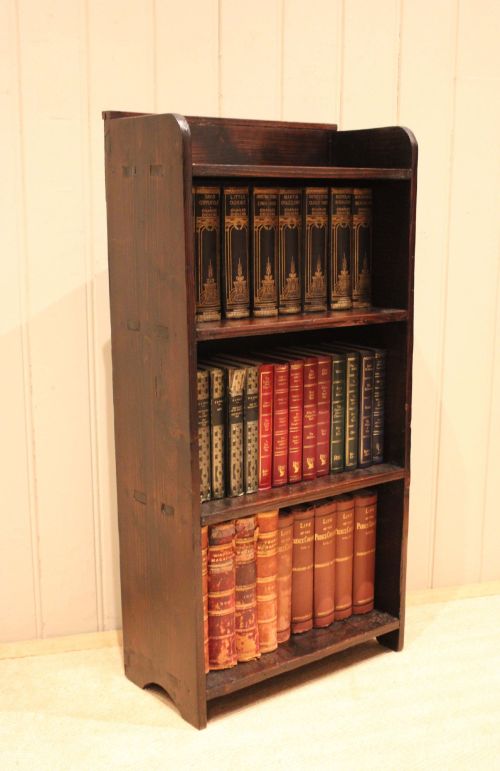
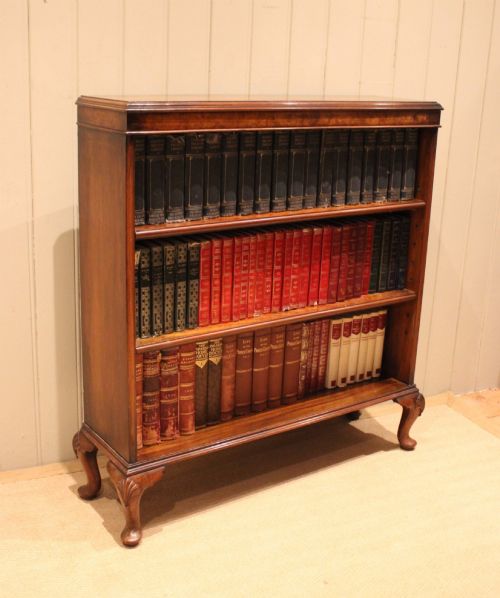
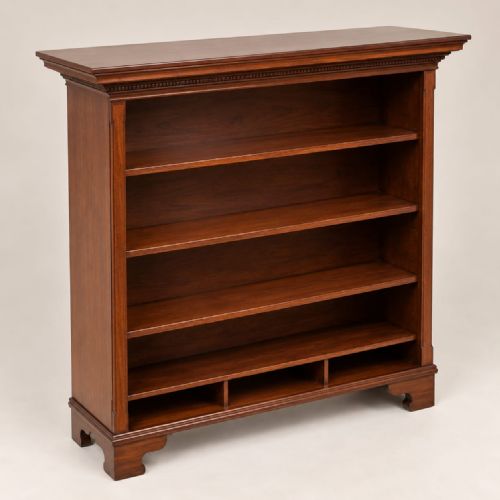
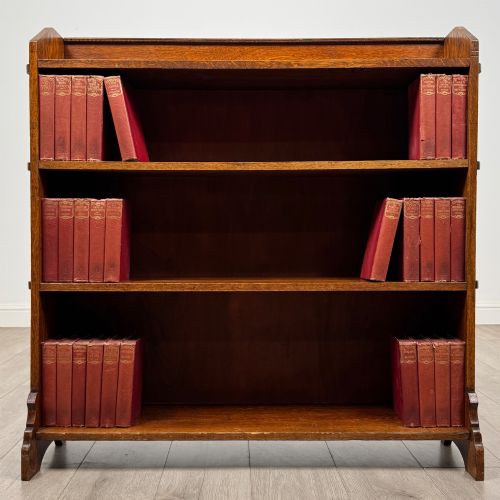
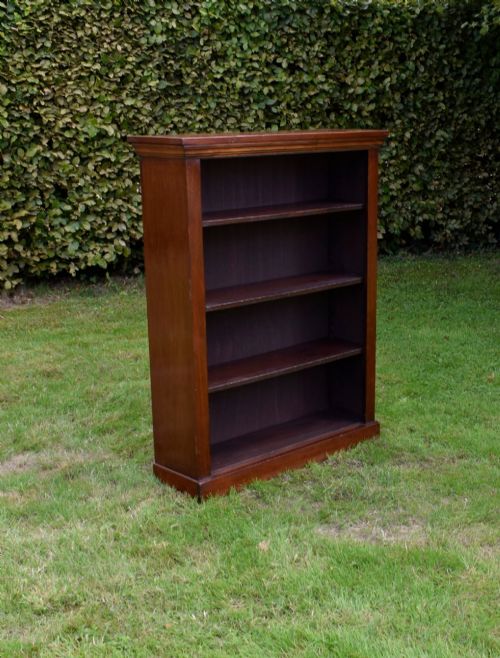
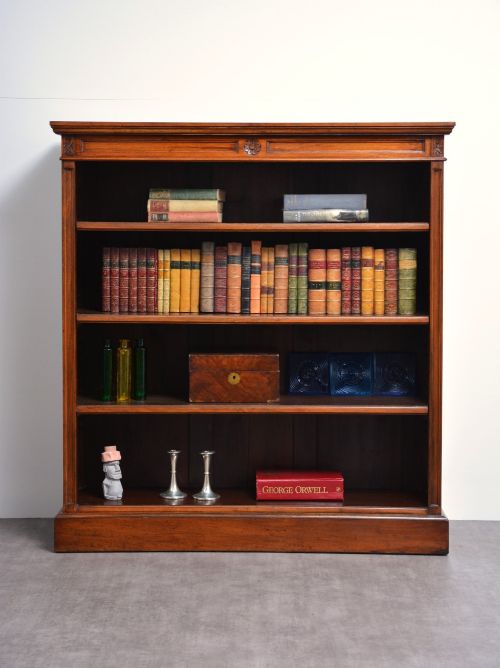
The material palette on this page leans heavily toward traditional hardwoods like oak, mahogany, and walnut, alongside occasional pine and ash. Pieces appear in distinct styles including Edwardian inlaid designs, Arts and Crafts simplicity, Regency waterfall tiers, and Art Deco geometry.
Most items originating from the domestic sphere focus on practicality through adjustable shelves or compact footprints suited to modern rooms. Buyers frequently select open fronted formats to grant immediate visual access to collections of books and ceramics.
Assessing Quality and Execution
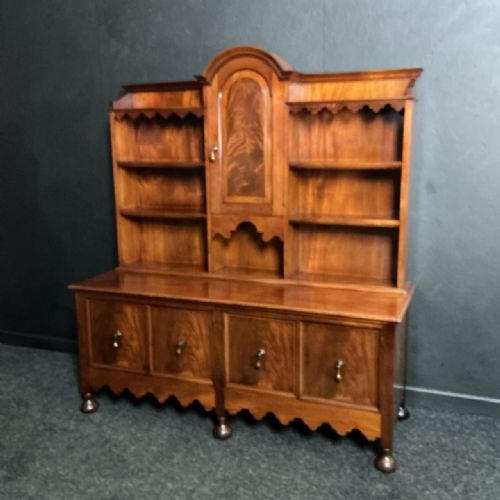
Quality in these pieces rests upon the selection of timber figures and the crispness of cabinetmaking details. Superior examples exhibit finely matched veneers, well proportioned cornices, and integrated structural elements that remain rigid over decades of use.
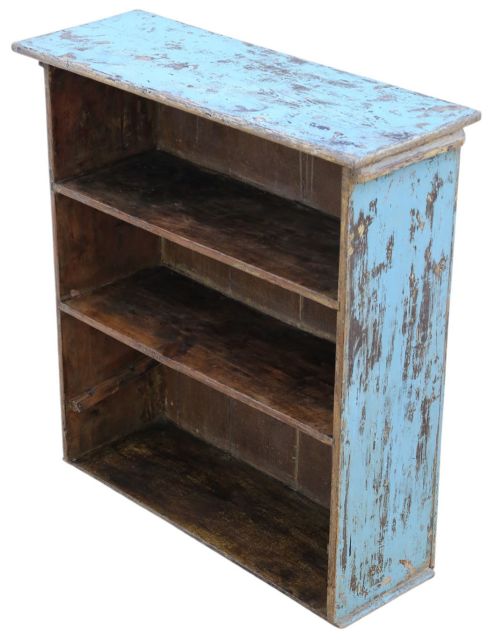
Simpler country items rely on honest utility and straightforward pine or oak construction rather than ornate decoration. The integration of functional elements like adjustable shelf mechanisms distinguishes better workshop output from basic domestic carpentry.
The furniture spans several stylistic movements, encompassing Georgian, Regency, Victorian, Edwardian, Arts and Crafts, and Art Deco periods.
The Wooden Display Shelving Glossary
- Whatnot
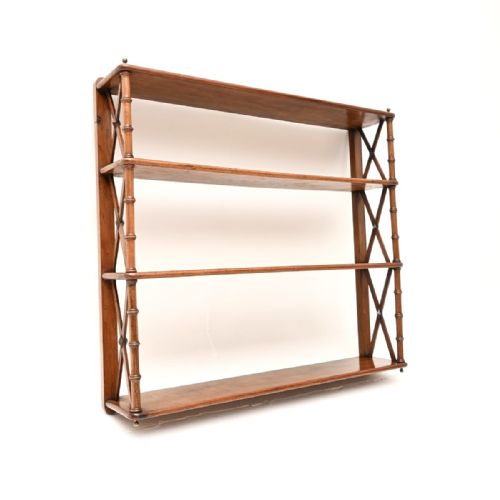
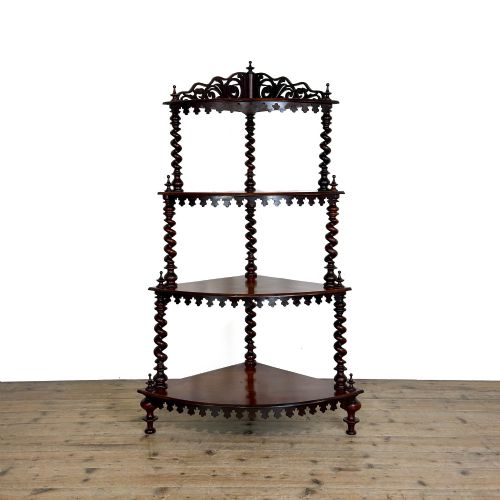
- A multi-tiered piece of freestanding furniture designed for displaying ornaments or books. These typically feature open shelves supported by slender corner posts.
- Waterfall bookcase
- A set of open shelves where each tier steps back progressively from the one below it. This creates a cascading profile popular during the Regency and Victorian periods.
- Inlaid
- The technique of embedding contrasting pieces of wood or metal into a solid timber surface to create decorative patterns. Edwardian cabinetmakers frequently utilised this method on mahogany cabinets.
- Arts and Crafts
- A design movement prioritising simple forms, visible construction, and the natural qualities of materials like English oak. Pieces from this tradition avoid excessive ornamentation in favour of honest craftsmanship.
- Wall bracket
- A decorative or structural support fixed to a vertical surface to hold shelves or ornaments. Carved wooden examples often feature architectural or figurative motifs.
Wooden Display Shelving: Frequently Asked Questions
How do I choose the right size?
Measure your available wall space and consider the weight and height of the items you plan to display.
Open bookcases and corner whatnots offer substantial vertical storage, while wall brackets and hanging shelves suit compact areas.
Are the shelves usually adjustable?
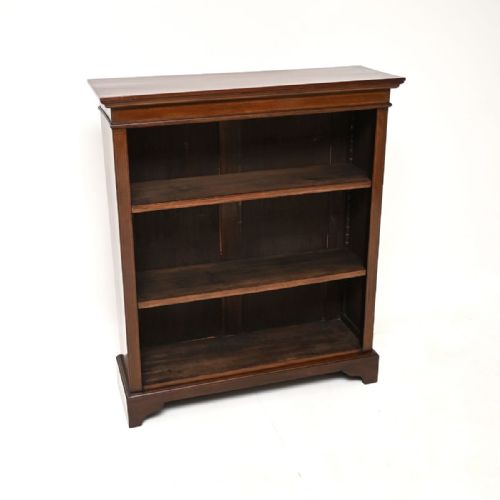
Many of the listed bookcases feature adjustable shelves supported by internal racks or pins.
This adaptability allows you to accommodate books of varying heights and change the internal layout over time.
What is the difference between oak and mahogany?
Oak is a durable, heavy timber with a pronounced grain pattern, frequently seen in Arts and Crafts and rustic pieces.
Mahogany offers a smoother, denser surface often enhanced with rich polish or decorative veneers for formal Victorian and Regency designs.
How do I care for antique wooden shelves?
Maintain the finish by applying natural beeswax periodically and keeping the wood away from direct heat sources and strong sunlight.
Dust regularly with a soft, dry cloth to prevent the accumulation of grit on carved details and polished surfaces.