

Country Kitchen Rack
A country kitchen rack is a utilitarian oak or pine shelving piece designed for displaying plates and storing provisions in domestic spaces.
Country Kitchen Rack
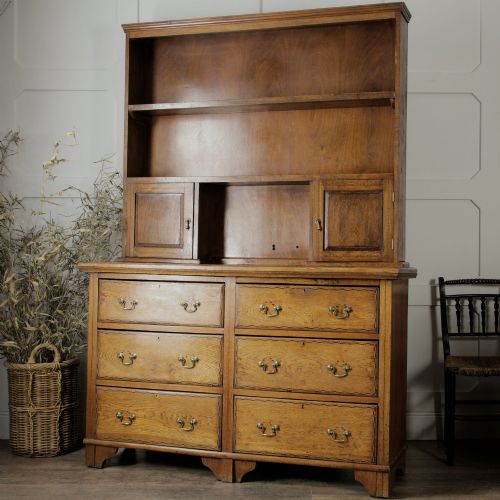
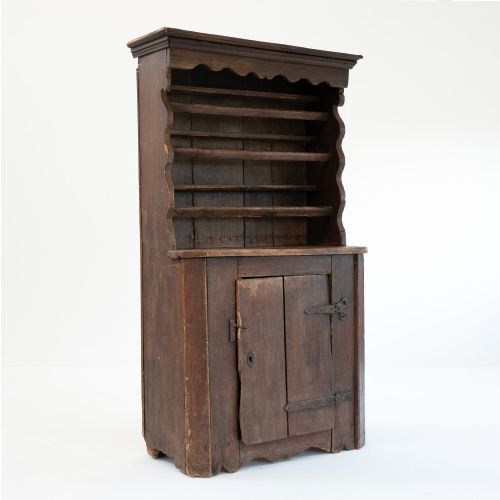
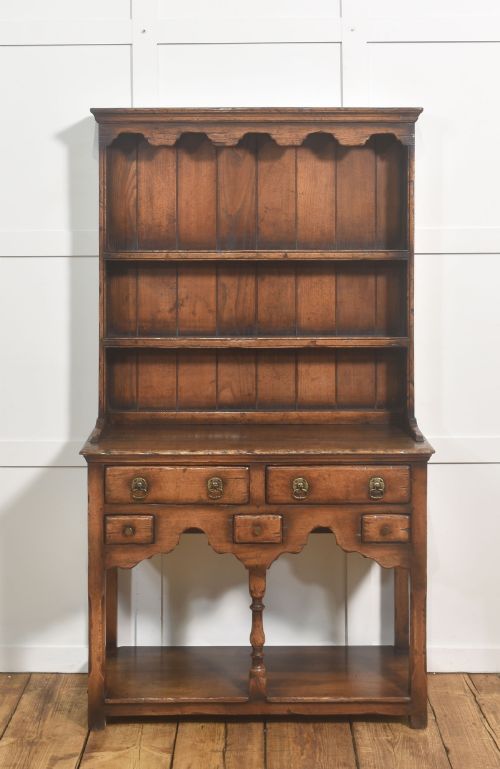
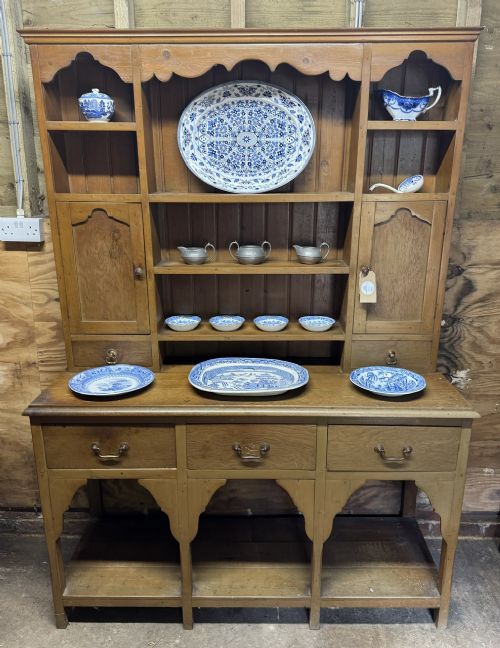
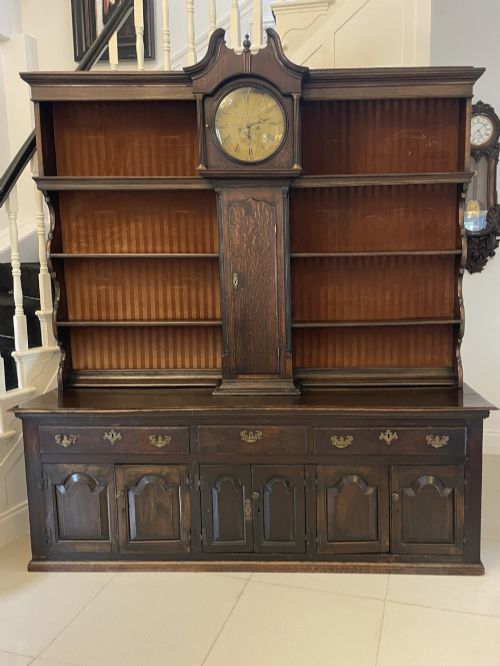
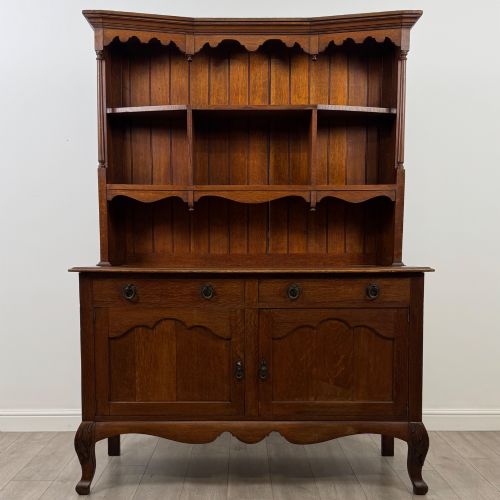
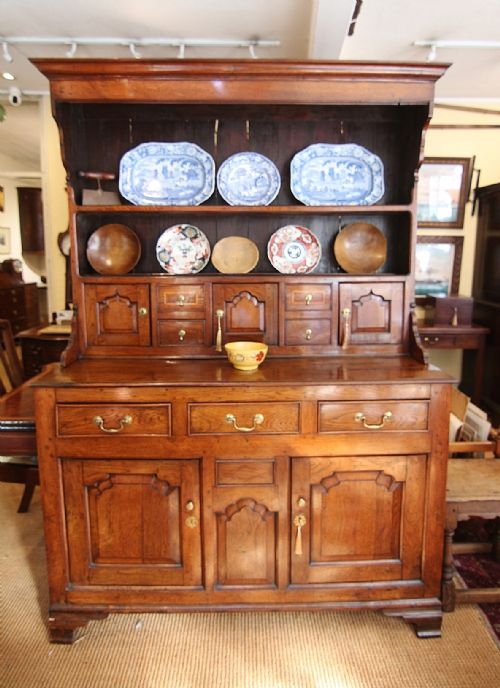
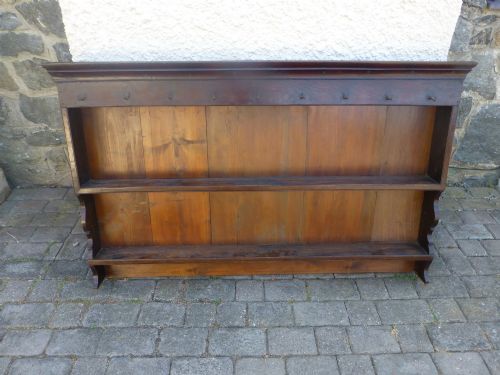
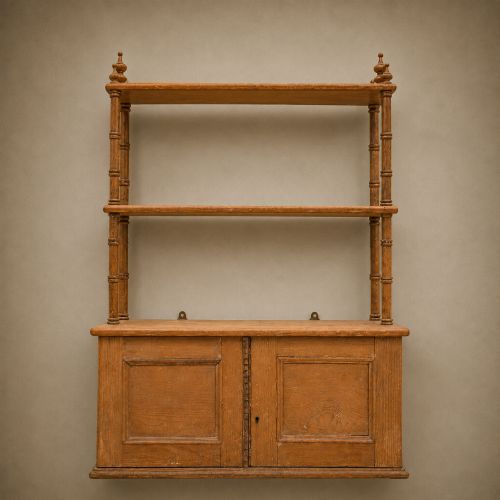
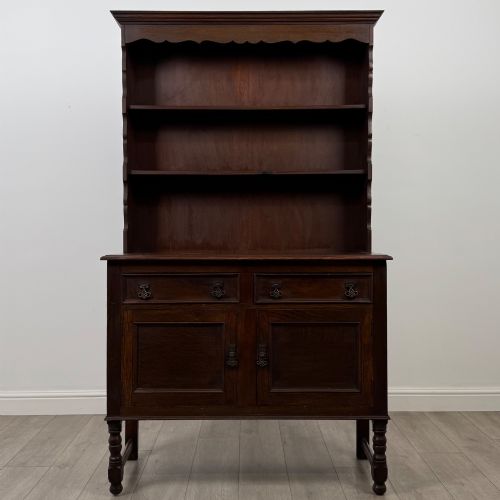
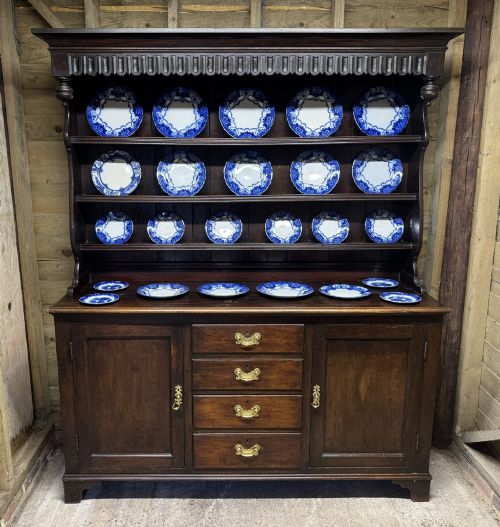
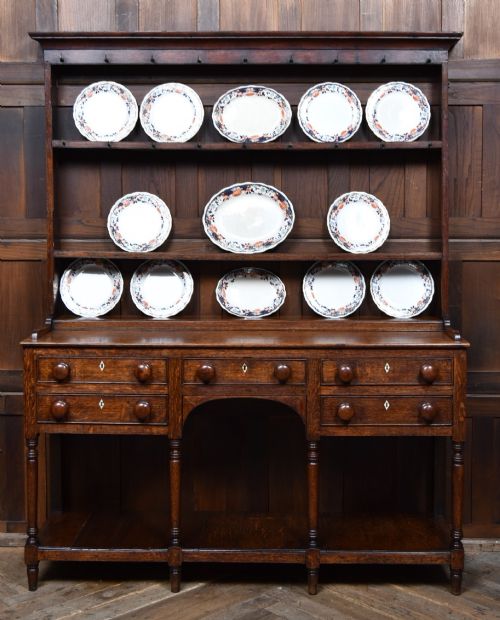
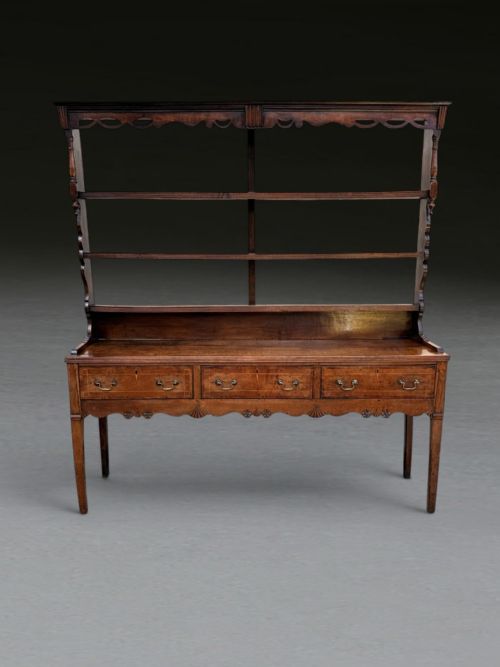
A country kitchen rack provides sturdy wall storage or forms the upper display section of a traditional Welsh dresser. These pieces span the eighteenth and nineteenth centuries, emerging from Georgian workshops and rural homesteads alike. The version most commonly encountered on this page combines open wooden shelving with pegged construction for holding heavy earthenware plates.
Makers shaped these utilitarian fixtures from regional timbers such as oak, pine, and mahogany, adapting them for daily domestic service. Regional variations include Snowdonia and Llanrwst styles, featuring distinct proportions and drawer arrangements beneath the primary display tiers. Buyers find these racks functioning as dedicated plate displays or incorporated into larger potboard dresser bases.
Materials and construction
Local joiners utilised solid oak and pine for the main framework, securing joints with wooden pegs and hand-cut dovetails. Iron and wrought iron appeared in structural hardware, hooks, and baker's racks, providing necessary strength for heavy culinary utensils.
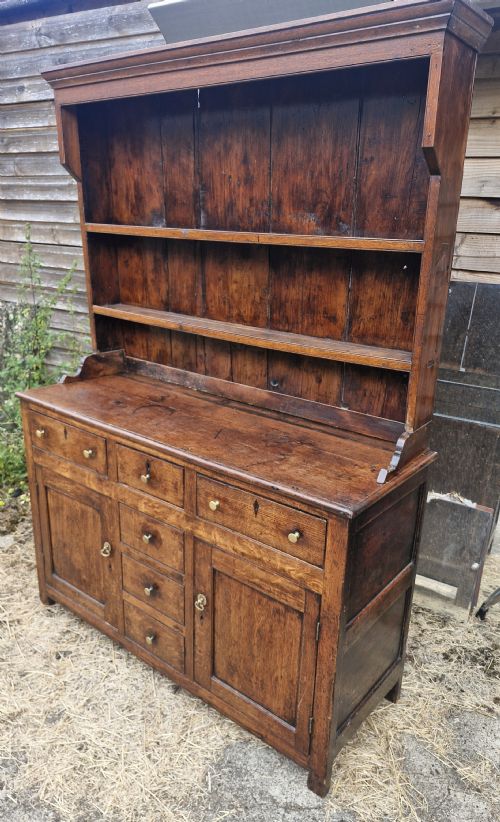
Surfaces often retain their original waxed finish or historical painted layers, showing the gradual accumulation of patina over centuries of household use. Cabinetmakers shaped mouldings by hand, while backboards frequently consist of wide vertical pine or oak planks fixed with traditional cut nails.
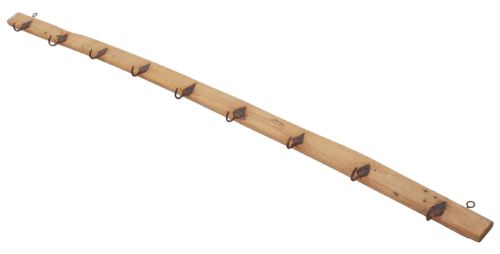
Game hook racks from the early nineteenth century survive ready to hold brace after brace of pheasant, long after the gamekeeper has hung up his boots.
Assessing quality in country furniture
Quality rests upon the integrity of the timber selection and the retention of original surface patination. Examples with untouched patinas, unreplaced brass or iron fittings, and sound structural joinery stand apart from pieces with extensive timber replacement.
Proportion and regional detailing distinguish superior regional cabinetwork from standard utilitarian joinery. The crispness of hand-carved mouldings and the harmonious integration of the rack with its base dictate the standing of each piece.
The Country Kitchen Rack Glossary
- Welsh Dresser
- A traditional kitchen unit comprising a lower base of drawers or cupboards surmounted by an open plate rack. These pieces served as the central storage and display hub in rural households.
- Potboard
- A lower open shelf built into the base of certain Georgian dressers, originally intended for storing heavy pots and pans off the stone floor.
- Delft Rack
- An open-backed shelving unit specifically proportioned for displaying imported delftware plates upright against the wall.
- Patina
- The deep surface sheen and mellow colour developed by wood through decades of handling, waxing, and exposure to light.
- Dog Grate
- An iron fireplace basket, though sometimes associated with regional vernacular groupings found alongside specific Welsh dresser listings.
Country Kitchen Rack: Frequently Asked Questions
How do I date a country kitchen rack?
Dating relies upon examining construction methods, timber species, and nail types used in the assembly. Hand-cut dovetails and hand-sawn board marks generally point to eighteenth-century origins.
Later nineteenth-century examples often display machine-sawn timber and standardised iron fixings while maintaining traditional regional forms.
What is the difference between a plate rack and a dresser?
A plate rack consists solely of open shelves designed to be hung on a wall or mounted above a separate surface. It holds ceramics upright using front retaining bars or grooved wooden bases.
A dresser includes both the upper plate rack and a lower storage base featuring drawers, cupboards, or open potboards.
Are these racks suitable for modern kitchens?
These robust wooden shelves integrate easily into contemporary interiors for displaying everyday ceramics and cookware. Their historical utility makes them practical storage solutions for modern wall spaces.
Buyers should verify wall strength and fixing points before hanging large oak or pine rack units due to their substantial weight.
Why do some racks feature painted surfaces?
Many regional pieces received protective layers of paint during the nineteenth century to update their appearance or seal the softwood. Pine dressers in particular were frequently painted or scrubbed.
Original painted finishes are now prized by collectors for recording the domestic history of the furniture.