

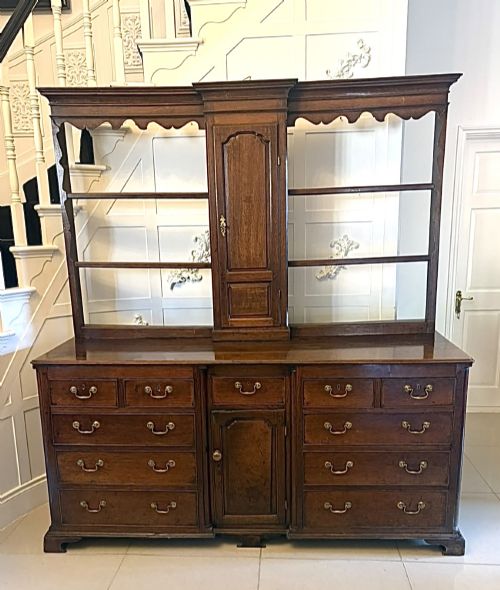
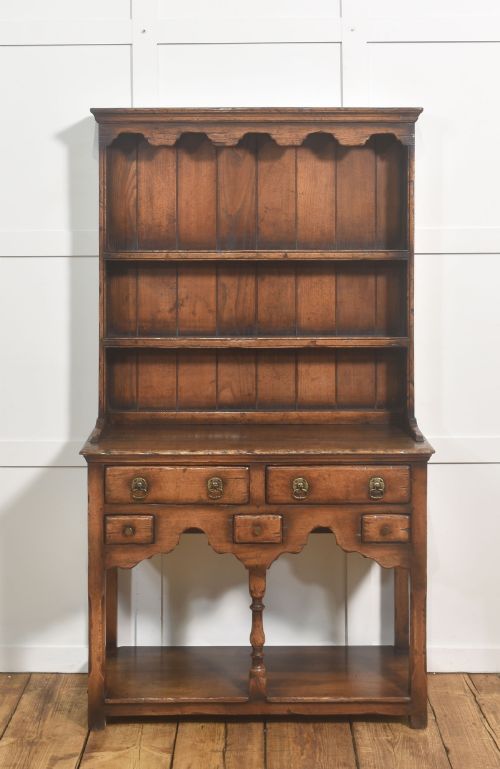
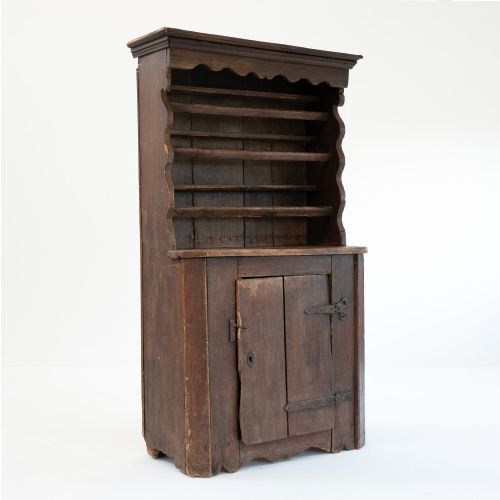
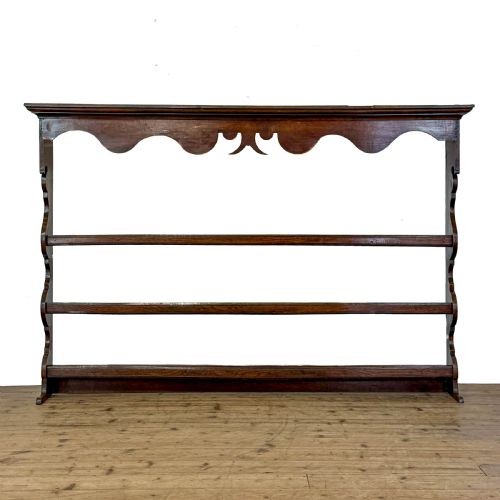


Scalloped Plate Rack
A scalloped plate rack brings rustic charm and practical display space to a kitchen, offering traditional storage for everyday ceramics.
Scalloped Plate Rack
When you search for a scalloped plate rack, you are looking at functional kitchen furniture and wall-mounted shelving designed to display plates upright. These pieces range from standalone dressers featuring integrated racks to wall-hanging shelves.
The versions most commonly met on this page span several periods, including Georgian, Victorian, and early twentieth-century country styles. They appear in forms such as open plate rack dressers, wall hanging shelves, and potboard base dressers.
Origins represented in these listings include English, Irish, and Welsh vernacular traditions. The woodwork reflects centuries of practical domestic utility, often combining display space with lower storage cupboards or potboards.
Materials and construction
Construction relies heavily on traditional timber selection, with oak, mahogany, fruitwood, and pine dominating the listings. Craftsmen shaped these domestic woods using hand tools to create sturdy plate grooves and supportive side panels.
Metal elements appear in brass and wrought iron details, providing structural reinforcement and hardware. Painted finishes also feature on regional vernacular examples, showing early surface treatments on pine and hardwood.
Scalloped Plate Rack Retail Price Guide 2026
Typical asking prices for scalloped plate rack among the pieces listed under this phrase on Sellingantiques today, from the lower quarter to the upper quarter. They describe what is for sale here now, not the wider market.
Listings feature oak, mahogany, pine, fruitwood, brass, and iron across Georgian, Victorian, and early twentieth-century periods.
Judgements of quality
Quality in these pieces rests upon the harmony of proportions and the retention of original timber surfaces. Pieces retaining their original plate back and integrated base show greater integrity than married combinations.
Subtlety of carpentry distinguishes finer regional workshops from standard utility pieces. Hand-carved details and well-balanced open shelves elevate the visual weight of the furniture.
The Scalloped Plate Rack Glossary
- Plate rack
- A set of open wooden shelves specifically grooved and railed to hold plates upright for display and drying. They form part of a larger dresser or hang independently on the wall.
- Potboard
- A low slatted or solid wooden shelf fitted near the floor of a dresser base, traditionally used for storing heavy pots and pans. This feature appears on vernacular Welsh and English pieces.
- Vernacular
- Everyday furniture made by local regional cabinetmakers using regional timbers, prioritising utility over high-style London fashions. These pieces display local building traditions.
- Fruitwood
- Dense timber harvested from fruit-bearing trees such as pear or apple, chosen by country makers for its smooth grain and warm tone. It is seen in regional dressers and shelving.
- George III
- The stylistic period spanning the mid to late eighteenth century, known for balanced proportions and refined timber use. Pieces from this era often display superior cabinetmaking.
Scalloped Plate Rack: Frequently Asked Questions
What is a scalloped plate rack?
A scalloped plate rack is a wall-mounted or dresser-integrated shelving unit featuring shaped or curved wooden edges designed to display plates securely.
These functional pieces originated in traditional kitchens to store and air dry crockery while keeping everyday tableware accessible.
How do I hang a wall plate rack?
Hanging a wall plate rack requires securing the frame directly into wall studs or using heavy-duty masonry fixings depending on your wall type.
Because these oak and mahogany racks hold heavy ceramics, proper weight distribution is essential for safe mounting.
Are these plate racks original?
Many listed plate racks date from the Georgian and Victorian eras, often integrated directly into country dressers or surviving as separate wall shelves.
Checking timber age, construction joints, and surface wear helps identify period examples from later country-style reproductions.
How do I clean an antique plate rack?
Clean antique wooden plate racks gently using a dry or slightly damp lint-free cloth to remove dust without damaging the aged surface patina.
Avoid modern chemical polishes and water immersion, opting instead for traditional beeswax to nourish exposed oak and fruitwood.