
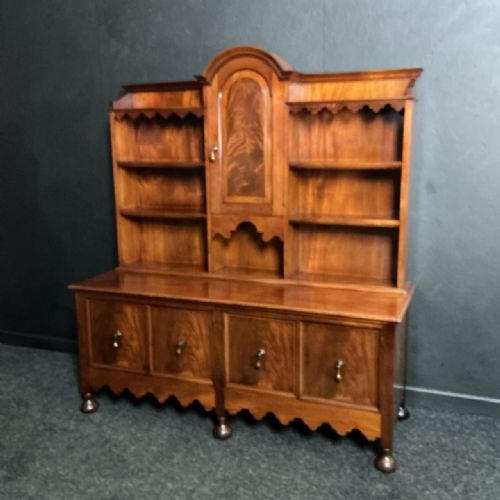
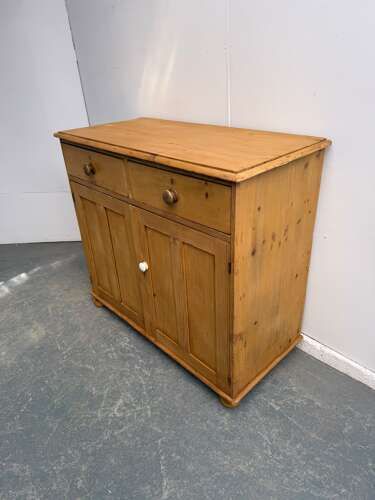
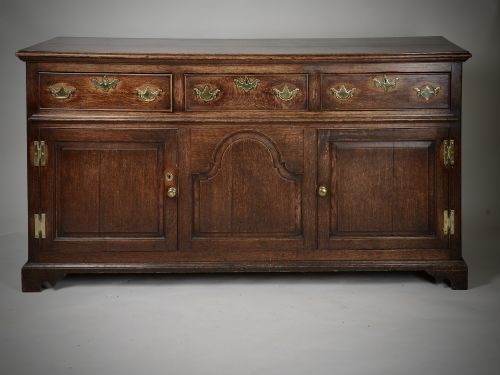
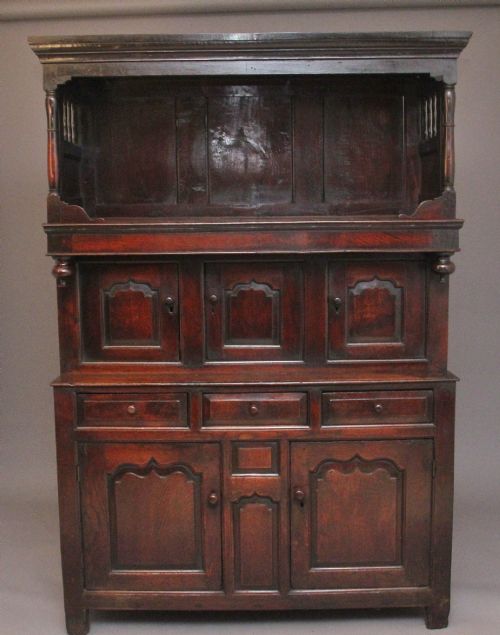


Welsh Dresser Base Cabinet
These welsh dresser base cabinet examples bring vernacular utility into modern spaces, offering sturdy storage shaped by centuries of regional craftsmanship.
Welsh Dresser Base Cabinet
A welsh dresser base cabinet sits at the heart of domestic history, functioning historically as a heavy work surface and storage unit for rural homes. These pieces emerge primarily from the eighteenth and nineteenth centuries, spanning Georgian and Victorian periods with distinct regional styles.
Most examples encountered on this page display robust proportions in oak or pine, often retaining lower doors and drawers designed for kitchen and dining utility. Buyers will find variations ranging from plain country workshop builds to more formal Georgian and Edwardian interpretations.
How They Were Made
Makers relied predominantly on solid oak and pine for structural integrity, utilising mortise and tenon joinery to endure heavy daily use. Panels and frames were fitted carefully to accommodate the natural seasonal movement of timber.
Hardware such as brass pulls and wrought iron hinges finish the construction, reflecting the utilitarian needs of the period. Surfaces were typically finished with wax or left to develop a natural patina over decades of domestic service.
The inventory includes regional forms such as tridarns and deuddarns alongside standard sideboard bases.
What Varies in Quality
The standard of a welsh dresser base cabinet rests largely on timber selection, timber thickness, and the retention of original structural components like feet and drawer bottoms. Pieces exhibiting dense grain patterns and minimal structural replacement command greater appreciation among collectors.
Proportion and regional character also dictate distinction, separating standard utility furniture from sophisticated examples with refined mouldings, cabriole legs, or detailed fielded panels.
The Welsh Dresser Base Cabinet Glossary
- Tridarn
- A traditional Welsh three-section piece featuring a central cupboard flanked or tiered by display areas. It represents a more complex evolution of domestic storage compared to a standard base.
- Deuddarn
- A traditional Welsh two-section cupboard designed for household provisions and textiles. This form provides enclosed storage with panelled doors.
- Vernacular
- Architecture and furniture rooted in local traditions and practical utility rather than formal academic design styles. These pieces utilise regional materials and straightforward construction methods.
- Border Counties
- A geographic classification denoting pieces sharing stylistic traits between Welsh workshops and adjacent English counties. This overlap creates distinct regional variations in mouldings and layout.
Welsh Dresser Base Cabinet: Frequently Asked Questions
What is a welsh dresser base?
A welsh dresser base is the lower portion of a traditional kitchen or dining storage unit, typically featuring drawers and cupboards without the upper plate rack.
These heavy pieces provided a sturdy work surface and enclosed storage for food preparation and domestic utensils in historic homes.
How do I date an oak dresser?
Dating relies on examining construction methods, tool marks, timber selection, and hardware fixings across the piece. Early examples show hand-riven boards and pegged joints, whereas later Victorian and Edwardian items incorporate machine-sawn elements.
Changes in leg style, from straight stile feet to cabriole legs, also help assign pieces to specific centuries like the eighteenth or nineteenth.
Are pine dressers authentic?
Pine dressers are entirely authentic and represent a significant portion of vernacular furniture produced during the Victorian period and earlier. Regional workshops utilised softwood alongside oak depending on local availability and domestic budgets.
Stripped pine versions reflect nineteenth-century cottage interiors where pine was frequently waxed or scrubbed.
How do I care for antique oak?
Maintaining antique oak involves keeping the timber nourished with quality natural wax applied sparingly. Avoid placing pieces near direct heat sources or rapid temperature shifts that cause timber to split.
Regular dusting with a soft dry cloth protects the historic finish and encourages a steady natural patina.