

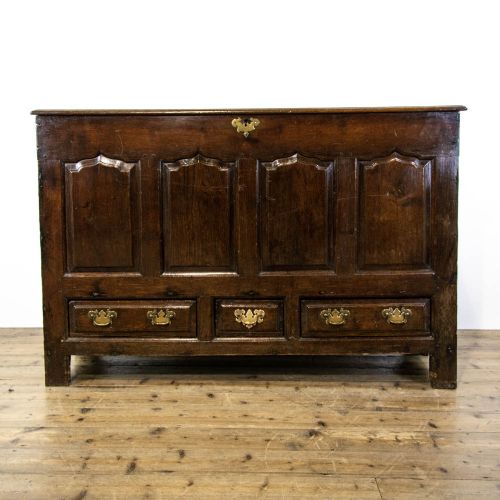
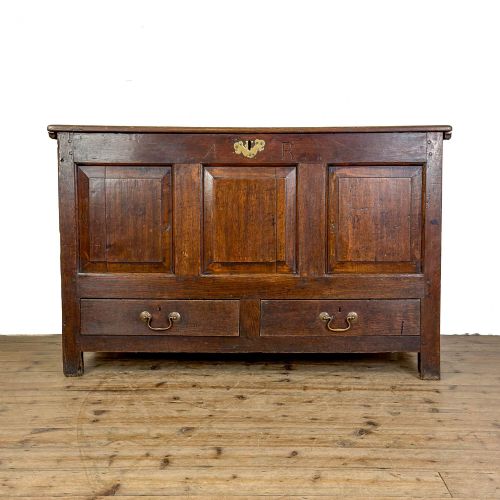
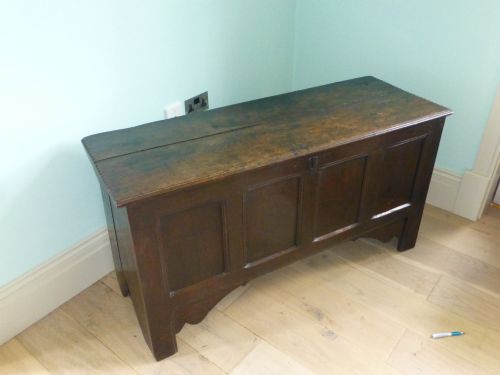


Welsh Carved Oak Coffer
A Welsh carved oak coffer is a robust domestic container carrying centuries of regional craftsmanship and practical utility into modern rooms.
Welsh Carved Oak Coffer
A Welsh carved oak coffer serves primarily as a sturdy storage chest, appearing frequently alongside smaller miniature variants known as coffor bach, table boxes, and mule chests. These pieces originate across periods spanning the sixteenth, seventeenth, and eighteenth centuries, reflecting traditional regional woodworking styles.
Buyers encounter standard blanket chests alongside specialised forms like court cupboards, livery cupboards, press cupboards, and table desks. The construction heavily incorporates local vernacular traditions, showing distinct regional characteristics from areas such as the Gower Peninsula.
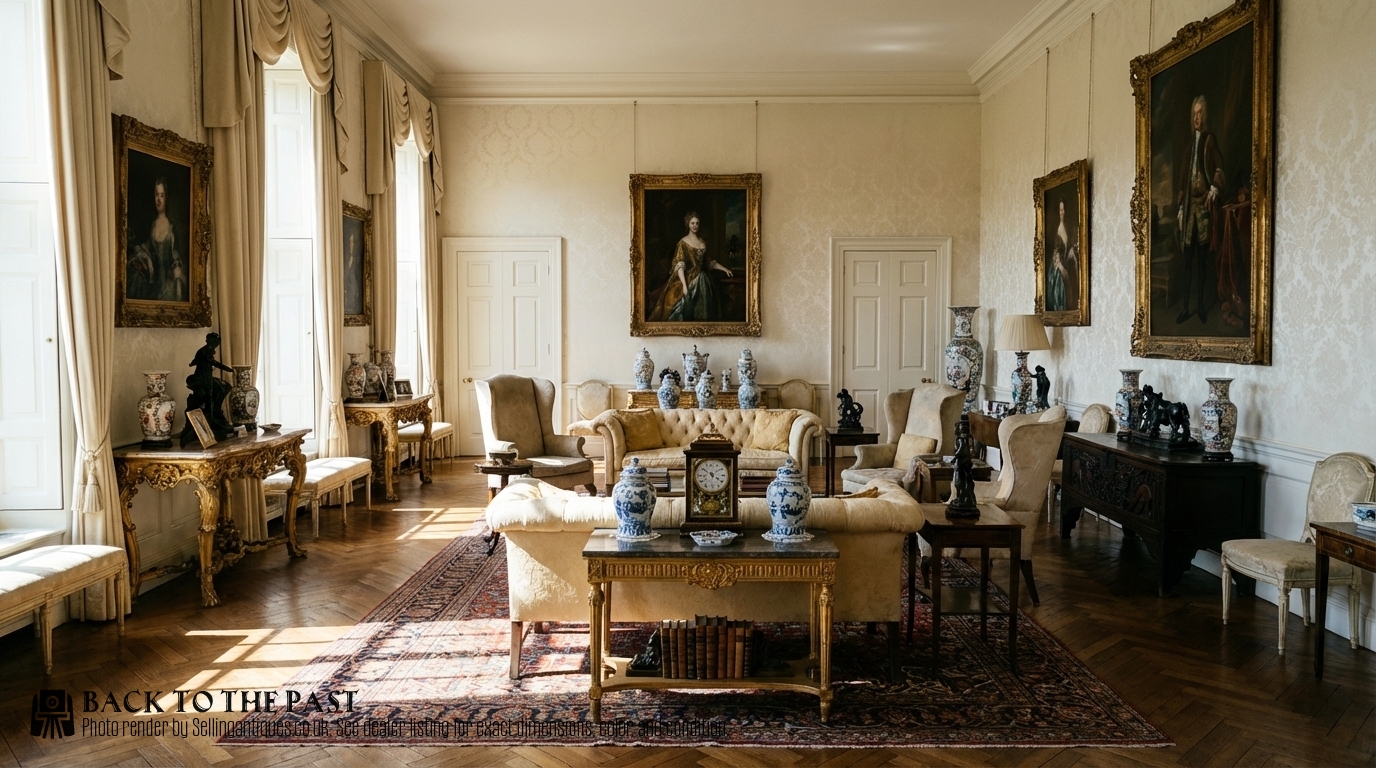
The domestic role of these objects evolved from secure storage for valuables and linens to prominent display furniture within period interiors. Surviving examples demonstrate the enduring utility of heavy timber furniture designed to withstand generations of domestic use.
How they were made
Makers utilised solid oak timber as the primary structural material, frequently complemented by secondary elements in fruitwood, bone, and mixed wood inlay. Metal components rely on iron, wrought iron, and brass for hinges, locks, and handles.
Construction techniques centre on heavy joined framing and panel assembly, often enhanced by intricate chip carving and original surface detailing. Carpenters integrated drawers, inscribed dates, and owner initials directly into the dense timber framework.
Several early pieces preserve personal touches including original owner initials and carved dates from the sixteen-forties.
What varies in quality
The standard of a Welsh carved oak coffer rests upon the crispness of the original carving and the integrity of the timber framing. Pieces retaining their untouched surface patination and authentic hardware command greater appreciation among collectors.
The Welsh Carved Oak Coffer Glossary
- Coffer bach
- A small miniature chest or box originating from Wales, typically featuring a single internal compartment and sometimes a base drawer. These smaller pieces served for holding valuables or precious documents.
- Mule chest
- A storage chest equipped with one or more drawers fitted beneath the main internal compartment. This form bridges the traditional blanket chest and the modern drawer unit.
- Court cupboard
- An imposing formal storage cabinet featuring tiered display stages or enclosed upper and lower sections. They demonstrate advanced joinery and prominent carved decoration.
- Chip carved
- A style of ornamentation created by chipping small triangles or notches from the surface of the wood to form geometric patterns. This technique appears widely on seventeenth-century boxes and panels.
- Vernacular
- Furniture designed and built by local tradesmen using regional traditions and readily available materials rather than metropolitan pattern books. Welsh vernacular work displays highly localized design traits.
Welsh Carved Oak Coffer: Frequently Asked Questions
What is a coffor bach?
A coffor bach is a miniature Welsh chest traditionally used for keeping personal valuables, letters, or textiles. These small pieces mirror the construction methods of full-sized coffers.
Craftsmen often fitted them with small base drawers and detailed chip carving, making them prized decorative items in domestic interiors.
How do mule chests differ from coffers?
Mule chests include one or more functional drawers positioned beneath the main lift-top storage compartment. This hybrid design emerged to provide more accessible storage for clothing and linens.
They combine the deep cavity of a standard chest with the organizational convenience of drawer storage.
Where were these coffers made?
These pieces originate from Welsh workshops and regional carpenters utilising locally sourced timber. Specific stylistic traits often link individual pieces to distinct areas like the Gower Peninsula.
Local joiners applied traditional regional motifs that separate Welsh vernacular work from English equivalents.
How should I care for antique oak furniture?
Antique oak benefits from stable indoor humidity levels away from direct heat sources and strong sunlight. Regular dusting with a dry cloth helps preserve the natural timber surface.
Avoiding synthetic polishes ensures the historic wax patination remains intact across the carved panels and mouldings.