
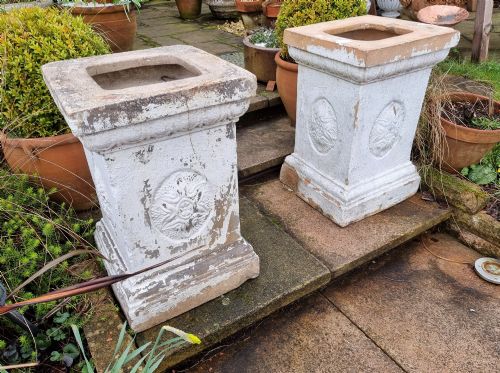
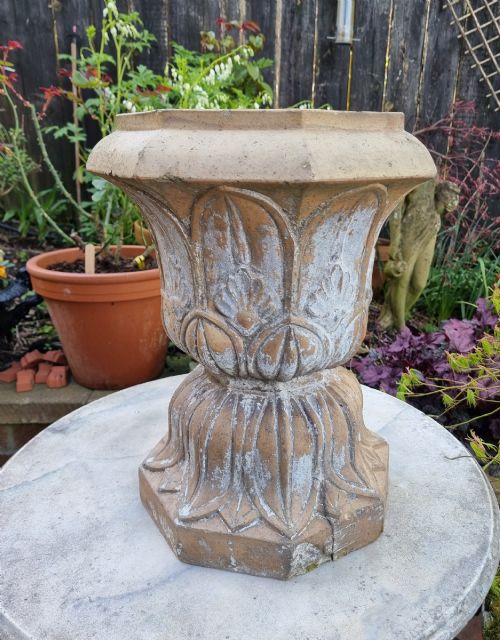


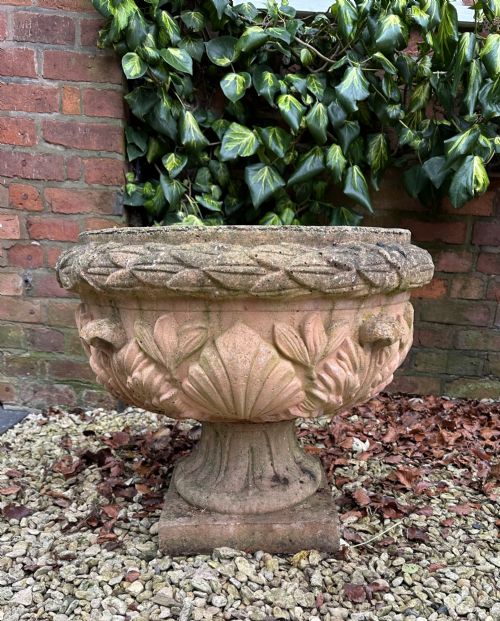
Weathered Terracotta Urn
These weathered terracotta urns bring enduring garden character, combining historic clay vessels and classical forms for outdoor spaces.
Weathered Terracotta Urn
A weathered terracotta urn represents functional historic garden vessels shaped from clay and earthenware, frequently appearing in classical and rustic forms. When searching for a weathered terracotta urn, buyers encounter garden urns, oil jars, and amphorae originating from the nineteenth and early twentieth centuries. These vessels display various finishes resulting from age, including lime wash, paint, and natural patination developed outdoors.
The selection on this page centres on garden planters, campana shapes, and Mediterranean olive jars alongside pedestals and plinths. Most examples date from the nineteenth century through to the 1930s, showing influences from Neoclassical, Victorian, and Arts and Crafts styles. Buyers will find individual pieces and matched pairs intended for garden display.
Originating from British, Italian, Portuguese, and Turkish makers, these pieces serve as focal points in garden design. The forms range from simple buff clay pots to large decorative urns featuring carved handles and wrought iron stands. Each vessel shows the specific marks of its region and period of manufacture.
How they were made
Potters shaped these vessels using traditional clay and terracotta bodies, sometimes utilising stoneware or buff clay for increased durability. The surfaces often received coats of paint or lime wash, which weathered over decades of exposure to the elements. Iron elements such as wrought iron stands or handles appear on selected jars and urns to support their heavy weight.
Manufacturing methods combined throwing, moulding, and hand-finishing, seen in decorative details like carved heads on handles or scroll patterns. Kiln firing transformed the raw earth into porous earthenware capable of holding plants and withstanding garden use. The resulting surfaces absorb moisture and minerals over time, creating the distinctive aged patina valued by collectors.
Some nineteenth-century urn handles feature small carved heads keeping watch over the petunias.
What varies in quality
Quality in these pieces depends on the crispness of the modelling and the depth of the historical surface patination. Superior examples feature well-defined classical details, balanced proportions, and integrated stands or plinths that complement the main vessel. The character of the weathering - whether soft lime wash remnants or organic lichen growth - adds to the visual merit of the piece.
The integrity of the clay body and the presence of original mounts or paired components distinguish exceptional items from standard garden ware. Pieces bearing identifiable regional characteristics or workshop traits command greater interest among collectors. Ultimately, the successful union of form, material age, and surface texture defines the upper tier of these garden ornaments.
Dunfermline Clay Company·Compton Pottery
The Weathered Terracotta Urn Glossary
- Terracotta
- A porous, unglazed baked earthenware clay typically reddish-brown in colour. It forms the primary material for historic garden urns and oil jars.
- Campana
- A bell-shaped garden urn with an everted rim and a fluted body on a pedestal base. This classical shape originates from antiquity and remains popular in garden design.
- Amphora
- A tall ancient container with two handles and a narrow neck, often used for storing oil or wine. In garden contexts, these vessels serve as decorative floor pots.
- Patination
- The surface alteration and mellowing of colour that occurs on materials through age and exposure. In terracotta, this includes weathering, lime washing, and organic growth.
- Plinth
- A heavy architectural base or pedestal supporting an urn, statue, or vase. They elevate garden ornaments to improve sightlines and visual presence.
Weathered Terracotta Urn: Frequently Asked Questions
Can I leave terracotta urns outside in winter?
Most historic terracotta vessels are porous and can crack if trapped water freezes inside them during severe frosts. Gardeners often move them under shelter or empty them during the coldest months to protect the clay.
Ensuring proper drainage through the base hole helps prevent ice damage. Many owners elevate their urns slightly on pot feet so moisture does not accumulate underneath.
How do I date an old garden urn?
Dating relies on observing manufacturing marks, potting techniques, and the style of decoration. Nineteenth-century pieces often display hand-finished details and specific clay compositions characteristic of regional potteries.
The degree of surface weathering and accumulated lime wash or paint remnants also indicate age, though these can be influenced by local environmental conditions.
What is the difference between an oil jar and an urn?
Oil jars are large, deep storage vessels traditionally used around the Mediterranean for olive oil, featuring sturdy rims and often multiple handles. Urns typically display a more formal decorative shape with a distinct foot and flared rim designed for display.
Both forms serve similar decorative purposes in modern gardens, but their original functions dictated their proportions and wall thickness.
How should I clean a weathered terracotta urn?
Cleaning should be minimal to preserve the historic patination and surface lichen that collectors value. A gentle brush with water usually removes excess dirt without harming the aged surface.
Avoid harsh chemical cleaners or pressure washers, as these strip away the surface character and weaken the porous terracotta body.