


Terracotta Planter Pot
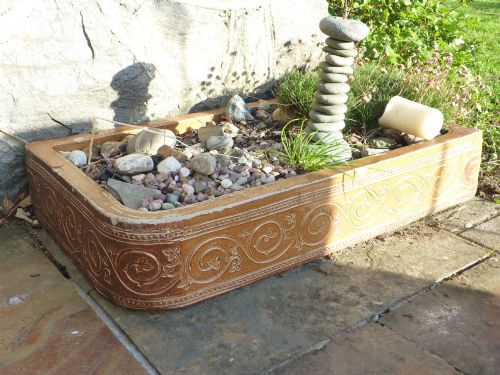
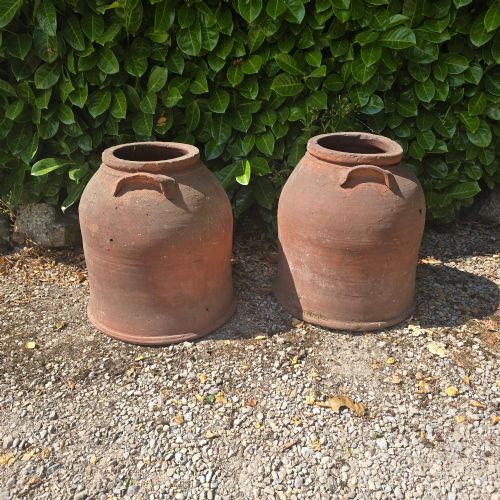
These terracotta planter pot examples range from nineteenth-century French jars and Scottish urns to Victorian salt-glazed strawberry planters, chosen for authentic garden decoration.
Terracotta Planter Pot
A terracotta planter pot serves practical garden and conservatory functions while providing distinct architectural presence through various historic forms. Buyers search for these pieces to introduce genuine period character into outdoor spaces and orangeries using vessels originally designed for utilitarian storage or horticulture.
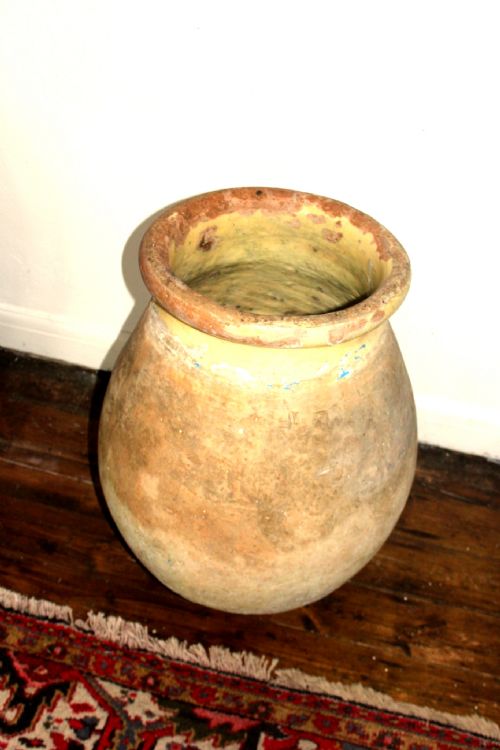
The selections on this page span several specific categories including garden urns, jardiniere vessels, olive jars, confit pots, and agricultural items adapted for planting. Nineteenth-century examples predominate, alongside Victorian pieces and regional French or Mediterranean designs.
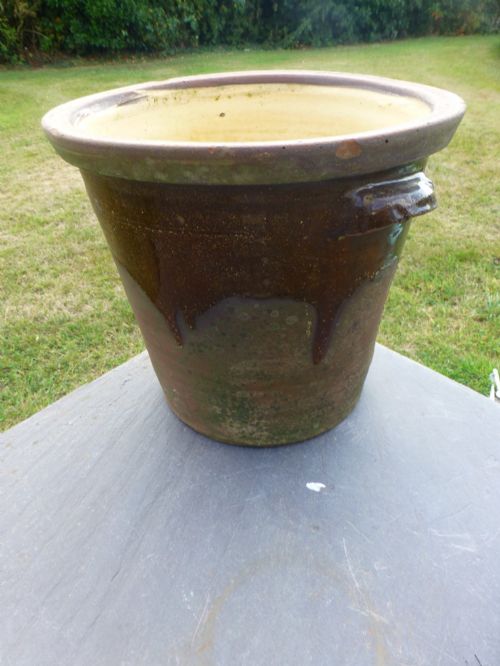
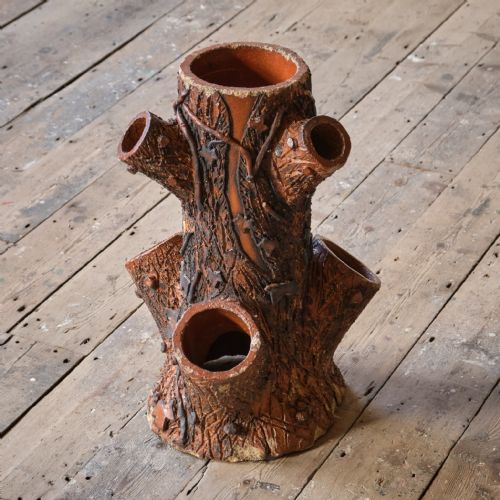
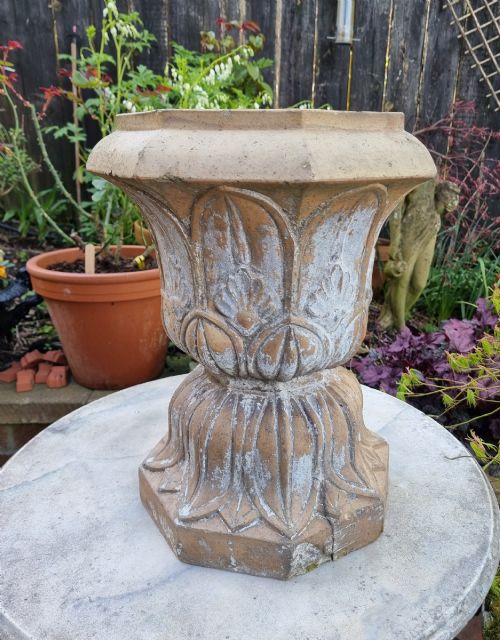
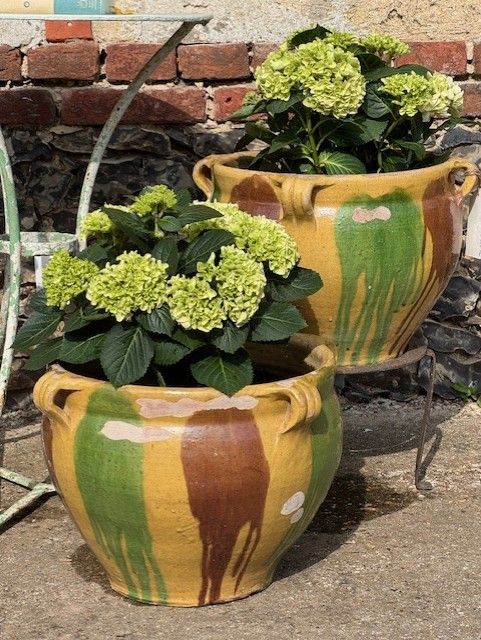
Forms vary considerably from tall amphorae and campana urns to low troughs and faux bois strawberry planters. Pieces frequently display specific regional traits, such as Provençal Biot jars or Castelnaudary vessels featuring distinctive dribble glazes.
How they were made
Makers utilised natural earthenware, clay, and ceramic materials to form these vessels, often shaping them by hand or throwing them on wheels before firing. The resulting porous body allowed moisture and air to reach plant roots, a functional quality inherent to traditional terracotta.
Surfaces frequently show applied glazes, ranging from salt-glazed stoneware finishes and green lead glazes to decorative paint or natural patination. Certain items, such as faux bois pieces, incorporate moulded naturalistic bark textures mimicking wood directly into the clay body.
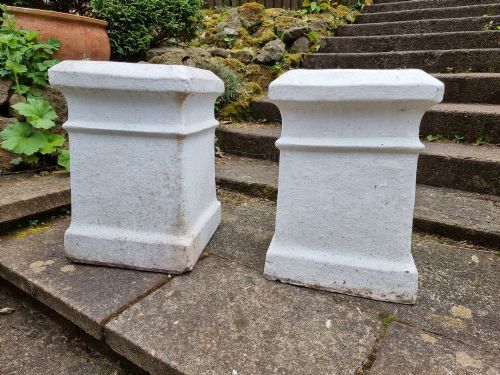
Agricultural chimney pots find a second life holding geraniums.
What varies in quality
Quality rests upon the crispness of the modelling, the depth of the natural patination, and the integrity of any applied glaze or salt finish. Superior examples display balanced proportions, confident hand-finishing, and surface weathering that reflects genuine age rather than artificial distress.
The distinction between standard utility vessels and finer ornamental pieces lies in decorative ambition, such as neoclassical campana moulding or deliberate artistic glazing. Condition and originality remain central, with untouched surfaces and historically appropriate repairs commanding greater appreciation among collectors.
Guichard Carriès·Compton Pottery
The Terracotta Planter Pot Glossary
- Terracotta
- A porous, unglazed or glazed fired earthenware clay possessing a characteristic brownish-red or buff colour. It has served for centuries as the primary material for garden pots and architectural ornaments.
- Faux bois
- An artistic technique replicating wood grain or natural bark textures directly onto a ceramic or concrete surface. This Victorian style frequently appears on specialist strawberry planters and rustic garden troughs.
- Campana urn
- A bell-shaped garden vessel with an everted rim and a pedestal base, originating from classical antiquity. Grand Tour and Victorian examples adapt this classical silhouette for estate gardens.
- Salt-glazed stoneware
- A dense ceramic material created by throwing salt into the kiln during high-temperature firing, producing an impervious, slightly pitted glaze. This finish protected utilitarian garden pots and chimney elements from frost damage.
- Jardiniere
- An ornamental ceramic or terracotta receptacle designed to hold growing plants or flowers. These items often feature decorative glazes or moulded relief work suited for prominent display.
Terracotta Planter Pot: Frequently Asked Questions
How do I identify a nineteenth-century terracotta planter pot?
Nineteenth-century examples typically display heavy weathering, hand-thrown or moulded irregularities, and historic surface patination that modern reproductions cannot replicate. Examination of the clay body often reveals mineral inclusions and porosity consistent with period firing techniques.
Specific regional markers, such as French Biot signatures or distinct British salt-glazes, further help establish the era and origin of individual garden vessels.
Can I leave antique terracotta outdoors in winter?
Many historic terracotta and earthenware vessels withstand outdoor conditions, but porous clay remains vulnerable to severe frost if water trapped inside freezes and expands. Salt-glazed items and dense stoneware generally resist frost better than highly porous earthenware.
Protecting valuable pieces under cover or indoors during freezing months ensures long-term preservation of fragile historic surfaces and patination.
How should I clean an antique terracotta pot?
Cleaning historic terracotta requires gentle brushing with water and a soft bristle brush to remove dirt without disturbing the aged patina or friable surface clay. Avoid harsh chemical cleaners, pressure washers, or abrasive tools that strip away centuries of weathering.
Preserving the accumulated moss, lichen, and mineral deposits maintains both the aesthetic value and the historical integrity of the piece.