


Relief Decorated Urn
A relief decorated urn brings sculptural depth and tactile interest to a room, offering classic form combined with ornate surface modelling.
Relief Decorated Urn
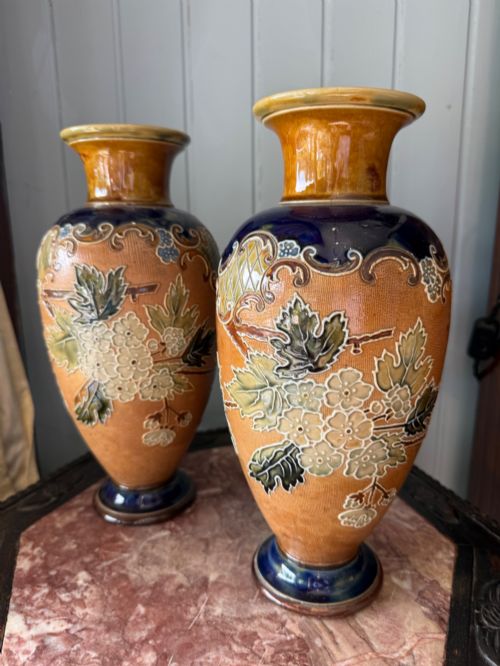
When you search for a relief decorated urn, you encounter vessels defined by raised surface ornament rather than flat painting alone. These objects range from nineteenth-century garden vessels to decorative porcelain and stoneware vases designed for interior display.
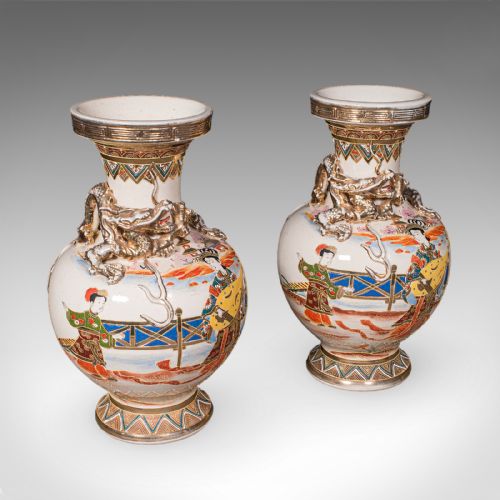
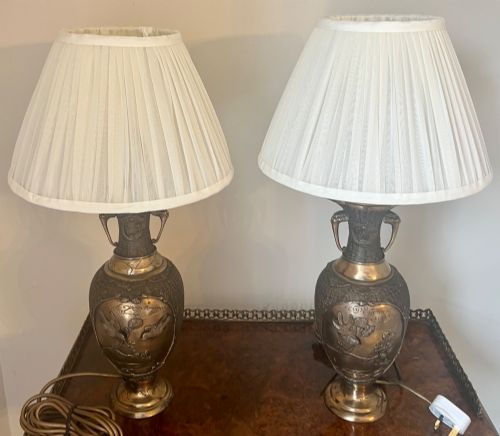
The pieces on this page appear across various periods including the Regency era and the Victorian epoch, alongside Japanese Meiji examples. Forms span from large country house porcelain vases and garden planters to table lamps and water vessels.
Victorian and nineteenth-century ceramic pieces dominate the selection, often taking the shape of baluster vases, jardinieres, and specialist stoneware containers. Each item displays distinct moulded or applied decoration that characterises the category.
How they were made
Maker workshops utilised materials such as stoneware, earthenware, porcelain, and terracotta to form the body of each vessel. Many pieces incorporate specialised glazes, enamel work, and bronze or gold leaf details to enhance the raised motifs.
Techniques relied on careful moulding and throwing, allowing artisans to build up three-dimensional surface patterns before firing. Metal components and mixed metal applications on Japanese Meiji works required precise casting and assembly skills.
What varies in quality
Quality depends upon the crispness of the moulded relief and the precision with which the decorative elements integrate with the body of the vessel. Superior examples demonstrate expert handling of glazes and meticulous execution of surface details.
The reputation of the pottery or workshop and the sophistication of the design execution distinguish finer works from standard production pieces.
Royal Doulton·Makuzu Kozan II·Bernhard Bloch·Burmantofts Faience·Royal Worcester
The Relief Decorated Urn Glossary
- Stoneware
- A dense, hard ceramic fired at high temperatures until vitrified. It resists liquid absorption naturally.
- Terracotta
- Unglazed or glazed fired clay possessing a characteristic brownish-red earthenware body. Garden urns frequently employ this material.
- Baluster
- An architectural form shaped with a rounded lower portion tapering toward a narrow neck. Many vases in this category follow this silhouette.
- Jardiniere
- An ornamental pot or stand designed to hold growing plants or flowers. These items often feature prominent exterior relief decoration.
Relief Decorated Urn: Frequently Asked Questions
How were relief decorated urn vessels used historically?
These vessels served diverse roles ranging from formal interior decoration on mantelpieces and pedestals to functional garden planters and water filtration containers.
Larger country house pieces acted as focal points in reception rooms, while smaller ceramic vases held floral arrangements or stood alone as ornamental objects.
Where should I place a relief decorated urn?
Place these pieces in areas where adequate lighting highlights the raised surface details and three-dimensional ornamentation.
Sturdier terracotta and stoneware versions suit conservatories and garden terraces, while porcelain and earthenware examples fit well on stable tables or dedicated display surfaces indoors.
How do I identify a nineteenth-century piece?
Examine the base for maker marks, registration stamps, or factory signatures typical of Victorian and Meiji production methods.
Material composition, glaze characteristics, and the style of the relief modelling also provide reliable clues regarding the period of manufacture.
What is the difference between earthenware and stoneware?
Earthenware utilises porous clay fired at lower temperatures, requiring a glaze to achieve impermeability.
Stoneware undergoes firing at much higher temperatures until the clay body becomes vitrified and completely non-porous.