



Warm Pine Bench
These warm pine bench pieces bring honest vernacular utility and rich timber grain to domestic hallways and living spaces.
Warm Pine Bench
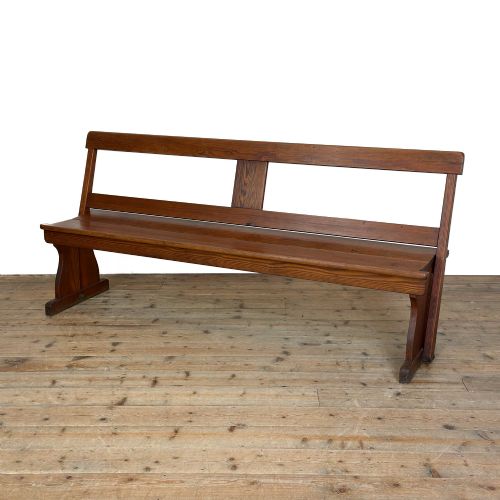
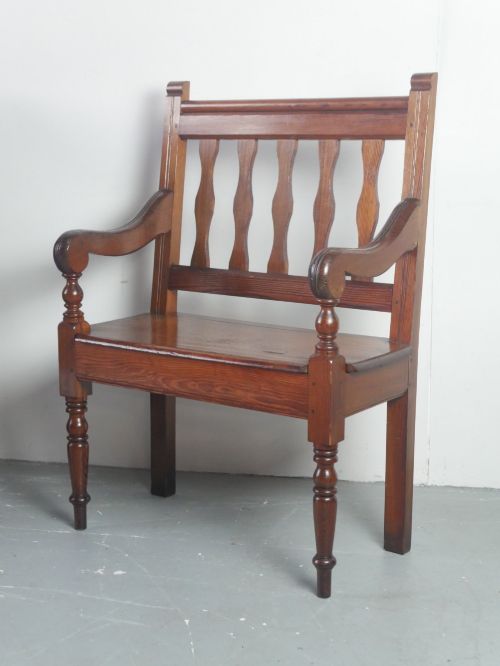
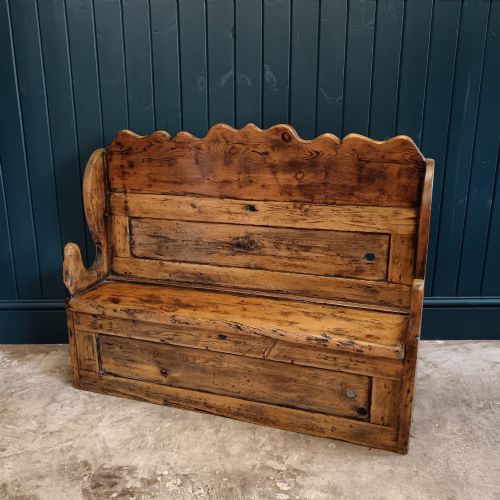
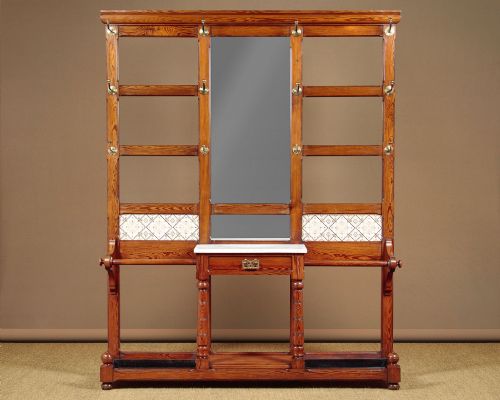
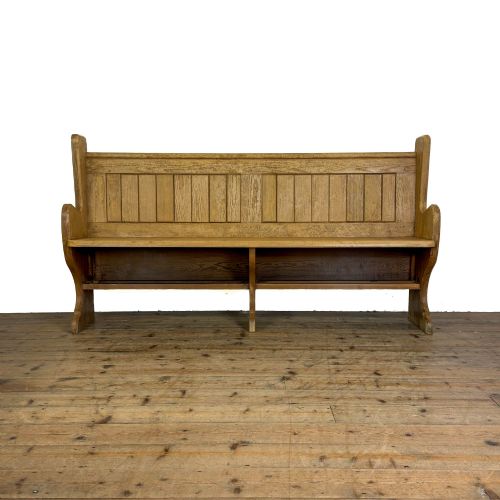
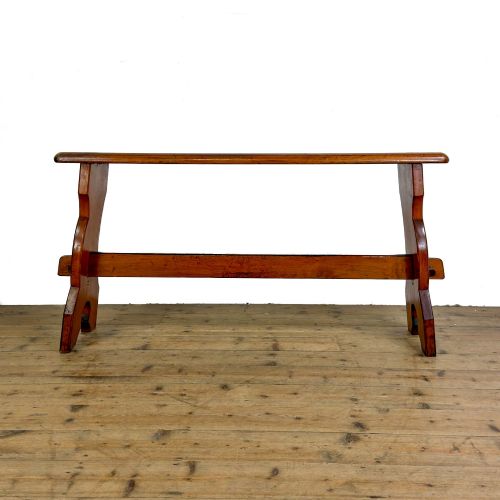
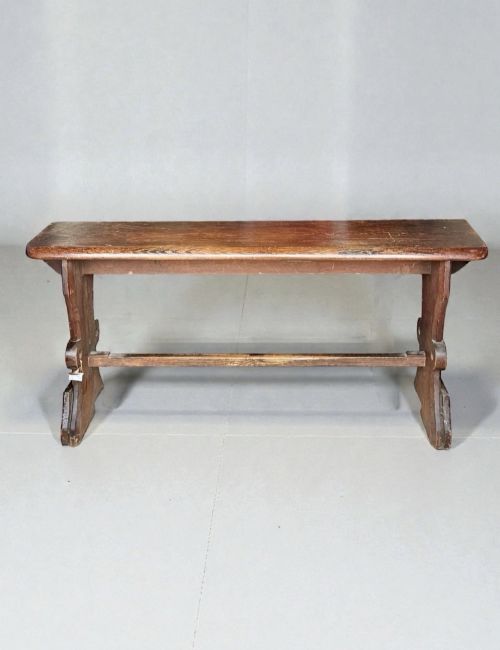
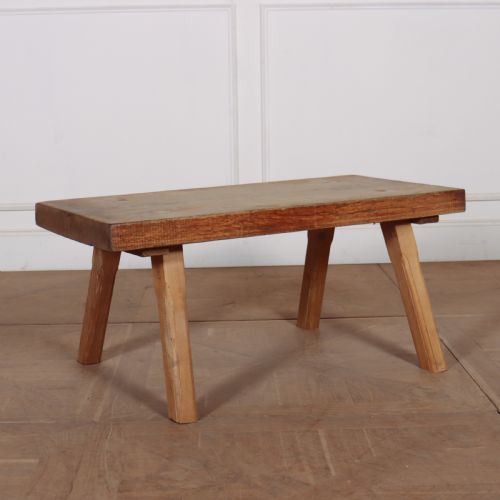
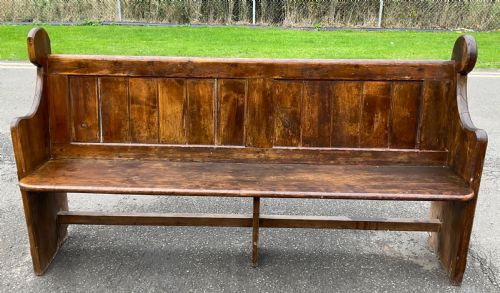
The versions most frequently met on this page range from Victorian pitch pine pews to rustic country settles and vernacular hallstands. They draw on styles including Georgian country, industrial vernacular, and Victorian gothic, reflecting simple workshop traditions.
How they were made
Construction relies heavily on solid pine, pitch pine, and elm, often paired with simple brass or iron fixings and occasional ceramic details. Workshops shaped these timbers using traditional joinery methods suited to robust, heavy-use furniture.
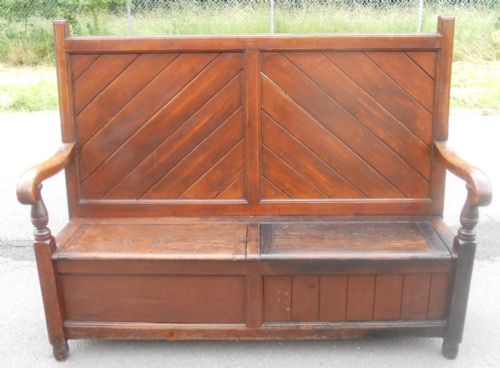
Surfaces frequently show original painted finishes or the warm patina of bare softwood shaped by decades of use. Structural elements range from flip-over mechanisms on railway benches and pews to storage boxes and drawer compartments built into settles.
Several pews feature clever flip-over mechanisms, designed so railway passengers or chapelgoers could switch their view instantly.
What varies in quality
Quality separates through the integrity of the timber and the honesty of the original construction rather than decorative ornamentation. Pieces retaining their original painted surfaces or untouched patination command greater interest than those stripped down or heavily restored.
Proportion and scale dictate the success of each piece, particularly within slim hallway formats and compact organ benches. The strength of vernacular joints and the retention of working mechanisms like flip-over seats define the better examples.
The Warm Pine Bench Glossary
- Pine
- A soft softwood widely utilised for vernacular furniture across the eighteenth and nineteenth centuries. It takes on a rich warm tone and deep patina through age and handling.
- Pitch pine
- A harder, resinous variety of pine valued for its pronounced grain pattern and durability. It was frequently selected for heavy-duty ecclesiastical and institutional seating.
- Settle
- A wooden bench featuring a high back to block draughts and solid arms, often incorporating a box seat for storage. These pieces formed the central seat by the hearth in traditional country interiors.
- Vernacular
- Furniture built by local tradesmen and country joiners following regional traditions rather than high-style metropolitan designs. These objects prioritise utility and straightforward construction.
- Chapel pew
- Long wooden seating designed for ecclesiastical spaces, constructed with solid pine or pitch pine. They frequently feature simple book ledges and structural bench ends.
Warm Pine Bench: Frequently Asked Questions
Where should I put a pine bench?
These benches suit narrow hallways, boot rooms, and farmhouse kitchens where sturdy, practical seating is required. Their narrow depths allow them to fit into transitional spaces without blocking walkways.
In living areas or bedrooms, shorter benches and organ seats function well as occasional seating or low side tables. Their warm wood tones complement both traditional interiors and minimalist modern spaces.
How do I care for antique pine?
Maintain antique pine surfaces with a simple application of natural beeswax to nourish the dry softwood and preserve the patina. Avoid placing pieces near direct heat sources that can cause the timber to split.
Clean the wood using a soft, dry cloth rather than harsh liquid polishes. Allowing the surface to age naturally maintains the character developed over generations of use.
What is a box settle?
A box settle is a wooden bench with a lidded seat compartment built underneath for household storage. The high back protected occupants from cold draughts in traditional unheated rooms.
These versatile pieces combined seating and storage in one heavy item of furniture. They typically stood near fireplaces in country taverns and domestic kitchens.
How can I tell the period?
Dating relies on construction methods, timber choice, and the tool marks left by nineteenth or early twentieth-century joiners. Georgian examples show heavier vernacular framing, while later Victorian and Edwardian pieces utilise pitch pine and machine-sawn elements.
Hardware such as iron brackets, brass fittings, and ceramic components also help establish the era of manufacture. Painted finishes often reflect the original decorative choices of the period.