

Rustic Country Settle
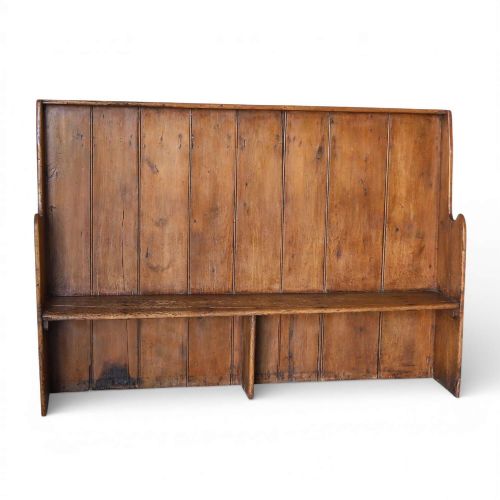
A rustic country settle offers solid timber seating with high backs designed to block cold draughts in farmhouse kitchens and firesides.
Rustic Country Settle
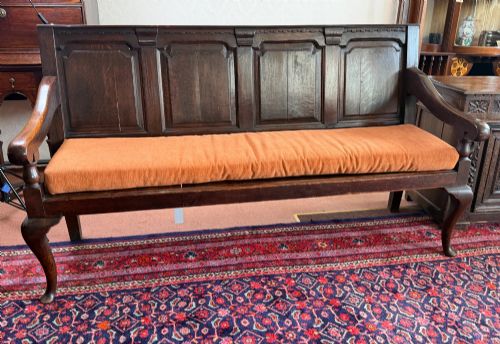
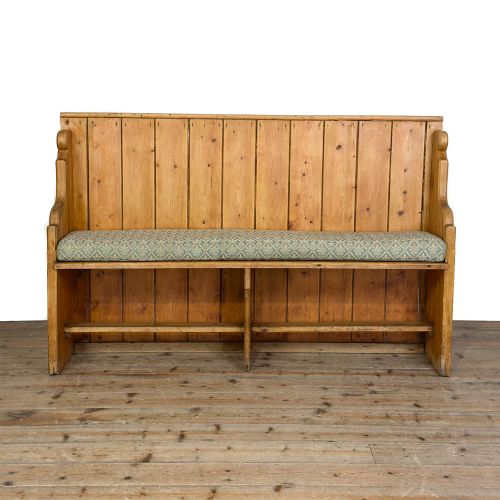
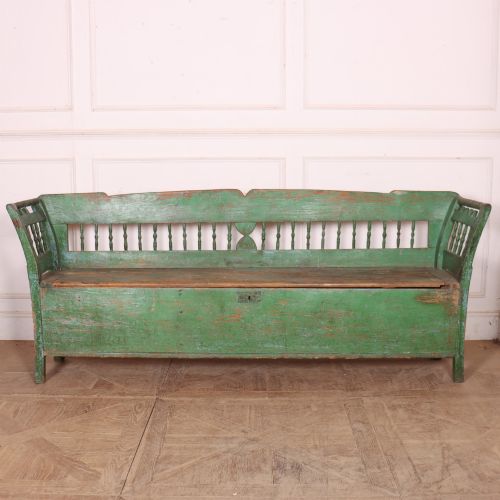
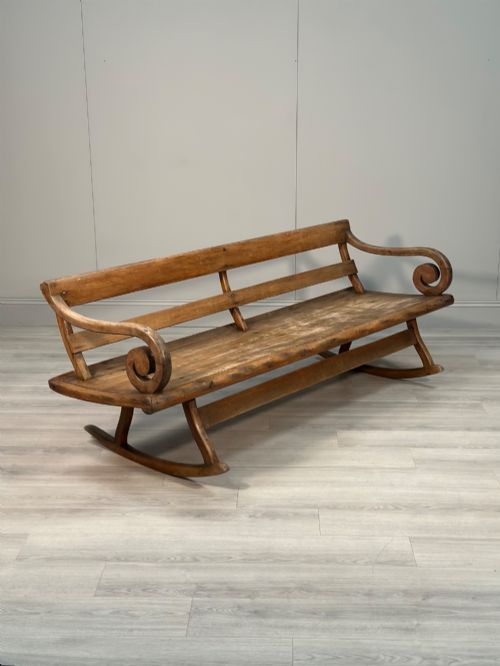
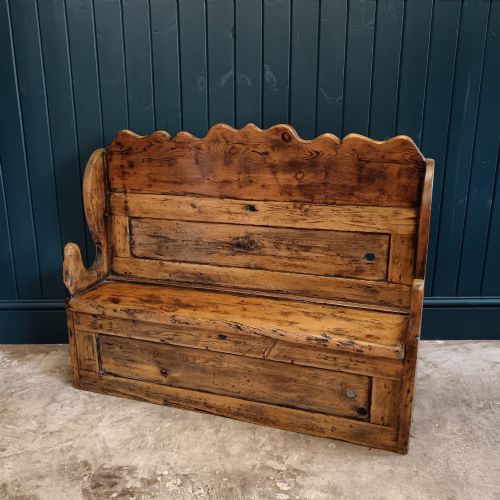
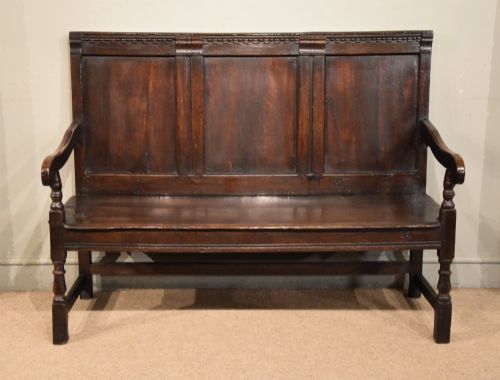
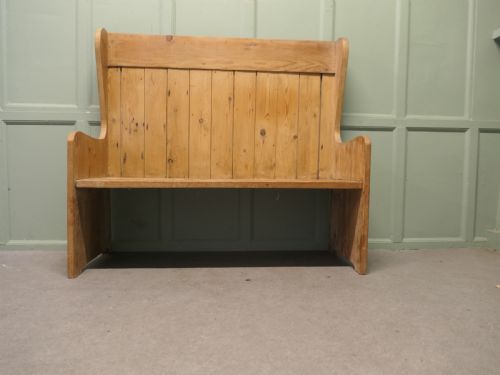
A rustic country settle functions as a high-backed wooden bench built to shield occupants from chill air near open hearths. These pieces appear frequently in pine, oak, and elm, originating from English, Welsh, Hungarian, and Spanish workshops.
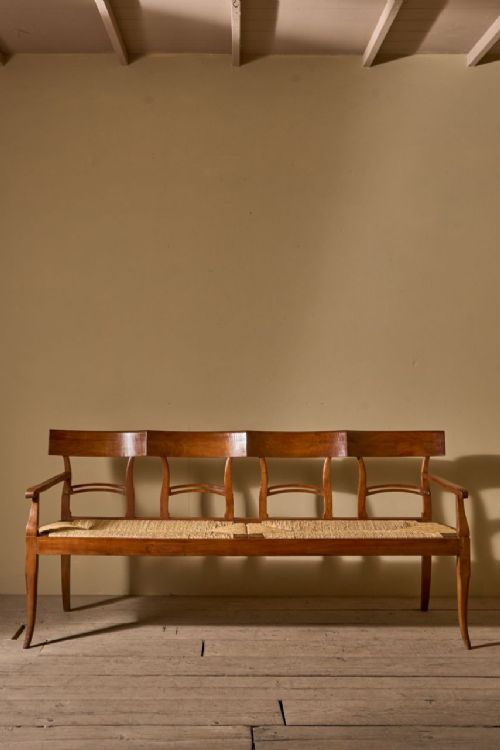
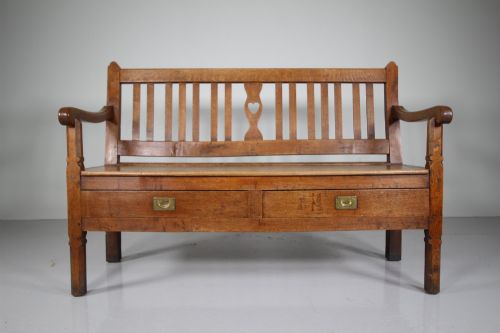
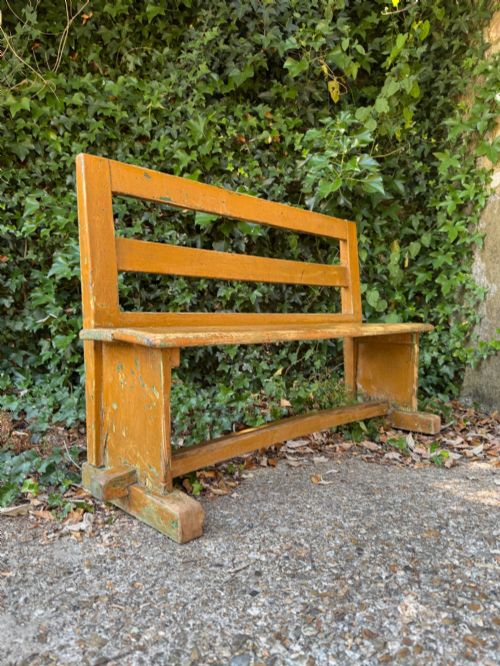
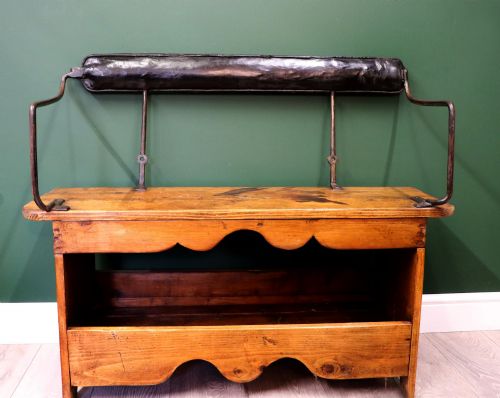
Most examples date across the eighteenth and nineteenth centuries, taking forms such as box settles with storage beneath the seat, spindle-backed benches, and canopied or rocking variations. The selection includes tall fireside pews alongside slender hallway benches suited for modern interiors.
How they were made
Cabinetmakers and rural joiners constructed these seats primarily from native timbers like oak, pine, elm, and cherry, often joining panels with traditional pegged mortise and tenon joints. Box settles incorporated hinged seats that opened to reveal storage space for blankets or fuel.
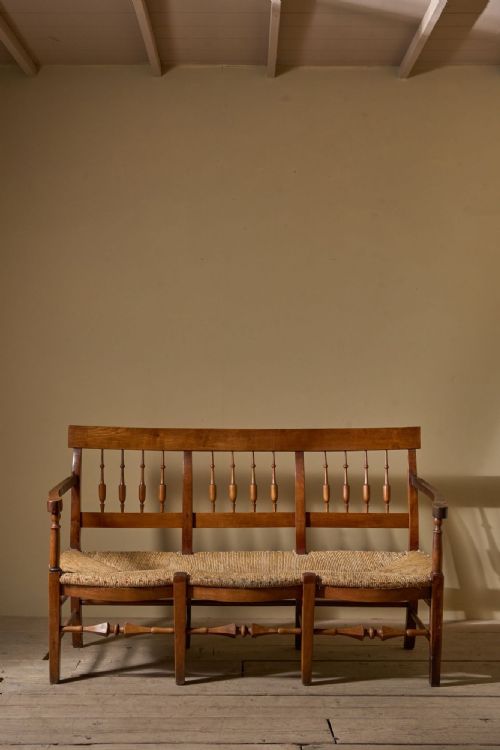
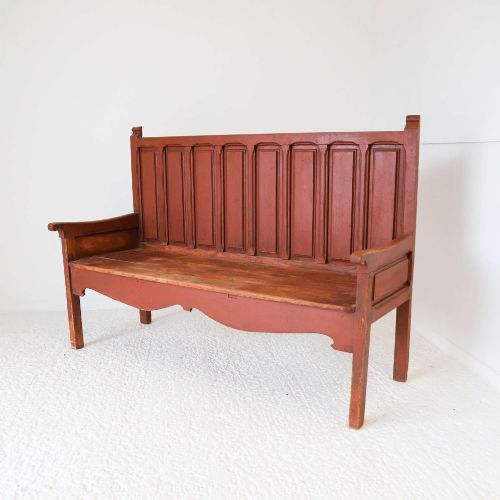
Surfaces frequently retain their original waxed finish, honey brown patina, or historical layers of paint in shades of blue, grey, or black. Some pieces feature woven rush seating or iron hardware, reflecting the practical domestic demands of country life.
What varies in quality
Quality rests upon the integrity of the timber and the preservation of original surfaces, such as untouched paint or deep waxed patination. Settles retaining their original boarded backs, robust box bases, and untrimmed proportions command higher regard among collectors.
Construction details distinguish standard utility benches from finer vernacular works, particularly where joiners shaped armrests with scrollwork or turned spindles with care. Alterations to height or replaced timber diminish the coherence of an antique piece.
The Rustic Country Settle Glossary
- Box settle
- A wooden bench featuring a compartment beneath the seat enclosed by a hinged lid. This storage space originally kept textiles or fuel dry near the hearth.
- Patina
- The surface sheen and colour developed by timber through age, handling, and repeated waxing. A desirable patina shows genuine depth without modern artificial distressing.
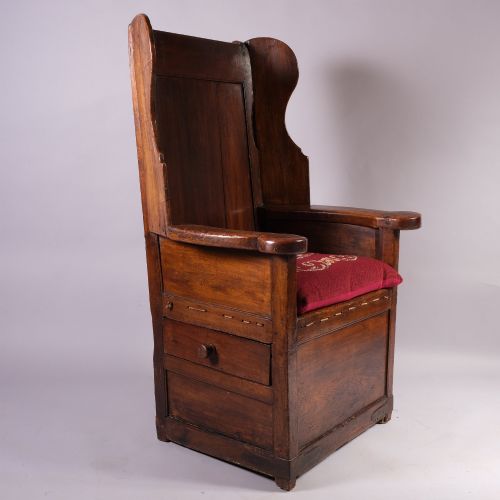
- Lambing chair
- An enclosed high-backed armchair, frequently featuring solid timber wings and a storage drawer beneath the seat. These served shepherds and farmers in rural dwellings.
- Rush seating
- A woven seat made from dried marsh rushes twisted into cords. Craftsmen utilised this technique on chairs and benches before the widespread adoption of solid wood boards.
Rustic Country Settle: Frequently Asked Questions
Where did people use settles?
Families placed settles beside farmhouse kitchen hearths and tavern firesides where high wooden backs deflected cold draughts.
They also stood in hallways and entrance passages to provide seating for removing outdoor boots.
How do I spot an 18th century settle?
Eighteenth century examples typically display dense oak construction with pegged joinery and hand-planed panels. Their patination develops a deep tone that reflects generations of domestic use.
Later Victorian versions often utilise pine and feature lighter decorative turnings or applied paint finishes.
What is a box settle?
A box settle incorporates a hollow compartment underneath the seat accessed by lifting the lid. Households utilised this hidden space to store blankets and dry fuel.
This dual purpose made the furniture piece practical for compact rural homes.
How do I care for waxed pine?
Maintain waxed pine furniture by applying a natural beeswax polish sparingly and buffing with a soft cloth. Avoid placing wooden benches near direct heat sources or damp areas.
Gentle cleaning preserves the historic surface finish and prevents the timber from drying out.