


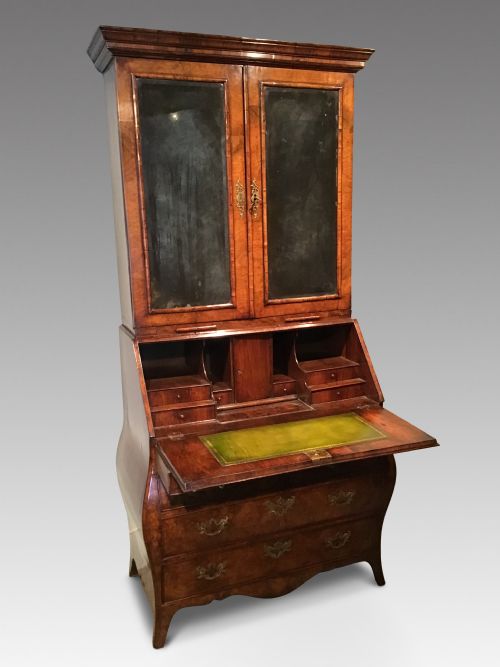


Warm Brown Writing Cabinet
A warm brown writing cabinet offers practical workspace and storage, uniting rich timber tones with traditional craftsmanship.
Warm Brown Writing Cabinet
When buyers search for a warm brown writing cabinet, they seek a functional piece of antique furniture designed for correspondence and storage. These pieces combine a writing surface with compartmentalised interiors and lower storage drawers or upper bookcase sections.
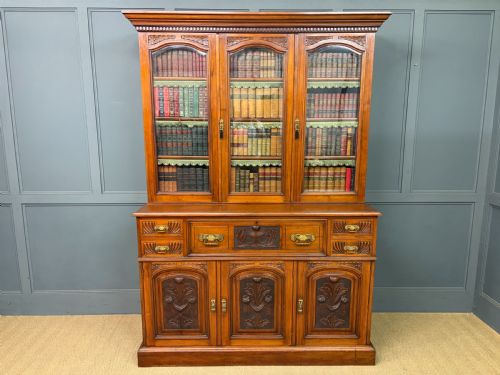
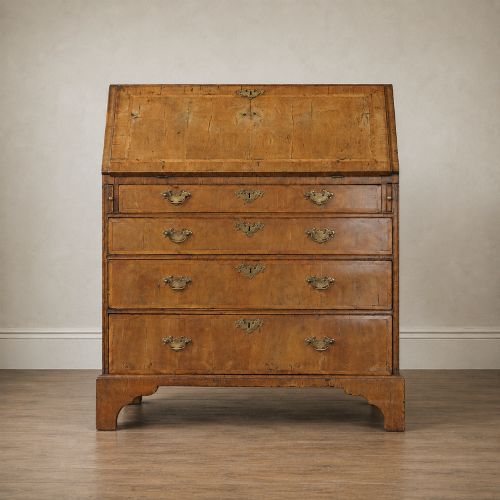
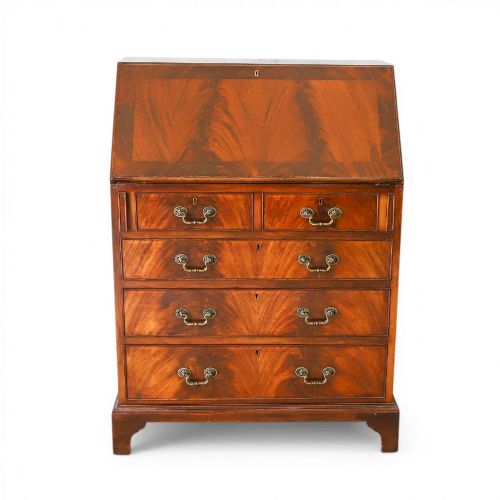
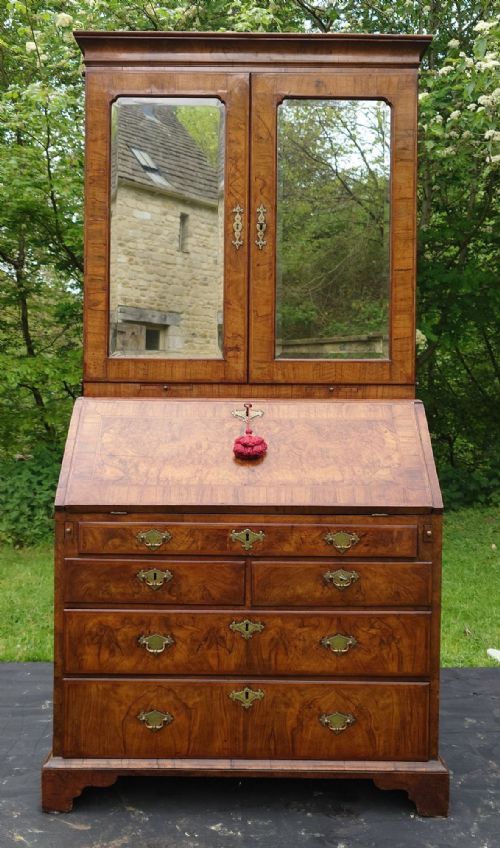
The versions most commonly met on this page span several distinct eras, notably the Georgian and Victorian periods. Forms range from compact walnut bureaux to taller bureau bookcases and fitted Davenport desks in mahogany and oak.
Makers across different centuries utilised traditional construction methods to house papers and books securely. Each style reflects the domestic requirements of its era, from early walnut pieces to later mahogany and satinwood revivals.
How they were made
Cabinet makers constructed these pieces using dense hardwoods such as mahogany, walnut, and oak, often applying figured veneers to main surfaces. Solid timber frames provided structural stability for the heavy fall fronts and fitted desk interiors.
Secondary materials included brass for handles, escutcheons, and hinges, alongside leather writing inserts and glass panes for upper bookcase doors. Marquetry, inlay, and carved details decorated the exterior facades of select pieces.
Listings feature pieces spanning the Georgian period, the Victorian era, and the nineteen thirties, constructed from walnut, mahogany, oak, and satinwood.
What varies in quality
The selection of timber grain, particularly figured walnut or flame mahogany veneers, dictates much of the visual depth across different examples. Superior execution shows in the crispness of cabinet work, tight joinery, and the preservation of original patination.
Internal arrangement complexity also separates standard items from finer works, notably in secret compartments, pigeonhole construction, and secondary drawer linings. The retention of original brass hardware and working locks influences the overall integrity.
The Warm Brown Writing Cabinet Glossary
- Bureau
- A sloping writing desk with a fitted interior, often featuring drawers beneath. This form served as a primary workstation for letters and accounts.
- Secretaire
- A piece of furniture containing a drawer or compartment that pulls down to reveal a writing surface and small drawers. These units frequently form the middle section of taller bookcase combinations.
- Veneer
- A thin slice of figured wood applied over a secondary timber base to create decorative patterns. Cabinet makers used walnut and mahogany veneers to achieve rich surface variation.
- Davenport
- A compact desk type featuring a sloping desktop and side drawers, popular during the nineteenth century. The pop up variation incorporates hidden stationary compartments.
- Marquetry
- The art of forming decorative designs on wood using thin pieces of coloured veneer. This technique adorned the surfaces of French and English writing cabinets.
Warm Brown Writing Cabinet: Frequently Asked Questions
What is a bureau bookcase?
A bureau bookcase combines a sloping desk compartment with an enclosed shelving unit above for storing books and papers. These tall pieces served as multi-functional furniture for studies and libraries.
Lower sections house pull-out writing flaps and drawers, while glazed upper doors protect volumes from dust.
How do I care for antique timber?
Keep antique writing cabinets away from direct heat sources and strong sunlight to prevent the timber and veneer from drying out. Consistent indoor humidity levels protect the structural joints.
Apply traditional beeswax periodically to maintain the lustre of the wood surface without building up synthetic residues.
How are different periods identified?
Cabinet construction methods, timber choices, and decorative styles help distinguish between Georgian, Victorian, and later revival pieces. Early examples frequently utilise solid walnut or figured veneers with hand-cut dovetails.
Later Victorian and Edwardian items display machine-sawn elements, different secondary woods, and distinct hardware styles associated with industrial production.
Where were these cabinets used?
Writing cabinets found placement in private libraries, drawing rooms, and studies of wealthy households. They provided a secure, dedicated space for household accounts and personal correspondence.
Today, these versatile items function well as writing desks or display storage in modern living spaces.