
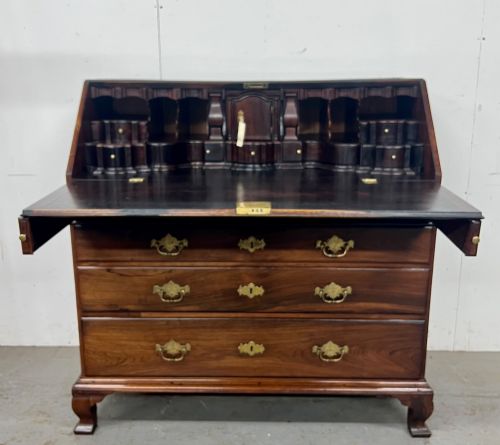
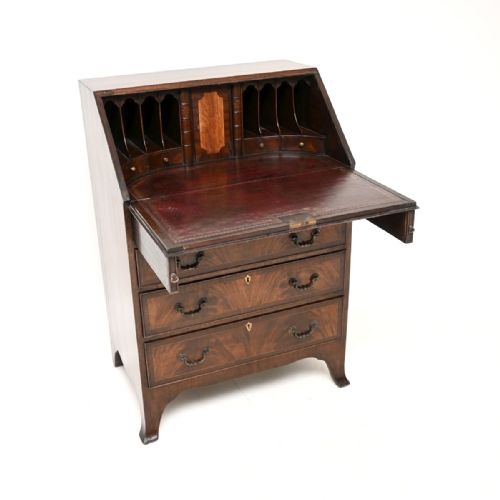
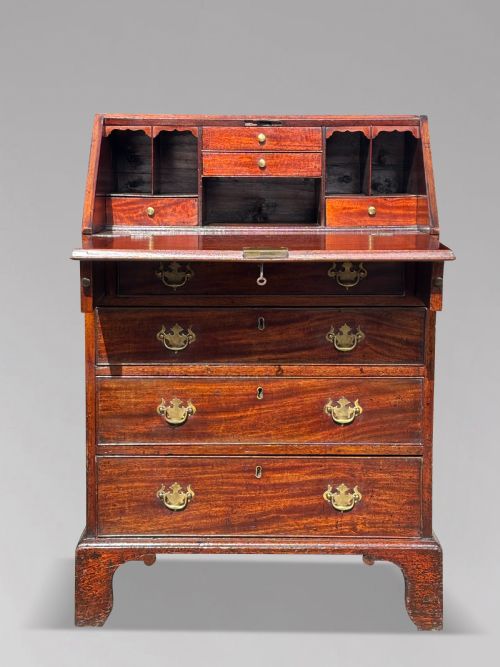


Fitted Interior Slant Bureau
A fitted interior slant bureau offers a dedicated writing surface that conceals pigeonholes, drawers, and secret compartments behind a sloping fall front.
Fitted Interior Slant Bureau
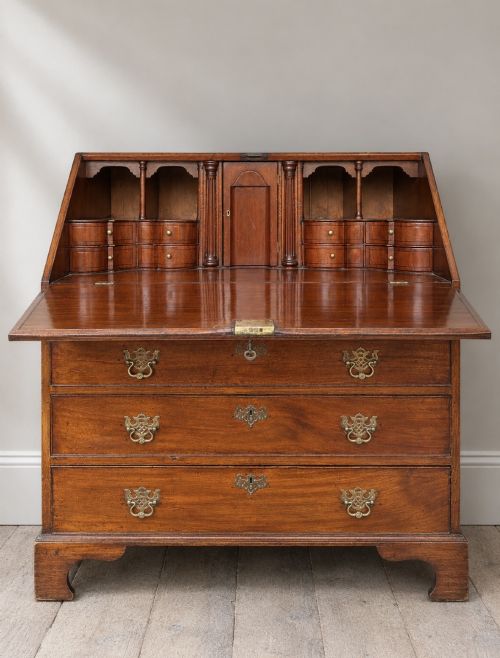
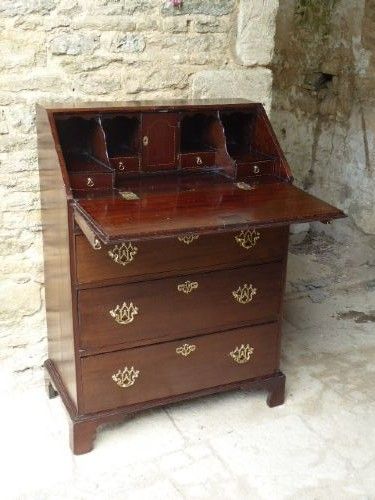
A fitted interior slant bureau is a desk featuring a hinged, sloping lid that opens to reveal an arrangement of small drawers, pigeonholes, and document compartments. These writing cabinets span multiple centuries, appearing in records from the seventeenth century through to the twentieth century.
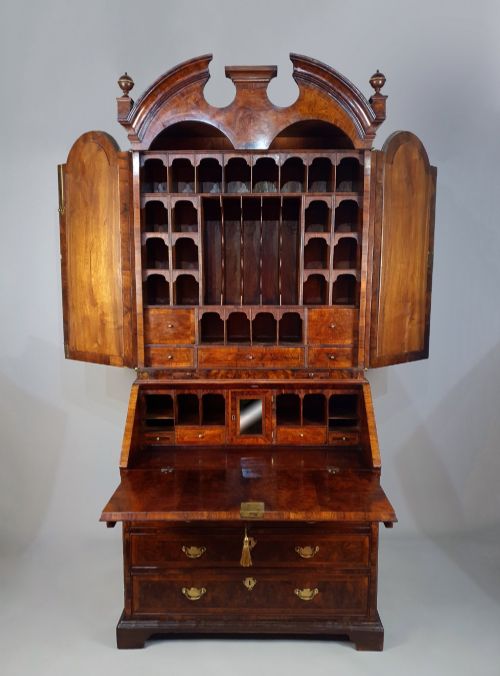
The most common examples encountered on this page are mahogany and oak pieces dating from the Georgian period, alongside walnut bureau bookcases. These variations range from modest writing desks to grand architectural cabinets with glazed or mirrored top sections.
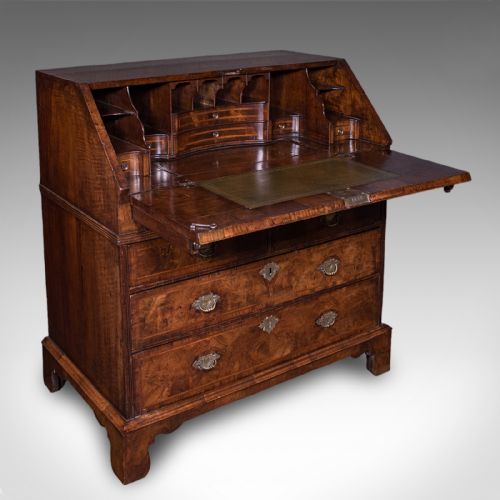
Makers utilised solid timbers and figured veneers across these forms, incorporating bracket feet, candle slides, and specialised writing surfaces lined in leather.
How they were made
Cabinet makers constructed these writing desks using solid timbers including oak, mahogany, and walnut, frequently applying decorative veneers such as burr walnut and cross banding. Brass hardware, including key escutcheons and carrying handles, complemented the primary woods.
Internal compartments required precise joinery to create miniature banks of drawers and hidden compartments situated behind the fall front. Glazed doors and mirrored doors appeared on the upper sections of larger bureau bookcases.
Certain writing bureaus feature moving interiors designed to conceal secret compartments from prying eyes.
What varies in quality
The distinction between standard examples and the finest pieces lies in the choice of timber and the complexity of the interior arrangement. Walnut and mahogany bureaus with figured veneers and intricate internal configurations represent the higher tier of cabinet making.
Proportion and scale also separate the items, with diminutive or unusually configured writing desks commanding distinct interest compared to larger standard formats.
The Fitted Interior Slant Bureau Glossary
- Fall front
- The hinged sloping lid of a bureau that lowers to serve as a writing surface. This panel conceals the fitted interior when closed.
- Bureau bookcase
- A writing bureau with an upper shelving or cabinet section enclosed by doors. These doors frequently feature glass panes or mirrors.
- Cross banding
- A border technique where narrow strips of veneer are applied to the edges of furniture. The grain runs perpendicular to the main panel.
- Candle slide
- A pull-out wooden board positioned beneath the writing flap. These slides held illumination for writing after dark.
- Pigeonhole
- A small open compartment within the interior desk arrangement used for sorting letters and papers.
Fitted Interior Slant Bureau: Frequently Asked Questions
What is a fitted interior slant bureau?
A fitted interior slant bureau is a writing desk with a sloping fall-front lid that opens to reveal internal drawers and pigeonholes.
These pieces were designed for correspondence and record-keeping in domestic settings.
How do you date an antique bureau?
Dating relies on timber selection, construction methods, hardware styles, and overarching design characteristics. Earlier examples often utilise oak or walnut, while mahogany became prominent during the Georgian era.
Secondary woods and internal drawer construction further help narrow the period of manufacture.
Where were bureaus used in the home?
These writing cabinets served in private studies, libraries, and withdrawing rooms as secure spaces for correspondence and financial records.
The lockable fall front kept private documents protected when the desk was unattended.
What timber was used for bureaus?
Cabinet makers built bureaus using native and imported woods, most notably oak, walnut, and mahogany. Finer examples incorporated burr walnut, Brazilian rosewood, and decorative cross banding.
Pine and secondary softwoods frequently appear in internal drawer construction.