


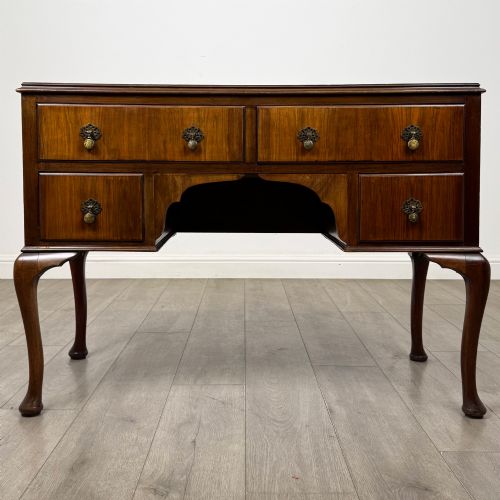
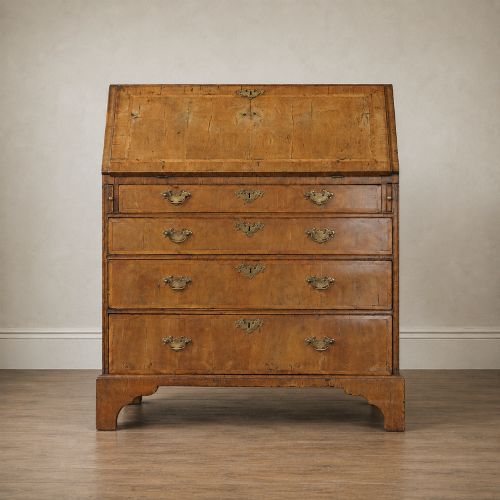
Vintage Walnut Bureau Desk
A vintage walnut bureau desk offers fitted writing compartments and concealed drawers, bringing period craftsmanship and rich timber grain to the modern home.
Vintage Walnut Bureau Desk
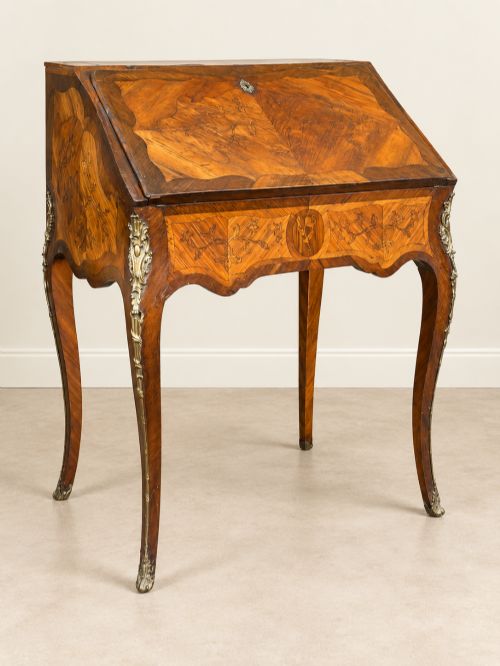
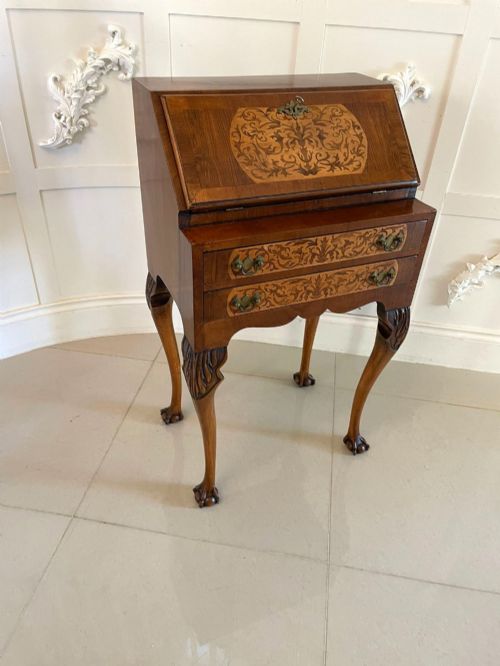
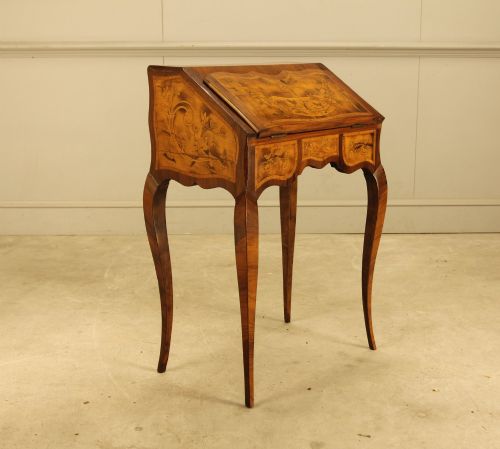
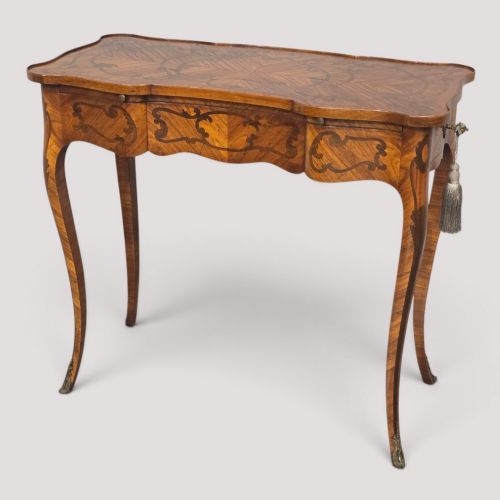
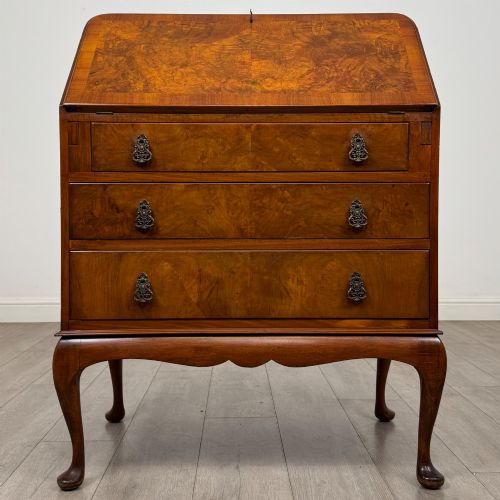
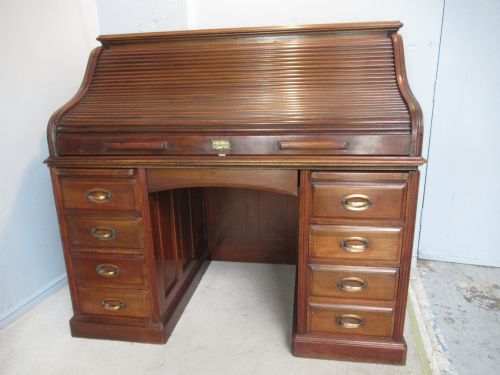
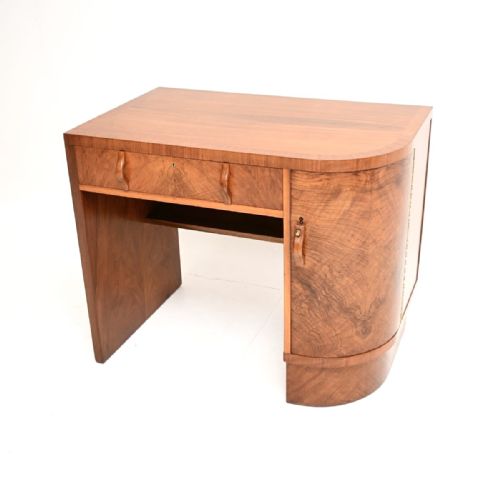
A vintage walnut bureau desk encompasses drop-front writing cabinets, pedestal tables and bureau bookcases originating from the eighteenth century to the Art Deco period. Buyers seeking a vintage walnut bureau desk will encounter pieces ranging from early Georgian styles and Queen Anne revivals to Edwardian and 1930s designs.
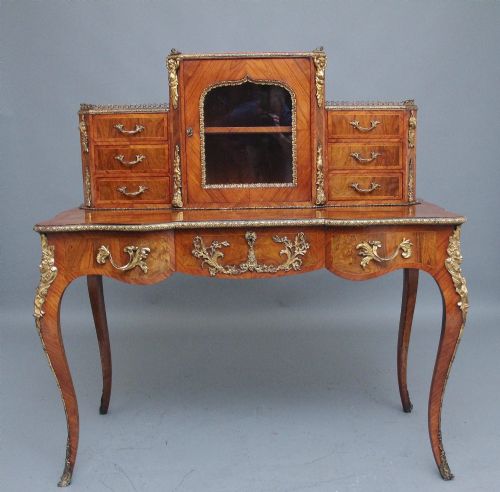
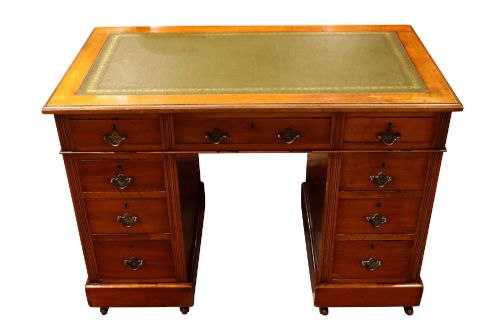
The selection includes compact writing slopes, serpentine fronts and larger pedestal formats fitted with multiple drawers and leather writing surfaces. Pieces span English, French and South German workshops, utilising both figured veneers and solid timbers.
Edwardian and 1930s examples appear frequently alongside nineteenth-century interpretations of earlier monarchical styles. Each variant retains specific functional compartments designed for correspondence and storage.
Materials and construction
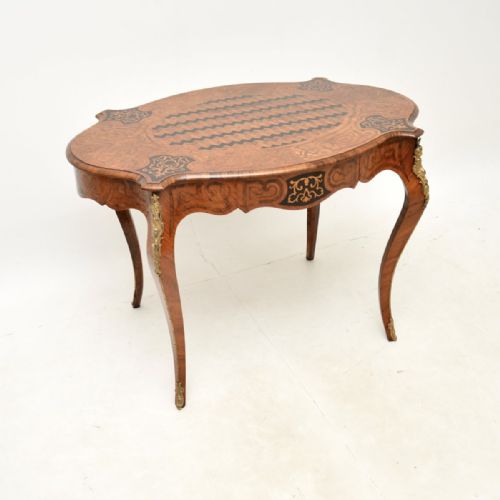
Cabinetmakers constructed these pieces primarily from walnut and burr walnut veneers applied over secondary woods such as oak, often incorporating decorative brass handles and brass key escutcheons. Surfaces frequently feature green tooled leather writing inserts and fine marquetry inlay.
Makers utilised specialised veneering techniques to highlight the swirling grain patterns of burr walnut across fall-fronts and drawer fronts. Ormolu mounts and glass panels supplement the timber framework on select French and Art Deco examples.
Secret drawers lurk behind sliding pigeonhole partitions in many of these drop-front compartments.
Craftsmanship and proportion
Superior examples display meticulous matching of wood grain across expansive drawer fronts and fall-front flaps, ensuring a harmonious visual balance. The integration of secret compartments and original brass hardware distinguishes finer workshops from mass-produced alternatives.
The precision of the dovetail joinery within the drawer construction and the seamless operation of internal pigeonholes indicate the standard of execution. Timber selection also dictates grade, with heavily figured burr walnut commanding greater attention than plain stock.
Maple & Co·Wylie & Lochhead Glasgow·F.H. Marshall & Co Glasgow
The Vintage Walnut Bureau Desk Glossary
- Bureau
- A writing cabinet featuring a sloping fall-front that opens to reveal a fitted interior of pigeonholes and small drawers. It often sits upon a chest of drawers or a dedicated stand.
- Burr walnut
- A prized timber harvested from the wart-like growths on walnut trees, yielding intricate, swirling grain patterns. Cabinetmakers sliced this wood into thin veneers for decorative surfaces.
- Bureau plat
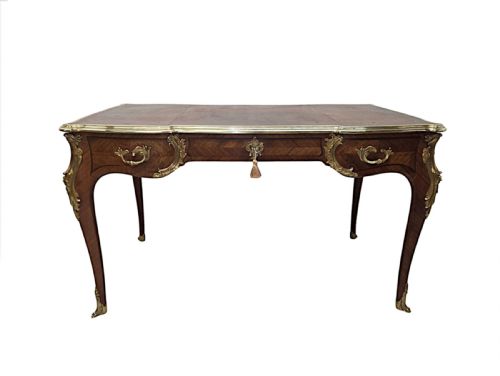
- A freestanding French writing table featuring a flat top, frequently fitted with leather and multiple frieze drawers. These pieces date across the nineteenth and early twentieth centuries.
- Pedestal desk
- A heavy writing desk comprising two supporting banks of drawers beneath a main writing surface. Many versions incorporate inset leather panels on the top.
- Kneehole desk
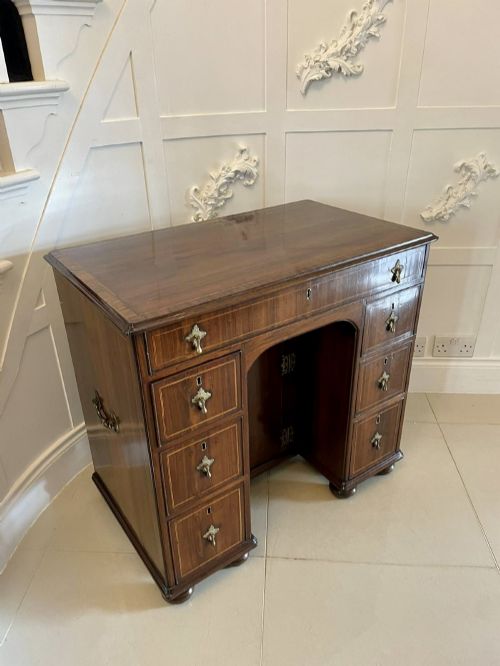
- A compact desk featuring a central recessed space for the user's legs, flanked by narrow pedestals of drawers. Georgian and Victorian examples often include a concealed cupboard behind the kneehole.
Vintage Walnut Bureau Desk: Frequently Asked Questions
What is a bureau desk?
A bureau desk is a writing cabinet with a hinged sloping flap that drops down to form a writing surface. This flap conceals an internal arrangement of small drawers and pigeonholes for stationery.
Beneath this writing section, standard drawer tiers provide general storage, making these pieces practical for domestic administration.
How do I maintain leather writing surfaces?
Leather writing inserts require gentle cleaning with a slightly damp cloth followed by a neutral leather cream to prevent cracking. Avoid harsh chemical cleaners or excessive moisture.
Keeping the surface protected from direct sunlight preserves the original gold tooling and the suppleness of the hide.
Where were these desks made?
The listings comprise pieces manufactured in England, France, Scotland and South Germany. Regional preferences shaped the stylistic details, such as French marquetry versus English walnut veneers.
City workshops in London and Glasgow produced many of the Edwardian and Art Deco examples using imported exotic timbers.
How do I distinguish Queen Anne style from original pieces?
Queen Anne style pieces on this page include twentieth-century revivals that replicate eighteenth-century forms such as cabriole legs and burr walnut falls. Examining the construction methods and secondary timbers helps clarify the actual period of manufacture.
Revival pieces often display early twentieth-century cabinetmaking standards while closely copying earlier aesthetic proportions.