

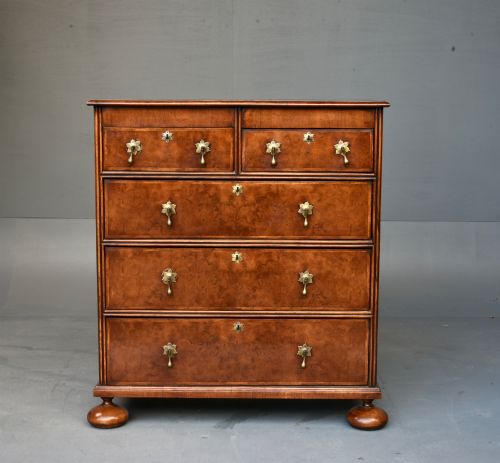
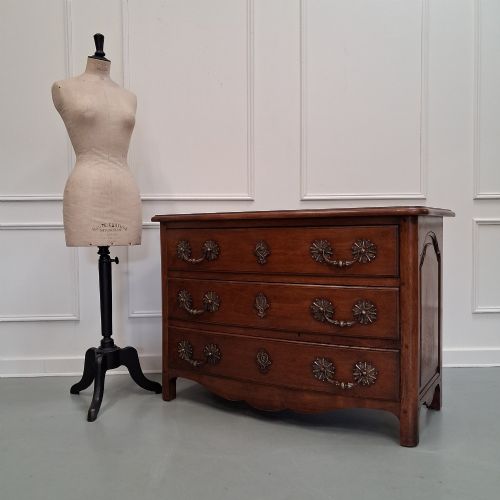
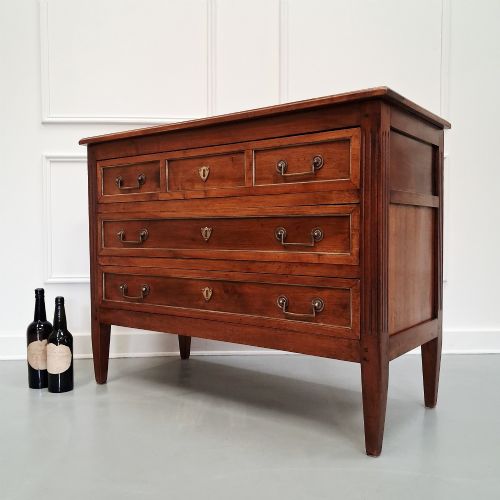
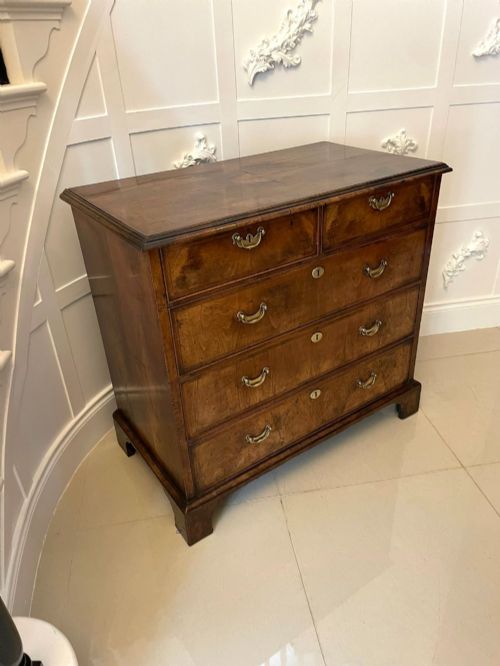
Warm Brown Walnut Commode
A warm brown walnut commode brings rich timber tones and practical drawer storage to a traditional room.
Warm Brown Walnut Commode
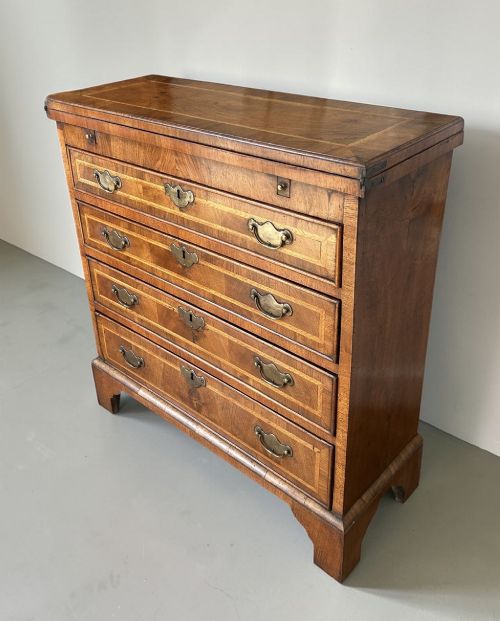
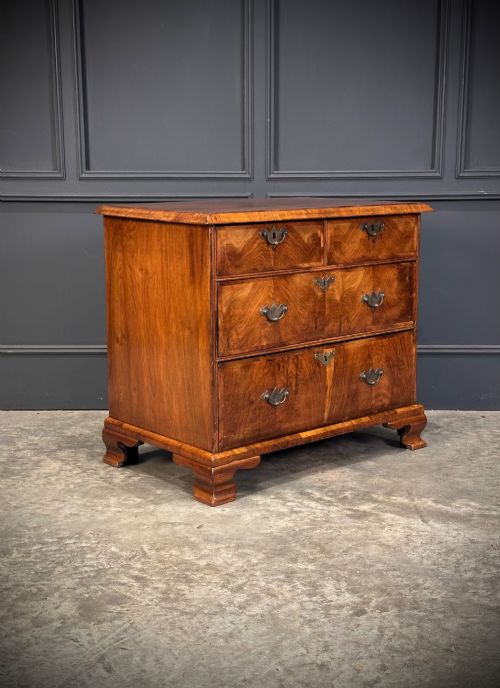
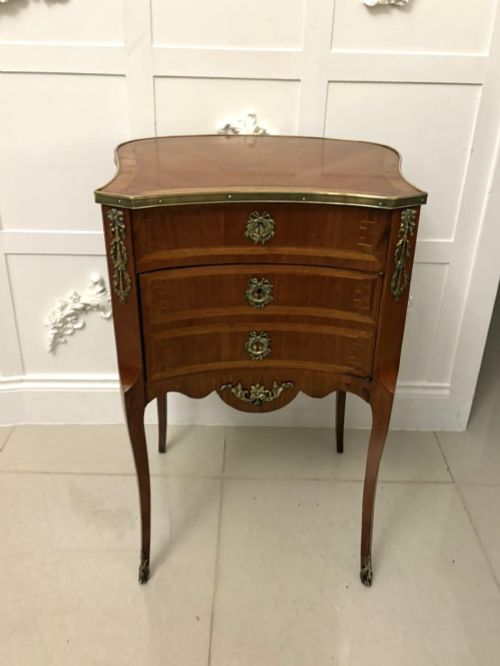
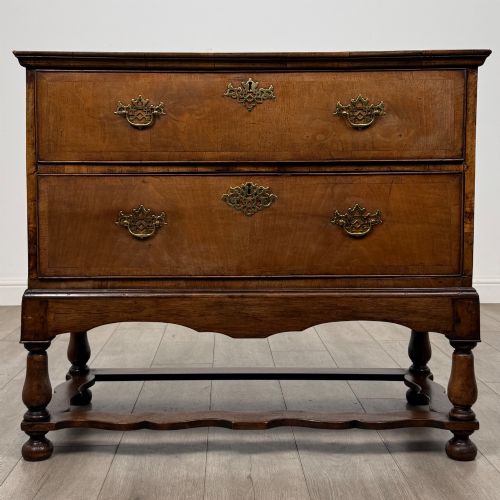
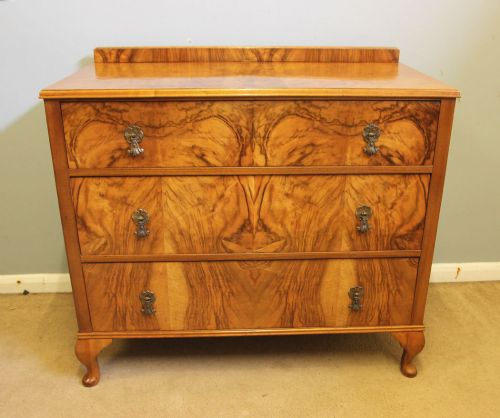
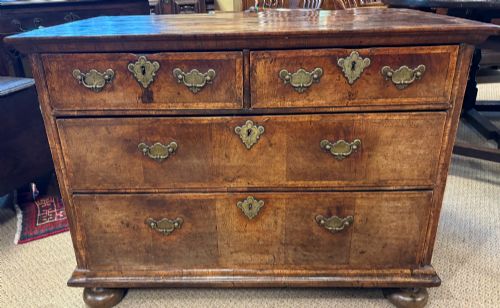
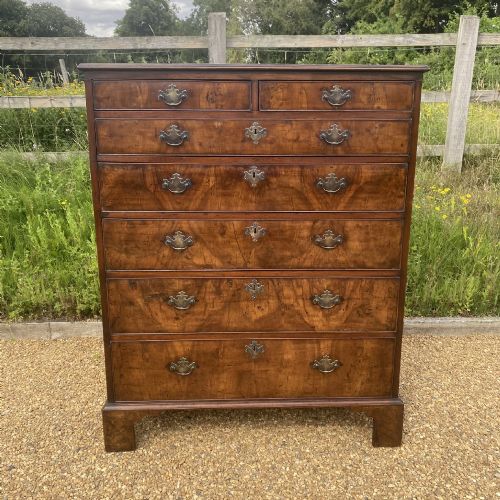
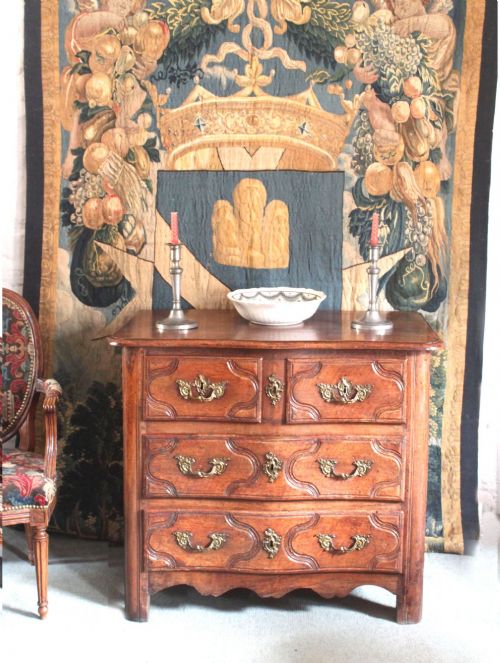
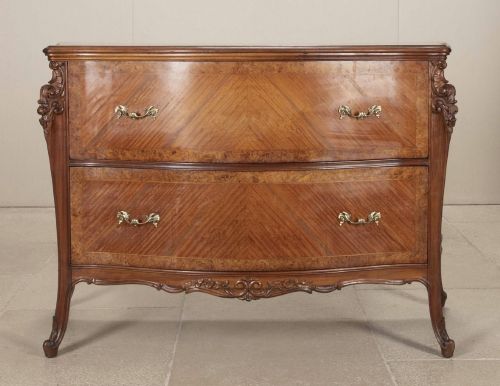
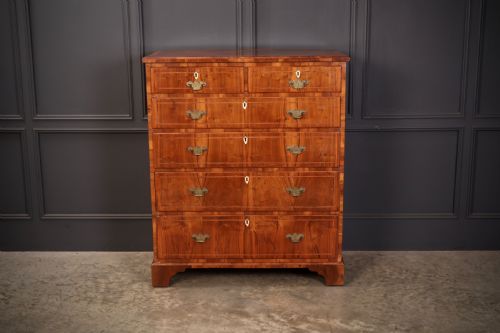
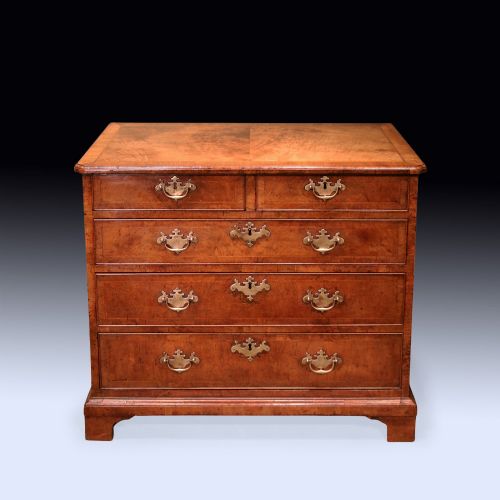
A warm brown walnut commode is a drawer-based storage unit built primarily from walnut timber, appearing across this page in forms such as chests of drawers, side cabinets, and side tables. Buyers seeking this search phrase encounter pieces originating from domestic English workshops as well as continental European centres.
The selection spans several centuries, running from seventeenth-century William and Mary designs through eighteenth-century Georgian and Queen Anne periods, alongside later Victorian and twentieth-century interpretations. These objects served traditionally for personal storage in bedchambers and formal reception rooms.
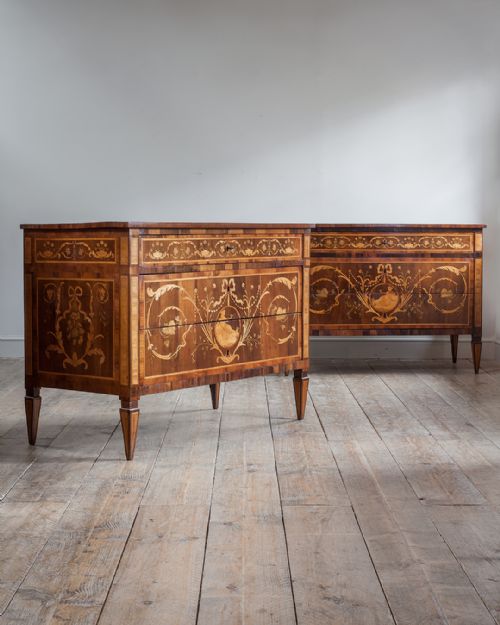
Continental examples frequently take the form of serpentine or breakfront commodes, while British pieces typically present as upright chests of drawers or low dressing chests. Cabinetmakers utilised timber grains to create decorative fronts, employing burr walnut, fruitwood, and inlay details.
How they were made
Cabinetmakers constructed these pieces using solid walnut, oak, and pine carcasses, applying figured walnut, burr walnut, kingwood, or satinwood veneers to exterior surfaces. Artisans incorporated feather-banded borders and marquetry to accentuate the natural grain patterns of the timber.
Joinery techniques included hand-cut dovetails for drawer construction and pegged mortise and tenon joints for the main frames. Brass drawer pulls and escutcheons were fitted to secure and operate the doors and drawers.
Surfaces were traditionally finished with polishes that highlighted the deep warmth of the brown walnut timber, preserving the natural figures developed over centuries of tree growth.
Warm Brown Walnut Commode Retail Price Guide 2026
Typical asking prices for warm brown walnut commode among the pieces listed under this phrase on Sellingantiques today, from the lower quarter to the upper quarter. They describe what is for sale here now, not the wider market.
Listings feature walnut, oak, fruitwood, and exotic veneers including kingwood and satinwood across pieces spanning the seventeenth to twentieth centuries.
What varies in quality
Quality rests upon the selection and matching of the timber veneers on the primary surfaces, where symmetrical grain alignment distinguishes superior pieces from standard workshop output. The crispness of the feather-banding and the intricacy of any marquetry inlay reveal the skill of the original maker.
Structural integrity depends on the retention of original drawer linings, backboards, and brass hardware rather than later replacements. The delicacy of carved mouldings and the precision of the dovetail joints separate master cabinetwork from utilitarian production.
Pietro Ferrario
The Warm Brown Walnut Commode Glossary
- Burr walnut
- Timber taken from a growth or burl on the walnut tree, showing twisted, swirling grain patterns that create decorative veneer panels. This material was favoured by elite cabinetmakers for principal drawer fronts.
- Serpentine
- A furniture front or top shaped with a curving outline that bends convexly in the centre and concavely at the ends. This contour requires advanced woodworking skill to execute cleanly in solid wood or veneer.
- Feather-banding
- Narrow strips of veneer cut diagonally across the grain and arranged in a V-shape to form a decorative border around drawer edges. It frames the central burr walnut panels on period case pieces.
- Marquetry
- Inlays of different coloured woods applied to a structural carcass to form pictorial or geometric patterns. French and Italian commodes frequently employ this technique across their top and side surfaces.
Warm Brown Walnut Commode: Frequently Asked Questions
What is a commode?
A commode is a low chest of drawers or cabinet designed for domestic storage, standing on legs or a plinth base. Continental examples often feature serpentine fronts and elaborate veneer work.
In British cabinetmaking traditions, similar items are catalogued as chests of drawers or side cabinets rather than commodes.
How do I date a walnut chest?
Dating relies on examining the construction methods of the drawers, the timber used for secondary woods like oak or pine, and the overall style of the feet and handles. Early pieces from the seventeenth and early eighteenth centuries show hand- cut dovetails and distinct framing.
Later revival pieces from the Victorian and twentieth centuries often incorporate machine-cut elements or carry distinct stylistic markers from their specific manufacturing era.
Where should I place a commode?
These cabinets suit hallways, living rooms, and bedrooms where their surface provides space for lamps or decorative objects while the drawers offer concealed storage. Their warm brown tones complement traditional and transitional interior schemes.
Keep them away from direct heat sources and strong sunlight to protect the walnut veneers and polished finishes.