

Antique Brass Mount Commode
An antique brass mount commode brings architectural presence to a room, offering deep storage beneath a stone or wooden surface.
Antique Brass Mount Commode
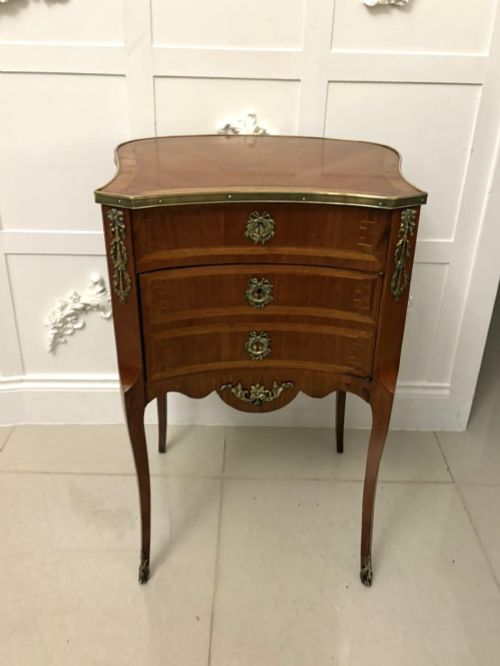
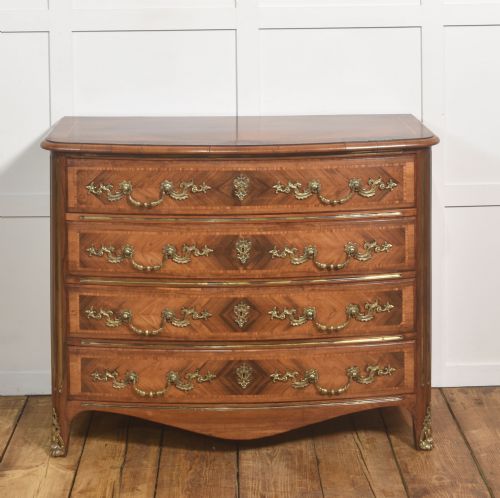
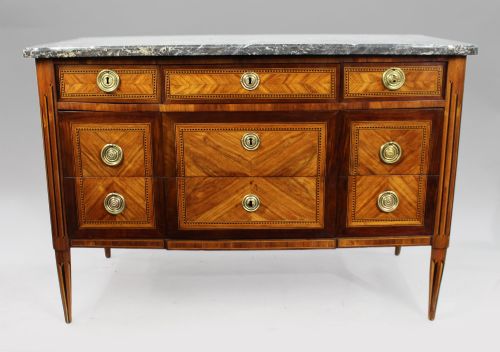
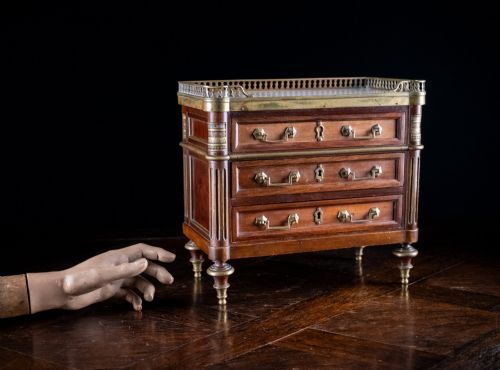
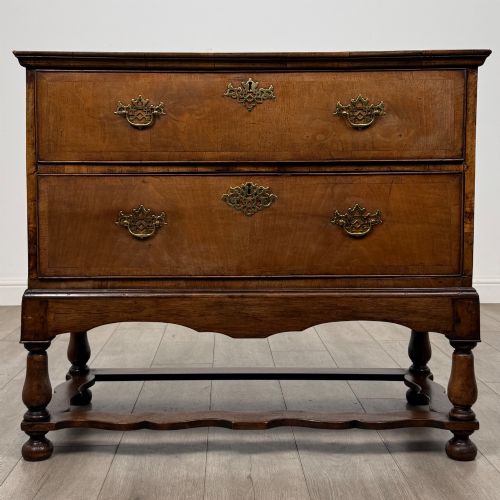
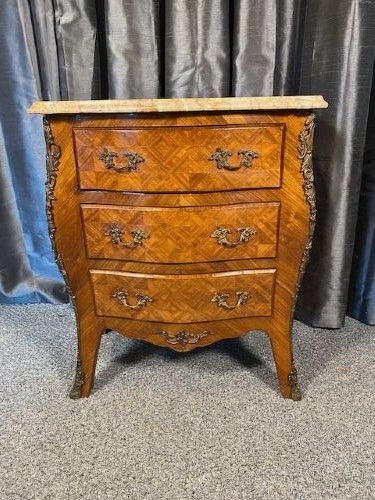
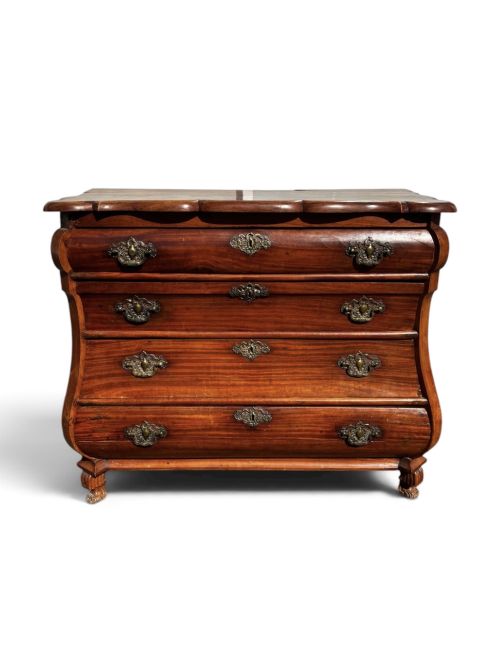
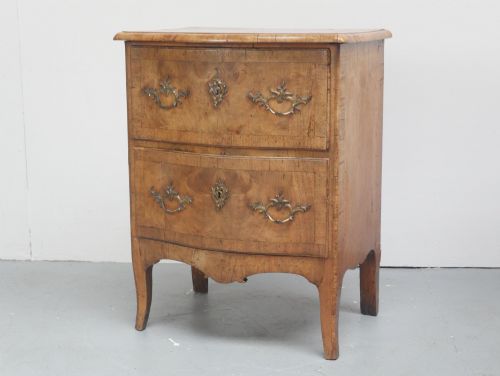
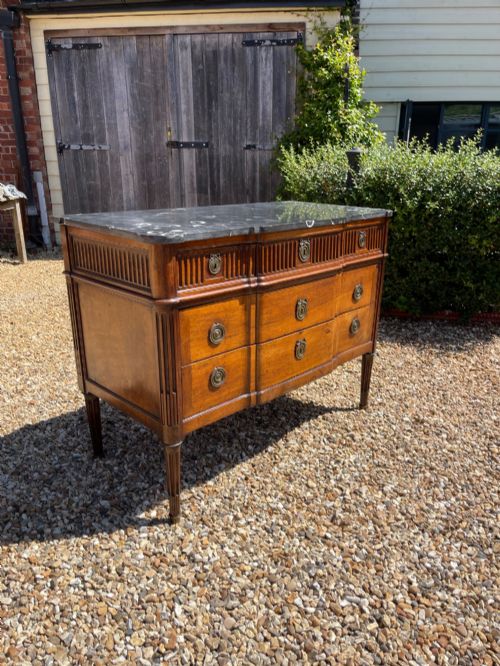
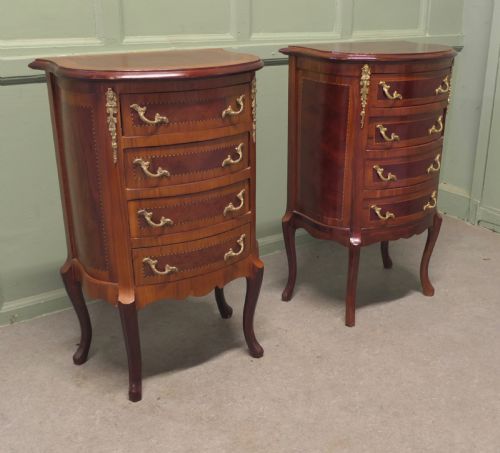
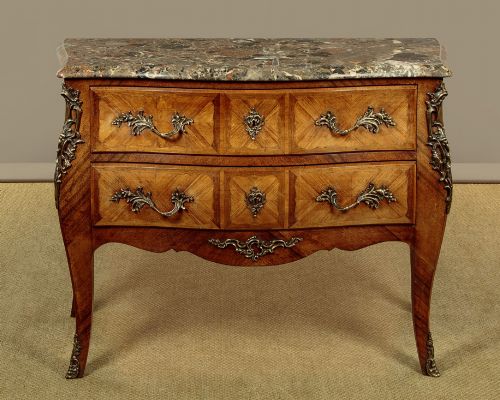
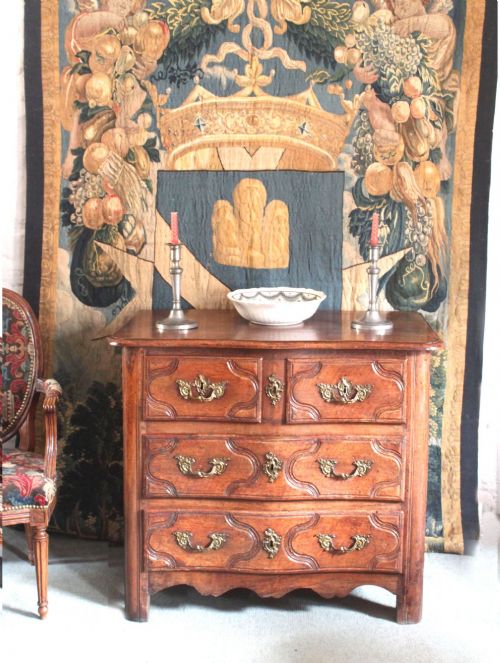
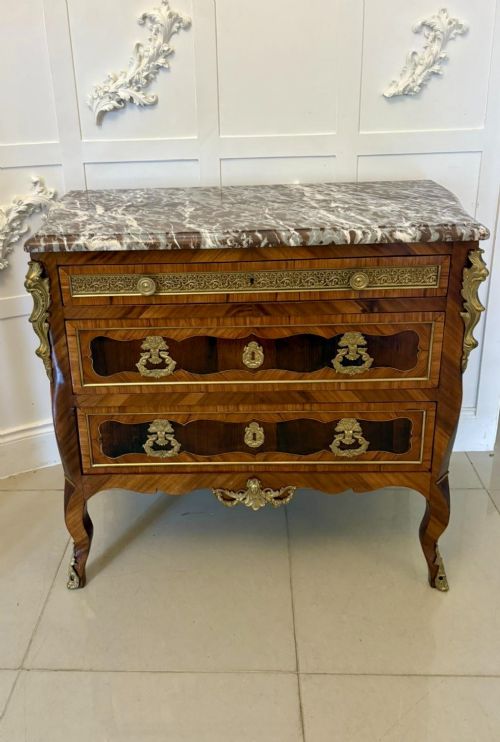
An antique brass mount commode is a low chest of drawers or cabinet embellished with cast metal mounts, most commonly found in French provincial and courtly styles. Pieces span the eighteenth, nineteenth, and early twentieth centuries, shifting from robust walnut and oak constructions to refined mahogany, kingwood, and burr walnut surfaces. You will frequently encounter forms described under French Louis XV, Louis XVI, and Empire styles, often fitted with marble tops in grey or other tonal varieties.
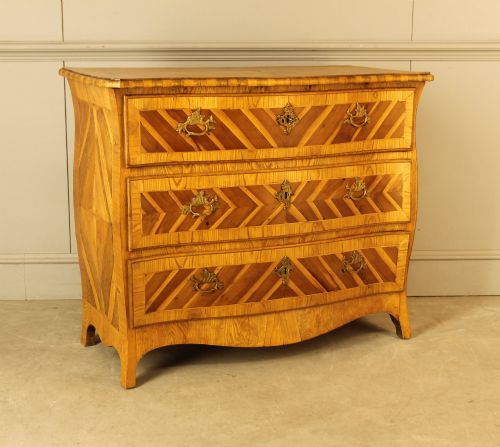
The silhouettes range from straight-fronted chests to serpentine, bombe, and demi-lune profiles that test the cabinetmaker's skill. Alongside standard chests of drawers, the category includes bedside cabinets, sideboards, chiffoniers, and console tables sharing the same decorative hardware vocabulary. Eighteenth-century examples sit alongside later nineteenth-century revival pieces and twentieth-century interpretations, each bearing distinct regional characteristics from France, Sweden, Holland, and Bavaria.
Materials and construction
Cabinetmakers built carcass frames in solid walnut, oak, or mahogany, applying fine veneers of kingwood, satinwood, and burr walnut to visible exterior surfaces. Marquetry and parquetry geometric patterns required precise cutting of contrasting timber tiles, glued and clamped to the underlying structure. Heavy timber shrinkage was anticipated through panel-and-frame construction, allowing woods to move naturally with seasonal humidity changes.
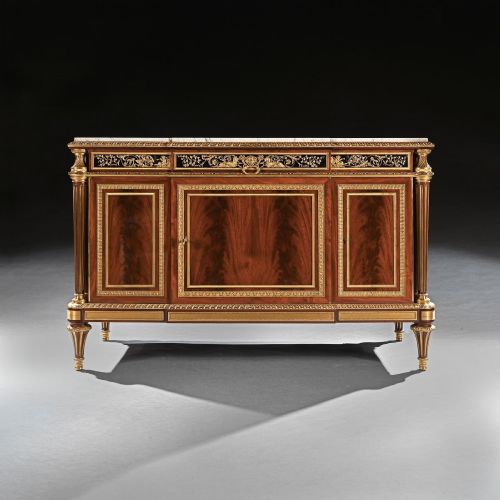
Mounts in brass and ormolu were cast using lost-wax or sand-casting methods, then chased by hand to sharpen foliage, scrollwork, and figurative details before fire-gilding or polishing. Marble slabs for the tops were sawn to shape, edge-moulded by hand, and fitted precisely to the chest contours to protect the timber below. Dovetail joints secured the drawer boxes, while interior linings utilised secondary woods such as oak or pine.
Secret compartments occasionally hide behind shallow top drawers, designed for currency and letters.
Judging the work
Quality rests in the crispness of the brass and ormolu chasing and the integrity of the timber ground beneath the veneers. Superior pieces display fluid, hand-tooled mount details that integrate cleanly with the cabinet contours, rather than crude castings nailed hastily to flat drawer fronts. The execution of serpentine and bombe curves reveals the maker's mastery, where drawer edges follow complex contours without gaping.
The selection and matching of veneers define the visual ambition of the piece, with book-matched burr walnut or elaborate floral marquetry creating balanced compositions across the front and sides. Secondary timbers inside the drawers and the weight of the marble top further separate standard workshop production from exceptional cabinetmaking.
Henry Dasson·Weisweiler
The Antique Brass Mount Commode Glossary
- Ormolu
- Gilded bronze or brass applied as decorative mounts to furniture. The technique involves applying a mercury-gold amalgam to cast brass before heating to drive off the mercury.
- Bombe
- A swelling, outward-curving profile found on case furniture sides and fronts. This curved form demands advanced woodworking joinery to maintain structural stability.
- Marquetry
- The art of applying pieces of veneer to a structure to form decorative patterns and pictures. Craftsmen cut contrasting woods together to ensure tight, seamless joints.
- Serpentine
- A furniture front or top shaped with a concave central section flanked by two convex curves. The undulating line creates shifting plays of light across polished veneer.
- Parquetry
- Geometric mosaic woodwork formed by small veneer tiles arranged in repeating patterns. Squares, triangles, and diamonds combine to create dynamic visual textures.
Antique Brass Mount Commode: Frequently Asked Questions
What is a commode?
A commode is a low chest of drawers or cabinet developed in seventeenth-century France, later adopted across Europe for domestic storage and display.
Over time the form evolved from heavy oak and walnut storage pieces to highly decorated reception room furniture featuring marble tops and gilt metal mounts.
How do I care for marble tops?
Marble requires gentle cleaning with warm water and neutral soap, avoiding acidic substances like lemon or vinegar that etch the polished stone surface.
Routine dusting and immediate wiping of spills prevent staining, while occasional waxing preserves the lustre of the stone.
Are eighteenth and nineteenth century styles different?
Eighteenth-century originals reflect contemporary design movements such as Rococo and Neoclassicism, built with period joinery techniques and native timbers.
Nineteenth-century revival pieces often reinterpreted these earlier designs with heavier machinery assistance, denser carcase construction, and distinct regional interpretations.
Where were these pieces used?
These cabinets served primarily in formal bedchambers, withdrawing rooms, and grand hallways as both decorative focal points and practical storage.
Their polished marble surfaces provided a durable display area for porcelain, clocks, and lighting fixtures in wealthy homes.