
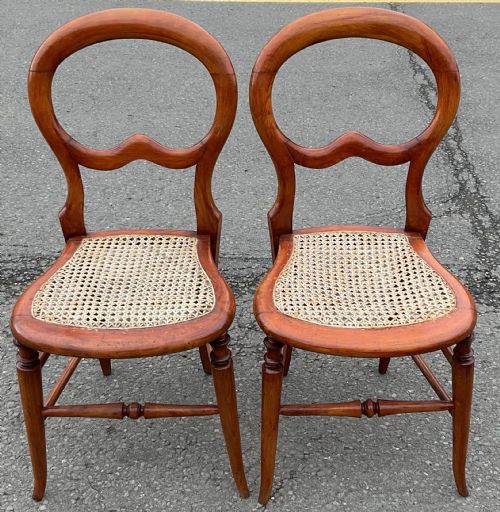


Warm Brown Hall Seat
A warm brown hall seat brings immediate character to an entryway, offering practical seating and rich timber tones shaped by Victorian and earlier hands.
Warm Brown Hall Seat
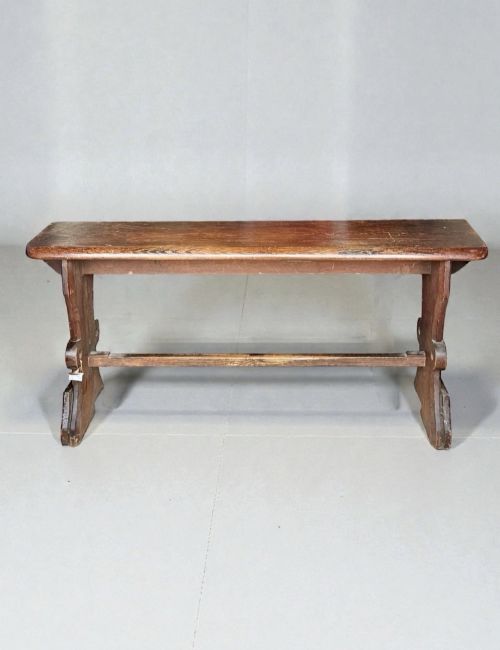
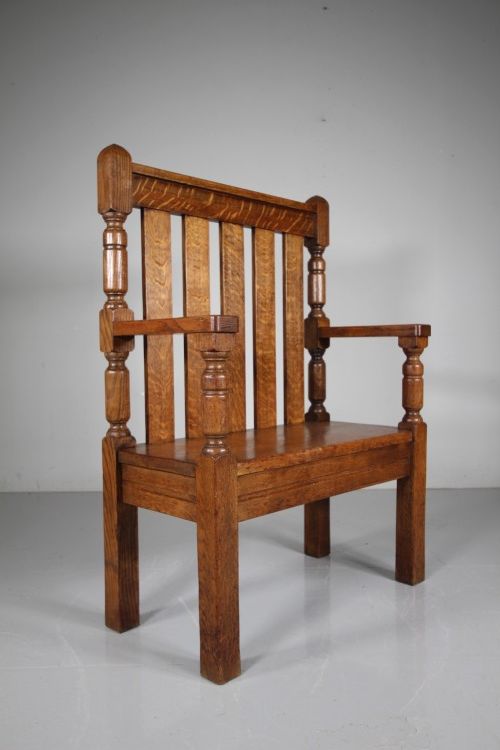
When you search for a warm brown hall seat, you encounter a robust selection of benches, settle seats, and side chairs designed for hallways, receptions, and domestic passages. These pieces originate primarily from the nineteenth century, including Victorian interpretations alongside Georgian and Arts and Crafts examples.
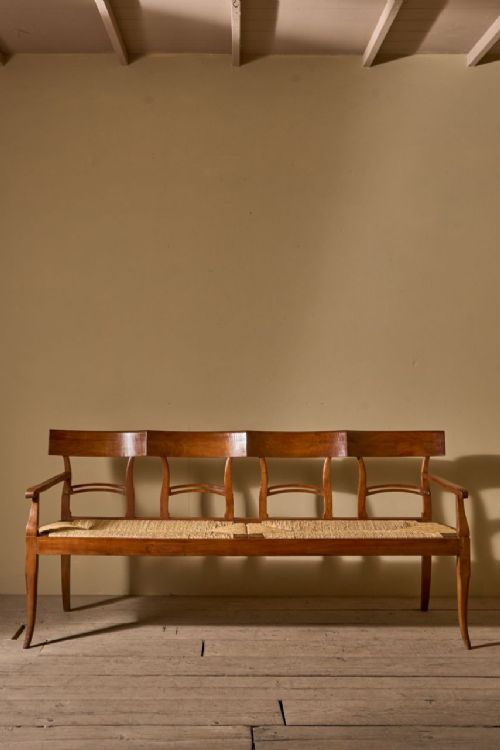
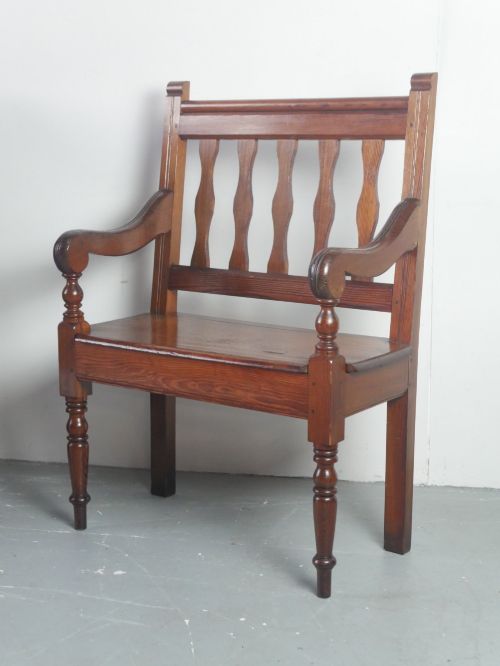
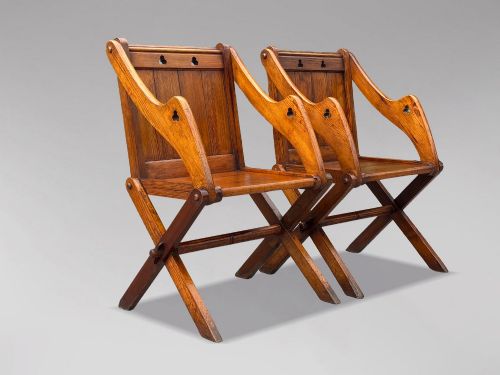
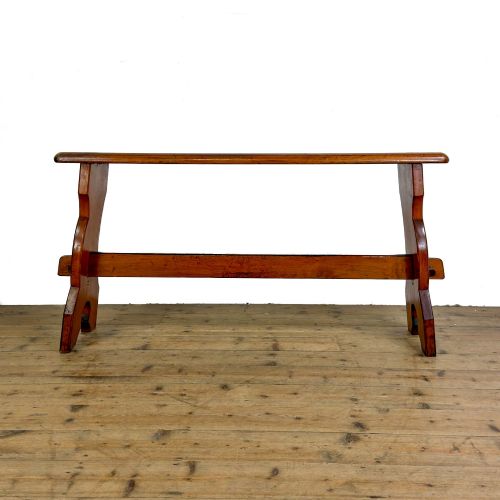
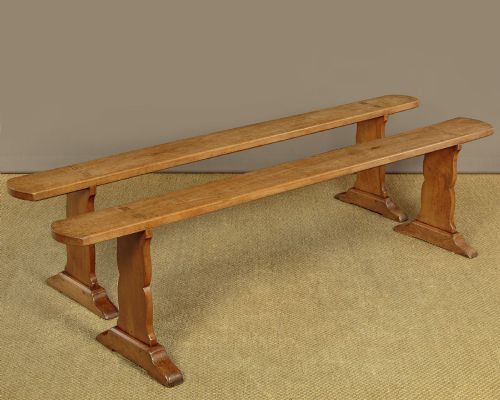
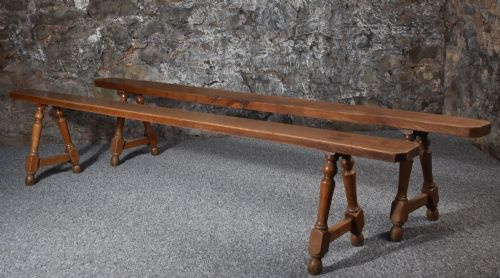
The selections span simple pine and pitch pine church and organ benches, elegant cherrywood and fruitwood forms, and sturdy oak pieces carrying Gothic Revival or French Provincial influences. Many survive as pairs or trios, providing balanced seating arrangements for spacious corridors and entrances.
How they were made
Cabinet makers and vernacular joiners utilised solid domestic timbers such as oak, elm, cherrywood, pine, and pitch pine to construct these durable seats. The natural grain of the wood provides the characteristic warm brown palette, enhanced through decades of handling and wax polishing.
Construction techniques combine traditional mortise and tenon joinery with sturdy pegging to withstand heavy domestic or ecclesiastical traffic. Certain seating variations incorporate woven rush for comfort, while others rely on carved woodwork and applied mouldings to express Gothic or Georgian styles.
Several church organist benches have quietly retired from hymns to hold hats and boots in modern hallways.
What varies in quality
The distinction between standard utility seating and finer examples lies in the selection of timber and the ambition of the design. Dense grain patterns in oak, cherrywood, or walnut and balanced proportions elevate a piece beyond basic workshop output.
Subtleties in carving, such as crisp linenfold panels or detailed Gothic tracery, demonstrate superior craftsmanship by the maker. Original surface patination and tight, uncompromised joinery further separate superior surviving examples from heavily restored or replaced elements.
Liberty
The Warm Brown Hall Seat Glossary
- Gothic Revival
- A nineteenth-century architectural and decorative style drawing inspiration from medieval forms, featuring pointed arches and heavy timber construction.
- Pitch pine
- A resinous softwood noted for its durability and strong grain pattern, frequently utilised in nineteenth-century ecclesiastical and domestic seating.
- Rush seating
- Woven marsh plant seating material utilised in traditional chair and bench construction for texture and flexibility.
- Settle
- A wooden bench with high backs and arms, often incorporating enclosed storage beneath the seat to block draughts in hallways.
- Fruitwood
- A generic term for timber sourced from fruit-bearing trees such as cherry or pear, prized for warm tones and smooth grain.
Warm Brown Hall Seat: Frequently Asked Questions
Where should I place a hall seat?
These pieces suit entrance halls, boot rooms, and wide corridors where practical seating meets visual presence.
Their narrow profiles allow them to sit against walls without blocking movement through the home.
How do I clean wooden furniture?
Maintain timber surfaces by dusting regularly with a soft, dry cloth to prevent grit accumulation.
Apply a quality beeswax periodically to nourish the grain and preserve the warm brown finish.
Are these seats comfortable for daily use?
Most historic hall seating prioritises sturdy upright posture and durability over modern cushioning.
Versions featuring rush seats or padded additions offer softer support for putting on shoes.
How do I identify a Victorian piece?
Look for distinct revival styles such as Gothic Revival or Arts and Crafts motifs characteristic of the nineteenth century.
Construction marks and timber choices like pitch pine typically point toward this expansive manufacturing era.