



Solid Wood Entryway Chair
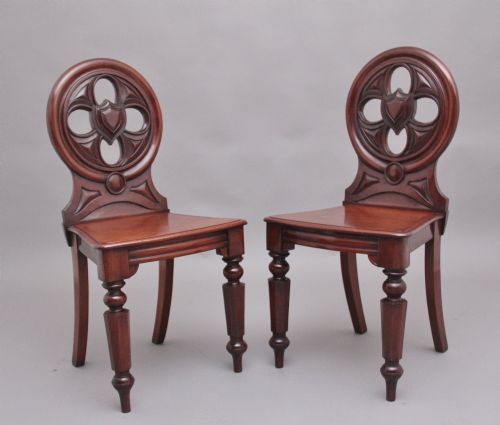
These solid wood entryway chair selections offer practical seating in mahogany and oak, bringing period character to corridors and halls.
Materials and Construction
Cabinet makers utilised solid timbers including mahogany, oak, and walnut to build these entryway seats. Workshops employed traditional joinery to ensure frames remained stable under repeated use.
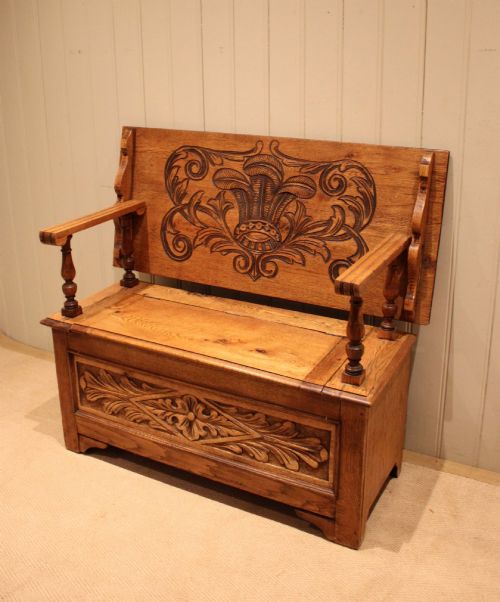
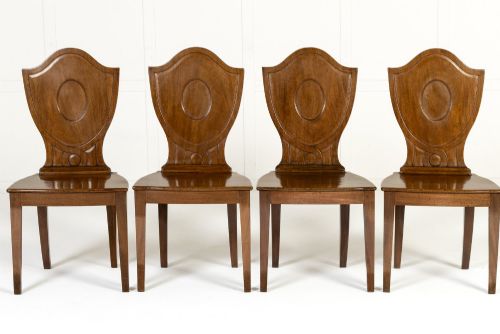
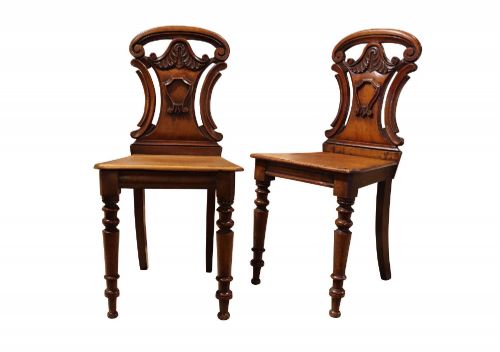
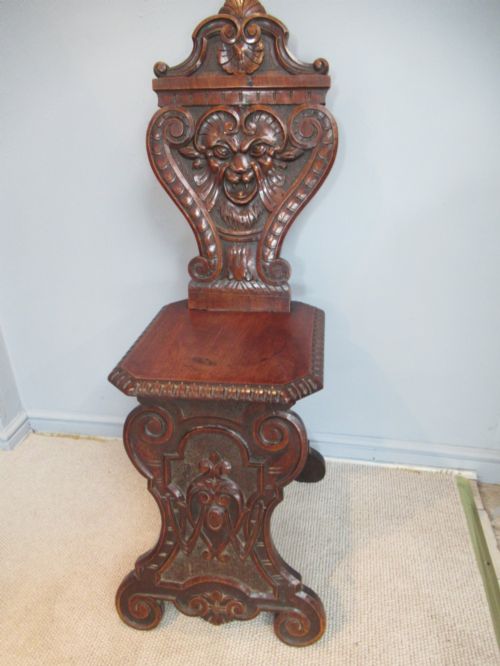
Carving serves as a primary decorative technique across the listings, with motifs ranging from shield backs and pelta shapes to shell designs and armorials. Brass inlay occasionally provides additional contrast against the dark wood grain.
Judging Quality
Quality rests upon the crispness of the carved details on the backrest and the selection of the timber grain. Pieces exhibiting deep, well-defined sculptural carvings and substantial proportions stand apart from simpler iterations.
The integrity of the timber and the precision of the joinery determine the longevity of the piece. Superior examples maintain firm joints and retain their original surface patination without excessive restoration.
Listings feature mahogany and oak predominantly, spanning the 18th century, Regency, and Victorian eras.
Gillows
The Solid Wood Entryway Chair Glossary
- Hall chair
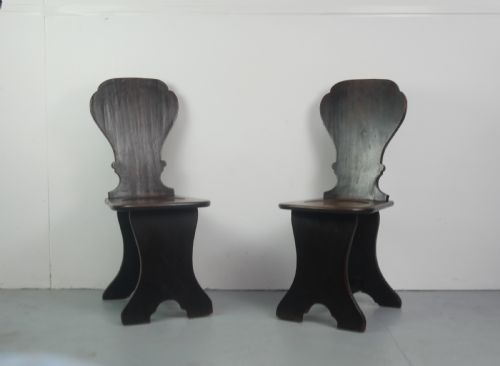
- A rigid wooden seat intended for entranceways and corridors, typically featuring a solid timber seat and an elaborately carved backrest.
- Shield back
- A chair back shaped in the outline of a heraldic shield, popular during the Georgian and Victorian periods.
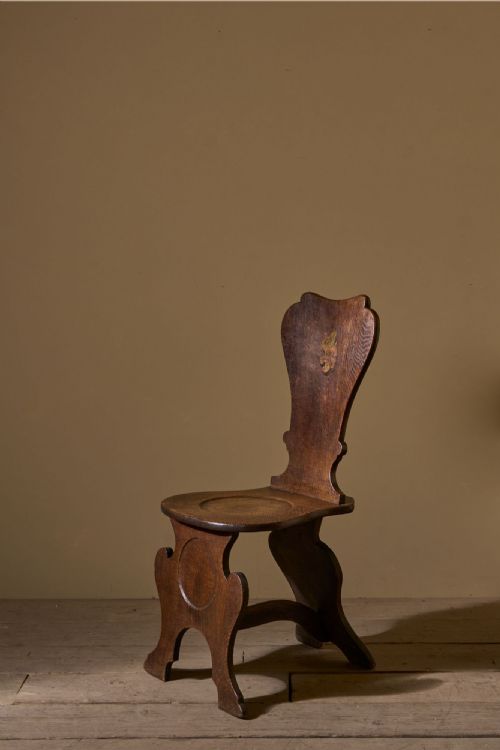
- Sgabello
- An early form of Renaissance-style wooden chair with a high back and trestle supports, seen in oak examples.
- Pelta back
- A chair back design incorporating a pelta motif, which resembles a classical crescent-shaped shield.
- Armorial
- A design displaying a family coat of arms or heraldic insignia carved directly into the wood.
- Mahogany
- A durable tropical hardwood prized by period cabinet makers for its rich colour and smooth finishing qualities.
Solid Wood Entryway Chair: Frequently Asked Questions
What is a solid wood entryway chair used for?
These chairs served primarily as formal seating in entrance halls, reception rooms, and corridors rather than for long periods of relaxation. Households used them as practical furniture near the front door.
Today, buyers place them in narrow hallways or entryways to provide a striking architectural statement and a convenient spot to pause.
How do I identify a Regency hall chair?
Regency pieces often display classical motifs such as brass inlay, sculptural mahogany frames, and clean architectural lines influenced by ancient Greek and Roman design.
Checking the listings for specific period markers like curved backrests and dark timber will help distinguish Regency items from later Victorian revival styles.
Are these chairs comfortable for daily sitting?
Period hall chairs were designed with solid wood seats and upright wooden backs, prioritising architectural presence and formal posture over plush cushioning.
They function best as accent seating in hallways or as occasional chairs rather than primary seats for a desk or dining table.