






Walnut Wood Bedstead
A walnut wood bedstead brings rich grain and warmth to a bedroom, ranging from French period carvings to clean Art Deco lines.
Walnut Wood Bedstead
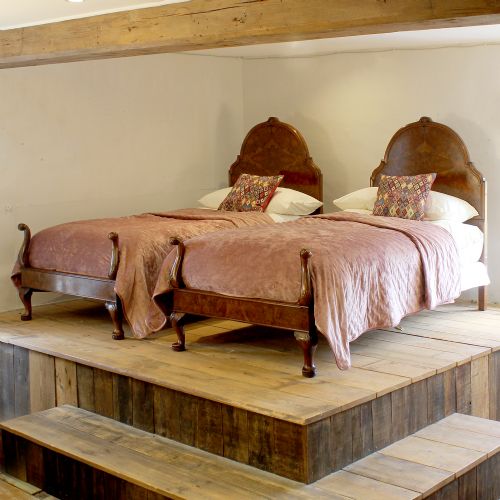
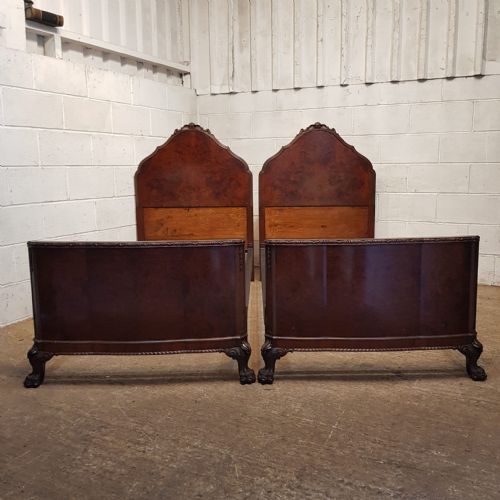
A walnut wood bedstead offers a substantial sleeping frame shaped by diverse aesthetic movements spanning the nineteenth and twentieth centuries. Buyers searching this phrase encounter everything from grand French king size proportions to pairs of single beds built for smaller rooms.
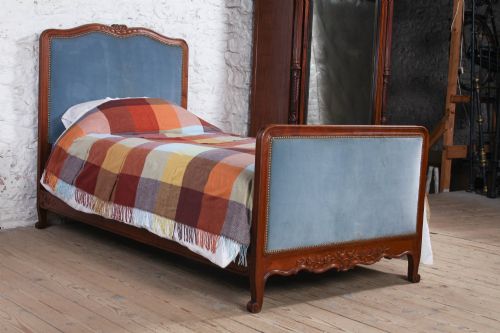
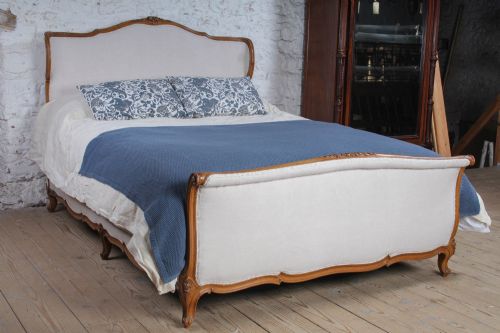
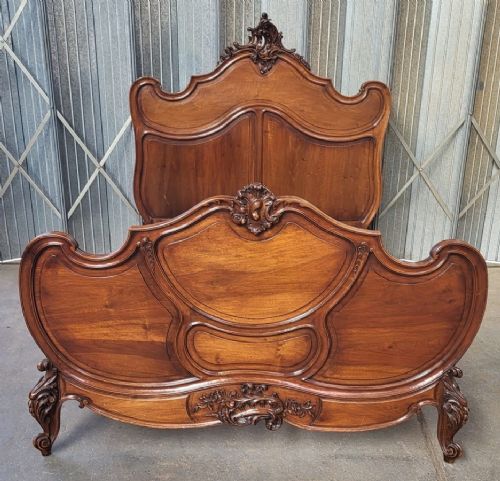
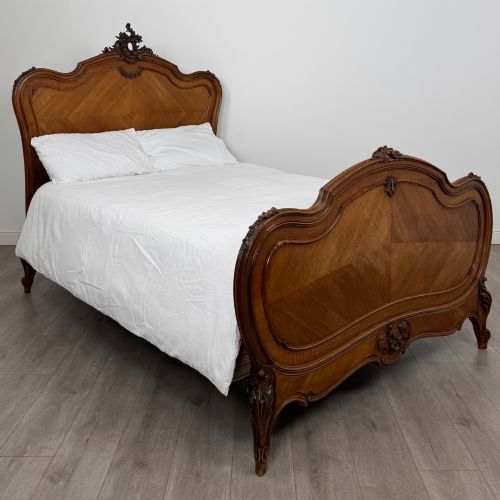
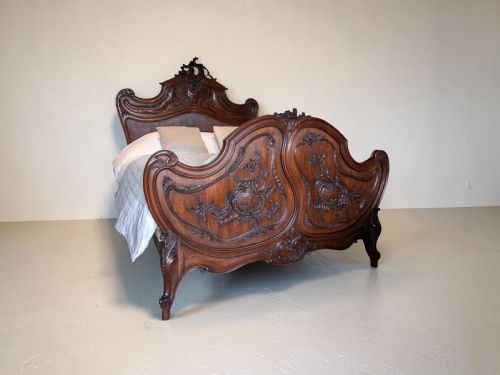
The selections on this page lean heavily towards continental European styling, particularly French Louis XV and Rococo revivals alongside British Edwardian and Victorian forms. Single beds, double proportions, and daybeds appear regularly across the inventory.
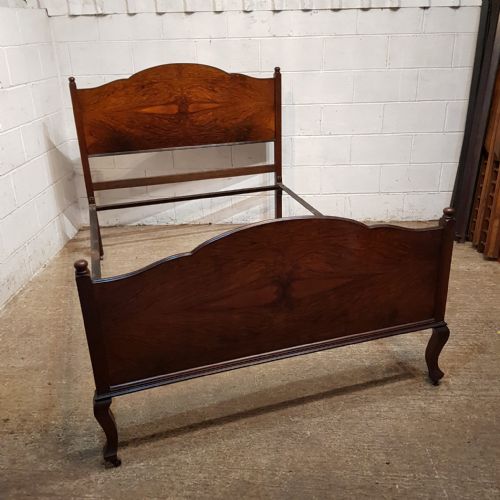
Makers from the early twentieth century and the late nineteenth century predominate, utilising timber figures from plain walnut to heavily figured burr surfaces. Queen Anne style frames and Art Deco blonde satinwood combinations also feature prominently.
How they were made
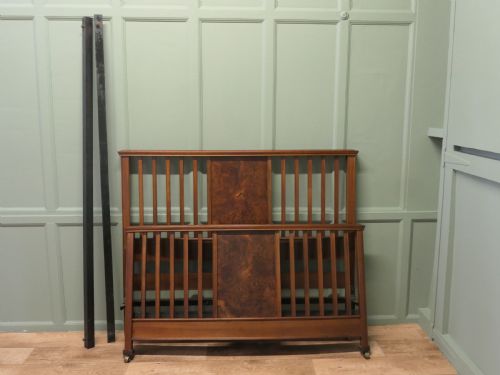
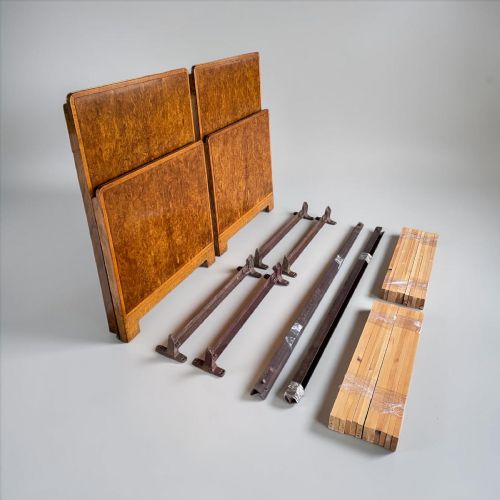
Makers constructed these bedsteads using solid walnut and applied walnut veneer, often selecting burr walnut sections to showcase intricate natural grain patterns. Structural strength relied on timber frames, sometimes supplemented with iron or brass components.
Surface decoration frequently involved detailed carving by hand, visible in floral motifs, scrolling edges, and giltwood highlights on French regional pieces. Art Deco examples balanced these organic curves with geometric blonde satinwood and walnut contrasts.
Upholstered headboards and footboards appeared on select king and double formats, introducing fabric textures alongside polished wood surfaces.
Walnut Wood Bedstead Retail Price Guide 2026
Typical asking prices for walnut wood bedstead among the pieces listed under this phrase on Sellingantiques today, from the lower quarter to the upper quarter. They describe what is for sale here now, not the wider market.
Materials recorded across current inventory include solid walnut, burr walnut, iron, brass, timber, and contrasting satinwood veneers.
What varies in quality
Quality in a walnut wood bedstead rests primarily on the depth and selection of the timber veneer and the crispness of the hand-carved details. Higher tier pieces display exceptional burr figuring across wide panels, whereas simpler constructions rely on plain timber boards.
The integrity of the joinery and the original proportions dictate the overall success of the piece, particularly when scaled up to king size dimensions. Finer examples retain harmonious styling across headboards, footboards, and matching side rails without awkward alterations.
The Walnut Wood Bedstead Glossary
- Burr Walnut
- A specialised timber cut from the abnormal growths on walnut trees, yielding complex, swirling grain patterns. This highly decorative material appears on prominent panels of Edwardian and early twentieth century furniture.
- Bedstead
- A framework of a bed designed to support a mattress and springs, distinct from modern divan bases. These structures often feature prominent wooden headboards and footboards.
- Louis XV Style
- A decorative aesthetic characterised by asymmetrical curves, cabriole legs, and naturalistic scrollwork. It influenced many nineteenth and twentieth century French walnut frames.
- Daybed
- A couch that can be used for lounging or as a bed for sleeping, often incorporating a raised back and one or two raised ends. Antique versions frequently feature detailed walnut carving.
- Satinwood
- A durable, yellowish timber often used for contrasting inlay or banding alongside darker walnut veneers in Art Deco pieces.
Walnut Wood Bedstead: Frequently Asked Questions
How do I choose the right size walnut bed?
Consider the proportions of your bedroom and check whether the frame accommodates standard modern mattress dimensions. Single, double, and king sizes all appear with varying headboard heights.
Measure doorways and stairwells carefully before purchase, as antique wooden headboards and side rails can be cumbersome to maneuver into position.
Are these beds compatible with modern mattresses?
Many antique bedsteads require custom slat arrangements or minor internal adaptations to support contemporary mattress depths comfortably. It helps to inspect the internal rail measurements listed for each individual frame.
Consulting with a specialist restorer can ensure the internal structure remains secure under modern daily use.
How do I care for walnut wood furniture?
Keep walnut furniture away from direct sunlight and heat sources to prevent the wood from drying out or the veneer from lifting. Regular dusting with a soft, dry cloth maintains the polished finish.
Apply a quality beeswax polish sparingly when the wood appears dry, buffing gently along the grain to preserve the natural lustre.
How can I tell the difference between periods?
Victorian and nineteenth century pieces often feature deeper, heavier carvings and darker timber finishes, while Edwardian examples can appear lighter in scale. Art Deco pieces from the 1920s and 1930s embrace streamlined geometry and blonde veneer contrasts.
Examining construction techniques, hardware, and stylistic motifs helps narrow down the decade of manufacture.