

Walnut Vanity Table
A walnut vanity table brings rich grain and practical elegance to a dressing space, spanning styles from Victorian revival to Art Deco.
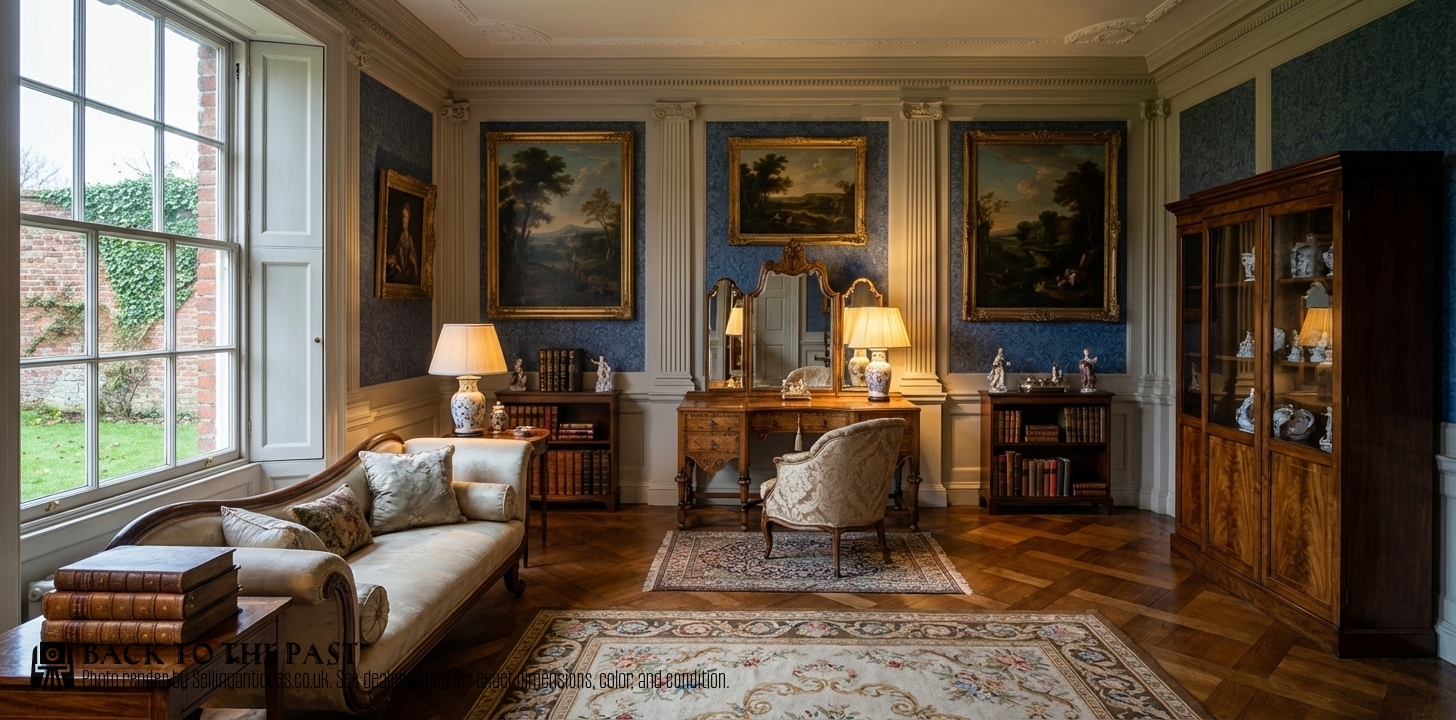
Walnut Vanity Table
A walnut vanity table combines surface space, drawer storage and mirrors for daily grooming routines. These pieces originate across the nineteenth and twentieth centuries, encompassing Victorian, Edwardian and Art Deco periods alongside revival designs.
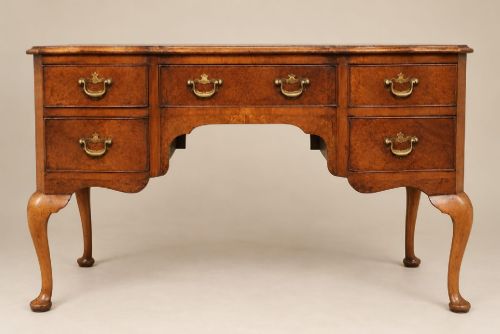
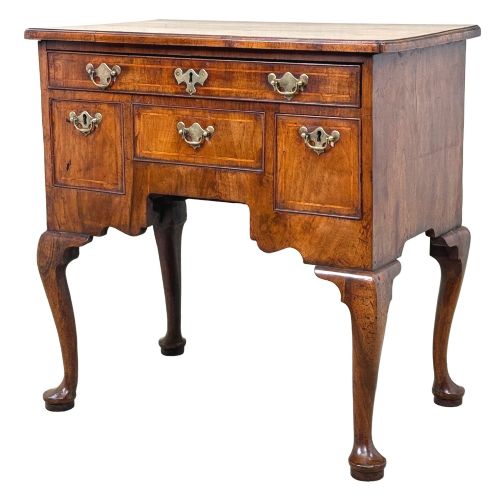
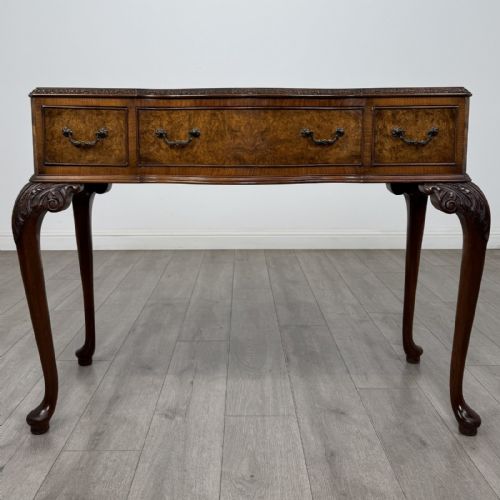
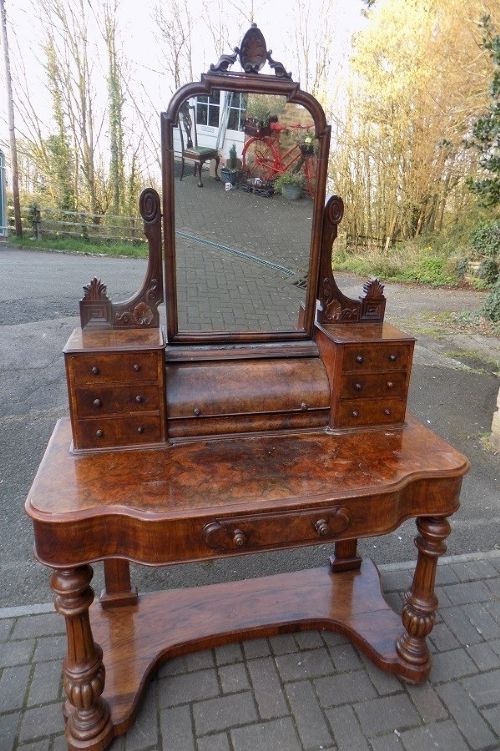
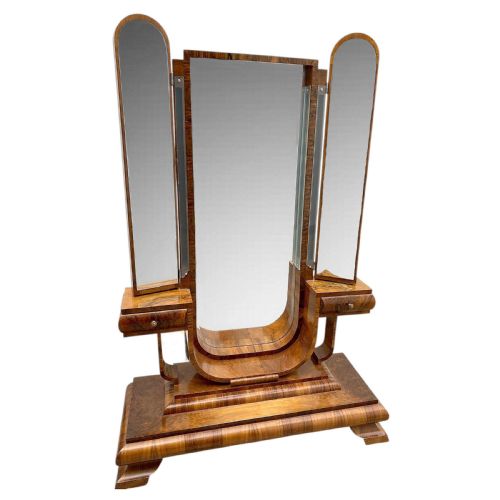
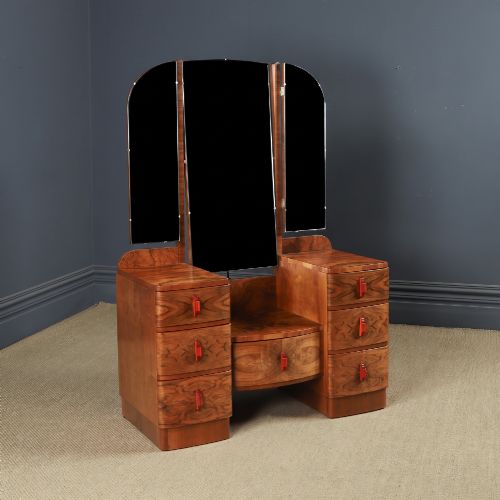
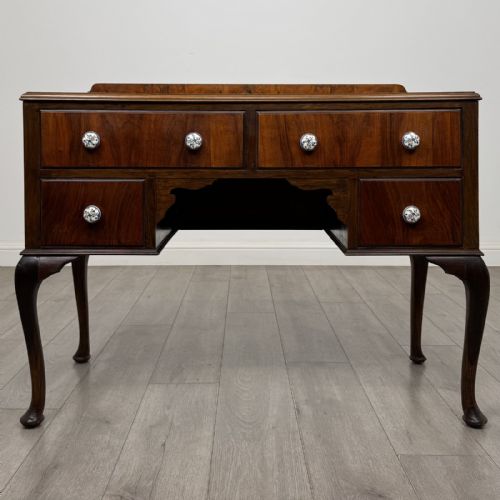
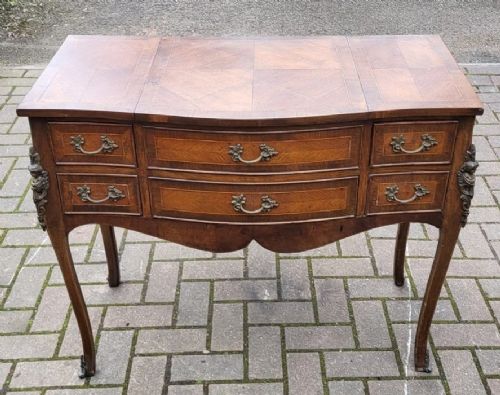
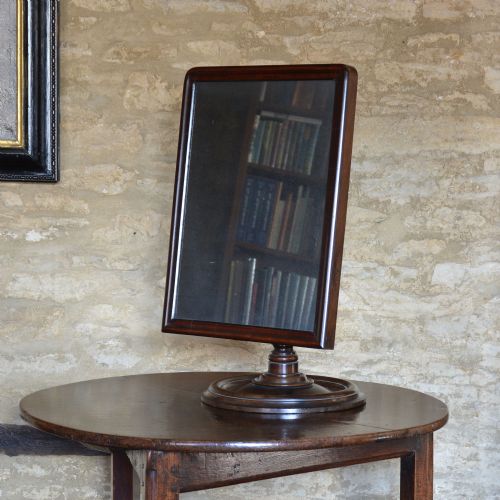
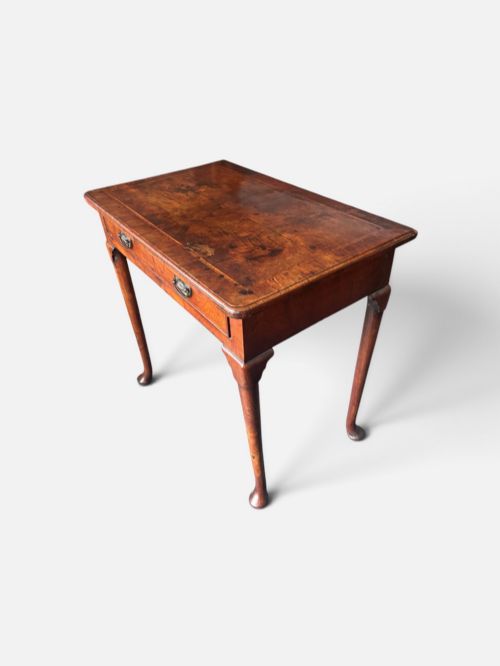
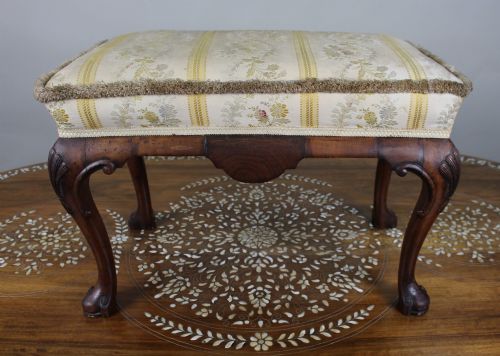
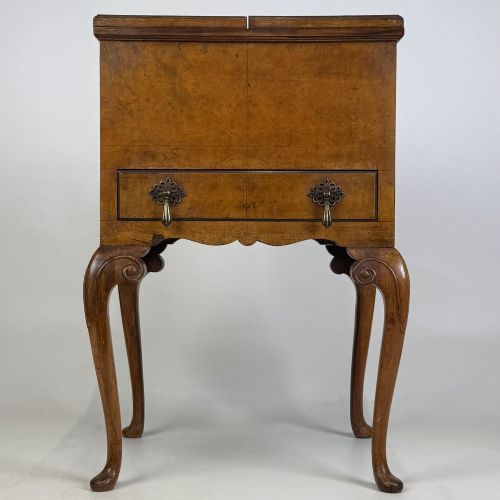
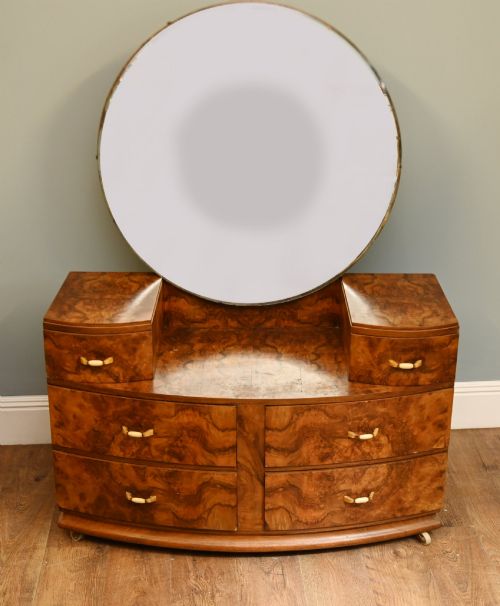
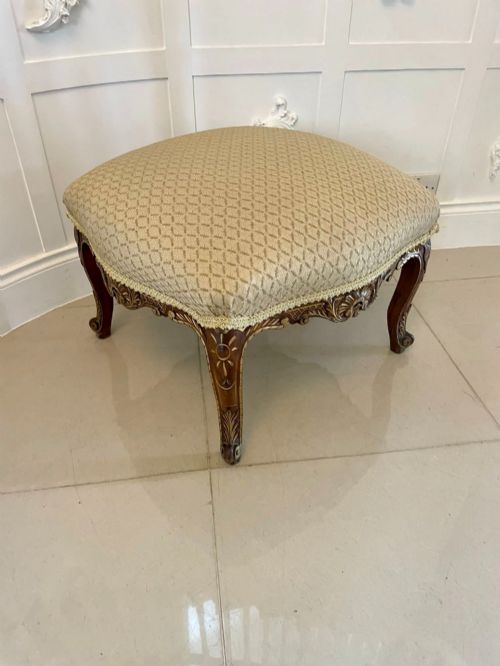
The selection here includes pedestal dressing tables, lowboys and matching stools or mirrors. Art Deco interpretations favour streamlined pedestal forms in burr walnut, while earlier pieces lean towards Queen Anne styling with cabriole legs.
How they were made
Craftsmen built these tables using solid walnut frameworks combined with figured or burr walnut veneers to showcase decorative grain patterns. Secondary timbers provided internal structure for drawers and carcases.
Surface detailing often incorporates brass hardware, glass mirrors and occasionally leather writing inserts or ormolu mounts. Frames received polished finishes to protect the wood and highlight natural colour variations.
Walnut Vanity Table Retail Price Guide 2026
Typical asking prices for walnut vanity table among the pieces listed under this phrase on Sellingantiques today, from the lower quarter to the upper quarter. They describe what is for sale here now, not the wider market.
Listings feature walnut vanity tables and desks spanning the Victorian, Edwardian and Art Deco periods, alongside Queen Anne revival styles.
What varies in quality
The choice of veneer defines visual appeal, with symmetrical burr walnut figuring commanding greater attention than plain timber. Selecting timber for continuity across drawer fronts reveals the maker's care.
Construction methods distinguish standard production from finer cabinet work, evident in drawer dovetailing and the integration of matching mirrors and stools.
Wylie & Lochhead Glasgow·Frank Taylor & Co.·Maple & Co. London
The Walnut Vanity Table Glossary
- Burr walnut
- A veneer taken from growth excrescences on walnut trees, prized for its swirling, highly decorative grain patterns. It forms the primary visual feature on many Art Deco and Victorian pieces.
- Lowboy
- A small table with drawers, typically raised on four tall legs, functioning historically as a dressing or writing surface. Many examples date from the eighteenth century and subsequent revival periods.
- Pedestal dressing table
- A vanity form featuring twin stacks of drawers flanking a central kneehole space, frequently paired with an attached or hanging mirror. This layout offers substantial storage capacity.
- Cabriole leg
- A furniture leg that curves outward in a convex arc and then bends inward in a concave arc, ending in a pad or claw foot. This form is common on Queen Anne style pieces.
- Toilet mirror
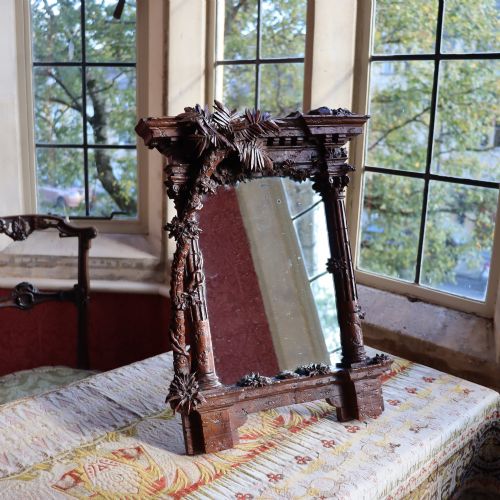
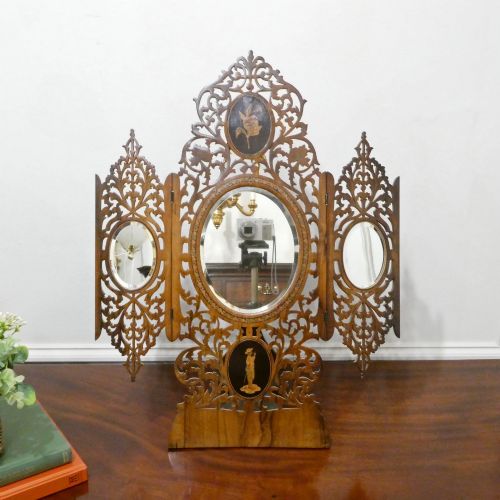
- A smaller tabletop mirror mounted on a pivoting frame above a small box or drawer base. These items often accompany dressing tables or lowboys.
Walnut Vanity Table: Frequently Asked Questions
How do I date a walnut vanity table?
Dating relies on stylistic markers, construction techniques and hardware. Victorian examples often feature heavy carved ornament, whereas Art Deco pieces display geometric lines and burr walnut veneers.
Drawer construction also helps determine age. Hand-cut dovetails generally indicate earlier periods, while machine-produced elements appear in later twentieth-century items.
Are mirrors original to the tables?
Many dressing tables retain their original pivoting or triple mirrors, often mounted on carved uprights. Examining the mirror glass for minor foxing or bevelling helps confirm period authenticity.
Some pieces survived without mirrors or received replacements later. Checking fixings and timber match provides clues to whether the mirror belongs to the table.
What is the difference between a lowboy and a vanity table?
A lowboy is a compact table with one or more rows of drawers and no attached superstructure. It served multifunctional roles for writing or grooming.
A vanity table is specifically designed for dressing, usually incorporating built-in mirrors, pedestals, or dedicated compartments for cosmetics and brushes.
How should I care for walnut veneer surfaces?
Walnut requires protection from direct sunlight and excessive moisture to prevent fading and veneer lifting. Regular dusting with a soft cloth maintains the polished finish without chemical buildup.
Applying microcrystalline wax occasionally helps nourish the timber and preserve the grain. Avoid placing hot or wet items directly on the wood.