


Walnut Toilet Glass
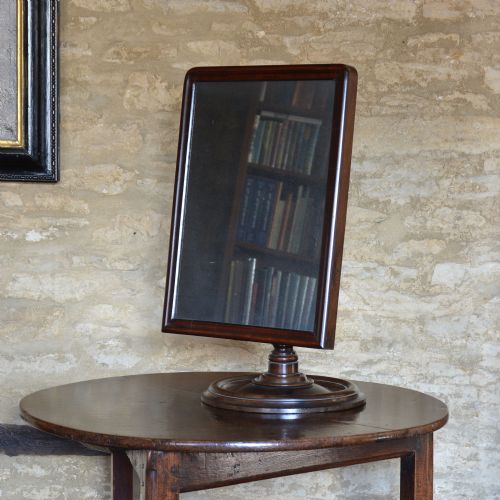
These walnut toilet glass pieces are dressing and shaving mirrors for table use, bringing polished wood and tilting glass to any surface.
Walnut Toilet Glass
A walnut toilet glass sits upon a table or chest to provide a tilting reflection for grooming and dressing. The pieces found here range from seventeenth-century box mirrors to Victorian burr walnut examples and Dutch marquetry designs.
Most pieces date from the eighteenth and nineteenth centuries, spanning Queen Anne, George II, and George III periods alongside Victorian interpretations. You will find them described variously as dressing table mirrors, toilet mirrors, and shaving mirrors.
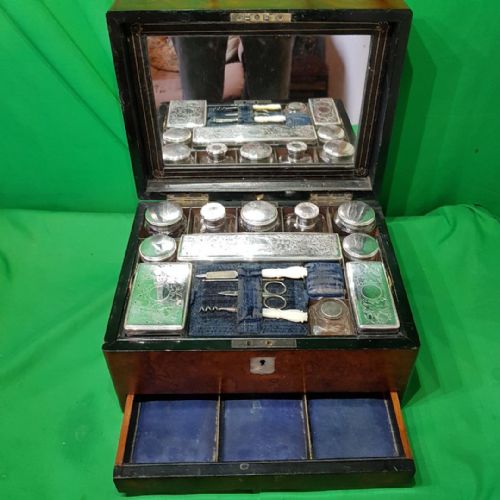
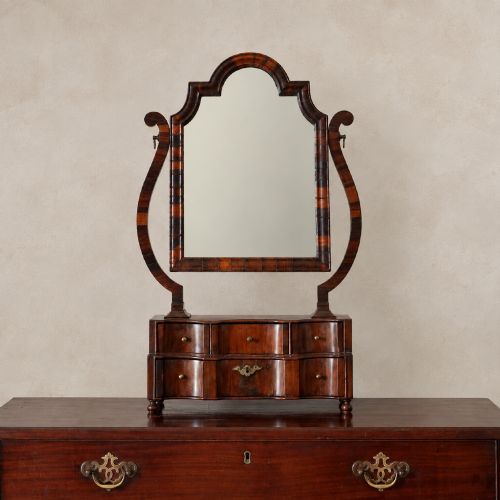
The form typically combines a rectangular or arched glass plate held within a wooden frame, mounted on upright arms above a small base fitted with drawers. Some variations include bureau fitments or specialised compartments for travel and vanity items.
How they were made
Cabinet makers utilised solid walnut and decorative burr walnut veneers over secondary timbers, often applying boxwood stringing and marquetry details. Brass forms the pivot screws, hinges, and small drawer pulls that allow the glass to tilt.
Mirror glass itself was set into rebated frames, while interiors occasionally lined themselves with velvet or incorporated fitted boxes. Construction methods evolved from seventeenth-century joinery to nineteenth-century box and vanity case designs.
Listings feature walnut, burr walnut, and boxwood materials across periods from the seventeenth century to the Victorian era.
What varies in quality
Quality rests in the figuring of the walnut timber and the crispness of any boxwood inlay or marquetry work. Finely grained burr veneers and well-proportioned drawer bases separate superior examples from simpler utilitarian pieces.
The integrity of the original mirror glass and the correct operation of the brass pivot hardware influence the character of each piece. Retaining fitted interior compartments or original velvet linings adds substance to boxes and bureau mirrors.
The Walnut Toilet Glass Glossary
- Burr walnut
- A decorative timber veneer taken from the growth excrescences of walnut trees. It yields swirling, highly figured patterns prized by cabinet makers.
- Marquetry
- The art of applying pieces of veneer to a structure to form decorative patterns. Dutch examples frequently display floral or pictorial designs in this technique.
- Boxwood stringing
- Thin inlaid lines of contrasting light wood used to outline panels and drawer fronts. It provides a sharp border to darker walnut surfaces.
- Bureau fitment
- A small fitted interior incorporating pigeonholes and miniature drawers beneath a slanted writing flap or mirror base.
Walnut Toilet Glass: Frequently Asked Questions
What is a walnut toilet glass?
A walnut toilet glass is a movable table mirror used for dressing and shaving, typically housing small drawers in its base. These pieces sit comfortably upon chests of drawers and dressing tables.
Originating in various forms from the seventeenth century onward, they combine practical reflection with decorative cabinet work in walnut and burr veneers.
How do I date a walnut toilet mirror?
Dating relies on observing the framing style, timber choices, and construction methods of the base. Queen Anne and Georgian pieces often show simpler veneers and shaped drawer fronts, whereas Victorian examples introduce burr walnut and heavier box forms.
Hardware such as brass pivot screws and drawer pulls also offers clues to the period of manufacture, though replacements are common.
Where were these mirrors placed?
They were designed to stand upon dressing tables, washstands, or chests of drawers in bedrooms and dressing rooms. Their movable frames allowed users to adjust the angle of reflection.
Travelling versions and vanity boxes were built for portability, allowing owners to pack their grooming equipment for journeys.
Are toilet mirrors and dressing mirrors the same?
The terms are largely interchangeable in historical descriptions, referring to table-standing mirrors intended for personal grooming. Some variations include compartments or small desks beneath the glass.
Shaving mirrors represent a specific subset focused on utility, while dressing boxes incorporate complete sets of vanity containers alongside the glass.