

Walnut Tier Stand
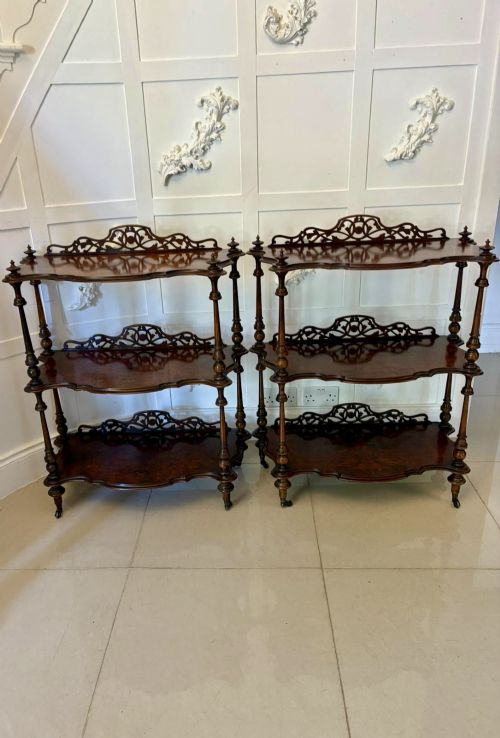
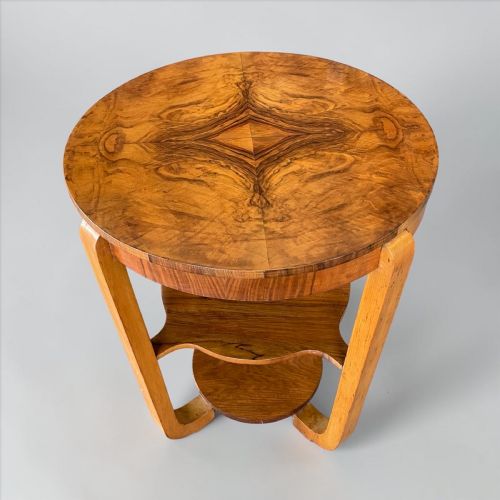
When you search for a walnut tier stand, you find multi-level display pieces ranging from Victorian whatnots to Art Deco tables.
Walnut Tier Stand
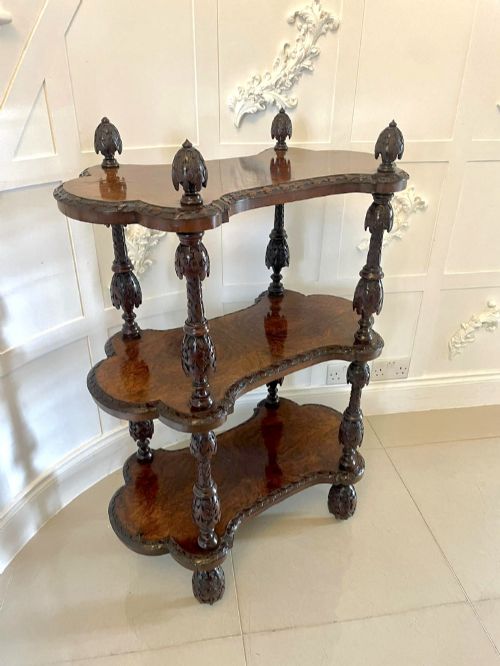
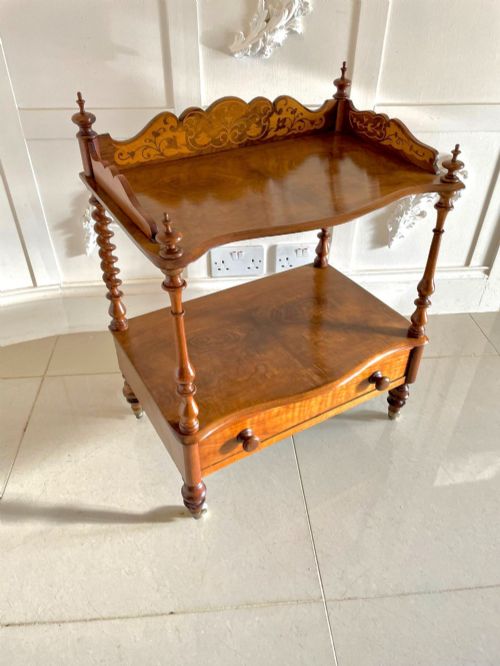
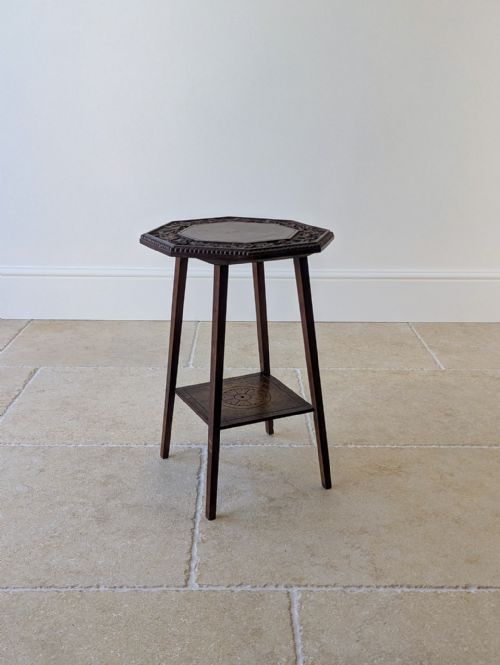
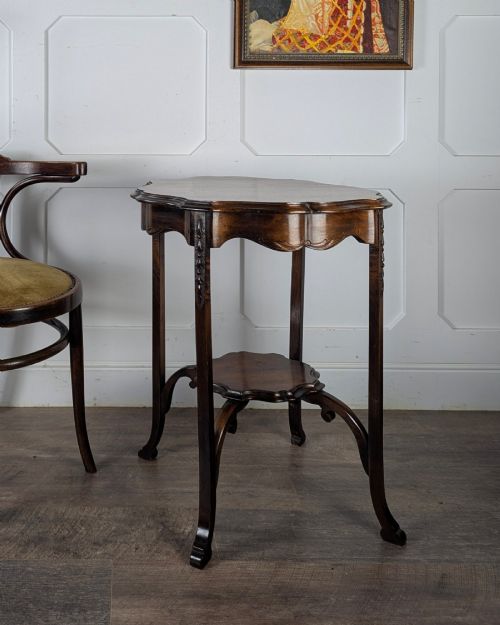
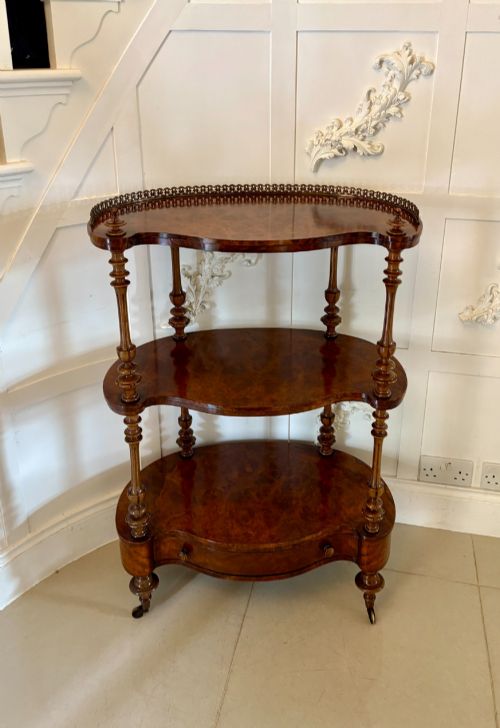
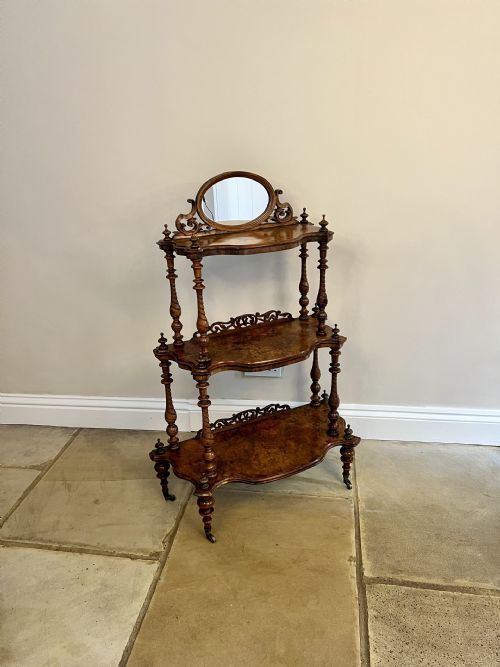
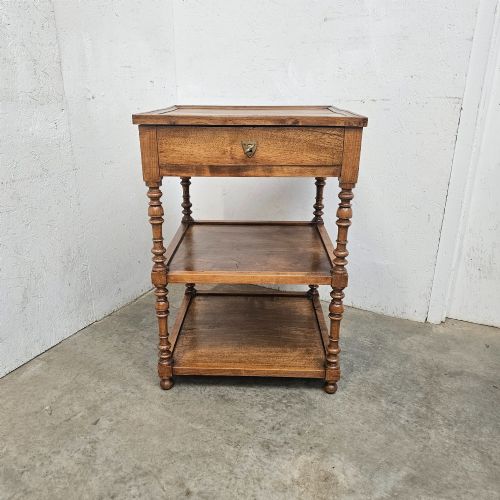
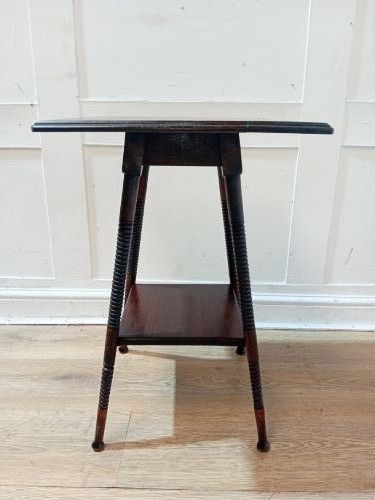
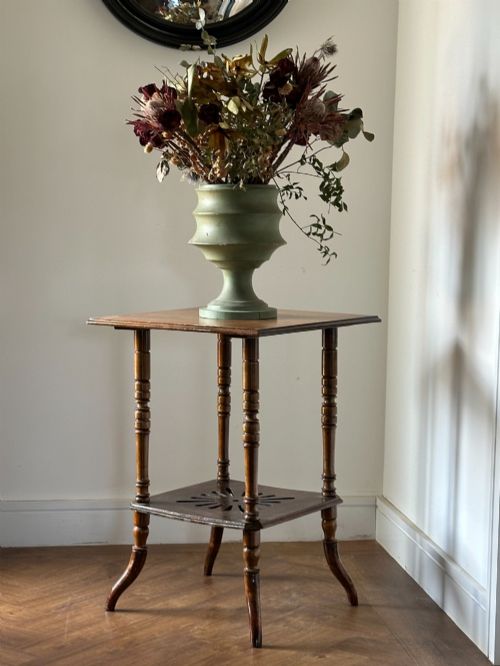
A walnut tier stand typically takes the form of a multi-level whatnot, etagere, or occasional table designed for display and storage in domestic rooms. These pieces provide several open shelves supported by uprights, allowing owners to exhibit decorative items, books, and plants across different levels. The selection spans from mid-19th century Victorian examples to later Edwardian and Art Deco designs.
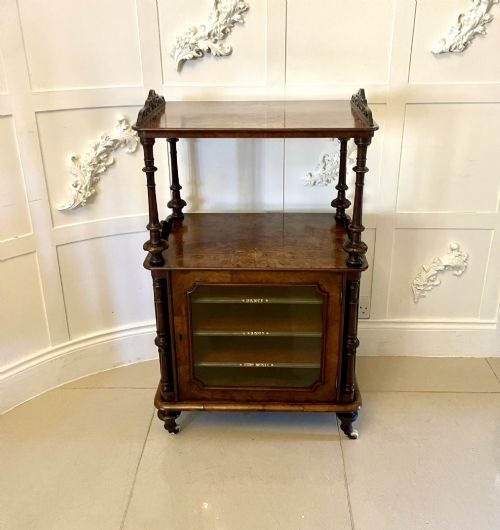
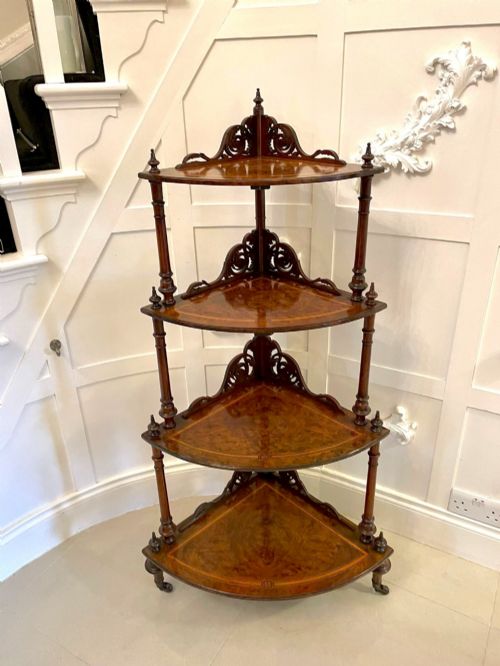
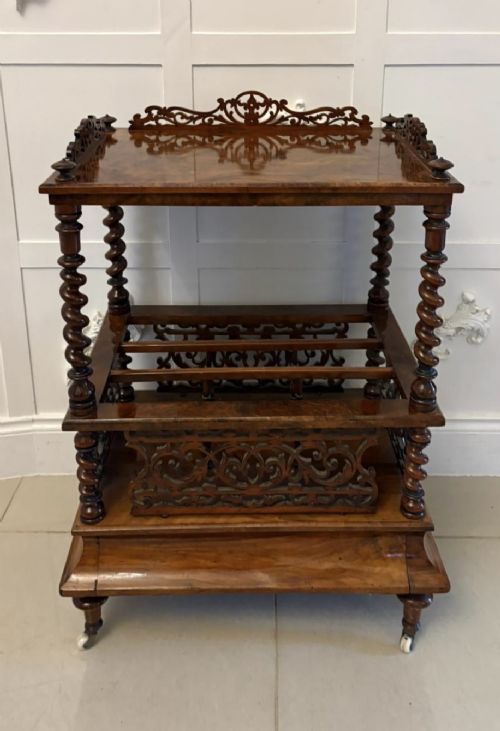
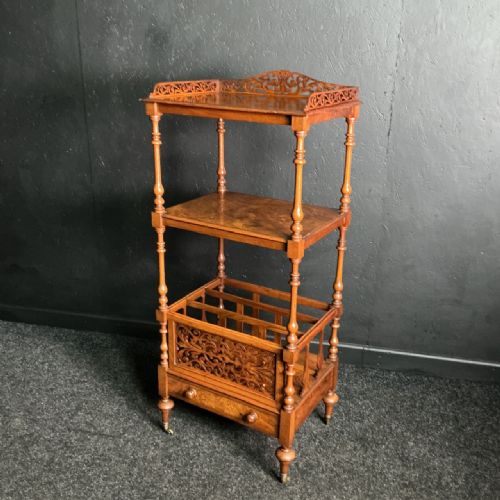
The most common versions met on this page are Victorian burr walnut whatnots and etageres featuring two or three tiers. Makers constructed these multi-tiered forms to utilise vertical space efficiently in reception rooms and parlours. Alongside standard freestanding models, the inventory includes corner stands, side tables, and specialised pieces incorporating drawers or music cabinets.
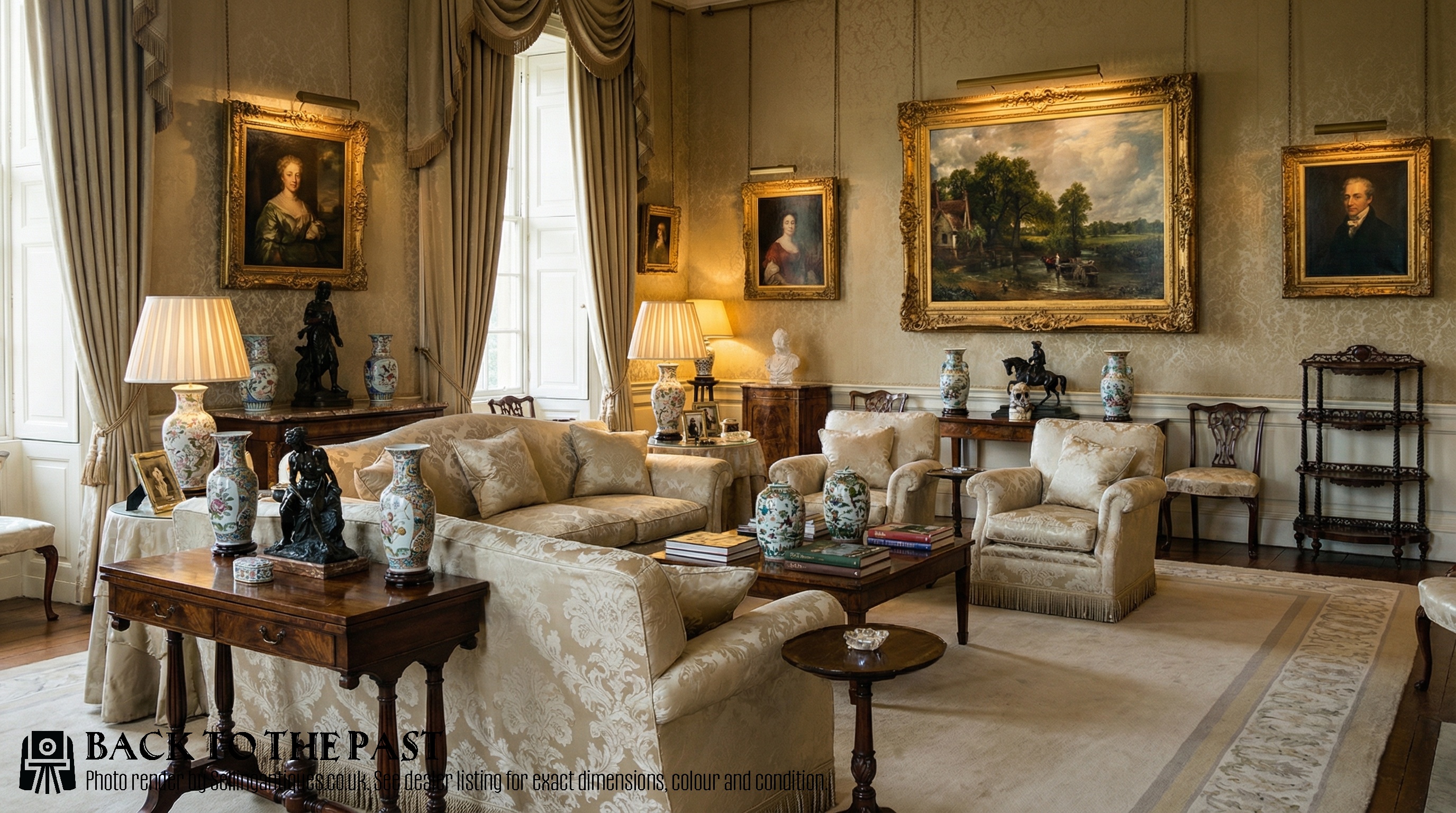
Materials and construction
Cabinet makers utilised solid walnut and figured burr walnut veneers applied to secondary timbers to achieve rich surface patterns on the shelves and uprights. Workshops frequently combined walnut with ebonised wood, mahogany, or brass mountings, while some pieces incorporated glass, ormolu, and gilt metal details. These materials provided both structural stability and decorative contrast across the tiers.
Construction techniques involve turned or carved supports, marquetry inlay, and tiered platforms joined securely to upright frames. Many Victorian and Aesthetic Movement examples feature shaped serpentine edges, delicate fretwork, or turned wooden galleries designed to keep objects secure on upper shelves.
Materials recorded across these stands include burr walnut, ebonised wood, brass mounts, and ormolu.
Distinctions in quality
Quality in a walnut tier stand is determined by the selection of burr veneers, the crispness of carved details, and the integrity of the joinery across multiple levels. Superior pieces display carefully matched grain patterns on each shelf and robust structural connections that prevent wobble between the tiers.
Liberty of London·William Birch·Holland Sons
The Walnut Tier Stand Glossary
- Whatnot
- An open set of shelves standing on legs, used for displaying ornaments or books. Originating in the 18th century, these multi-tiered pieces became extremely popular during the Victorian period.
- Etagere
- A piece of furniture consisting of a series of open shelves for displaying small objects or china. French in origin, these stands often feature lighter framing and decorative mounts.
- Burr Walnut
- Timber taken from a growth on a walnut tree, yielding highly decorative swirling grain patterns. Cabinet makers used thin slices of this wood as veneers on prominent surfaces.
- Canterbury
- A low stand with partitions, originally designed for sheet music or books and frequently combined with tier stands. Victorian makers often integrated these compartments beneath occasional tables or whatnots.
- Aesthetic Movement
- A late 19th-century design style emphasising visual beauty over narrative content, often drawing inspiration from Japanese art. Pieces from this movement frequently pair walnut with ebonised wood.
Walnut Tier Stand: Frequently Asked Questions
What is a walnut tier stand used for?
These stands serve primarily as display furniture for ornaments, books, and small collections in living spaces. The multiple levels allow owners to exhibit items vertically without occupying excessive floor space.
Historically, households used them in parlours and drawing rooms as decorative occasional tables or plant stands. Today, they function well as lamp tables or bedside display units.
How do I identify a Victorian tier stand?
Victorian examples generally feature rich burr walnut veneers, turned wooden uprights, and sometimes serpentine shelves or inlaid marquetry. Construction details often include brass castors and heavier timber framing compared to later Edwardian pieces.
Earlier 19th-century models lean towards formal display whatnots, while late Victorian versions often incorporate Aesthetic Movement ebonising or arts and crafts influences.
Are these stands sturdy enough for daily use?
Most tier stands are built with multiple upright supports that distribute weight effectively across the shelves. However, their open framework and slender turned legs mean they suit decorative objects and books better than heavy equipment.
Placing items evenly across the tiers ensures stability during everyday domestic use.
What is the difference between a whatnot and an etagere?
A whatnot is traditionally an English multi-tiered shelving unit designed for general display and storage in domestic rooms. An etagere is typically a French-influenced open-tier stand that often emphasises lighter, more decorative framing.
In practice, makers and dealers frequently used both terms interchangeably for multi-level walnut stands.