
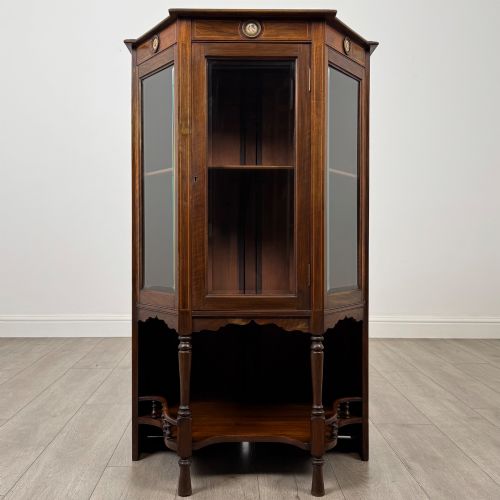
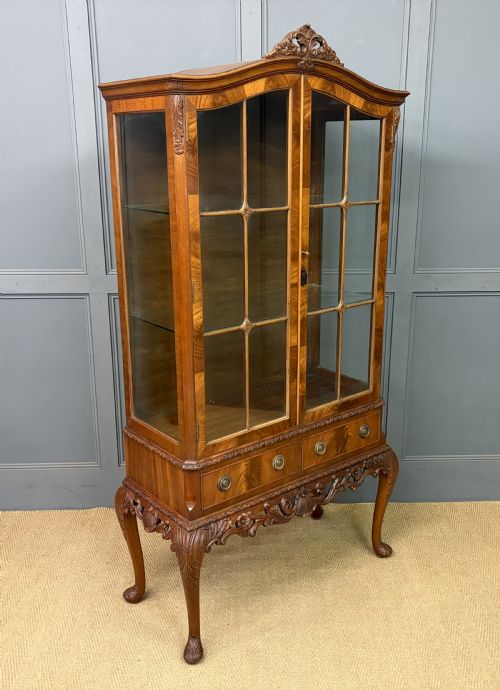
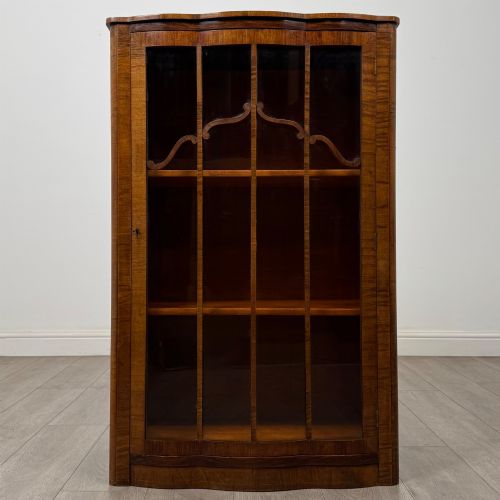


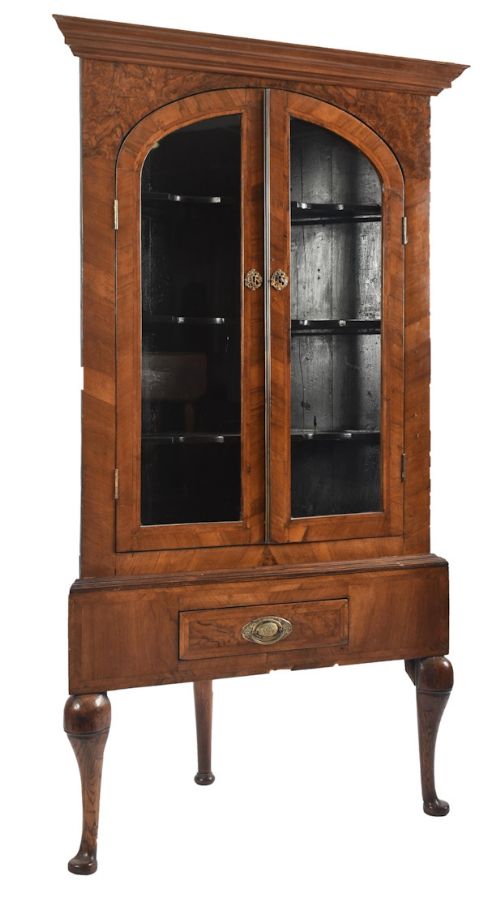
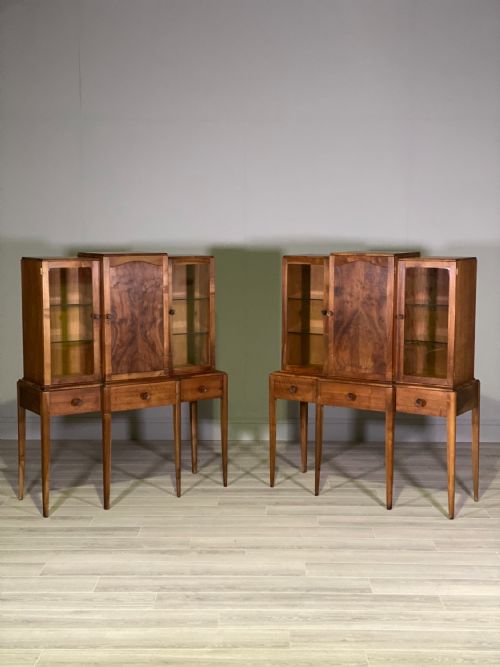

Walnut Standing Vitrine
These walnut standing vitrine pieces are glazed display cabinets and cupboards built to showcase collections, bringing rich timber and glass to a room.
Walnut Standing Vitrine
When you search for walnut standing vitrine pieces, you are looking at tall display cabinets, corner cabinets, and glazed cupboards designed to exhibit precious objects. The examples you are most likely to meet on this page span the eighteenth century, Victorian era, Edwardian period, and twentieth century.
The styles range from Queen Anne Revival and George I style to Dutch Baroque, Edwardian, and Art Deco. Makers and workshops utilised figured walnut, burr walnut, and kingwood, often mounting the timber with brass or ormolu on glass-panelled frames.
Forms vary considerably between freestanding upright display cases, two-part corner cabinets, and bookcases with glazed doors. Origins include English workshops and Dutch cabinet makers employing marquetry and canted sides.
Materials and construction methods
The structural carcass is typically built from oak or solid walnut, overlaid with veneers of figured walnut or burr walnut to create striking grain patterns on the main surfaces. Glazed doors and side panels allow light to enter the interior shelving space.
The listings show walnut standing vitrine options spanning from the eighteenth century through to the Edwardian era and 1930s.
Markers of distinction
The standard of a walnut standing vitrine is defined by the selection of the timber veneers, where highly figured burr walnut and matched grain patterns distinguish finer examples from plain surfaces. The crispness of the carving, the finesse of the marquetry, and the integration of ormolu or brass hardware indicate the skill of the workshop.
Proportion and structural integrity also separate pieces, with well-balanced cornices, tight joinery on the glazed doors, and original glass panes contributing to a higher grade. A warm natural patina and depth of colour in the walnut finish reflect careful historical maintenance and superior initial polishing.
Maple & Co.·Arthur Reynolds Of Ludlow
The Walnut Standing Vitrine Glossary
- Burr walnut
- A prized timber veneer taken from the warted growths of walnut trees, displaying swirling, highly decorative grain patterns. It is frequently utilised on the primary doors and facades of formal display cabinets.
- Vitrine
- A glass-fronted display cabinet or case designed specifically for exhibiting porcelain, curiosities, or small collectibles. The term derives from the French word for glass.
- Ormolu
- Gilt bronze mounts and decorative accents applied to furniture, popular in revival styles. This technique adds metallic highlights to the timber framework.
- Marquetry
- The art of applying pieces of veneer to a structure to form decorative patterns and pictures. Dutch examples often feature elaborate floral designs in this medium.
- Canted sides
- Vertical corners that are cut away or bevelled at an angle rather than forming a square ninety-degree edge. This architectural detail softens the profile of large display cases.
Walnut Standing Vitrine: Frequently Asked Questions
What is a walnut standing vitrine used for?
These cabinets were built to display ceramics, glass, and precious objects behind glass doors while protecting them from dust. They served as formal room furniture in drawing rooms and parlours.
The tall upright or corner format allowed homeowners to exhibit collections without taking up excessive floor space in reception rooms.
How do I date a walnut display cabinet?
Dating relies on identifying the prevailing style, such as Queen Anne Revival, Edwardian, or Dutch Baroque, alongside construction details like drawer linings and hinges. Secondary timbers like oak often provide clues to the period.
Cabinet makers across the eighteenth, nineteenth, and twentieth centuries reinterpreted earlier forms, so stylistic markers must be weighed against timber ageing and hardware types.
Where should I place a corner display cabinet?
Corner cabinets are designed to fit snugly into room junctions, making efficient use of unutilised wall space while drawing the eye upward. They work effectively in dining rooms or studies to house decorative porcelain.
Positioning them away from direct sunlight protects the walnut veneers and internal timber from fading over time.
What is the difference between figured walnut and burr walnut?
Figured walnut refers to timber possessing natural grain variations and ripples that occur within standard tree growth. It offers a subtle, flowing pattern across large cabinet doors.
Burr walnut comes from tree growths that produce dense, swirling clusters of knots and eyes, creating a much wilder and highly decorative surface pattern.