



Freestanding China Cabinet
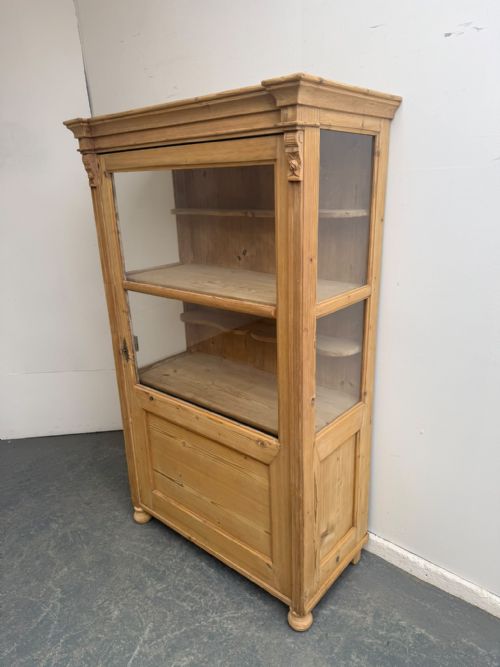
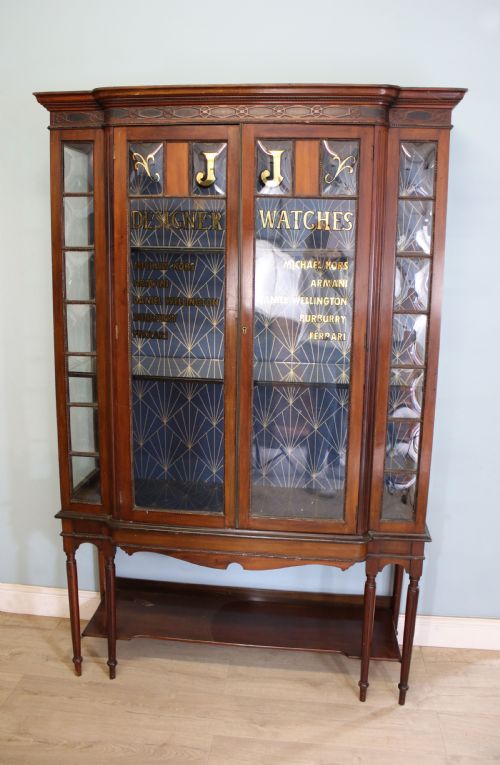
A freestanding china cabinet organises your dining room or parlour by holding porcelain behind glass while standing apart from the wall.
Freestanding China Cabinet
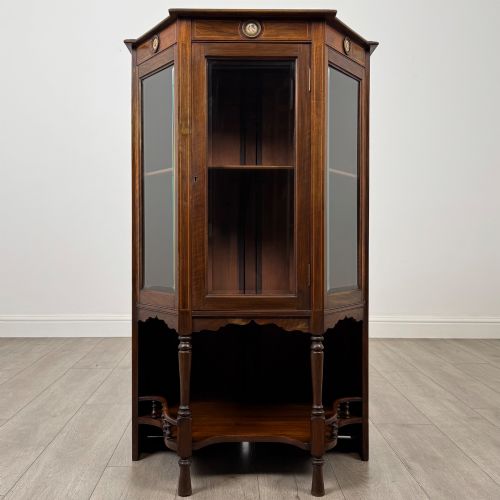
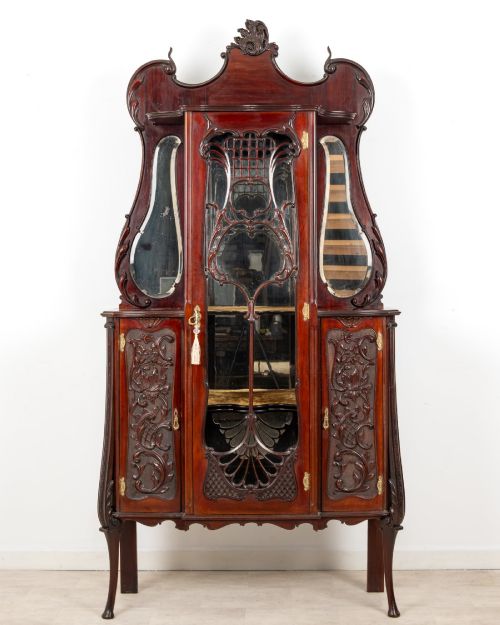
When you search for a freestanding china cabinet, you encounter display cabinets, vitrines, corner cupboards and kitchen dressers spanning the eighteenth, nineteenth and twentieth centuries. These pieces serve to showcase ceramics and glassware while remaining movable items of furniture.
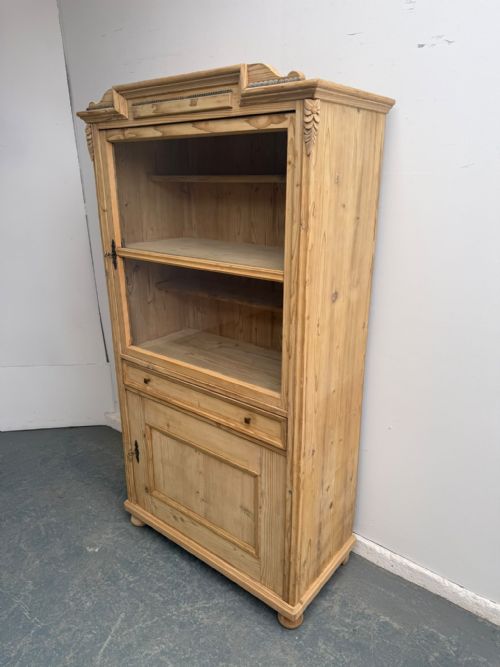
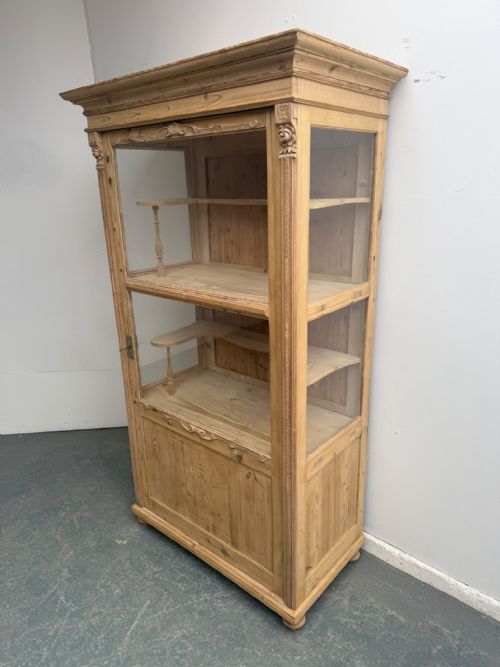
The selections available here range from Victorian mahogany vitrines and Edwardian walnut cabinets to earlier pine dressers and oak corner cupboards. Victorian and Edwardian examples dominate the offerings, alongside occasional eighteenth-century walnut pieces and Chinese carved hardwood forms.
Makers and workshops from various regions shaped these items, producing styles such as Chippendale Revival, Georgian, Victorian Country and English Country. Each piece reflects the domestic storage needs of its respective period.
How they were made
Cabinet makers utilised hardwoods such as mahogany, walnut and oak alongside softer pine for carcass construction, often adding brass handles, glass panes and fabric linings. Ormolu mounts appear on select French and English vitrines from the nineteenth century.
Construction techniques involve glazed doors for viewing contents, internal shelving, and sometimes inlaid woodwork or carved details. Pine pieces frequently survive with surfaces prepared for waxing or painting.
Listings feature items from the eighteenth, nineteenth and twentieth centuries, constructed in walnut, mahogany, oak, pine and hardwood.
What varies in quality
The standard of timber selection and joinery separates standard utility furniture from finer parlour pieces. Walnut and mahogany cabinets with precise bow fronts or fine ormolu mounts sit at the higher end of craftsmanship.
Carved ornament depth, the clarity and age of the glass panels, and the integrity of internal shelving dictate the overall merit of an individual cabinet.
The Freestanding China Cabinet Glossary
- Vitrine
- A glass-sided display cabinet designed primarily for the exhibition of porcelain and small decorative objects. These often feature glazed doors on multiple sides.
- Breakfront
- A piece of furniture where the central section projects forward from the flanking wings. This architectural layout adds depth and visual weight to larger cabinets.
- Bow front
- A convex, outwardly curved front facade common on select Edwardian and Georgian furniture pieces. It softens the linear geometry of a room.
- Ormolu
- Gilded bronze mounts applied as decorative ornaments to furniture, frequently seen on nineteenth-century French and English display pieces.
- Corner cupboard
- A specialised storage unit constructed with a flat or angled front designed to fit neatly into the ninety-degree junction of two walls.
Freestanding China Cabinet: Frequently Asked Questions
How do I clean the glass safely?
Use a lint-free cloth and a mild glass cleaning solution applied to the cloth rather than directly onto the wood or frame. This prevents moisture from damaging antique finishes and timber.
Take care around old putty or wooden glazing bars, which can be fragile on nineteenth-century and earlier cabinets.
Can I adjust the internal shelves?
Many nineteenth and twentieth-century cabinets feature fixed wooden shelving rather than adjustable modern tracks. Alterations require careful carpentry work to preserve the interior fabric.
Consider the height of your porcelain collections before purchasing a cabinet with fixed display tiers.
Are corner cabinets stable?
Corner cupboards utilise wall junctions for inherent stability, though freestanding versions distribute weight across multiple legs or a solid base. Ensure the floor is level where you place the unit.
Heavier oak and mahogany examples rarely require wall fixings unless subjected to heavy loading.
How do I identify Victorian pieces?
Victorian cabinets often display darker mahogany or walnut timbers, dense carving, and machine-sawn internal elements that emerged during the industrial period. Look for period lock hardware and traditional construction methods.
Stylistic cues like Chippendale Revival details also point toward late nineteenth-century manufacture.