
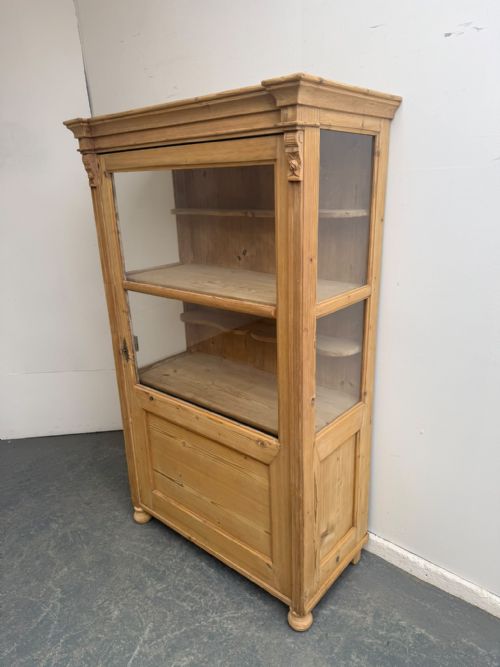


Glazed Trophy Cabinet
A glazed trophy cabinet turns a collection of objects into a room's focus, offering glass fronts and structured shelving to protect and display possessions.
Glazed Trophy Cabinet
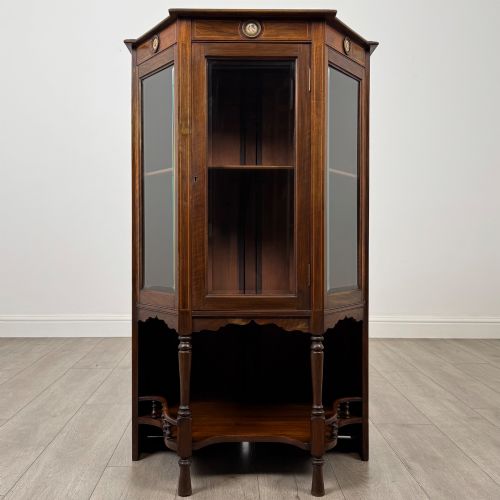
A glazed trophy cabinet provides enclosed shelving behind glass panels, designed to display valued possessions while keeping them safe from dust. These pieces range from domestic display cabinets to shop display cabinets and tall freestanding models.
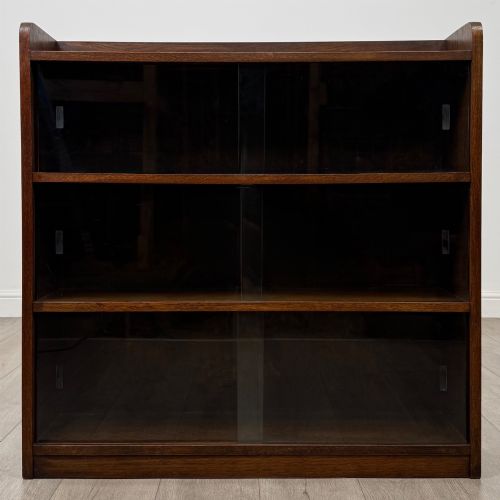
The versions most commonly met on this page belong to the Edwardian and Victorian periods. They span various formats including flat display cabinets, show cases, bookcases, and specialised gun cabinets.
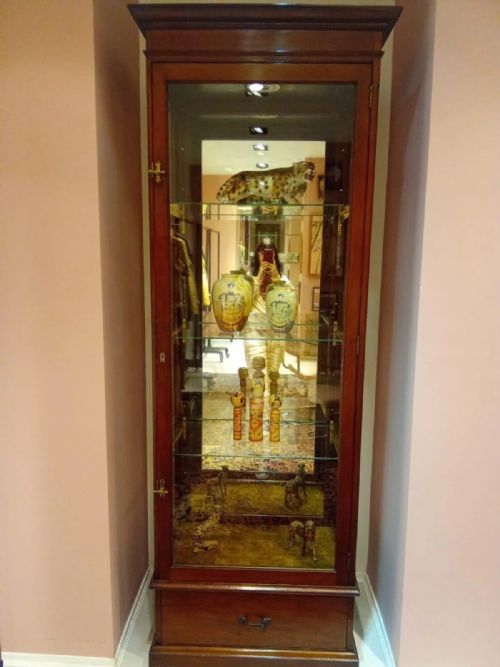
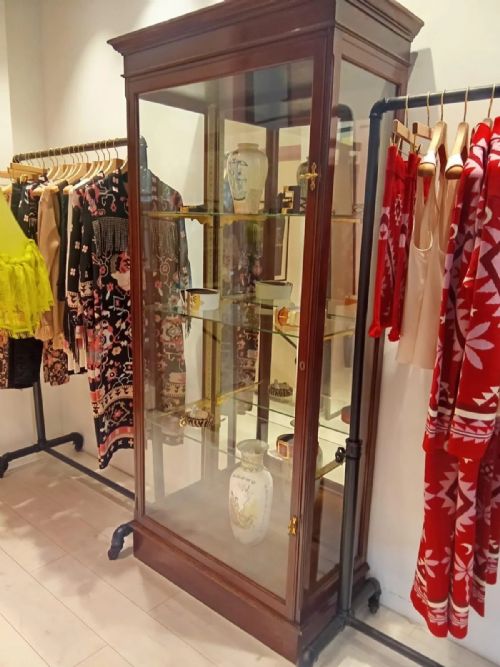
Makers utilised timber frames paired with extensive glass panels to maximise visibility from multiple angles. Many examples incorporate adjustable glass shelves or mirror backs to enhance the presentation of the contents.
How glazed trophy cabinet pieces were made
Makers constructed the primary frames of these cabinets using hardwoods such as mahogany, oak, walnut, and satinwood, alongside pine in country pieces. Brass hardware frequently secures the doors and hinges, while internal mirrors line the back panels of select examples.
Glazing forms the defining characteristic of these pieces, requiring carpenters to mount large glass panes securely within timber doors and side panels. Adjustable shelving systems utilise glass plates supported by metal brackets to allow flexible interior arrangements.
What varies in quality
Quality separates cabinets by the choice of timber and the precision of the joinery in the frame and door assemblies. Finer examples employ select mahogany, walnut, or satinwood with refined mouldings, whereas utilitarian shop pieces or country pine versions prioritise simple robust construction.
The sophistication of the internal fittings also marks the distinction between standard and superior pieces. Adjustable shelving mechanisms, bevelled glass panels, and original brass hardware indicate a higher standard of manufacture.
The Glazed Trophy Cabinet Glossary
- Edwardian
- Dating from the reign of King Edward VII, this period produced lighter furniture designs often incorporating satinwood stringing and neoclassical details. Pieces from this era frequently feature refined proportions.
- Victorian
- Spanning the reign of Queen Victoria, this period encompasses varied revival styles and robust construction methods. Cabinets from this era often utilise heavier timbers like mahogany and oak.
- Display cabinet
- A piece of furniture fitted with glass doors and sides specifically intended for exhibiting ornaments or collections. These items range from domestic sitting room furniture to tall commercial shop cases.
- Show case
- A glazed cabinet historically utilised in retail settings or private homes to display precious items. They provide maximum visibility through extensive glass panels.
- Satinwood
- A durable hardwood with a lustrous, golden-yellow sheen frequently utilised for decorative veneer or inlay work on fine Edwardian furniture. It adds a bright contrast to darker timbers.
Glazed Trophy Cabinet: Frequently Asked Questions
What is a glazed trophy cabinet used for?
A glazed trophy cabinet serves to display and protect collections, ornaments, or awards behind glass panels.
In domestic settings, they organise items while keeping dust away from delicate pieces.
How do I date a glazed cabinet?
Dating relies on identifying timber choices, construction techniques, and characteristic period styles visible in the frame.
Edwardian and Victorian examples show distinct moulding profiles and hardware choices typical of their respective decades.
Are shop display cabinets suitable for homes?
Shop display cabinets function well in homes when owners want tall, light-filled shelving with maximum visibility from all sides.
Their commercial origins often mean robust construction and adjustable glass shelves.
What woods were used for these cabinets?
Cabinet makers utilised mahogany, oak, walnut, satinwood, and pine depending on the workshop and the intended setting.
Finer domestic pieces often feature figured mahogany or walnut, while utilitarian shop fittings use robust oak or pine.
Do these cabinets have adjustable shelves?
Many examples include adjustable glass shelves supported by internal brackets to accommodate items of varying heights.
This feature allows the interior layout to adapt to changing display needs.