


Pair Display Cases
Pair display cases bring symmetry and proportion to a room while holding collections behind glass.
Pair Display Cases
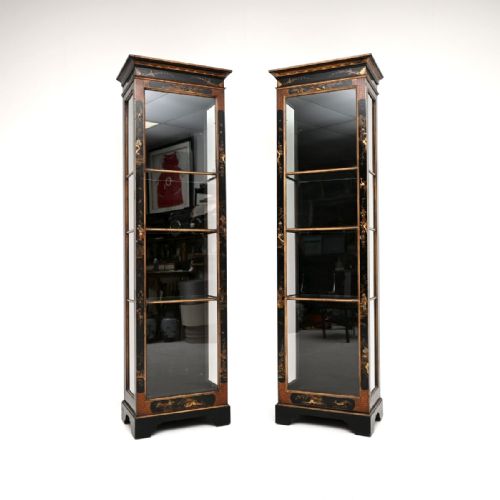
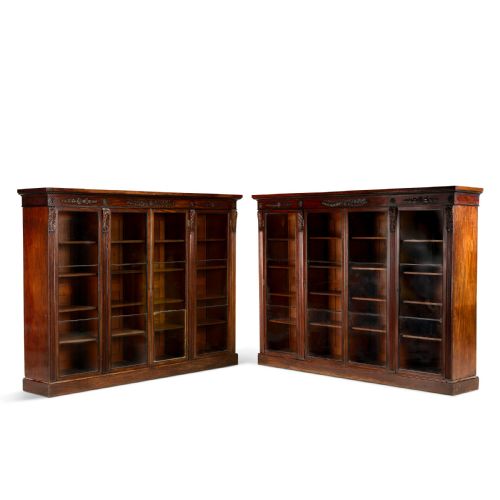
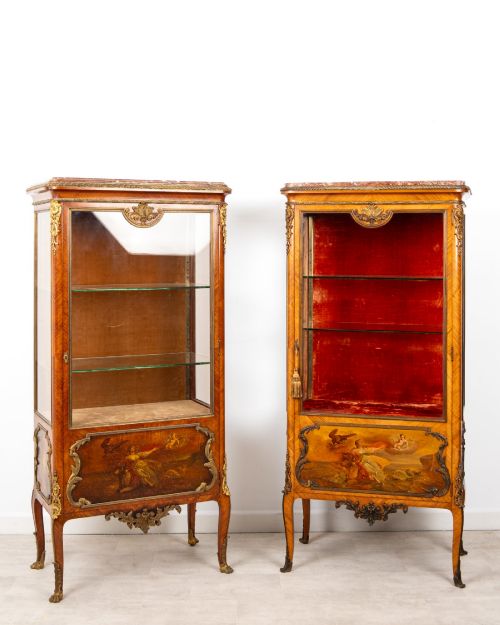
Pair display cases emerge across multiple centuries and styles, taking the form of glazed cabinets, vitrines, pier cabinets, and bookcases designed to match symmetrically.
The pieces on this page span the Victorian era, the Edwardian period, the Regency period, and the 1930s interwar years, utilising woods such as mahogany, walnut, burr walnut, and ebonised wood alongside glass and ormolu.
Victorian pier cabinets and French boulle inlaid vitrines sit alongside later Edwardian and Art Deco examples, providing matched solutions for displaying ceramics, books, and decorative objects.
Materials and Construction
Cabinet makers utilised dense hardwoods like mahogany and walnut as the primary structural carcases, frequently applying burr walnut, kingwood, or maple veneers to create decorative surface patterns.
Glazing forms the central functional element, set into timber doors or framing alongside brass hardware, ormolu mounts, and intricate marquetry or mother of pearl inlay.
French and English workshops employed traditional joinery, ebonising, and meticulous polishing to finish the timber frames and display platforms.
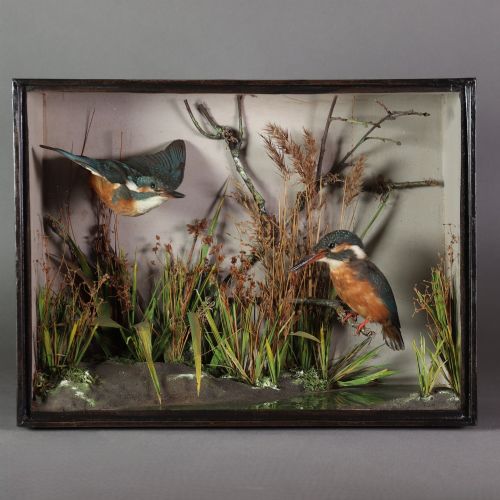
Several listings include unexpected inhabitants: taxidermy kingfishers, waxwings, and snow buntings keeping watch behind the antique glass.
Judging Quality and Execution
Quality rests in the selection of timbers, where figured burr veneers and solid mahogany frames indicate a higher grade of manufacture than plain secondary woods.
The crispness of ormolu mounts, the precision of Boulle brass inlay, and the finesse of marquetry panels separate standard cabinet work from exhibition pieces.
T E Gunn·Paul Somani·C Hindley and Sons·Town and Emanuel·Howard and Sons
The Pair Display Cases Glossary
- Vitrine
- A glass-fronted cabinet designed specifically for displaying fine porcelain, curiosities, or decorative objects. These French-inspired pieces often feature glazed sides as well as doors.
- Pier Cabinet
- A narrow cabinet built to stand against the wall space between windows. Victorian examples in walnut and marquetry are typical.
- Ormolu
- Gilded bronze mounts applied to furniture for decoration. High quality examples show sharp, chased detailing.
- Boulle
- A form of marquetry consisting of tortoise-shell and brass inlay developed in France. It creates a striking contrast of golden metal against dark grounds.
- Marquetry
- Decorative patterns formed by fitting together thin veneers of various woods and materials. It covers cabinet doors and friezes.
Pair Display Cases: Frequently Asked Questions
How do I place a pair in a room?
Symmetrical placement works best when flanking a fireplace, doorway, or large window. The matching forms create balance and a unified decorative focal point.
Ensure adequate clearance for doors to open fully without striking surrounding furniture or walls.
What items are suitable for display?
Historically these enclosures housed books, fine ceramics, taxidermy, and delicate curiosities. Glass shelves protect items from dust while maintaining visibility.
Heavier objects require sturdy timber or reinforced glass shelving to prevent sagging over time.
How do I distinguish Victorian from Edwardian cases?
Victorian examples frequently utilise dark walnut, heavy marquetry, and rich ormolu mounts. They lean towards formal, ornate presentation.
Edwardian pieces often feature lighter mahogany, satinwood, or painted chinoiserie finishes reflecting a more airy aesthetic.
How do I care for antique wood finishes?
Keep timber surfaces away from direct sunlight and heat sources to prevent veneer lifting and fading. Regular dusting with a soft, dry cloth preserves the polish.
Occasional application of appropriate wax feeds the antique grain without building up heavy residue.