
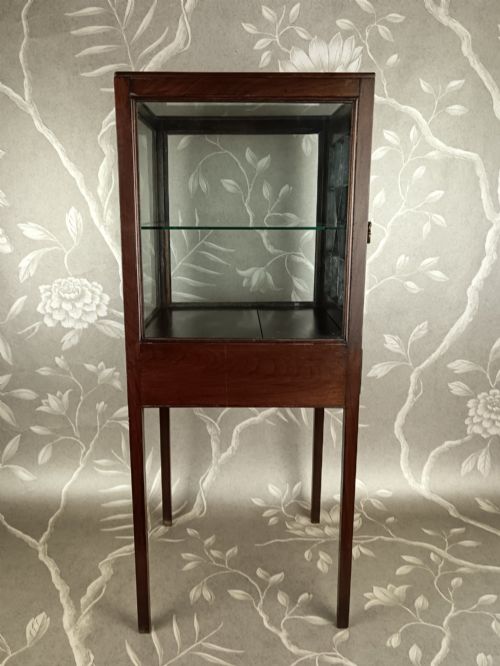
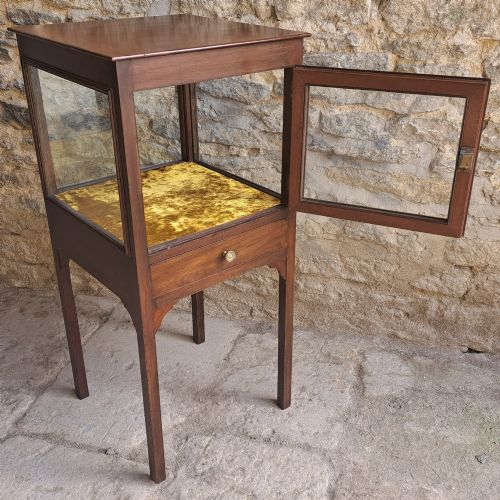


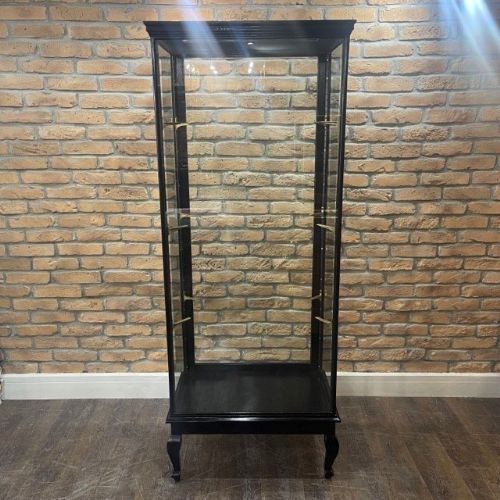


Standing Glass Showcase
These standing glass showcase examples bring clear visibility and period character to collections, offering classic floor-standing display storage.
Standing Glass Showcase
When you search for a standing glass showcase, you find floor-standing display cabinets, vitrines, and bijouterie cabinets designed to exhibit items from all angles. These pieces range from tall china cabinets to cylindrical pedestals, tower cabinets, and oval vitrines.
The versions you are most likely to meet on this page hail from the Edwardian era and the early twentieth century, alongside Georgian designs and nineteenth-century French pieces. Makers employed styles such as Sheraton Revival, Art Nouveau, Art Deco, French Louis XVI, and French Empire.
These display units serve distinct purposes, from tabletop bijouterie cases on stands to tall cabinets holding china or shop goods. Their glazed panels and freestanding forms allow light to circulate around cherished objects while keeping them secure.
What varies in quality
The standard of a standing glass showcase rests on the crispness of its timber joinery, the selection of figured mahogany or satinwood veneers, and the finesse of any inlaid decoration. Superior examples display balanced proportions, clean sightlines in the brass or timber framing, and well-fitted doors that close true.
Secondary elements such as original velvet linings, intact curved or flat glazing, and specialised hardware like maker-stamped brass fittings elevate a piece. The integration of painted details or complex forms like demi-lune and cylindrical shapes distinguishes workshop output.
One shop showcase arrived accompanied by the stamp of Siegel, proving that even retail fittings can aspire to cabinetmaker status.
Siegel
The Standing Glass Showcase Glossary
- Vitrine
- A glass display cabinet used primarily for showing porcelain, curiosities, or fine objects. These freestanding pieces often feature glazed sides and doors to maximise visibility.
- Bijouterie cabinet
- A shallow glass-topped display table or cabinet designed specifically for jewellery, medals, and small trinkets. They frequently sit on slender legs and raise the objects closer to eye level.
- Crossbanding
- A decorative border technique where strips of veneer are laid so that the grain runs perpendicular to the main panel. This method frames table tops and cabinet doors with contrasting wood grains like satinwood.
- Vernis Martin
- A decorative furniture finishing technique mimicking Asian lacquerwork, developed in eighteenth-century France. It uses successive layers of translucent varnish to create luminous painted panels.
- Demi-lune
- Half-moon or semicircular in shape, applied to cabinets designed to stand flush against a wall or function as freestanding console displays.
Standing Glass Showcase: Frequently Asked Questions
Where should I place a standing glass showcase?
These cabinets suit reception rooms, drawing rooms, or hallways where natural light can pass through the glass panels to illuminate the contents.
Position them away from direct sunlight to protect sensitive items and interior fabrics from fading over time.
How do I distinguish Edwardian cabinets from Georgian ones?
Edwardian examples on this page often feature lighter satinwood crossbanding, delicate stringing, and revived Sheraton styling typical of the early twentieth century.
Genuine Georgian pieces display heavier structural proportions, deeper timber patination, and construction methods characteristic of the late eighteenth century.
What is the difference between a vitrine and a bijouterie cabinet?
A vitrine functions as a tall display cabinet with vertical glass doors and multiple internal shelves for china or larger objects.
A bijouterie cabinet provides a shallow glazed compartment near the top, specifically tailored for horizontal viewing of small collectables.
How do French nineteenth-century cabinets differ from English ones?
French pieces of this period frequently incorporate giltwood, cylindrical forms, or Vernis Martin finishes that draw on Louis XVI and Empire design vocabularies.
English equivalents tend to rely on mahogany frames with straightforward rectilinear or bow-fronted geometries influenced by Sheraton traditions.