




Glass Museum Cabinet
A glass museum cabinet holds precious things behind clear panes, bringing the focus entirely to the objects inside.
Glass Museum Cabinet
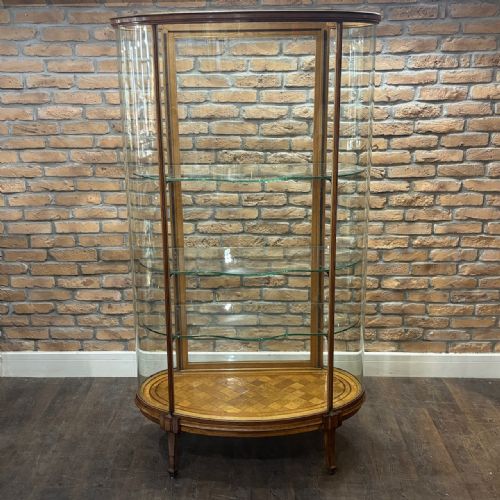
A glass museum cabinet provides a clear enclosure for objects, using extensive glazing to give a full view from multiple angles. When you search for a glass museum cabinet, you find tall towers, low counters, and tabletop cases designed to protect items while displaying them prominently.
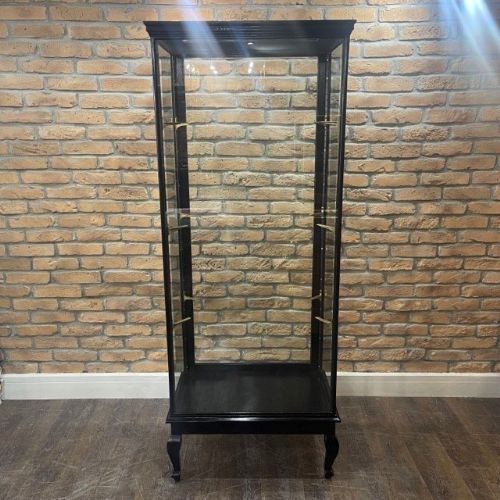
Most examples appearing here stem from the nineteenth and early twentieth centuries, spanning Victorian, Edwardian, and Art Deco periods. These pieces often originate from commercial shop settings, utilising mahogany, oak, or ebonised wood frames.
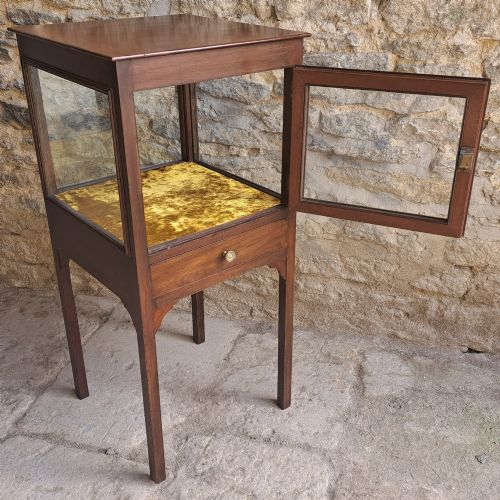
Forms range from large freestanding units to compact tabletop vitrines. Whether built for a nineteenth century interior or a nineteen-twenties commercial space, each piece balances structural timber with wide glass panels.
How they were made
Makers constructed these cabinets using sturdy timbers such as mahogany, oak, and cedar to form the primary framework. Ebonised wood and brass also appear, providing robust support for the heavy glazing required in display cases.
Large glass panes dominate the construction, held securely within wooden or brass framing to maximise visibility. Interiors frequently feature surfaces lined with velvet or fabric to cushion displayed items.
Some nineteenth century cedar cases arrived with an Indian style, bringing distant craft traditions into domestic display rooms.
What varies in quality
The sophistication of the timber work and the clarity of the framing distinguish finer examples from standard commercial pieces. Cabinets bearing maker details from established shopfitters often demonstrate superior joinery and refined proportions.
The proportion of glass to timber alters the visual weight of the case, with slimmer frames offering a more uninterrupted view. Material choices such as gold leaf detailing or specialised woods elevate the overall presence of the cabinet.
F Sage Co·Pollards·Siegel·Quincy Showcase Works Illinois·E Pollard Co Ltd
The Glass Museum Cabinet Glossary
- Vitrine
- A glass display cabinet used for exhibiting fine objects or collections. This term often applies to more decorative or refined display pieces.
- Showcase
- A glass-fronted or glass-topped case for displaying wares in a shop or museum. These units frequently date from the commercial expansion of the nineteenth and twentieth centuries.
- Ebonised
- Wood treated to imitate ebony, producing a dark, uniform finish. This treatment appears on several early twentieth century tower cabinets.
- Glazed
- Fitted with glass panes. Glazed panels form the primary walls of these display units.
Glass Museum Cabinet: Frequently Asked Questions
What is a glass museum cabinet?
A glass museum cabinet is a display enclosure featuring extensive glass panels supported by wood or metal frames.
These pieces were originally built for shops, museums, and private homes to exhibit collections while keeping them secure.
How do I style a glass museum cabinet at home?
You can use a glass museum cabinet to display curated collections of ceramics, glassware, or small antiques.
Keep the interior lighting clear and arrange items with space between them to maintain the open, airy feel characteristic of these display cases.
How do I tell an Edwardian display cabinet from a Victorian one?
Victorian cabinets often utilise heavier mahogany timber and more ornate detailing suited to late nineteenth century interiors.
Edwardian and later nineteen-twenties pieces frequently adopt cleaner lines, commercial styling, or influences from Art Deco design.
Were these cabinets used in shops?
Many of these pieces served as shop display counters and retail showcases during the nineteenth and early twentieth centuries.
Makers constructed them with durable timbers and large glass surfaces to draw customer attention to goods inside.