





Walnut Sheet Music Stand
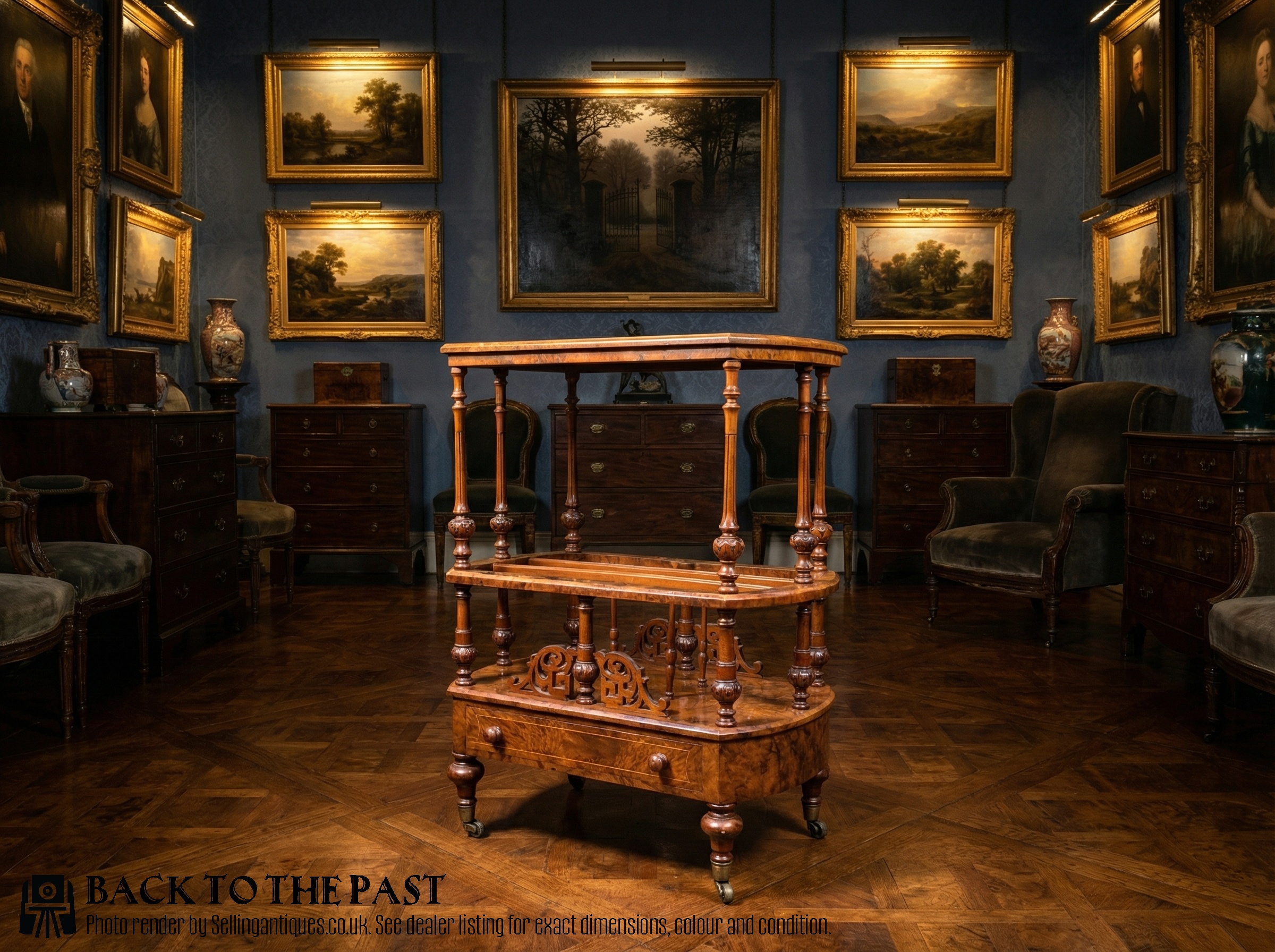
These walnut sheet music stand pieces bring Victorian melody into the room with burr walnut and wood inlay.
Walnut Sheet Music Stand
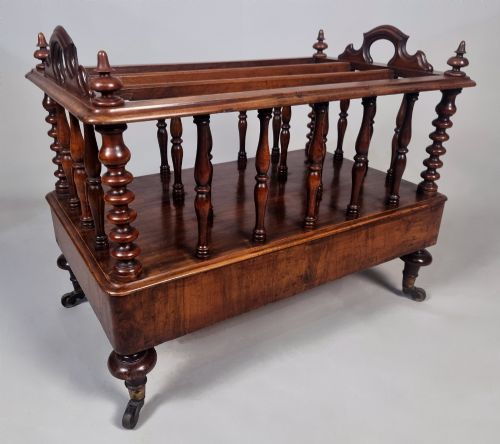
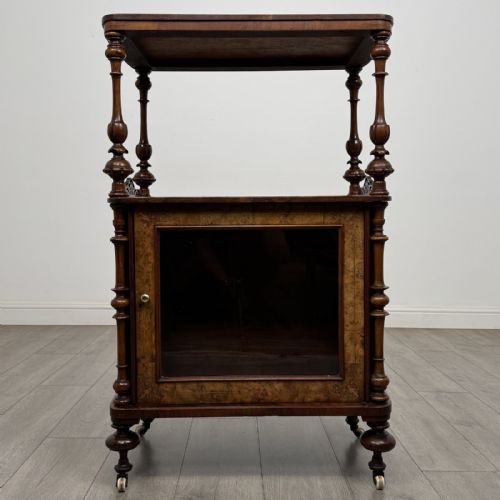
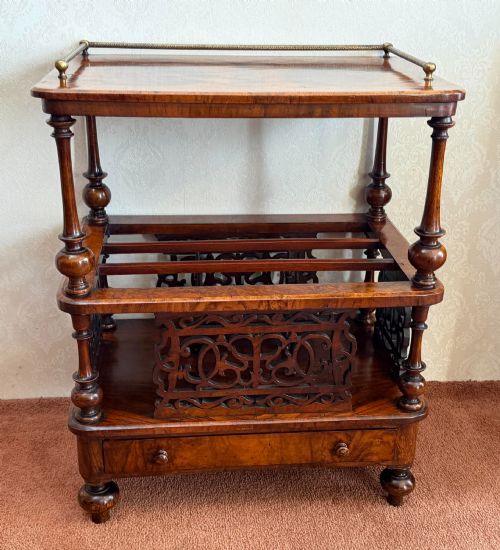
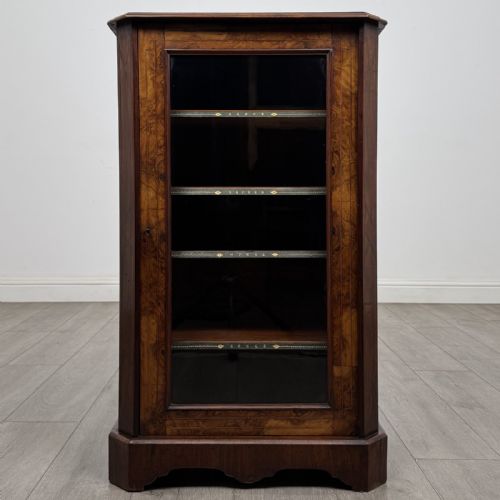
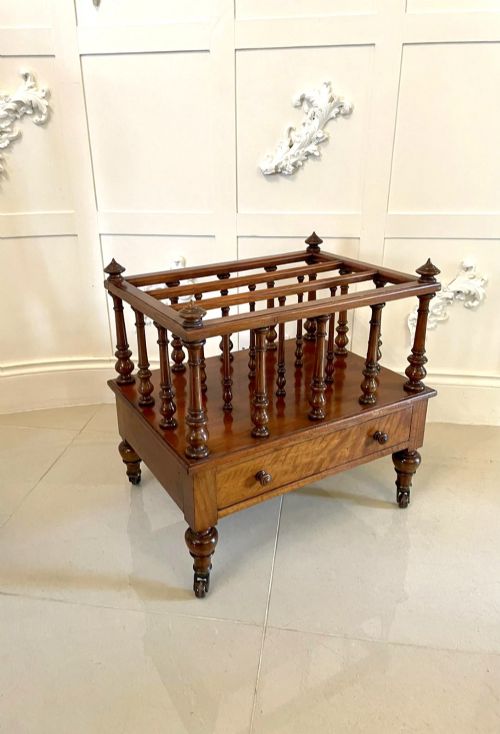
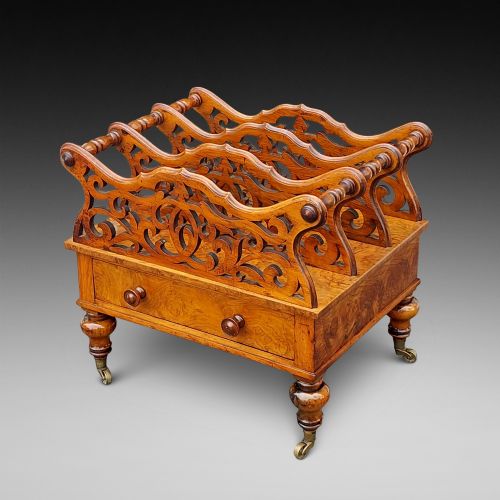
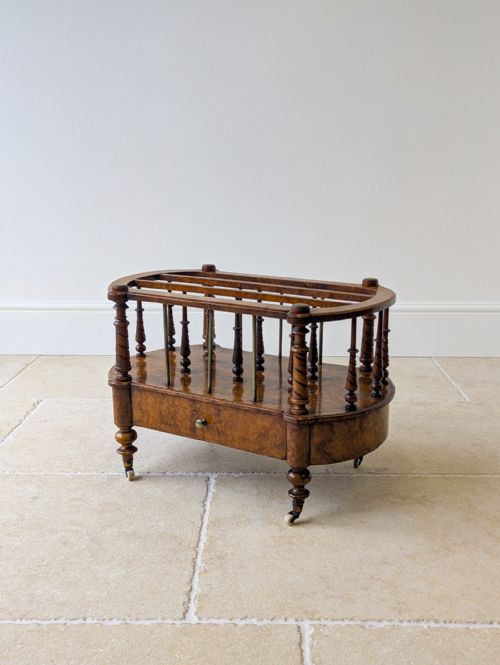
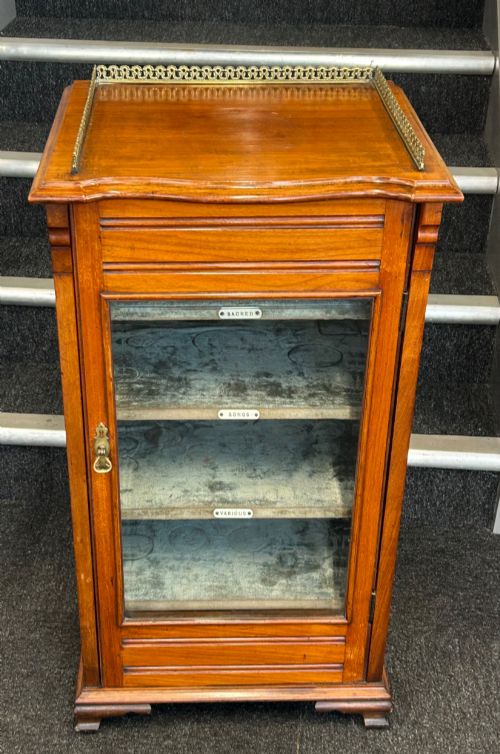
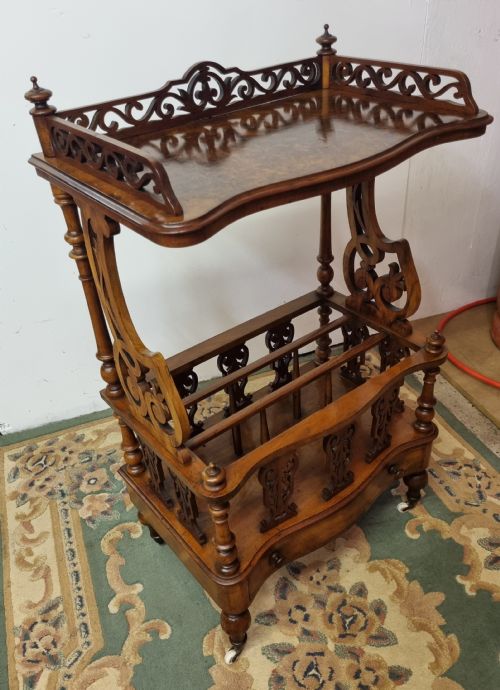
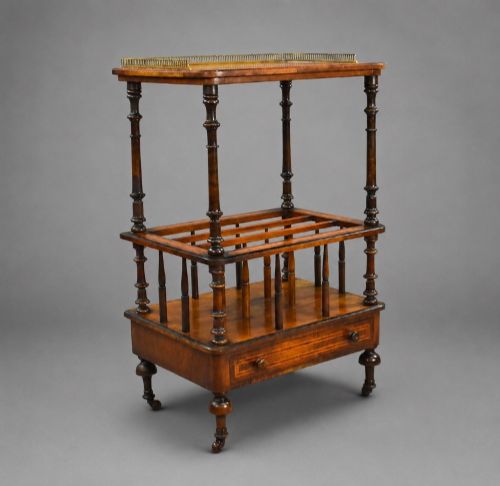
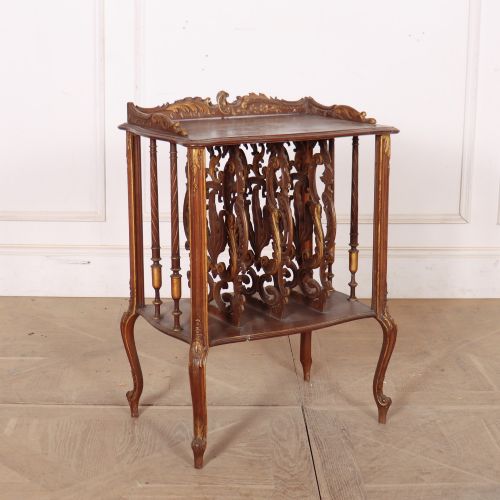
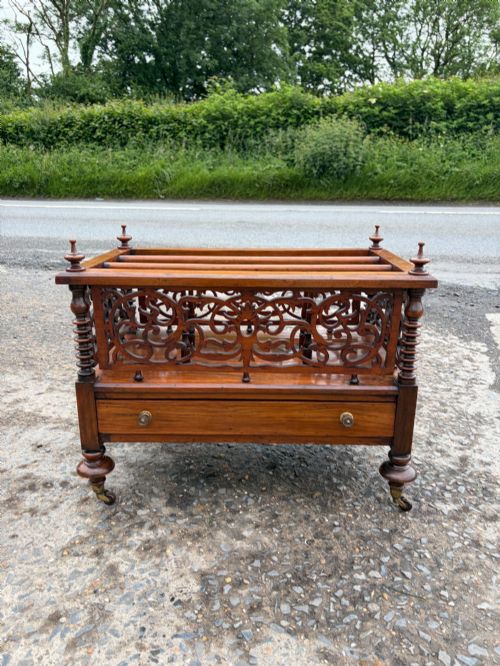
A walnut sheet music stand encompasses Victorian music cabinets, music canterburys, magazine racks, and occasional tables designed to hold scores near a piano or lounge. The pieces seen on this page span the Victorian era, specifically featuring dates from 1850 through to 1880.
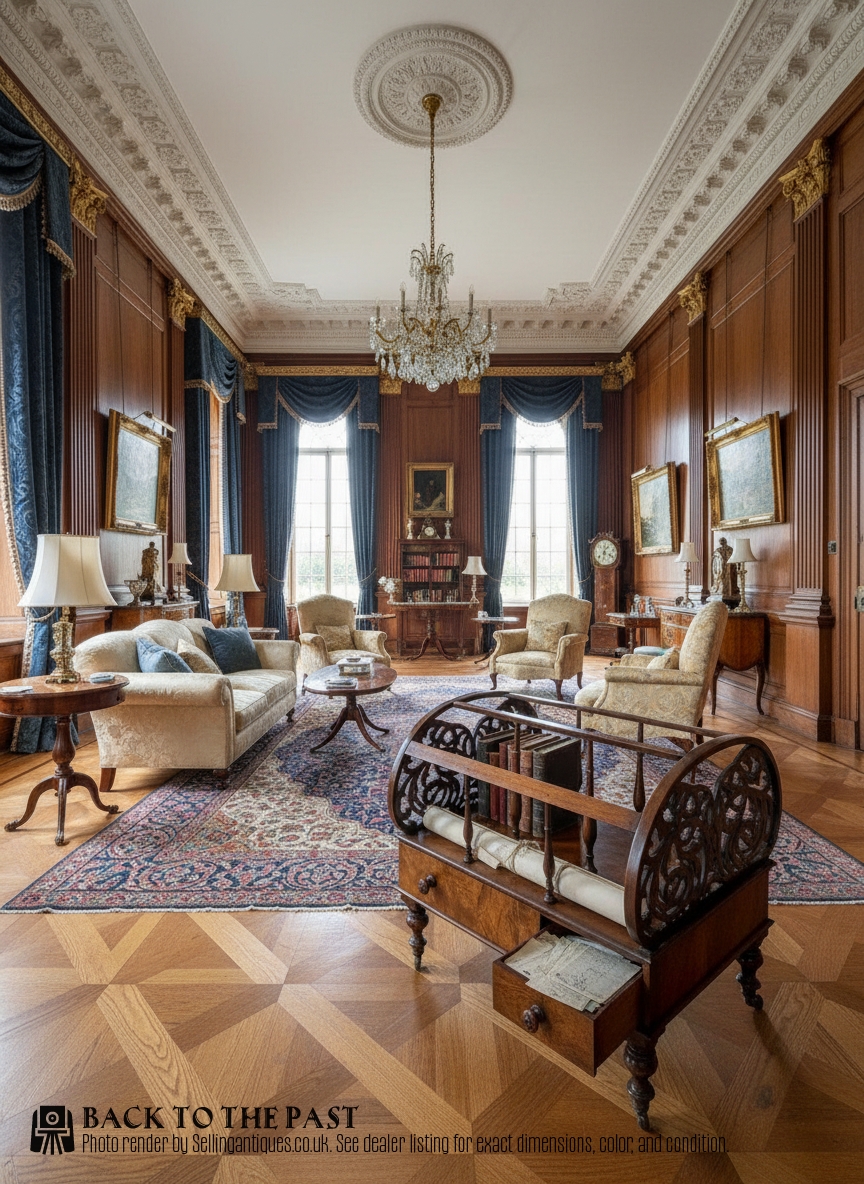
The form most frequently met is the canterbury, often freestanding with partitions for upright sheet music and sometimes a lower drawer or shelf. Alongside these sit dedicated music cabinets and pianist lounge servers that provide enclosed storage.
Makers and origins show a distinct English provenance in the nineteenth century, utilising rich timbers and brass details. Buyers encounter substantial proportions alongside smaller occasional table hybrids.
Construction and materials
Makers built these pieces using solid walnut and highly figured burr walnut veneers applied to carcases. Wood inlay adds decorative contrast to the surfaces, whilst glass and ceramic components appear in certain designs.
Metalwork played a structural and decorative role, with brass fittings and castors supporting the mobility of freestanding canterburys. Joinery reflected nineteenth-century cabinet-making standards appropriate for domestic music rooms.
Walnut Sheet Music Stand Retail Price Guide 2026
Typical asking prices for walnut sheet music stand among the pieces listed under this phrase on Sellingantiques today, from the lower quarter to the upper quarter. They describe what is for sale here now, not the wider market.
Edwards and Roberts once stamped their nineteenth-century furniture with initials so discreet you might need a magnifying glass to find them.
Judging quality in nineteenth-century music furniture
The distinction between standard examples and superior pieces rests on the choice of burr walnut veneer and the intricacy of the wood inlay. Rich grain patterns and balanced symmetrical figuring elevate the visual presence of a cabinet or canterbury.
Structural refinement also divides the range, particularly in the turning of wooden supports, the crispness of brass hardware, and the integration of drawers. Substantial proportions combined with tidy interior partitions indicate deliberate workshop execution.
Edwards and Roberts
The Walnut Sheet Music Stand Glossary
- Canterbury
- A low piece of furniture with upright partitions designed originally for holding sheet music or portfolios. Victorian examples frequently incorporate turned legs and castors.
- Burr Walnut
- A timber harvested from the warted excrescences of walnut trees, yielding highly decorative swirling grain patterns. It was favoured for high-status nineteenth-century cabinet-making.
- Wood Inlay
- The technique of inserting pieces of contrasting timber into a recessed wood surface to form decorative motifs. This ornamentation appears across several Victorian pieces on this page.
- Music Cabinet
- An enclosed piece of furniture with shelves or drop-down compartments for organising scores. These contrasted with open canterburys by protecting paper from dust.
Walnut Sheet Music Stand: Frequently Asked Questions
How were music canterburys used?
Music canterburys were placed beside pianos or in sitting rooms to keep sheet music organised and accessible for performers.
The upright partitions kept scores upright, whilst drawers held smaller items like manuscript books.
How do I date a Victorian music cabinet?
Dating relies on stylistic markers, timber choice, and construction techniques recorded across the Victorian period from 1850 to 1880.
Burr walnut veneers and specific brass hardware help place these items within the nineteenth century.
Can these hold modern magazines?
The original partitions and lower shelves suit contemporary periodicals and books just as well as nineteenth-century sheet music.
Freestanding canterburys and magazine racks function effectively in modern living spaces.