
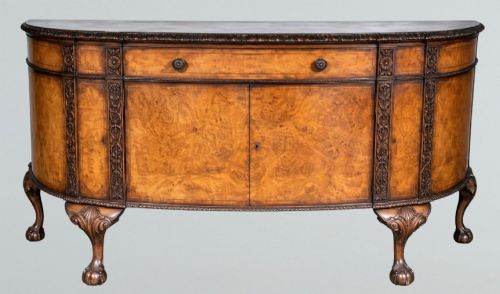

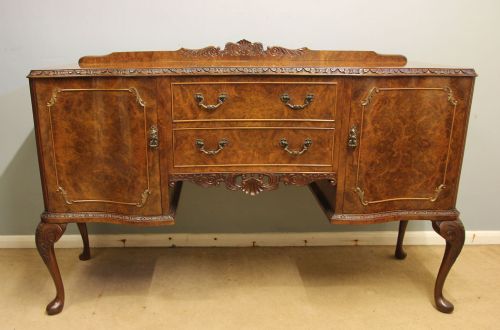
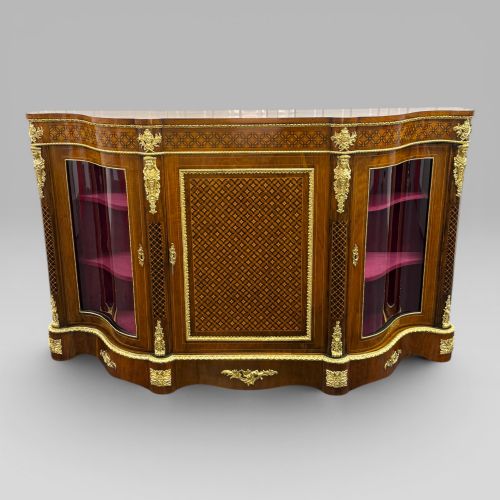


Walnut Serpentine Credenza
A walnut serpentine credenza brings nineteenth-century cabinet work into a room through undulating curves and burr veneers.
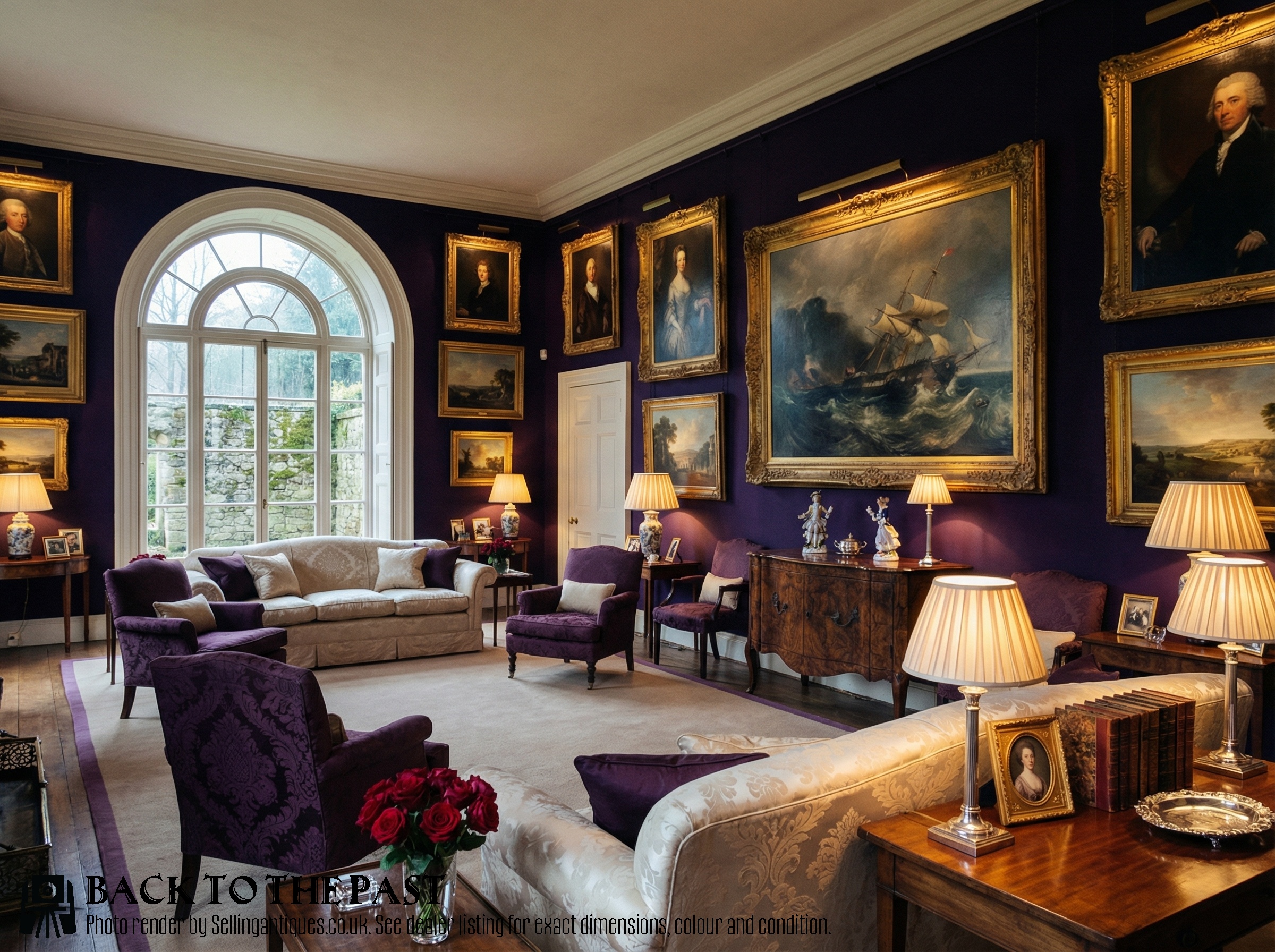
Walnut Serpentine Credenza
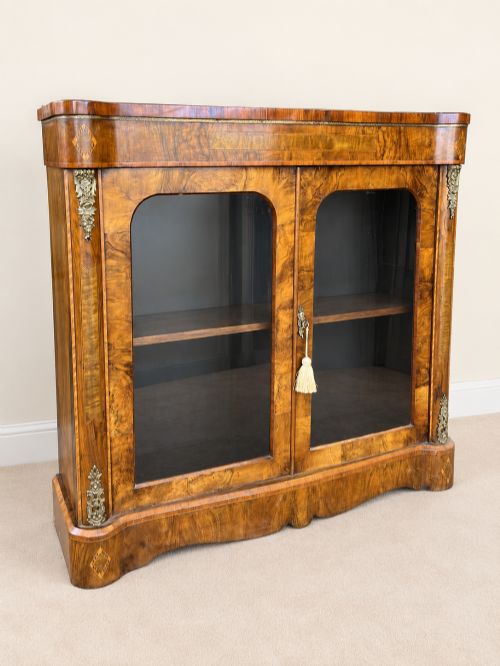
A walnut serpentine credenza is a low storage cabinet shaped with a gentle, undulating front edge characteristic of mid-nineteenth-century cabinet work. The pieces appearing most frequently on this page date from the Victorian era, specifically the 1850s, 1860s, and 1870s, though later twentieth-century iterations also emerge.
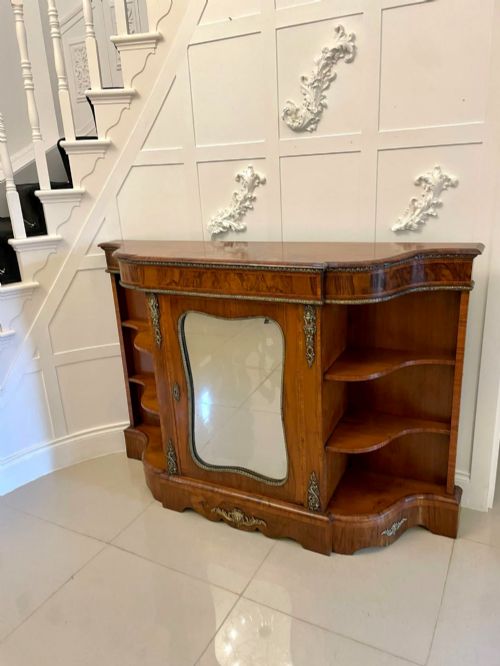
Makers designed these credenzas to serve formal reception rooms and drawing rooms as display furniture and serving surfaces. They sit low to the ground, often featuring central cabinet doors flanked by curved glass side compartments or open shelving.
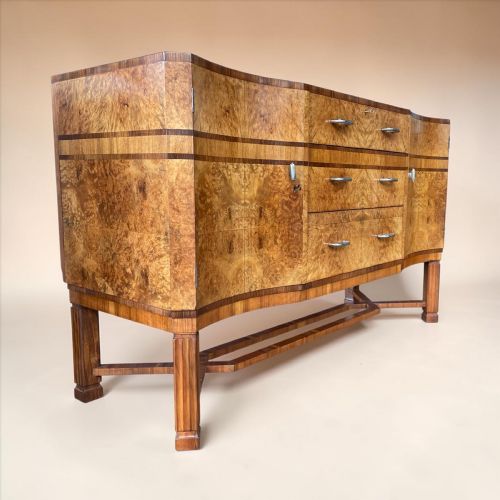
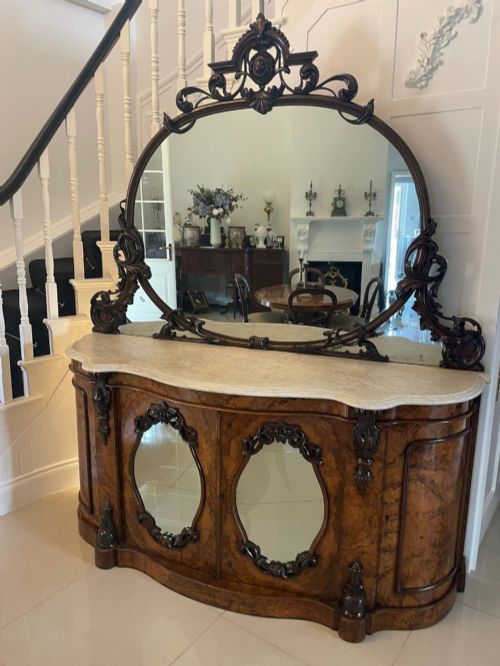
Beyond the standard Victorian forms, the inventory includes related side cabinets, marble-topped consoles, and occasional twentieth-century Art Deco sideboards that share the characteristic undulating profile.
How they were made
Cabinet makers constructed the primary carcase from solid timber before applying highly figured burr walnut veneers across the curved serpentine fronts. This grain pattern required skilled sawing to achieve symmetrical book-matched surfaces along the doors and panels.
Workshops embellished these cabinets using cast ormolu mounts, marquetry inlay in contrasting timbers like kingwood, and occasionally inset marble tops. Glazed doors utilised shaped glass curved to match the complex contours of the cabinet ends.
Some credenzas managed to squeeze entire twelve-piece cutlery sets and secret serving trays behind their undulating serpentine doors.
What varies in quality
The sophistication of the marquetry inlay and the density of the burr walnut figuring distinguish high-end exhibition pieces from standard production. Cabinets featuring finely cast ormolu mounts and original shaped marble tops command attention for their material richness.
Structural execution along the challenging serpentine curves determines long-term stability, as inferior joints warp over time. The crispness of carved wooden details and the integration of curved glass panes reflect the original maker's investment of time and skill.
Maison Gagneau·Epstein
The Walnut Serpentine Credenza Glossary
- Serpentine
- A furniture front profile characterised by a convex centre flanked by concave curves, or vice versa. This undulating shape requires precise joinery to follow the flowing contour.
- Burr Walnut
- Timber taken from the gnarled growth on a walnut tree, producing dense, swirling grain patterns. Cabinet makers prized these veneers for decorative door panels.
- Ormolu
- Gilded bronze mounts cast in decorative scrollwork or floral motifs applied to furniture corners and mounts. Makers used these metallic accents to frame the wood panels.
- Marquetry
- The art of applying pieces of veneer to a structure to form decorative patterns and pictures. Craftsmen utilised various tinted woods to create floral or geometric designs across the credenza front.
- Pier Cabinet
- A narrow cabinet designed to stand against the wall space between windows. These pieces often match the decorative scheme of a larger credenza.
Walnut Serpentine Credenza: Frequently Asked Questions
What is a walnut serpentine credenza?
A low nineteenth-century display cabinet featuring a curved, undulating front edge and figured wood veneers. These pieces served formal reception rooms for storage and surface display.
Craftsmen typically built them with central doors and glazed side compartments, mounting the structures on low plinth bases.
Where did people place these credenzas?
Victorian households positioned these cabinets against principal walls in drawing rooms and dining parlors. They functioned as serving surfaces during gatherings and as decorative focal points.
The low profile allowed owners to place mirrors or paintings directly above the cabinet surface.
How do I identify a Victorian piece?
Victorian examples display characteristic burr walnut veneers, hand-cut marquetry, and heavy ormolu mounts. The construction relies on traditional dovetail joints and hand-turned interior elements.
Many of these cabinets also incorporate mirror backs or shaped marble tops that align with nineteenth-century manufacturing methods.
How do I care for burr walnut?
Protect the veneered surfaces by avoiding direct sunlight and maintaining stable room humidity. Gentle dusting with a dry cloth preserves the polished finish.
Keep wooden surfaces away from direct heat sources to prevent the burr veneers from lifting or cracking over time.