


Rococo Side Cabinet
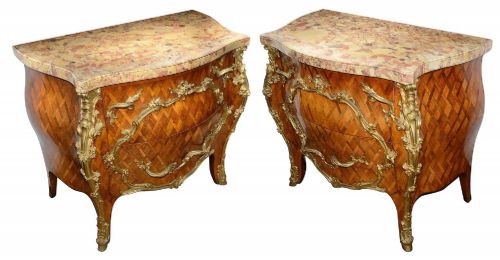
A rococo side cabinet brings serpentine lines, rich timber and gilded bronze into a room, offering both surface display and concealed storage.
Rococo Side Cabinet
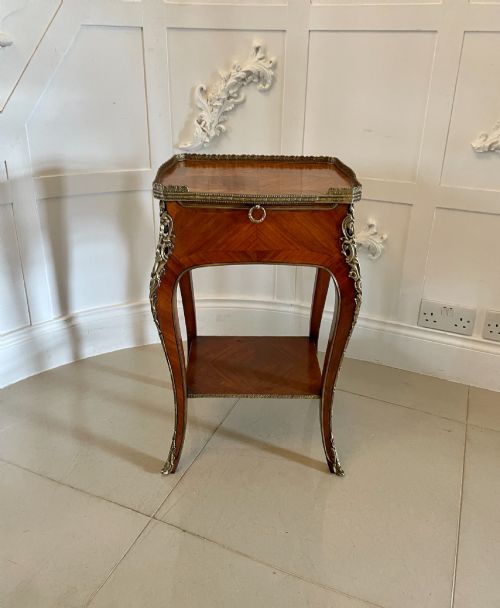
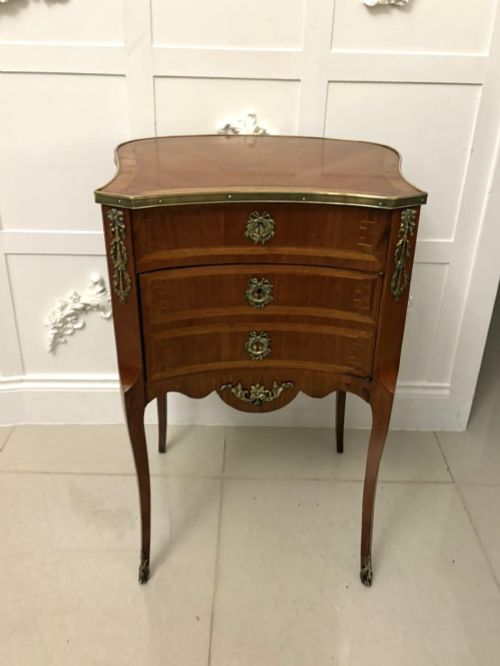
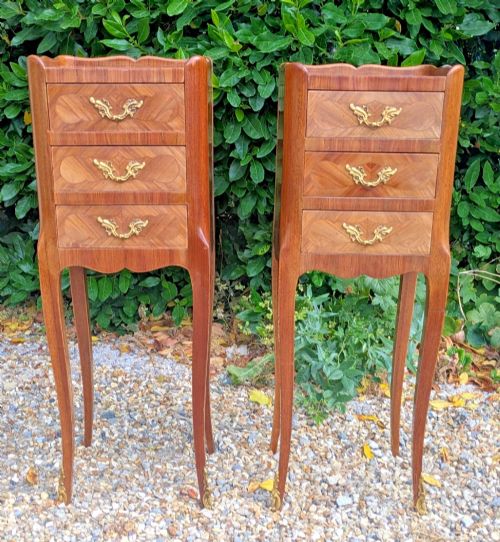
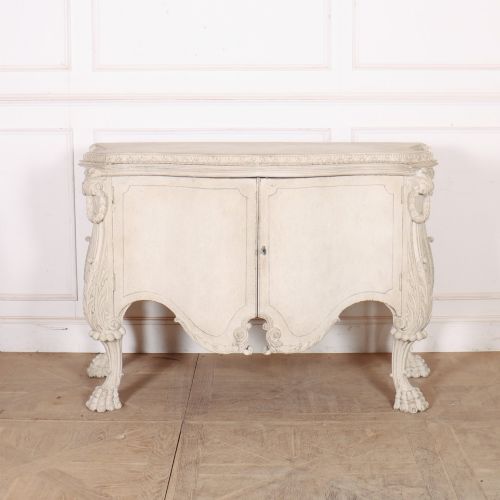
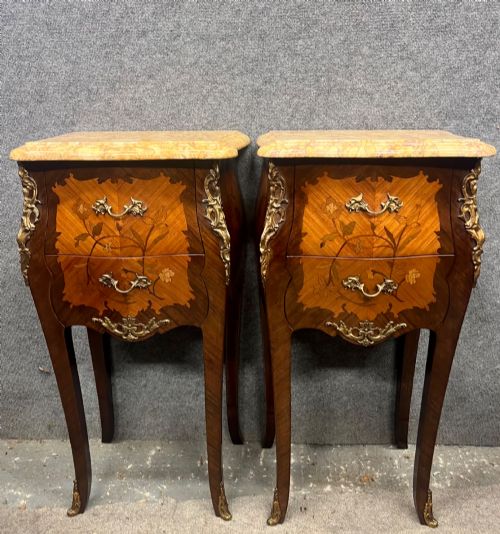
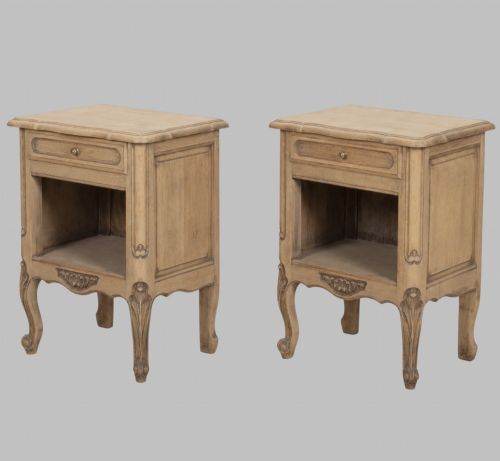
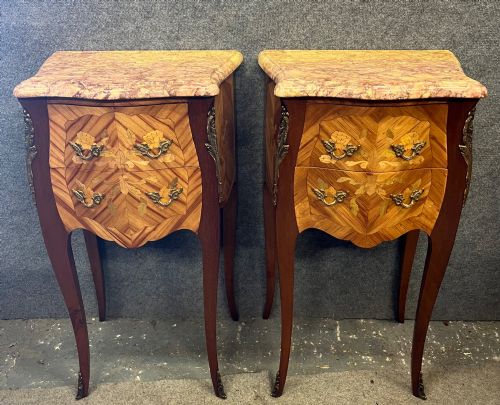
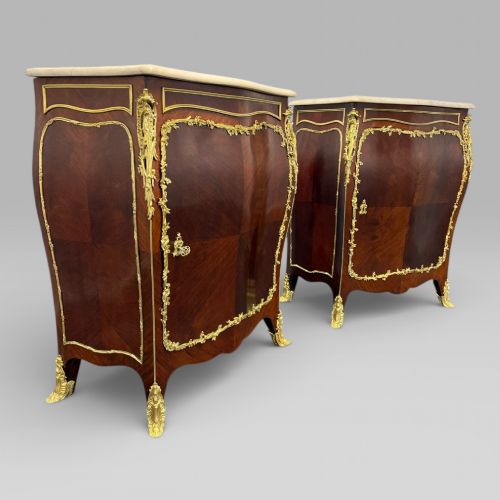
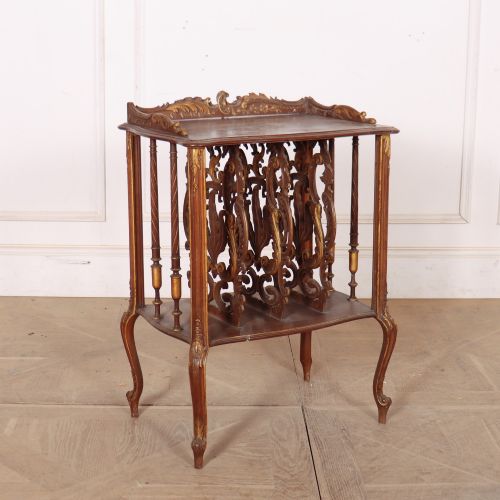
When you search for a rococo side cabinet, you encounter a selection of continental forms spanning the eighteenth century through to revival periods in the nineteenth and twentieth centuries. These pieces encompass commodes, bedside tables, lamp tables, and small cupboards designed with curved profiles and ornate ornamentation.
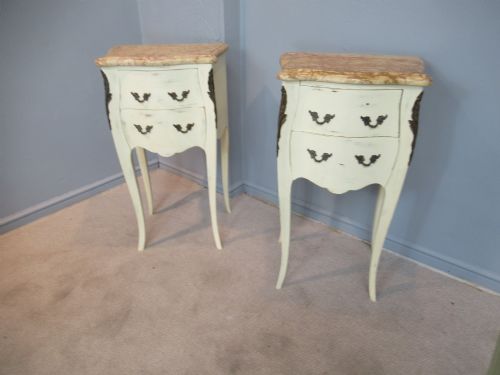
The most common examples on this page are revival pieces from the nineteenth and early twentieth centuries, particularly French Louis XV style bedside cabinets and walnut or kingwood commodes. These items adapt domestic storage into decorative statements through shaped surfaces and marquetry detail.
Materials and construction
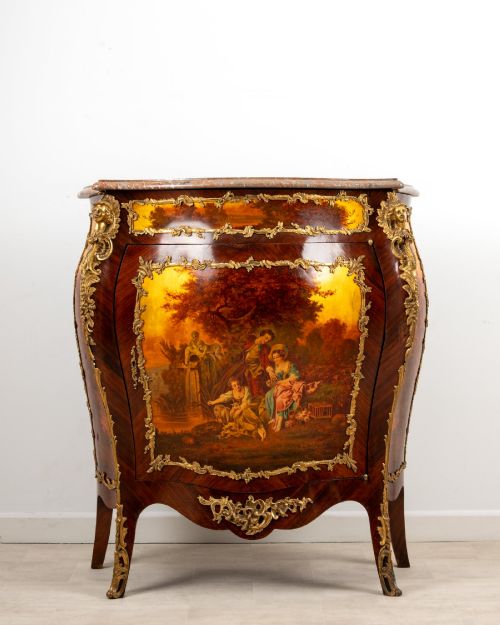
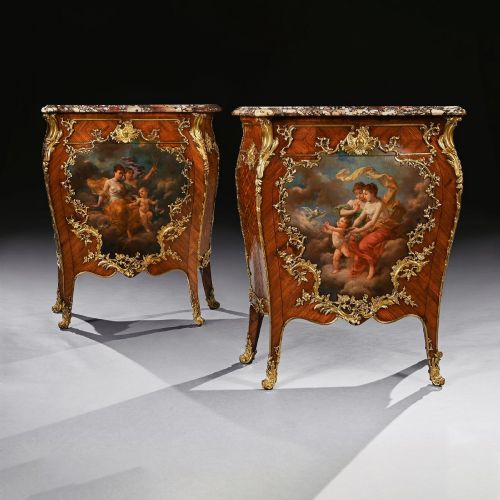
Cabinets of this type rely on foundational carcases of walnut, rosewood, or kingwood, frequently enhanced by intricate floral marquetry or painted Vernis Martin panels. Marble tops, often shaped to follow the serpentine contours of the wood below, provide durable and decorative working surfaces.
Cast ormolu and gilt-bronze mounts accentuate the structural corners, drawer edges, and aprons, emphasising the flowing asymmetric curves typical of the style. Cabinetmakers joined these decorative elements using traditional hardwood framing and dovetail joints suited to bombé and serpentine shapes.
Many a bedside cabinet hides a marble shelf designed to hold a midnight glass of water without troubling the polished wood.
Markers of quality
The distinction between standard pieces and the finest examples rests on the crispness of the gilt-bronze or ormolu mounts and the precision of the marquetry inlays. Heavier, finely chased bronze mounts indicate superior workshop production compared to lighter, simplified metal fittings.
Structural harmony also defines better pieces, where the marble top follows the exact contours of the wooden frame without overhang or misalignment. Figured timber selection, such as closely matched kingwood or figured walnut veneer across curved drawer fronts, separates standard workshop output from exceptional examples.
E. Kahn·Pauly et Cie
The Rococo Side Cabinet Glossary
- Ormolu
- Gilt bronze mounted onto furniture as decorative handles, feet, or corner mounts. This technique involves applying a gold amalgam to bronze through heat.
- Marquetry
- Veneers of different woods arranged in geometric or floral patterns across the surface of the cabinet. Artisans cut these pieces precisely to fit flush within the carcase.
- Bombé
- A swelling, outward-curving profile on the front and sides of a chest or cabinet. This shape requires careful shaping of both timber and drawers.
- Vernis Martin
- A European imitation of East Asian lacquerwork using multiple layers of varnish and paint. It appears on cabinet panels depicting figures or landscapes.
- Commode
- A low chest of drawers with legs, functioning as a decorative storage cabinet in reception rooms or bedrooms. These pieces frequently feature marble tops.
Rococo Side Cabinet: Frequently Asked Questions
What rooms suit a rococo side cabinet?
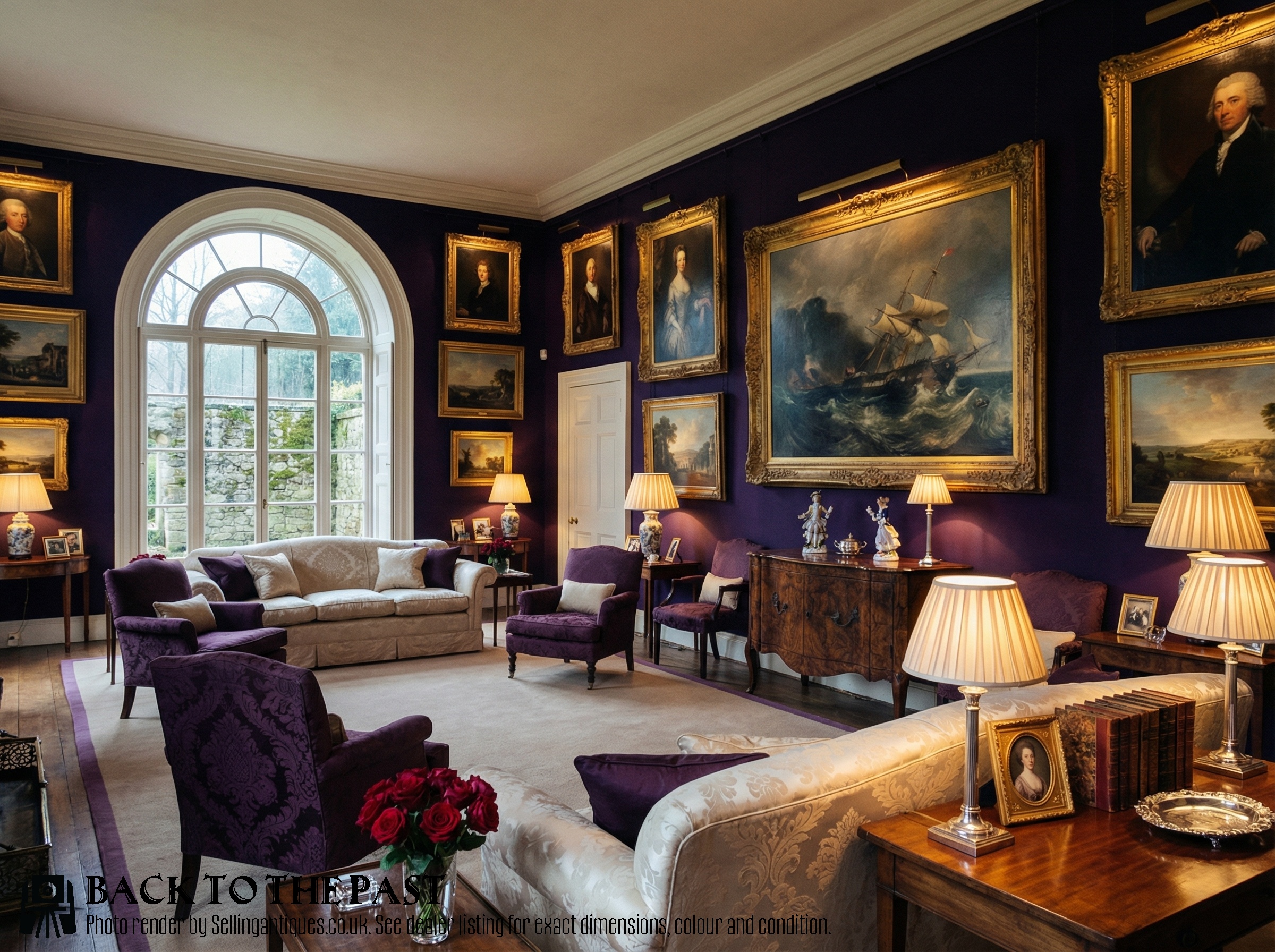
These cabinets fit well in bedrooms as bedside tables or in living spaces as lamp tables and small display surfaces. Their compact proportions allow them to sit alongside seating or against feature walls without dominating the floor plan.
The decorative surfaces and marble tops provide practical space for lighting and small objects while adding historical character to modern or traditional interiors.
How do I care for a marble top?
Marble surfaces require simple cleaning with a damp cloth and mild soap, avoiding acidic cleaners or abrasive materials that etch the stone. Placing protective pads under glasses and heavy items prevents scratching and staining.
Regular dusting keeps the polished surface clear without needing specialist waxes or polishes.
Are these cabinets eighteenth-century originals?
Many listings date from the nineteenth and early twentieth centuries during revival periods inspired by earlier French designs. These later pieces reproduce the forms and decorative techniques of the eighteenth century using period manufacturing methods.
Checking the wood construction, backing boards, and mount fixings helps determine the specific period of production.