



Italian Nightstand Cabinet
An italian nightstand cabinet brings continental walnut, marble and marquetry beside the bed, offering compact storage with centuries of artisan character.
Italian Nightstand Cabinet
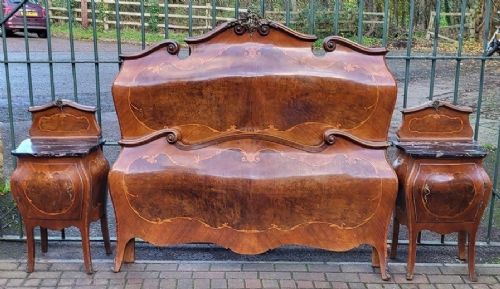
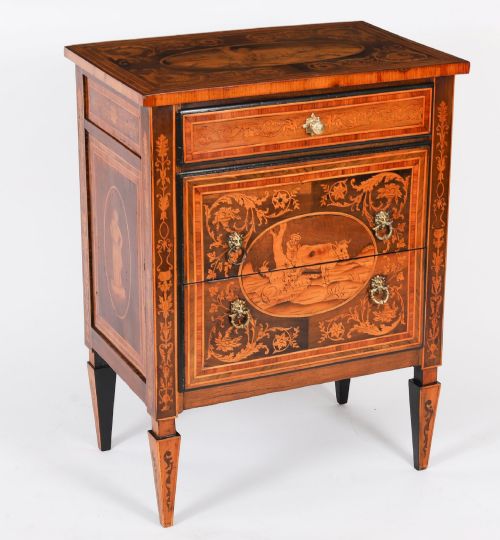
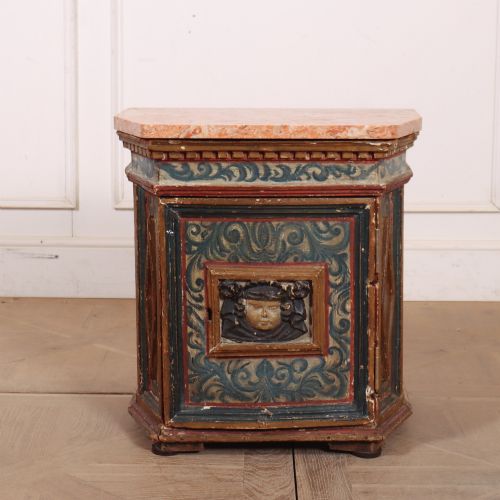
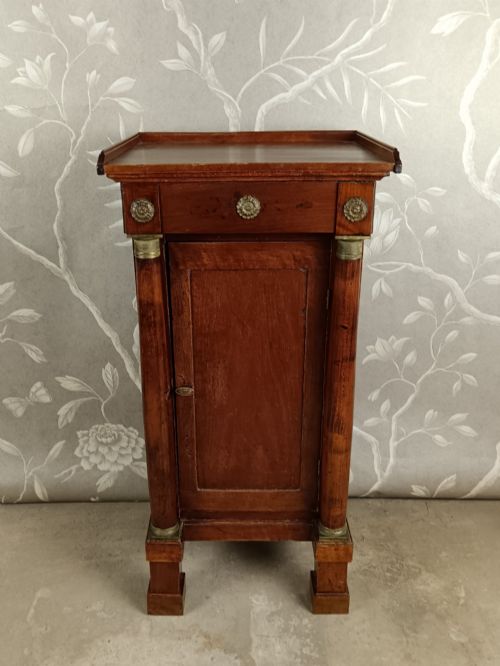
An italian nightstand cabinet is a compact bedside piece designed for European bedrooms, taking the form of cupboards, commodinos, bedside tables and small chests. These pieces span centuries of Italian craftsmanship, from early Tuscan pedestals to Art Deco drum shapes and painted finishes.
The version most likely to meet a buyer on this page is a walnut or burr walnut bedside cabinet, frequently topped with marble and often encountered in matched pairs. They combine enclosed cupboard storage with ornamental marquetry or giltwood details.
Makers and workshops across Italy produced these cabinets within distinct regional traditions, drawing on Rococo, Neoclassical, Baroque and Empire styles. Buyers encounter both single statement pieces and coordinated pairs intended to flank a larger bedstead.
Materials and Construction
Solid and veneered walnut, burr walnut and kingwood provide the primary timber foundations, often enriched with intricate inlaid marquetry. Fruitwood and beech appear alongside painted wood and giltwood surfaces.
Marble tops serve both a decorative and practical function, resting upon timber carcases constructed with traditional joinery. Brass mounts, handles and hardware punctuate the wood and stone surfaces.
Italian Nightstand Cabinet Retail Price Guide 2026
Typical asking prices for italian nightstand cabinet among the pieces listed under this phrase on Sellingantiques today, from the lower quarter to the upper quarter. They describe what is for sale here now, not the wider market.
The 18th century and the 1920s represent the most frequently recorded periods for these pieces.
Distinguishing Quality
The division between ordinary and exceptional pieces lies in the precision of the marquetry inlay, the richness of the timber grain, and the harmony of the proportions. Superior examples display crisp carving on giltwood or painted surfaces and well-figured burr walnut.
Integration of materials defines the better tier, where marble slabs sit flush and brass mounts integrate cleanly with the wood carcase. Original surfaces and period patination separate untouched historic pieces from later restorations.
The Italian Nightstand Cabinet Glossary
- Marquetry
- Decorative veneer work forming pictures or geometric patterns using various woods. Craftsmen cut contrasting veneers to create detailed surface decoration.
- Giltwood
- Timber carved and coated with gold leaf or a gold-coloured finish. This technique creates a brilliant decorative surface on frames and furniture.
- Bombe
- A swelling, outward-curving contour found on furniture fronts and sides. This exuberant shape is characteristic of Rococo and Baroque designs.
- Burr walnut
- Timber taken from a walnut tree growth, producing highly figured, swirling grain patterns. It is prized for veneering high-status cabinets.
Italian Nightstand Cabinet: Frequently Asked Questions
How do I care for a marble top?
Marble surfaces require gentle cleaning with mild soap and water to protect the stone from acidic spills. Coasters and protective mats prevent staining.
Avoid abrasive cleaners that can dull the polished surface over time.
What periods do these cabinets represent?
The pieces span from the seventeenth century through the eighteenth and nineteenth centuries into the Art Deco period of the 1920s and 1930s. Styles range from Baroque and Neoclassical to Empire and Rococo Revival.
Each era brings distinct woods, hardware and decorative motifs.
How do I identify a Neoclassical piece?
Neoclassical cabinets display restrained classical motifs, straight lines and balanced proportions inspired by ancient Greece and Rome. They often feature subtle marquetry and symmetrical brass hardware.
Unlike the curving exuberance of Rococo, Neoclassical design favours geometric clarity.