






Walnut Revolving Stool
A walnut revolving stool is a sturdy and functional seat designed for musicians and dressing tables, offering height adjustment through a clever threaded mechanism.
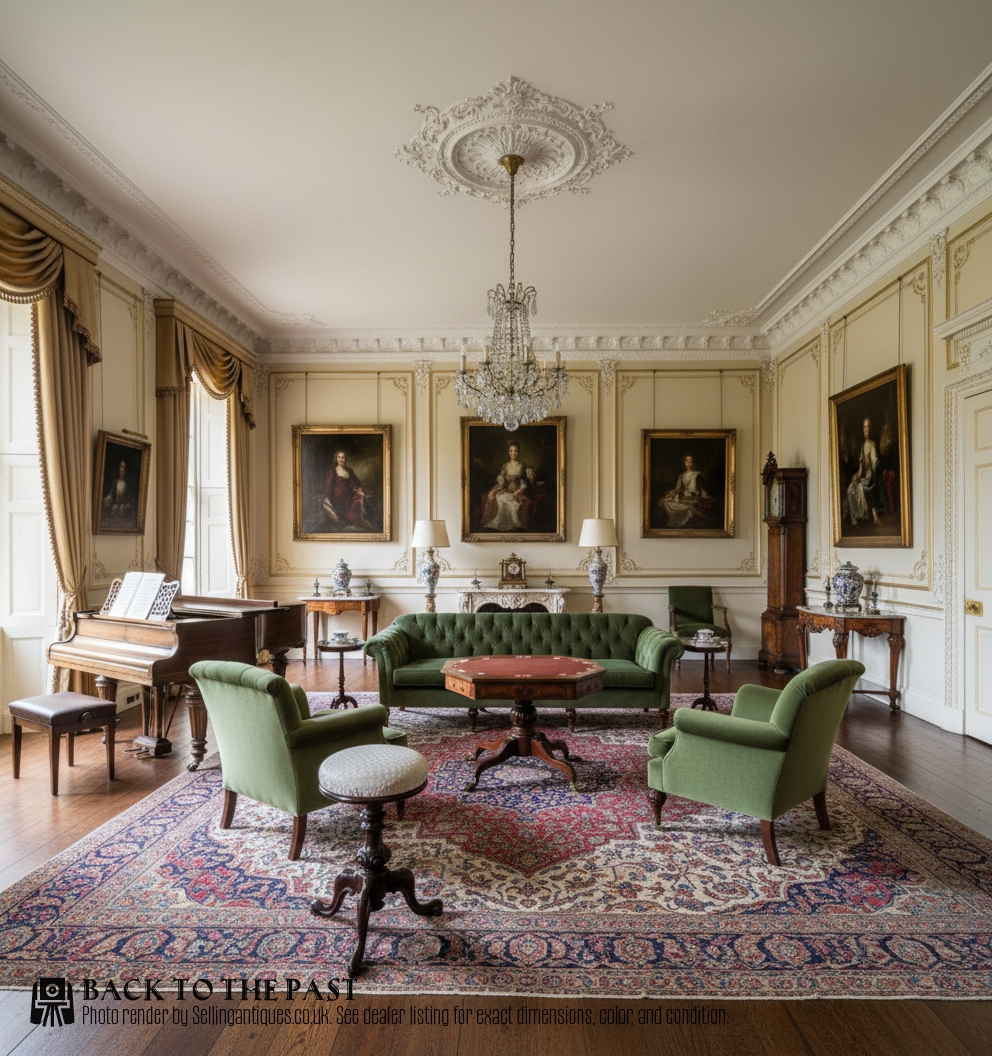
Walnut Revolving Stool
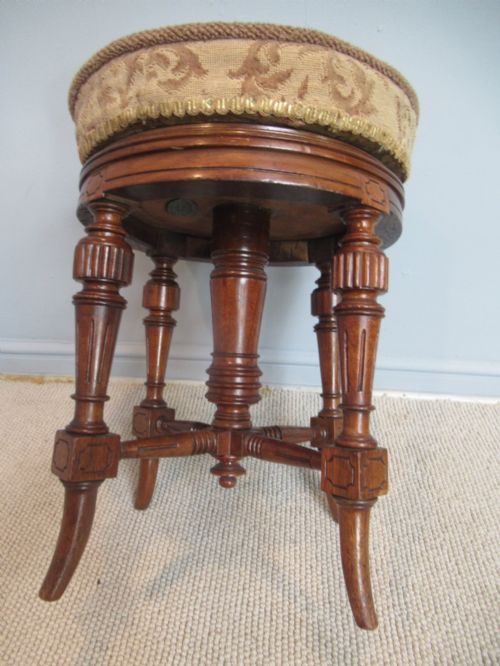
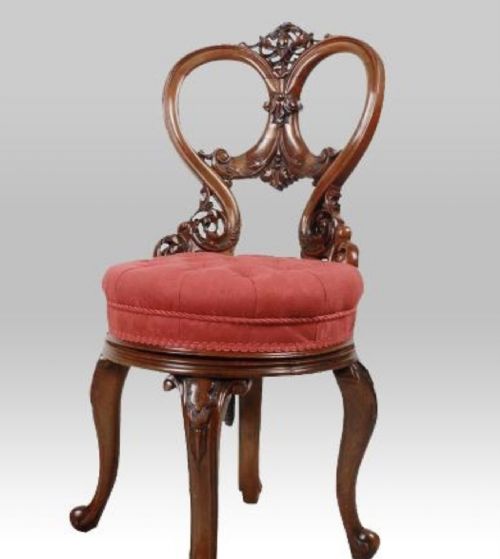
A walnut revolving stool is primarily encountered as a piano stool, music chair, or dressing table seat dating from the Victorian period through to the late nineteenth century. These pieces serve practical seating needs while incorporating swivel mechanisms and adjustable heights that suit domestic music rooms and boudoirs.
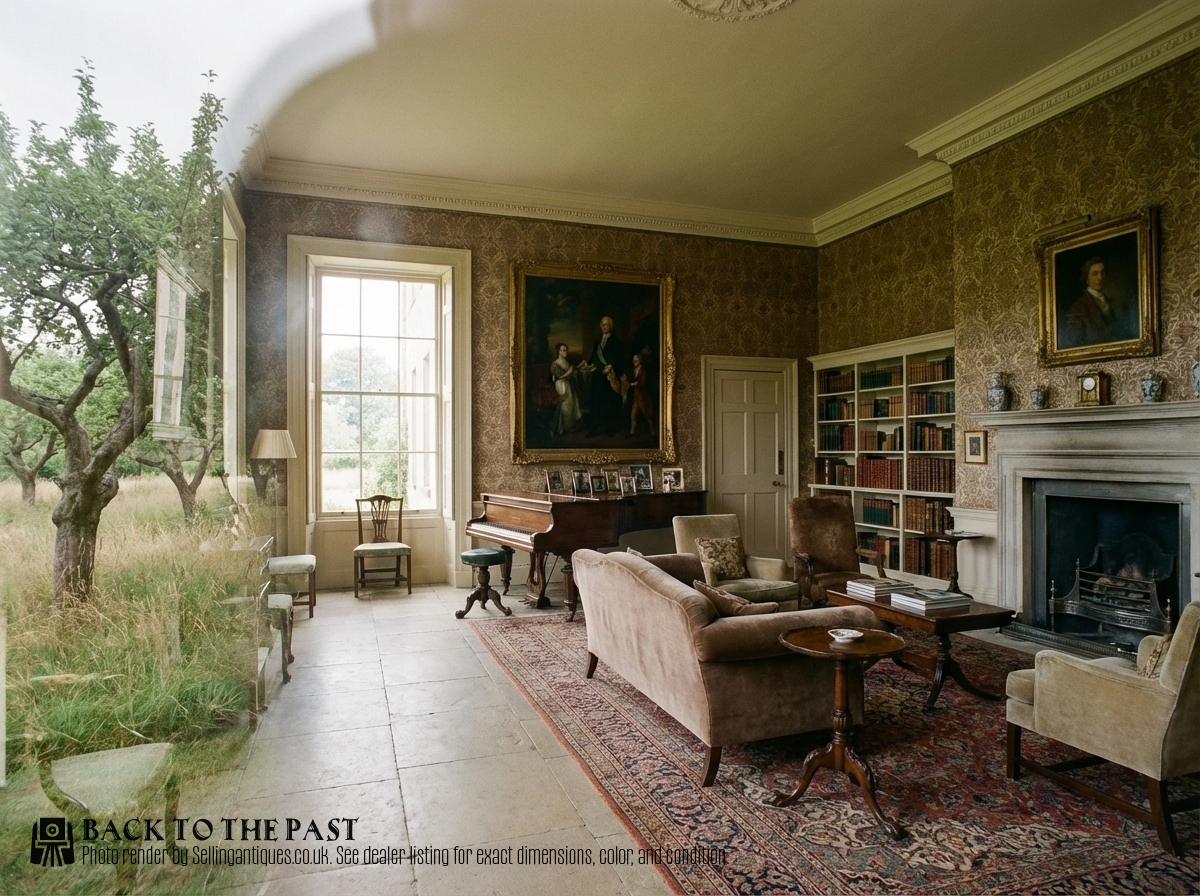
How they were made
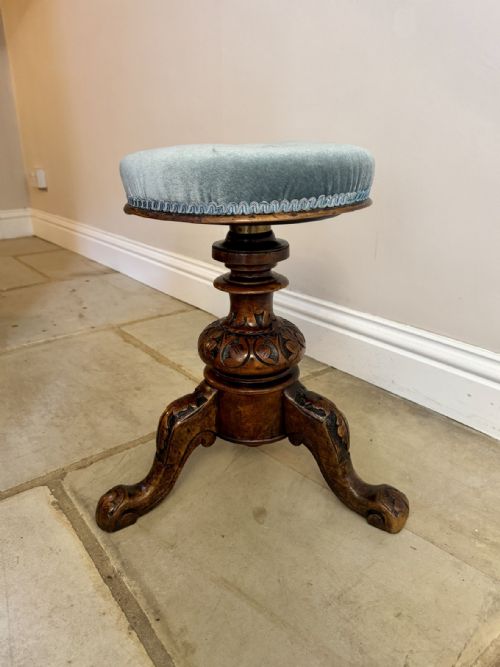
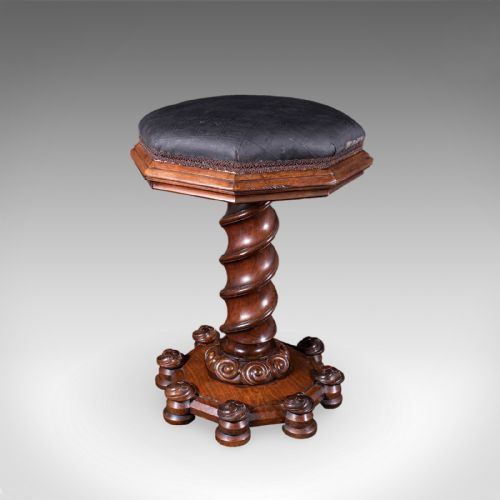
Cabinet makers utilised solid walnut for the frames, turned columns, and carved tripod or pedestal bases, pairing the timber with brass fittings for the central screw mechanisms. Upholstery materials applied to the seats include velvet, leather, fabric, and tapestry, secured over padding.
Construction relies on traditional joinery techniques, combining turned wood components with metal screw threads that allow the seat height to rise and fall when rotated. Carved ornamentation on the legs and column reflects the aesthetic preferences of the Victorian era and French Chateau influences.
Walnut Revolving Stool Retail Price Guide 2026
Typical asking prices for walnut revolving stool among the pieces listed under this phrase on Sellingantiques today, from the lower quarter to the upper quarter. They describe what is for sale here now, not the wider market.
Listings feature walnut, mahogany, brass, and iron alongside velvet, leather, and tapestry upholstery across the Victorian and William IV periods.
What varies in quality
The standard of a walnut revolving stool depends upon the depth of the timber carving, the stability of the central swivel mechanism, and the choice of upholstery fabric. Pieces with robust tripod bases and smooth adjustment screws represent superior craftsmanship compared to simpler iterations.
Detailing such as grotto carvings, heavy turned pedestals, and original leather or tapestry coverings elevate certain items within the range. The integration of durable brass hardware within the rise and fall action determines the longevity and mechanical ease of the seat.
Charles Wadman
The Walnut Revolving Stool Glossary
- Revolving stool
- A seat featuring a central screw mechanism that allows the top to turn and adjust in height. This design was particularly popular for piano players and organists who required custom positioning.
- Pedestal piano stool
- A single-column seat supported by a heavy base, typically with three carved legs. It forms a stable platform for the swivelling mechanism above.
- Grotto style
- An ornate design influence featuring shell and naturalistic motifs carved into the wood. It appears on select Italian and Victorian musical seats.
- Rise and fall action
- The mechanical movement achieved by turning the seat to raise or lower its height via an internal threaded screw. Brass components are frequently utilised within this system.
Walnut Revolving Stool: Frequently Asked Questions
What is a walnut revolving stool?
A walnut revolving stool is an adjustable seat designed primarily for pianos, organs, and dressing tables during the Victorian era. The central top rotates to alter the height using a concealed screw thread.
These pieces combine utilitarian function with decorative woodwork, making them suitable for practical use in modern music rooms or studies.
How do you adjust the height?
The seat top rotates clockwise or anticlockwise to move up and down along a central metal or wooden screw shaft. This allows the user to find a comfortable playing or sitting position.
Most mechanisms operate smoothly when clean and lightly lubricated, though older brass screws require gentle handling.
Where were these stools used?
They originated in nineteenth-century domestic settings, particularly beside upright and grand pianos, an American chapel organ, or a bedroom dressing table. Musicians needed a stable yet adaptable seat for practice sessions.
Today, they adapt easily to dressing rooms, living spaces, or as occasional piano seats.
How do I date a Victorian piece?
Dating relies on observing the timber choice, carving styles, and the construction of the revolving mechanism. Mid-Victorian examples often feature heavier tripod bases and deep floral carvings.
Later nineteenth-century versions sometimes incorporate simpler turned columns or alternative upholstery treatments like stamped leather.