

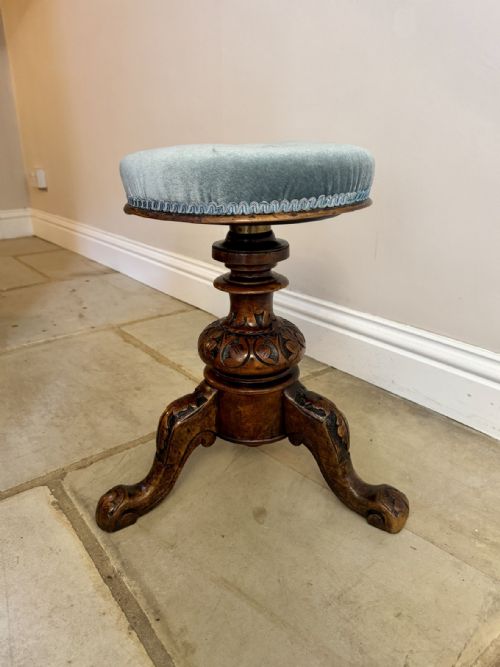


Carved Tripod Piano Stool
A carved tripod piano stool is a sturdy revolving seat built for the keyboard, combining timber and adjustable mechanics for the Victorian music room.
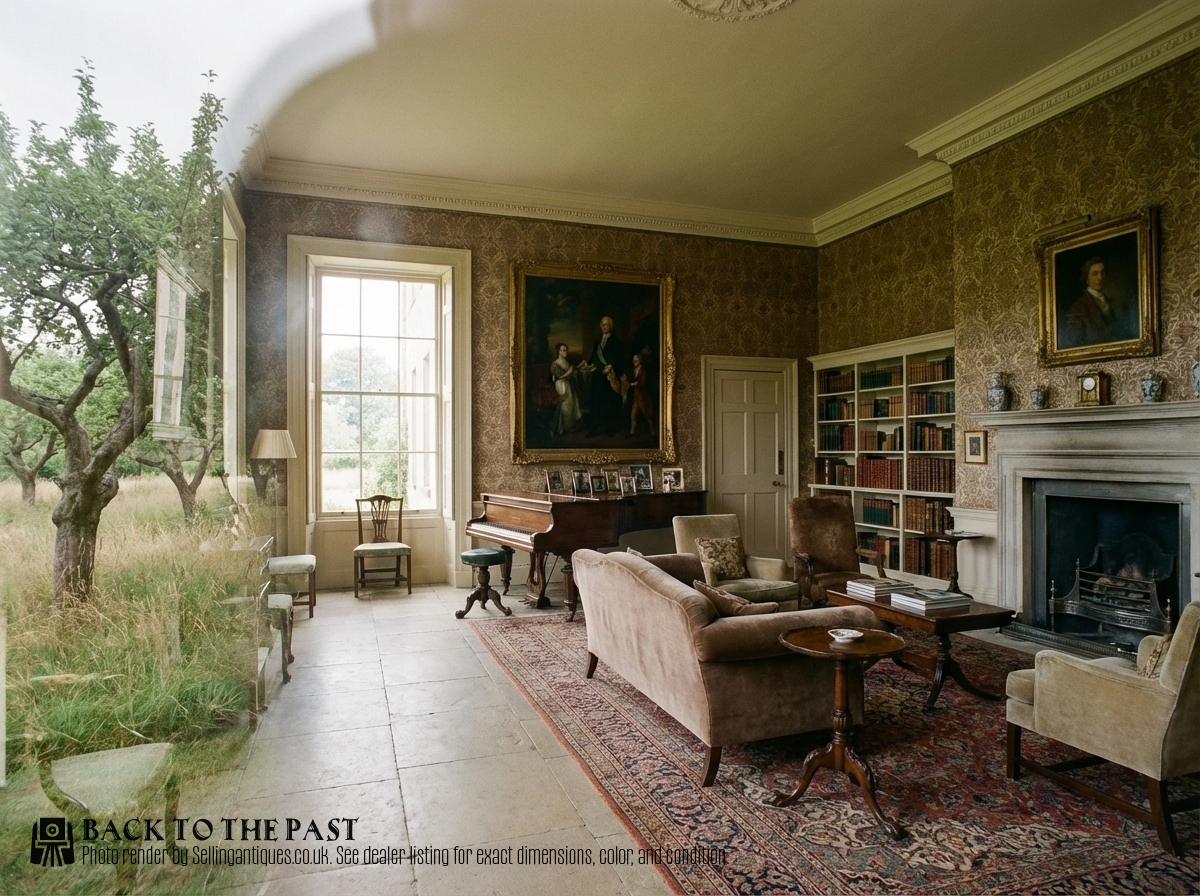
Carved Tripod Piano Stool
The recorded examples show walnut and rosewood as the primary timbers, occasionally accompanied by mahogany, oak, and hardwood. Seats are finished with velvet, leather, fabric, or other period upholstery resting upon iron or metal adjustment components.
Materials and construction methods
Makers utilised dense timbers such as walnut and rosewood, which allowed for deep carving on the central pedestal and the three tripod legs. Turning and joining formed the core structure, supporting the heavy brass or iron rise and fall mechanisms.
Upholstery was applied directly over padding to the revolving seat tops, utilising materials like leather, velvet, and woven fabric. Twist top designs and rise and fall screws allowed the player to alter the height smoothly while seated.
Carved Tripod Piano Stool Retail Price Guide 2026
Typical asking prices for carved tripod piano stool among the pieces listed under this phrase on Sellingantiques today, from the lower quarter to the upper quarter. They describe what is for sale here now, not the wider market.
Some Victorian music stools feature carved shell motifs from the Grotto Revival, turning a simple seat into a piece of marine theatre.
Assessing quality in the construction
Quality rests in the crispness of the timber carving on the tripod base and the stability of the revolving mechanism. Pieces with smooth rise and fall action and heavy, well-figured walnut or rosewood show a higher grade of workshop production.
The integration of the central pedestal to the three legs dictates structural integrity. Superior examples maintain firm joints without wobble, whereas lesser items suffer from wear in the wooden thread or metal screw mechanism.
The Carved Tripod Piano Stool Glossary
- Tripod base
- A three-legged support structure that provides balance for pedestals and columns. It keeps the seat stable on uneven floors.
- Revolving
- A top mechanism that turns a full circle on a central screw or spindle. This allows the user to spin freely while seated.
- Rise and fall
- An adjustable height mechanism operated by turning the seat top. It raises or lowers the seating platform.
- Grotto Revival
- A mid-nineteenth century design style incorporating shell and marine motifs into carved wood. It appears on specialised seating forms.
- Pedestal
- A central vertical column supporting the upper weight of the stool. It connects the seat mechanism directly to the legs.
Carved Tripod Piano Stool: Frequently Asked Questions
How do I adjust the height on these stools?
Most models use a revolving screw mechanism where you turn the upholstered top clockwise or anticlockwise to raise or lower the seating platform. Some variants include side levers or internal iron screws.
Ensure the mechanism is free of obstruction before turning, and support the weight of the seat while adjusting to protect the wooden threads.
Can I use a music stool at a dressing table?
Historical records show that these versatile seats served double duty at both the piano and the dressing table. The adjustable height made them practical for multiple domestic tasks.
Their compact tripod footprint allows them to tuck neatly beneath smaller tables without occupying excessive floor space.
How do I tell a Victorian stool from a Georgian one?
Georgian examples are scarcer and typically display simpler lines or earlier timber handling compared to the heavier ornamentation of the nineteenth century. Victorian pieces often feature elaborate carving and mechanical screw adjustments.
Look closely at the secondary woods and the style of the tripod legs to help determine the manufacturing period.
What maintenance do the revolving mechanisms need?
The internal iron or metal screw benefits from occasional light lubrication to ensure smooth turning without straining the wood. Keep the thread clean from dust accumulation.
Avoid forcing the screw if it meets resistance, as excessive pressure can damage the historic timber threads inside the column.