




Walnut Religious Carving
These walnut religious carving examples bring centuries of devotional art into the home through rich timber reliefs and figures.
Walnut Religious Carving
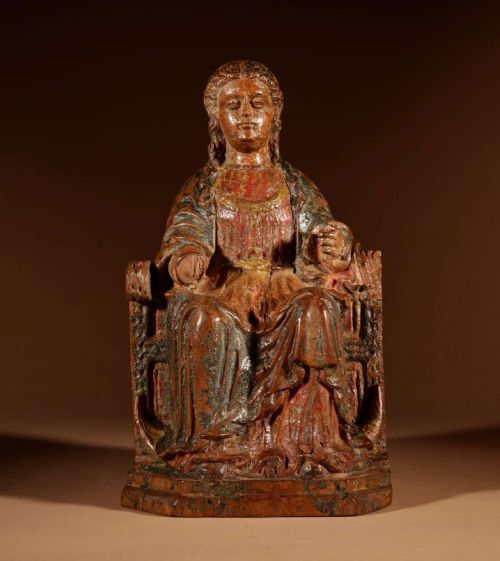
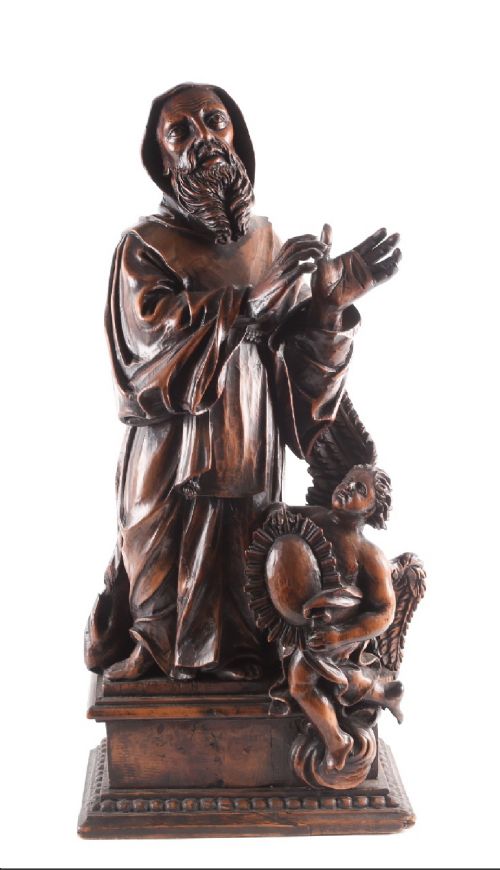
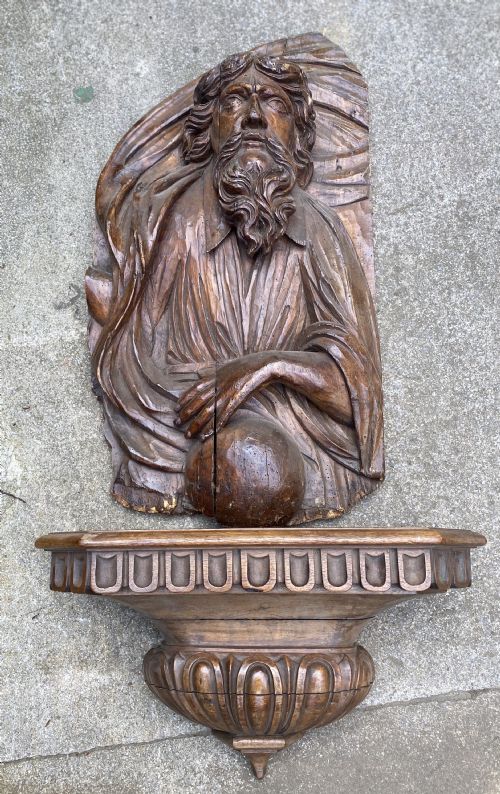
A walnut religious carving encompasses devotional wooden sculptures, wall reliefs, figures, and prayer chairs spanning several centuries. Buyers searching for a walnut religious carving encounter Continental Baroque figures, Renaissance Madonnas, and Gothic Revival pieces.
The selections range from monumental French panels depicting Biblical scenes to smaller Santos busts and acolyte candlestick figures. Most examples derive from European traditions, featuring saints, monks, and angels rendered in dark wood.
Functional pieces such as prie-dieu prayer chairs and carved crosses appear alongside pure sculptures. These items capture centuries of ecclesiastical artistry in solid timber.
Materials and construction
Artisans carved these devotional objects directly from solid walnut and other dense dark woods, utilising the fine grain for intricate detail. Gesso and gilding often highlighted specific elements, adding surface brilliance to the deep brown timber.
Selected pieces incorporate polychrome pigments to bring realism to the faces and garments of saints and holy figures. Occasional textiles like tapestry fabric appear on upholstered items such as prayer chairs.
Object forms range from wall reliefs and freestanding sculptures to candlesticks and prayer chairs.
Assessing quality
The preservation of original surface finishes, such as early gesso, gilding, or polychrome, elevates an object's historical integrity. Dense, unblemished walnut timbers with deep patination also determine the standing of each piece.
The Walnut Religious Carving Glossary
- Polychrome
- Painted in several colours, this technique decorated wooden sculptures and reliefs to enhance visual realism. It often survives in traces on older figures.
- Gesso
- A plaster mix applied to wood surfaces as a base for gilding or paint. It provides a smooth foundation for decorative enrichment.
- Prie-dieu
- A devotional prayer chair featuring a desk-like top for kneeling and resting elbows during prayer. These often incorporate carved wooden framing.
- Acolyte
- An assistant in religious services, frequently represented in carved wooden candlestick figures holding lights. These figures date widely across the Baroque and later periods.
- Santos
- A carved figure of a saint, traditionally used for devotional practices in Catholic homes and churches. They frequently display detailed facial expressions and carved garments.
Walnut Religious Carving: Frequently Asked Questions
What periods do these carvings come from?
The available examples span from the sixteenth century through the nineteenth century, encompassing Renaissance, Baroque, and Victorian revivals.
Earlier pieces often reflect Continental origins, while later items include nineteenth-century Black Forest and Gothic Revival interpretations.
How were these wooden sculptures used originally?
These items served devotional functions in churches, private chapels, and domestic shrines across Europe. Figures of saints, Madonnas, and angels aided in personal prayer and liturgical services.
Functional items like prayer chairs provided a designated space for daily worship within the home.
Are these pieces made entirely of solid walnut?
Many items feature solid walnut or related dark woods chosen for their grain and durability in detailed carving. Some examples incorporate supplementary materials such as gesso, gilding, and polychrome paint.
Upholstered pieces like prayer chairs also integrate fabrics alongside the wooden framework.
How do I identify a Baroque carving?
Baroque pieces typically display dynamic movement, dramatic facial expressions, and deeply folded drapery in the clothing of figures. They often convey a strong sense of theatricality compared to earlier Renaissance works.
Rich surface patination and ecclesiastical subject matter further characterise these seventeenth and eighteenth-century objects.