




Baroque Timber Relief
Baroque timber relief brings tactile historical depth to interiors through substantial carved woodwork from the seventeenth and eighteenth centuries.
Baroque Timber Relief
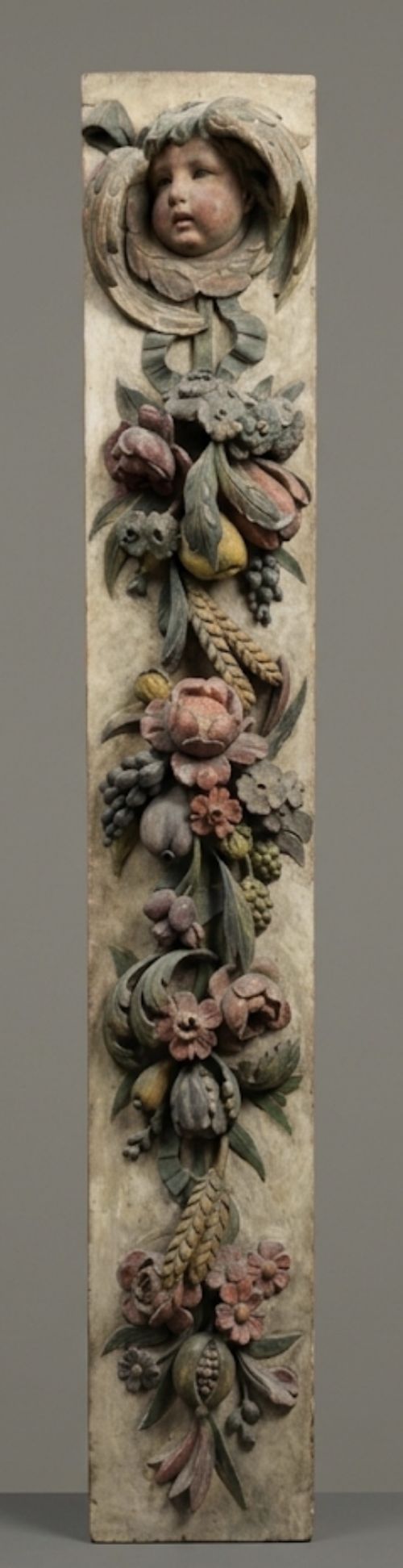
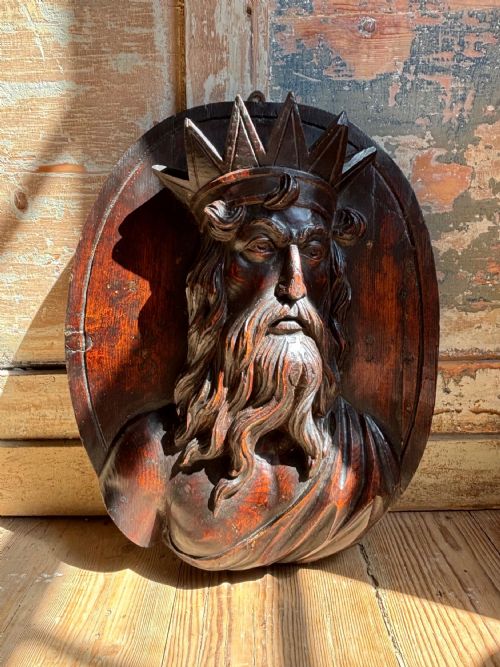
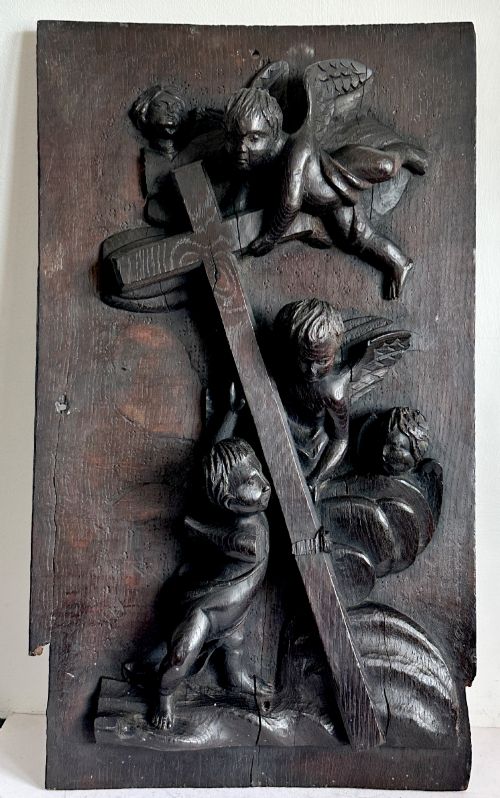
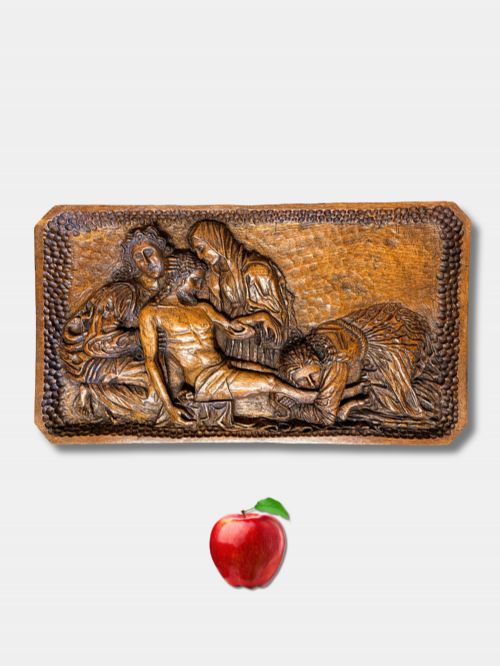
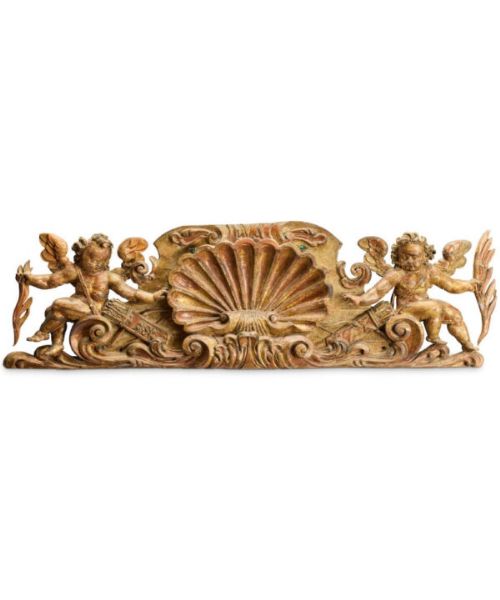
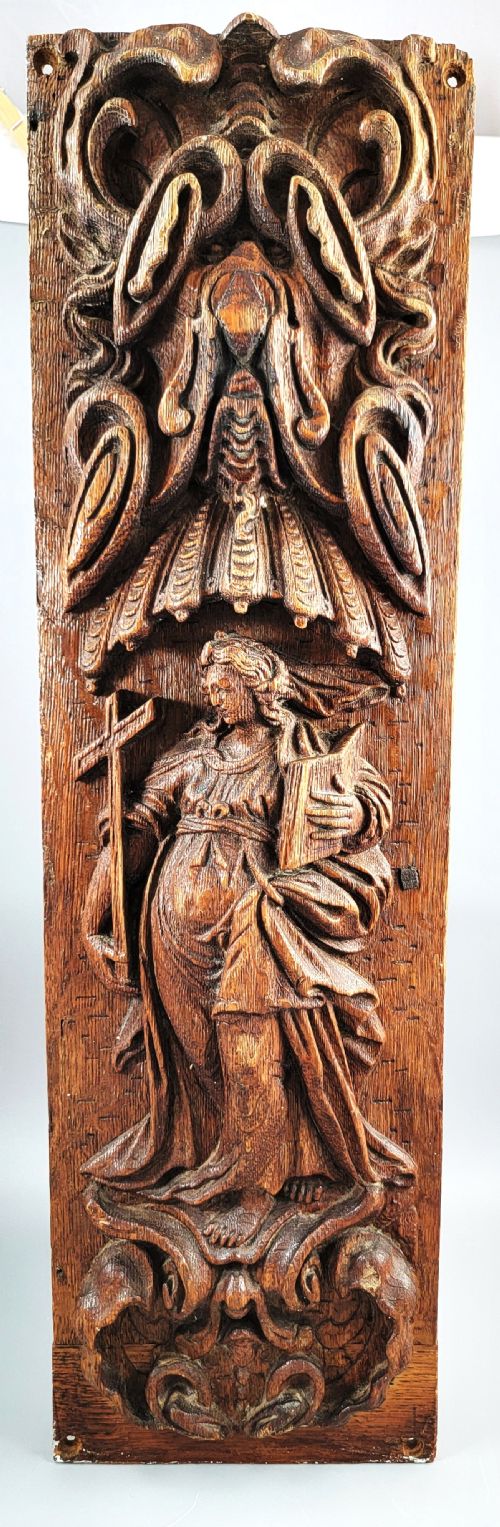
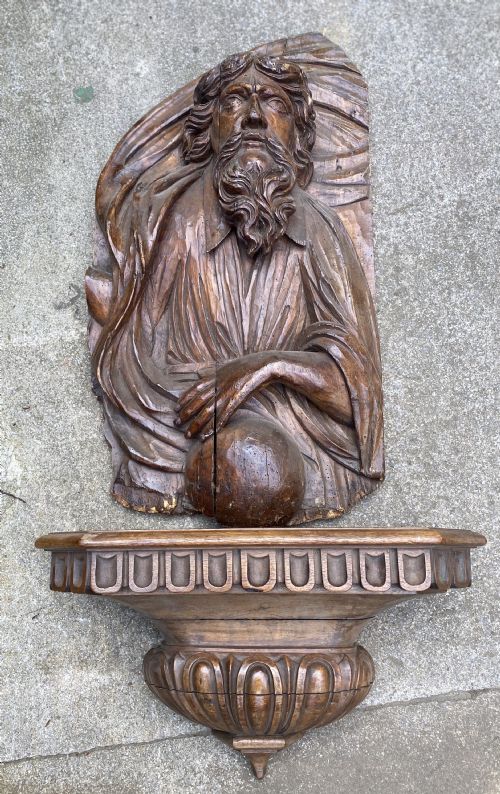
When you search for baroque timber relief, you encounter substantial architectural fragments, wall sculptures, and carved panels originating from the seventeenth and eighteenth centuries. These items manifest as overdoor panels, architectural pediments, staircase sections, and standalone wall carvings depicting religious and classical subjects.
The objects frequently take the form of heavy oak, walnut, or chestnut panels shaped into figural scenes, cherubs, and complex foliage. English, Italian, Flemish, and Dutch workshops produced these pieces to adorn grand interiors, churches, and civic buildings during the baroque period.
How they were made
Carvers shaped these reliefs directly from dense hardwoods such as oak, walnut, chestnut, and general timber using sharp gouges and chisels to achieve deep undercut leaves and prominent figures. Master artisans worked the wood to create strong three-dimensional projections that caught candle or natural light in large rooms.
Surfaces were frequently finished with gesso and gold leaf to highlight decorative mouldings, or painted with polychrome pigments to bring figures to life. Some architectural pediments incorporated parcel gilt details alongside exposed natural timber grains.
Listings feature seventeenth and eighteenth century oak and walnut panels with carved figures, cherubs, and acanthus leaves.
What varies in quality
Depth of carving and clarity of detail distinguish finer architectural fragments from simpler panels. Pieces attributed to notable workshops demonstrate sharper facial expressions on cherubs and deities, alongside more dynamic movement in acanthus leaves.
The choice of dense timber versus softer woods affects the preservation of crisp edges over centuries. Original surface treatments, such as surviving polychrome pigment or gold leaf, elevate the visual impact of an individual panel.
Grinling Gibbons·Edward Pearce
The Baroque Timber Relief Glossary
- Baroque
- A style of European architecture and art spanning the seventeenth and eighteenth centuries, characterised by ornate detail and dramatic movement.
- Architectural salvage
- Building elements rescued from older structures for decorative reuse, including pediments and overdoor panels.
- Polychrome wood
- Timber sculptures or panels decorated with multiple colours of paint.
- Parcel gilt
- Objects partially gilded with gold leaf, leaving portions of the underlying wood or gesso visible.
- Acanthus leaves
- A Mediterranean plant motif frequently carved in repeating scrolls across wooden mouldings and architectural friezes.
Baroque Timber Relief: Frequently Asked Questions
Where were these panels originally placed?
These carved wooden elements typically adorned the interiors of wealthy residences, churches, and public buildings. They functioned as architectural pediments above doors, staircases, and wall panels.
Overdoor placements and grand staircase sections allowed the heavy timber reliefs to serve as focal points in large rooms.
How do I care for antique timber?
Keep wooden reliefs away from direct sunlight and sudden temperature shifts to prevent the material from drying out and cracking. Dust the carved surfaces gently with a dry, soft cloth.
Avoid using modern liquid polishes or chemical cleaners that might strip the historic finish or gesso layers.
Are these pieces heavy to hang?
The panels are fashioned from dense hardwoods such as oak and walnut, making them considerably heavy. Secure wall mountings anchored directly into structural studs are necessary.
Professional installation is recommended for large architectural fragments and heavy wall sculptures to ensure safety.
How do I distinguish regional styles?
Italian and Dutch pieces often utilise walnut or chestnut with distinct figural treatments, while English examples frequently employ robust oak. The choice of subject matter, such as classical deities versus biblical scenes, also points to specific European traditions.
Detailing like acanthus leaf carving styles can provide further clues regarding whether a panel originated from Flemish, German, or British workshops.