

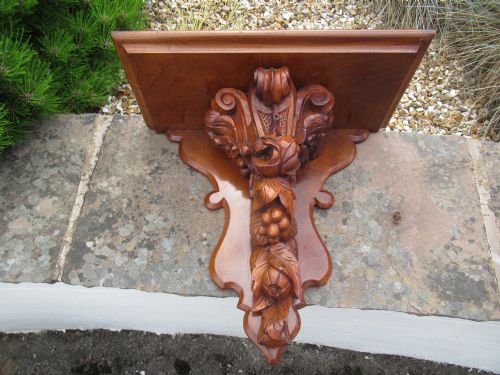


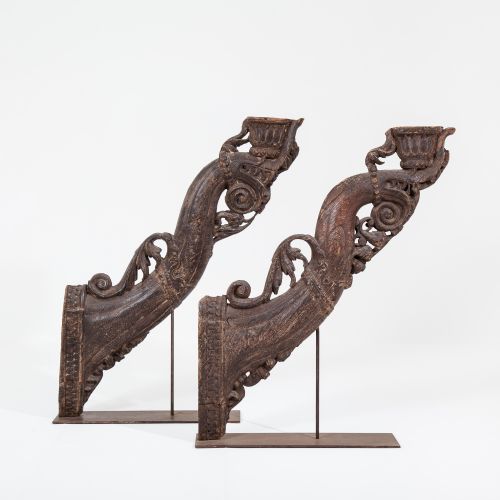
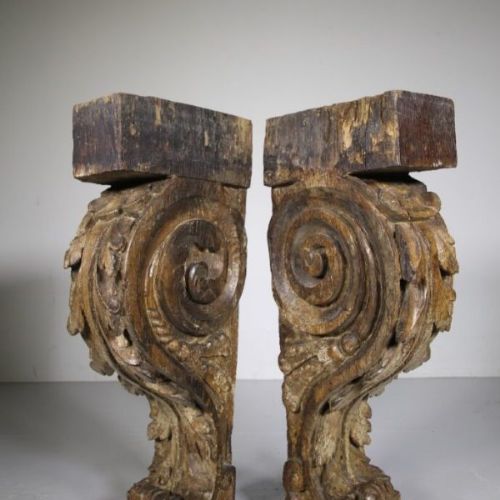


Carved Wooden Corbel Bracket
These carved wooden corbel bracket pieces bring architectural sculpture indoors, offering sturdy timber support and classical form to plain walls.
Carved Wooden Corbel Bracket
A carved wooden corbel bracket serves as both a structural support and a decorative wall feature, emerging in forms from simple architectural salvage to elaborate sculptural pieces. When searching this phrase, buyers encounter items functioning as wall shelves, display brackets, and architectural carvings.
The selections span centuries, featuring 17th-century oak figures, Georgian oak corbels, and Victorian walnut displays. Pieces originate from various regions, including English workshops, continental Europe, and Anglo-Indian sources.
Most items on this page appear as matched pairs, though single architectural elements also present themselves. Forms range from cherub wall brackets and Corinthian capitals to figurative wall sculptures and roof decorations.
How they were made
Carvers shaped these items primarily from hardwoods like oak, walnut, and pine, utilising traditional hand-chiselling techniques. Dense timbers allowed for deep undercutting and sharp relief work across figures, scrolls, and acanthus leaves.
Many surfaces received additional treatments, including layers of gesso, gold leaf gilding, or paint. Gilding and polychrome finishes highlight the carved details, catching light on baroque scrolls and figurative panels.
One exceptional 19th-century bracket portrays the devil, carved by master carver Luigi Frullini.
What varies in quality
Quality rests primarily on the depth and confidence of the hand carving, distinguishing crisp, expressive detail from softer, mechanical work. Master carvers achieved anatomical precision in figures like cherubs and archangels, whereas lesser pieces show blunt execution.
The integrity of the timber and the preservation of original surfaces drive the distinction between ordinary items and exceptional examples. Intact historic finishes such as original gilding or aged oak patination elevate the standing of a piece considerably.
Luigi Frullini
The Carved Wooden Corbel Bracket Glossary
- Corbel
- A structural piece of stone, wood, or metal jutting from a wall to carry a superincumbent weight. In these listings, they function mainly as decorative wall brackets and shelf supports.
- Capital
- The topmost member of a column, mediating between the column and the load. Examples here include carved wood capitals executed in the Corinthian style.
- Giltwood
- Wood that has been treated with gold leaf or gold paint. This finish appears frequently on Italian and continental brackets from the baroque and rococo periods.
- Architectural salvage
- Building parts rescued from demolition or alteration for reuse. These items often transition from exterior roof decorations or structural timbers into interior wall sculptures.
Carved Wooden Corbel Bracket: Frequently Asked Questions
How were corbels used historically?
Corbels functioned primarily as structural load-bearing brackets projecting from walls to support heavy beams, roof timbers, or upper masonry. Over time, smaller examples were designed specifically to hold architectural elements, clocks, or candles indoors.
In domestic settings, they transitioned into purely decorative wall shelves and display brackets for valued objects. Their placement combined engineering utility with classical or figurative ornamentation.
How do I hang a heavy wooden bracket safely?
Hanging a substantial wooden bracket requires locating structural wall studs or using heavy-duty masonry anchors depending on the wall type. Many antique brackets feature integrated rear mounting holes or require custom concealed metal brackets for secure support.
Weight distribution matters because dense hardwoods like oak and walnut place significant downward pull on fixings. Consult a professional installer if the bracket is intended to support heavy display items.
How do I tell an 17th-century corbel from a Victorian copy?
Seventeenth-century pieces typically show tool marks consistent with hand-cleaved and adzed timber, along with deep, organic oxidation and shrinkage splits. Oak used in this era displays distinct medullary rays developed over centuries of ageing.
Victorian revival pieces often employ machinery alongside hand tools, resulting in more uniform dimensions and different surface patination. Wood species choice and stylistic exaggerations also point toward specific revival periods like the baroque revival.