


Walnut Music Canterbury
A walnut music canterbury provides partitioned slots for scores and sheets, uniting Victorian cabinet-making with the practical needs of the music room.
What a walnut music canterbury is
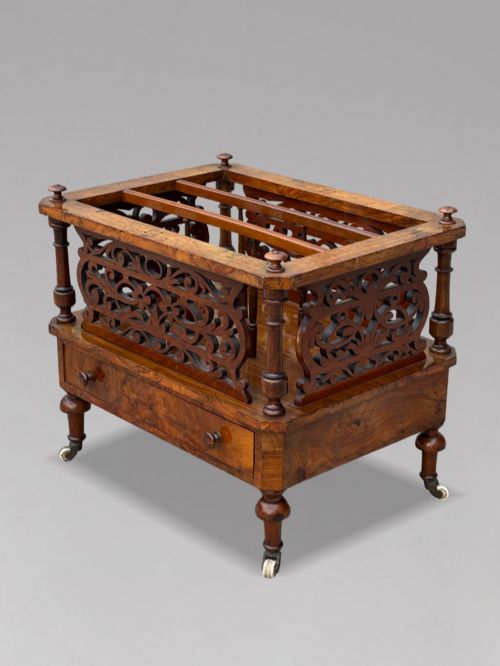
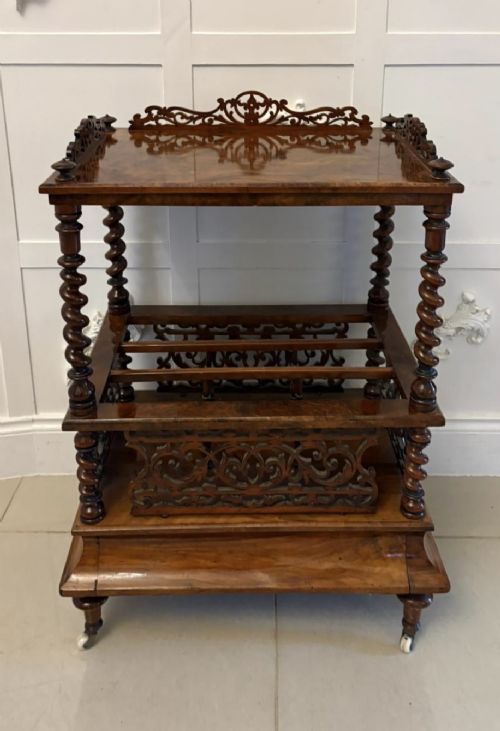
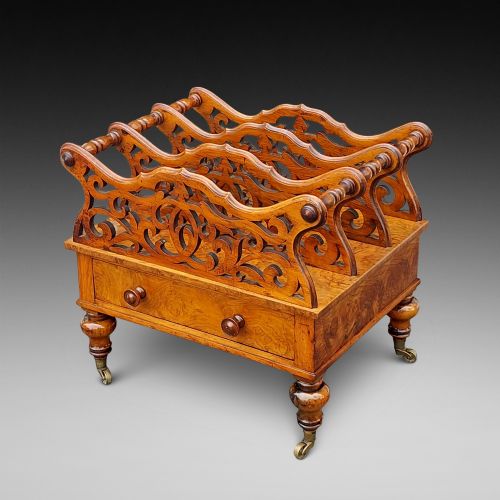
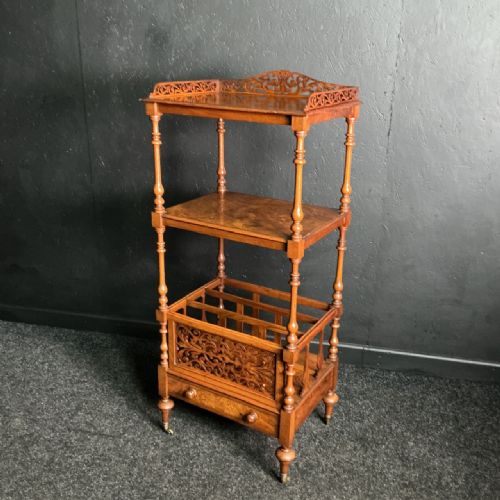
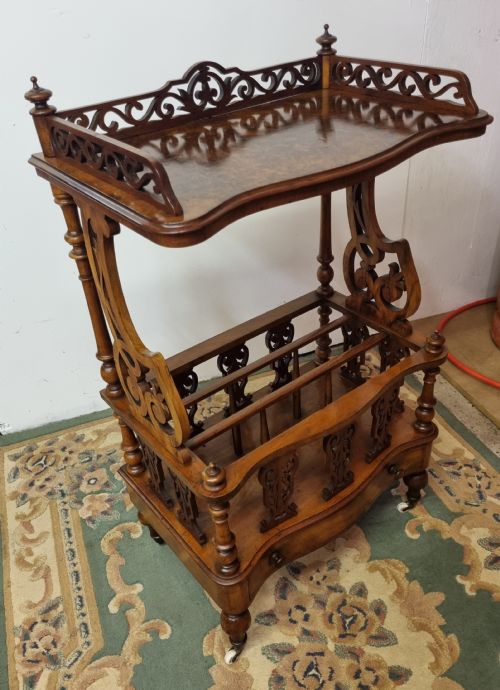
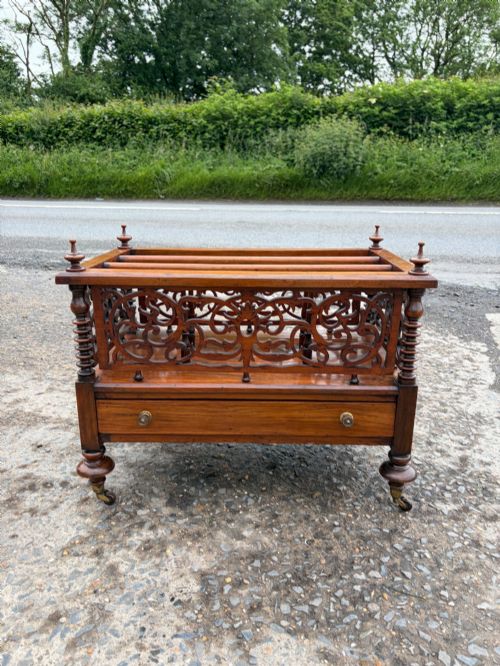
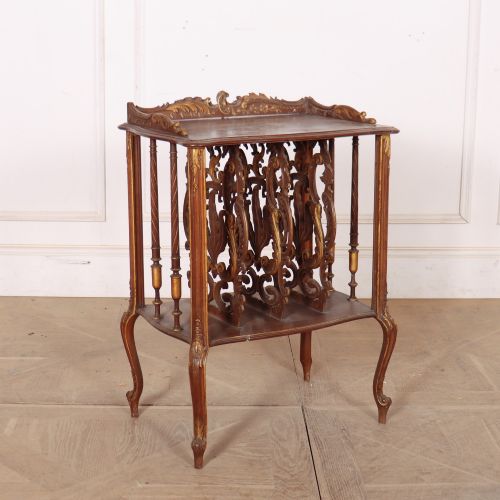
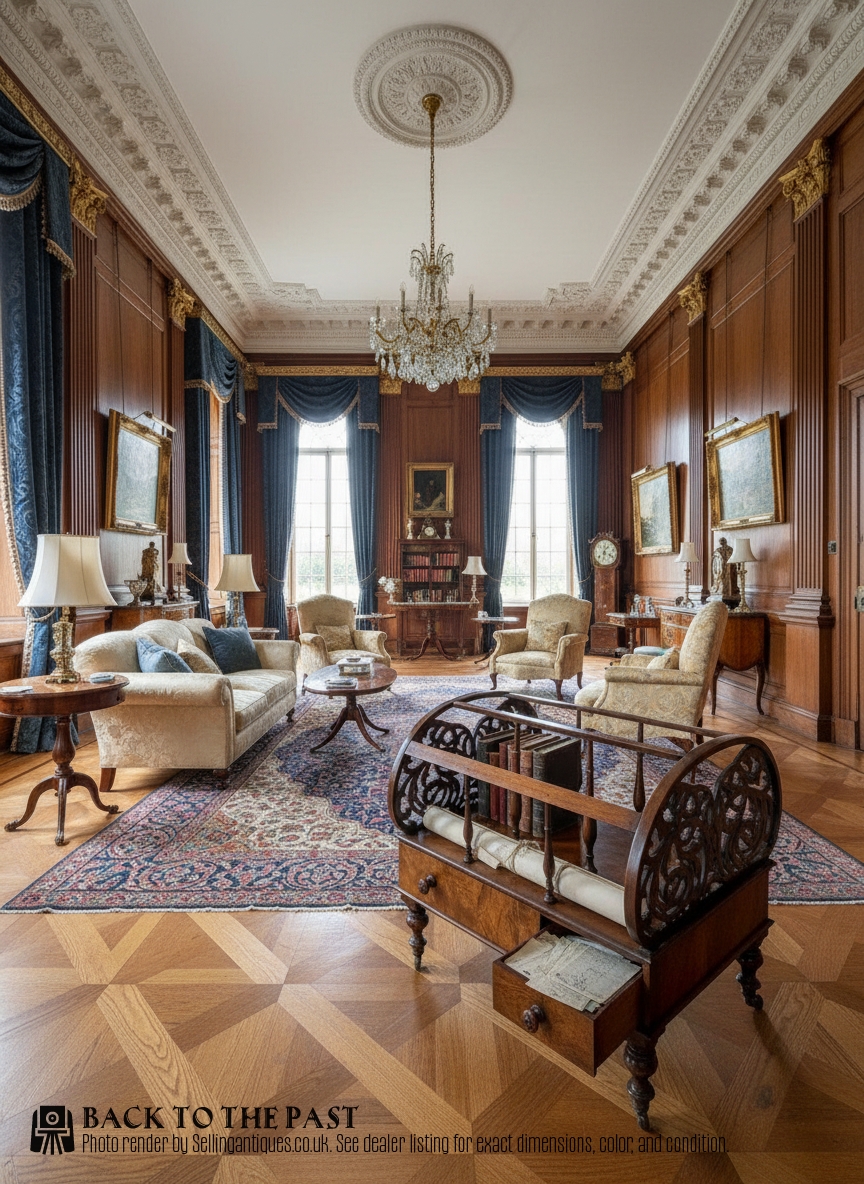
When you search for walnut music canterbury, you encounter specialised Victorian furniture designed to hold folios, sheet music, and periodicals near the piano or drawing-room table. These pieces generally feature upright divisions for paper storage, often combined with low drawers, shelves, and occasional surfaces.
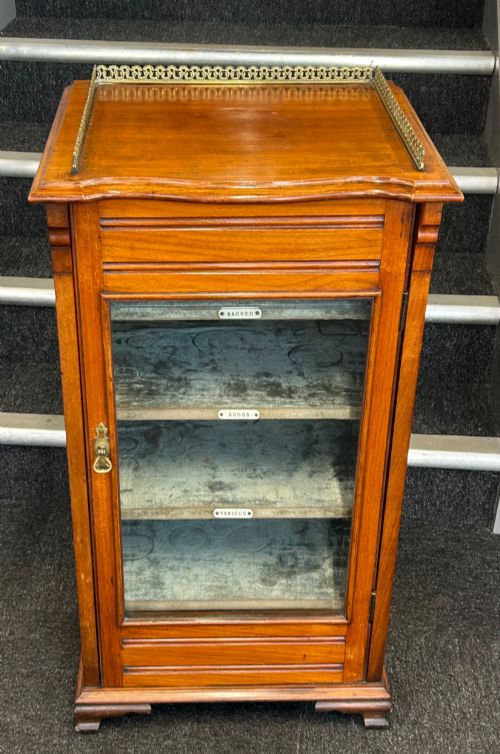
The pieces appearing here belong principally to the Victorian era, spanning dates from around eighteen hundred to the late nineteenth century. Forms range from low freestanding open racks to elaborate music cabinets and combined workstations with reading slopes.
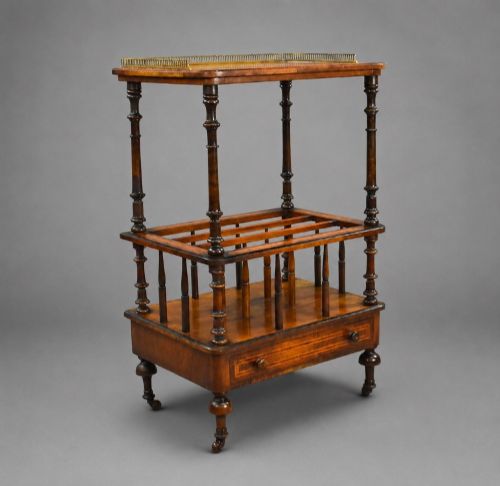
You meet variations that include revolving models, items incorporating brass details, and examples fitted with book rests or glass doors. The core form remains a low stand with vertical partitions designed to keep scores upright and tidy.

How they were made
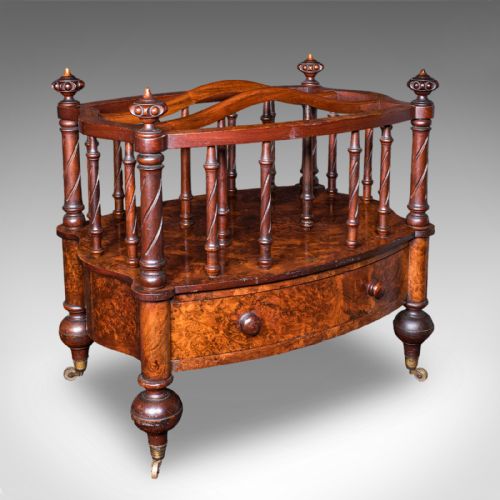
Cabinet-makers built these pieces using walnut and burr walnut veneers over secondary timbers, frequently enhancing the surfaces with marquetry inlay. The rich grain of burr walnut was selected for visible exterior panels to create striking visual patterns.
Structural elements incorporated turned uprights, brass castors, and metal fittings to support revolving tiers or adjustable book rests. Woodworkers joined partitions and drawers using traditional joinery suited to daily domestic handling.
Retail Price Guide 2026
Typical UK retail prices for walnut music canterbury, calculated from the Sellingantiques database of over a million retail prices indexed since 2003. This retail price guide relies exclusively on Sellingantiques data; no external sources or auction records are used, so the figures do not describe the wider market.
What varies in quality
Quality in these pieces rests upon the selection of timber veneers and the crispness of the marquetry inlay. Superior examples display carefully matched burr walnut grain across the entire cabinet rather than plain timber surfaces.
The integration of functional additions such as smooth-turning mechanisms, fitted drawers, and solid brass hardware elevates a piece above standard production. Construction detail in the slatted partitions and overall stability distinguish finer workshop output.
Gillows
The Walnut Music Canterbury Glossary
- Canterbury
- A low stand with vertical partitions originally intended for holding music folios and newspapers. It developed during the late eighteenth century and remained popular throughout the Victorian period.
- Burr Walnut
- Timber taken from a tree growth or excrescence, yielding intricate and swirling grain patterns. Cabinet-makers sliced this wood into thin veneers for decorative furniture panels.
- Marquetry Inlay
- The technique of fitting contrasting pieces of wood veneer into a prepared ground to form decorative patterns. It frequently decorates the top surfaces and drawer fronts of Victorian cabinets.
- Revolving Music Canterbury
- A specialised variant mounted on a central pivot that allows the user to access compartments from all sides. These models often feature brass mechanisms to ensure smooth rotation.
Frequently Asked Questions
What is a music canterbury used for?
These stands served to organise sheet music, folios, and periodicals beside a piano or in a drawing room. The vertical slats kept paper scores upright and easily accessible during musical evenings.
Over time, owners also utilised them for newspapers, magazines, and books. Their compact footprint made them practical additions to nineteenth-century domestic interiors.
How do I date a Victorian canterbury?
Dating relies on examining timber choices, construction methods, and decorative styles within the piece. Pieces utilising rich burr walnut veneers and marquetry inlay typically point to the mid-nineteenth century.
Earlier examples from around eighteen hundred feature simpler lines and differing timber selections. Hardware such as castors and hinges also provides clues regarding the period of manufacture.
Are these cabinets suitable for modern homes?
Their compact proportions allow them to function effectively as side tables or magazine racks in contemporary living spaces. The partitioned lower sections accommodate books, vinyl records, or writing materials.
Placing them away from direct heat sources helps protect the walnut veneer and polished finish. Regular dusting keeps the burr walnut grain clear and preserved.