

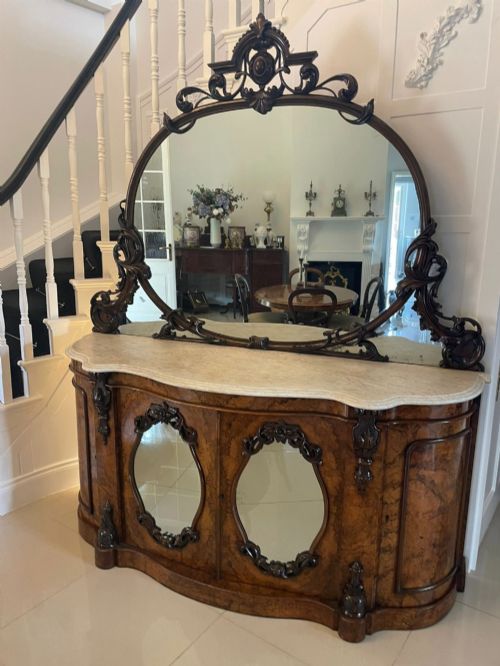
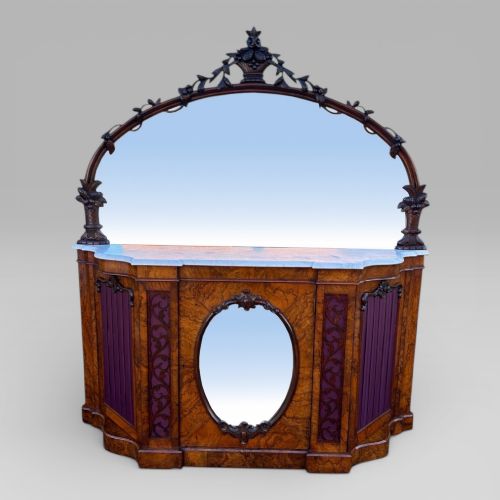
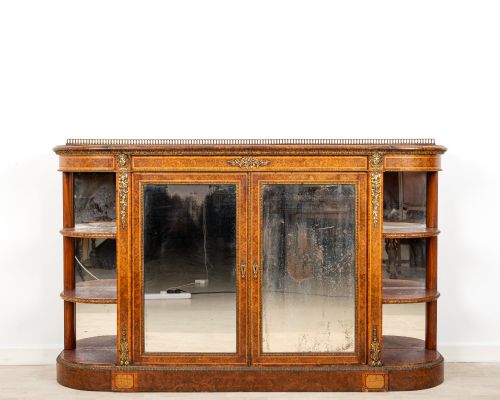
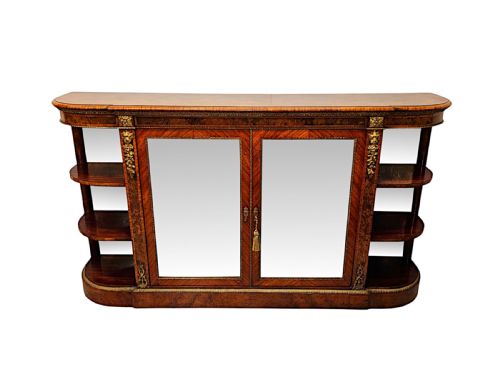
Walnut Mirror Sideboard
When you search for a walnut mirror sideboard, you are looking at substantial Victorian and Edwardian low cabinetry that combines figured timbers with integrated glass.
Walnut Mirror Sideboard
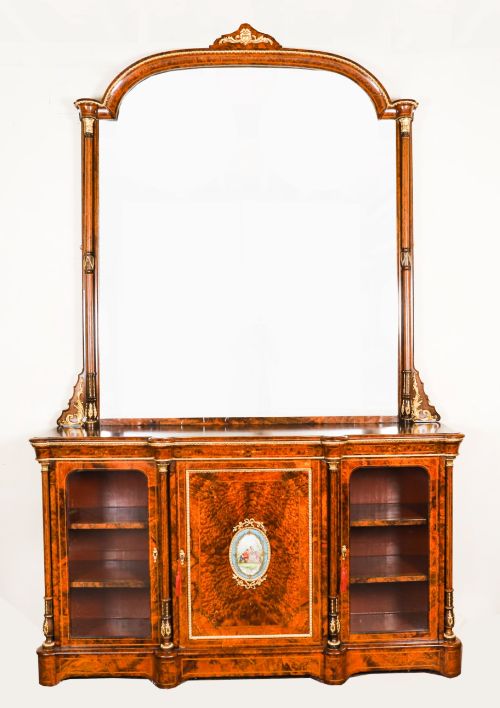
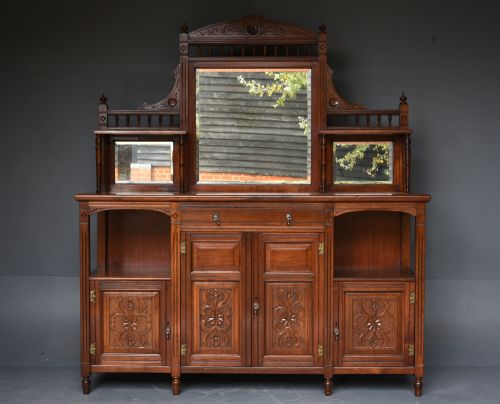
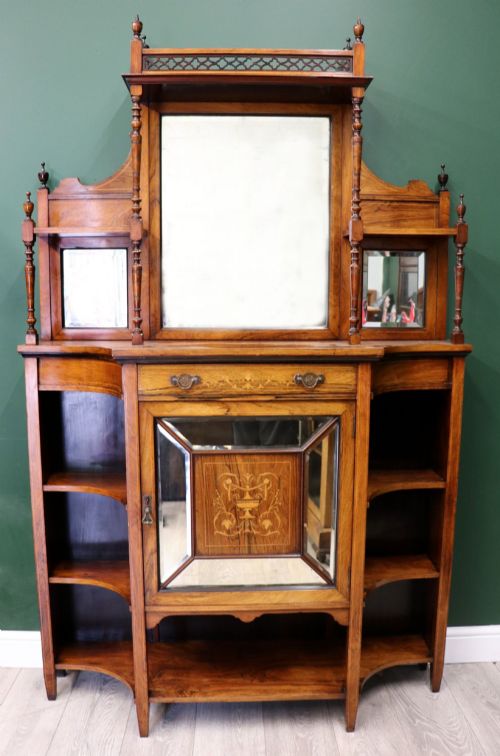
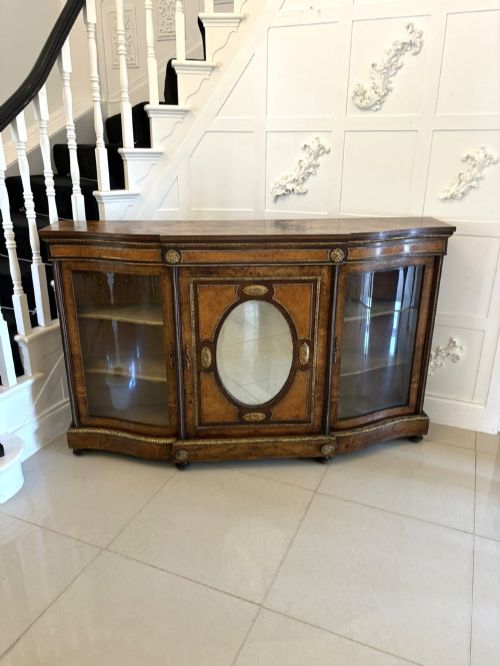
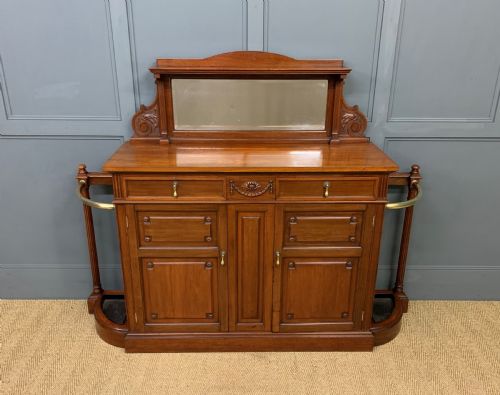
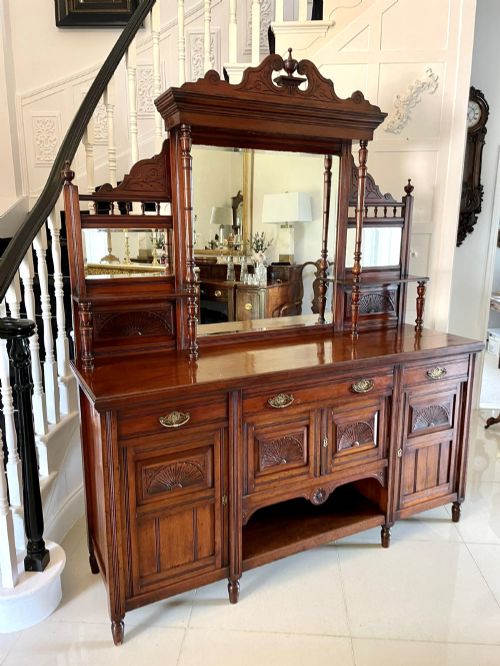
A walnut mirror sideboard encompasses a broad family of low storage furniture including credenzas, chiffoniers, and side cabinets produced primarily during the Victorian and Edwardian eras. These pieces typically combine a low wooden base cabinet with an upright superstructure containing a fitted mirror, serving simultaneously for display and serving.
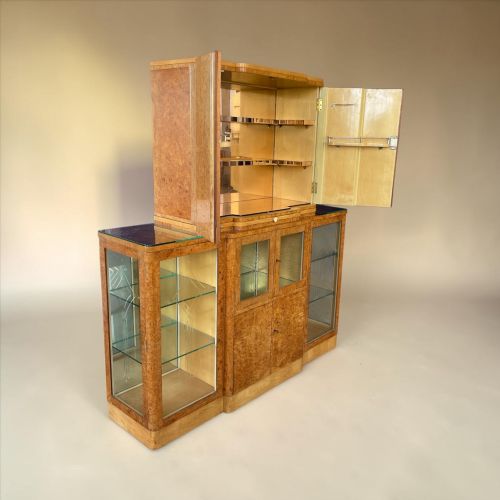
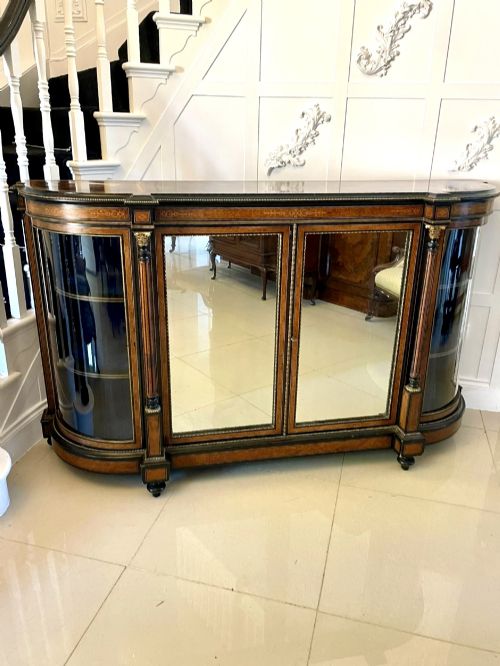
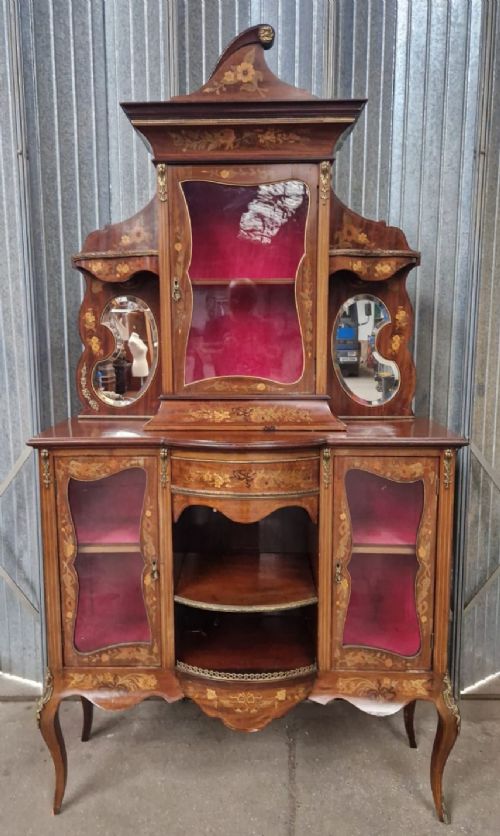
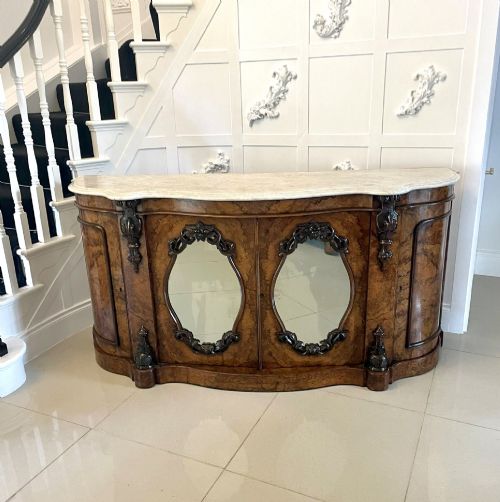
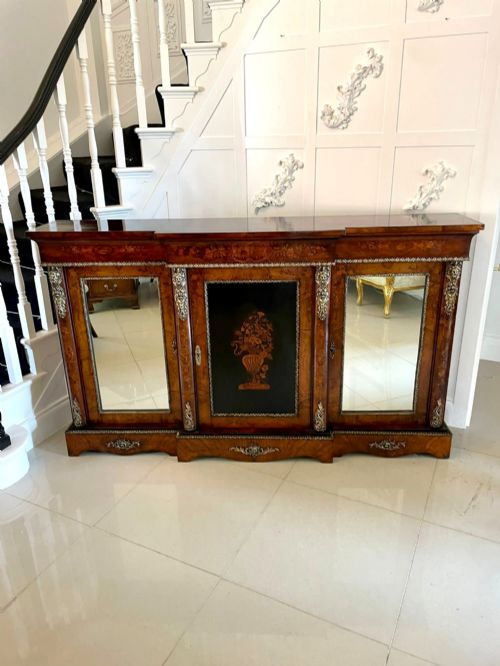
The version most commonly met on this page is the mid-to-late Victorian burr walnut credenza or mirror-back sideboard, often featuring serpentine fronts and inlaid marquetry. Alongside these formal pieces, buyers frequently encounter Edwardian iterations and later Art Deco cocktail cabinets utilising similar warm timber tones.
Originating predominantly from British workshops and cabinet makers of the nineteenth century, these forms were designed for principal reception rooms and dining spaces. Their survival reflects a strong preference for figured walnut veneers and integrated reflective glass that maximised light in period interiors.
Materials and construction
Makers relied heavily on burr walnut and figured walnut veneers applied over solid secondary timbers, creating rich swirling grain patterns across the primary surfaces. These veneers were frequently accented with delicate marquetry inlay in satinwood or boxwood to enhance the visual depth of the cabinet doors and friezes.
Structural embellishments often included cast or gilt ormolu mounts, brass fittings, and carved wooden detailing framing the central mirror glass. On certain high-status examples, polished marble tops in white or coloured varieties provided a durable, contrasting surface above the main cabinet body.
Walnut Mirror Sideboard Retail Price Guide 2026
Typical asking prices for walnut mirror sideboard among the pieces listed under this phrase on Sellingantiques today, from the lower quarter to the upper quarter. They describe what is for sale here now, not the wider market.
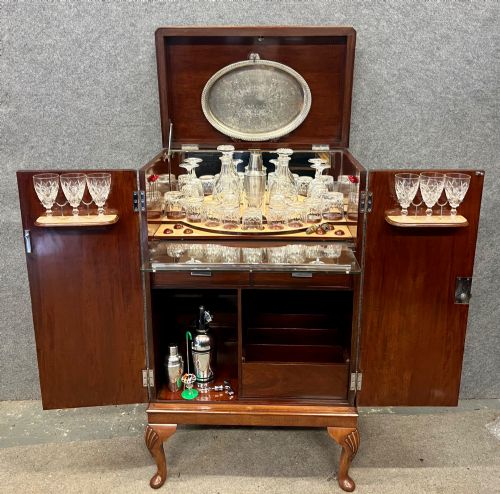
Several examples cleverly conceal compartments designed specifically for nineteenth-century bottled spirits and glassware.
Factors determining quality
Quality in these pieces is dictated by the selection and symmetry of the burr walnut veneer, where master cabinet makers matched the grain across multiple doors and panels to create continuous patterns. The presence of stamped signatures from notable firms or exceptional architectural carving on the mirror frame further separates standard production items from exhibition-grade examples.
The integration of secondary materials also signals distinction, such as substantial fire-gilded ormolu mounts, heavy bevelled mirror glass, and solid marble slabs fitted cleanly to the carcass. Superior internal fitting, including original cedar or mahogany lined drawers and adjustable shelving, indicates careful craftsmanship from the outset.
Shoolbred and Co·Gillows·Epstein
The Walnut Mirror Sideboard Glossary
- Credenza
- A low dining room or parlour cabinet, frequently featuring curved end doors and central compartments. This form evolved during the Victorian period to display decorative porcelain and silver.
- Burr Walnut
- A specialised timber cut from the abnormal growth of a walnut tree, yielding highly figured and swirling grain patterns. It was prized by Victorian cabinet makers for veneering principal surfaces.
- Ormolu
- Gilded bronze mounts applied to furniture for decorative effect, common on high-status mid-nineteenth-century pieces. These metal accents highlight architectural breaks and door surrounds.
- Marquetry
- The art of applying small pieces of veneer to a structure to form decorative patterns and pictures. Makers utilised contrasting woods like satinwood to achieve pictorial depth.
- Chiffonier
- A compact sideboard or low cabinet typically fitted with a raised shelf or mirror back. They served functional storage roles in smaller nineteenth-century reception rooms.
Walnut Mirror Sideboard: Frequently Asked Questions
What rooms suit a walnut mirror sideboard?
These pieces function well in dining rooms, large hallways, or living spaces where low storage and display surface are required. The integrated mirror helps to reflect natural light and visually expand smaller interior spaces.
Positioning them away from direct heat sources helps protect the walnut veneer and polished finishes over time. They pair naturally with both period interiors and eclectic modern room schemes.
How do I identify a Victorian piece?
Victorian examples often feature rich burr walnut veneers, serpentine fronts, and elaborate carved crests above the mirror glass. Construction methods typically include hand-cut dovetails within the drawers and traditional timber framing.
Later Edwardian and Art Deco pieces tend to show cleaner lines, simpler marquetry, and different proportions. Comparing the secondary timbers inside the cabinet can also offer clues to the manufacturing decade.
Were these sideboards used for dining?
In nineteenth-century homes, they provided essential storage for silver, glassware, and table linens close to the dining area. The top surface served as a station for serving food or displaying ornamental ceramics.
Later variants adapted the internal layout to accommodate bottles and glassware as dedicated drinks cabinets. This multifunctional history explains the variety of internal shelving and drawer configurations found today.
How should I care for the veneer?
Maintaining walnut veneer involves keeping the timber away from direct sunlight and maintaining stable room humidity. Gentle dusting with a dry, soft cloth preserves the polished surface without stripping the natural oils.
Applying occasional specialist wax feeds the timber and protects the historic finish. Avoiding synthetic cleaning sprays ensures the antique polish remains intact.