


Walnut Marquetry Display Stand
A walnut marquetry display stand combines tiered shelving and intricate wood inlay to elevate decorative objects in a room.
Walnut Marquetry Display Stand
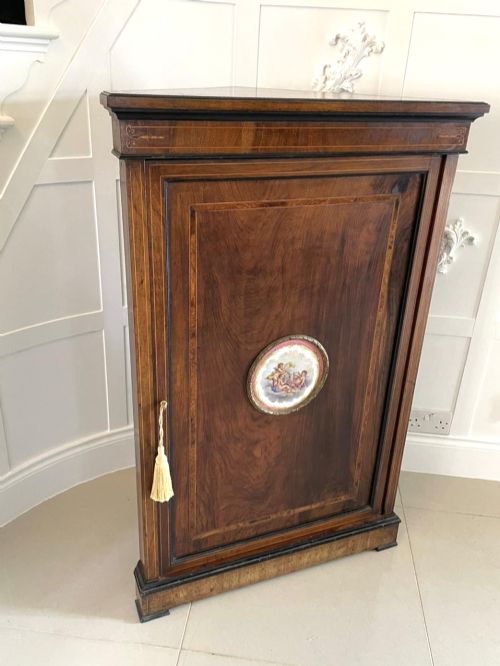
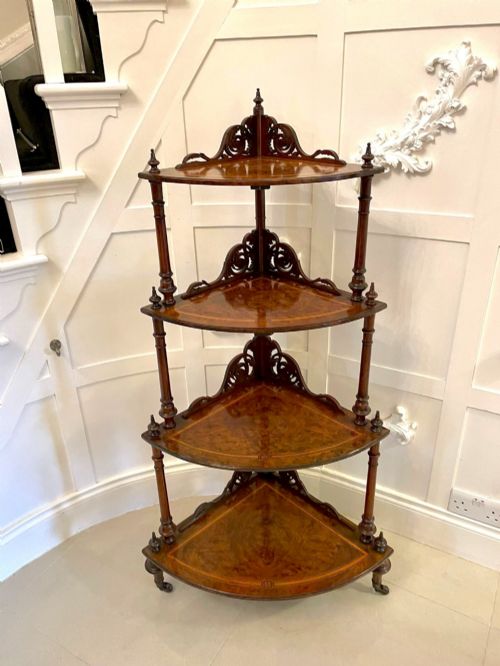
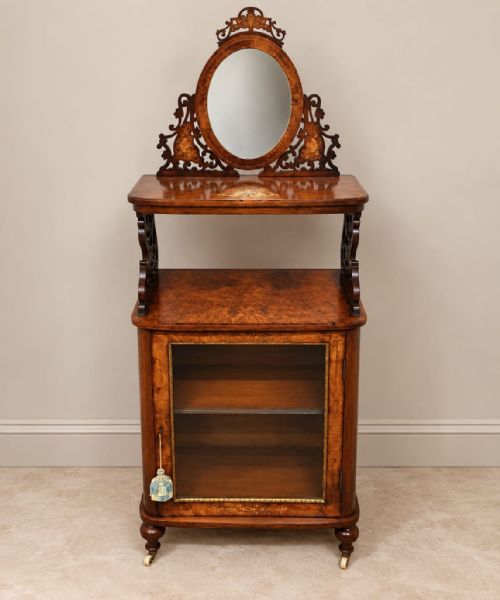
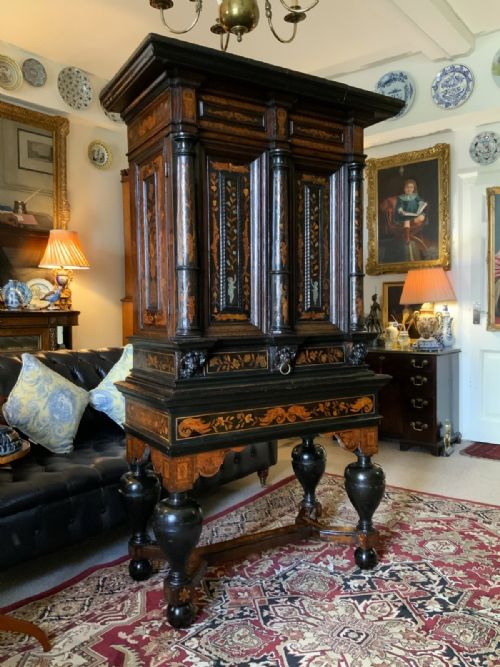
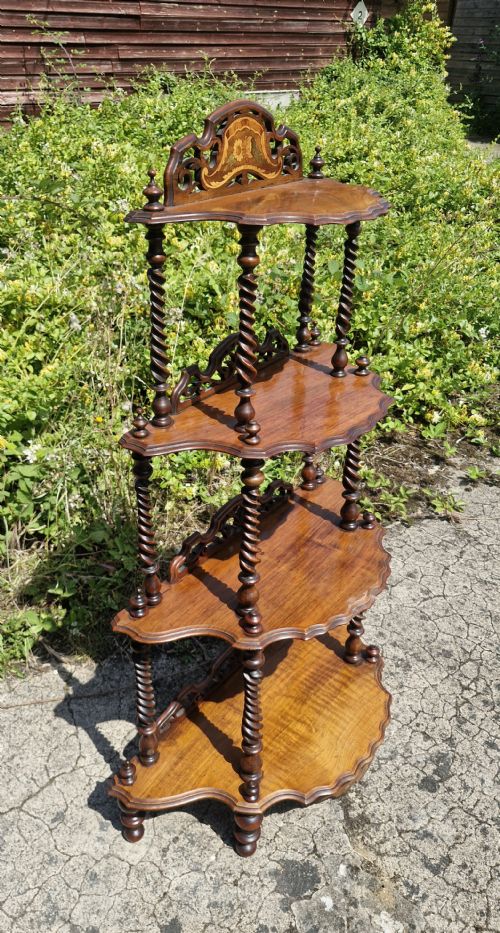
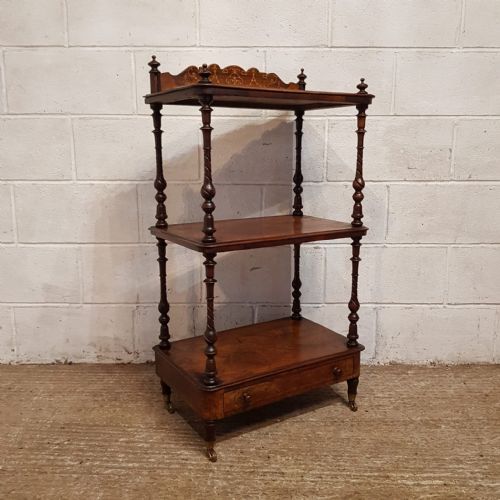
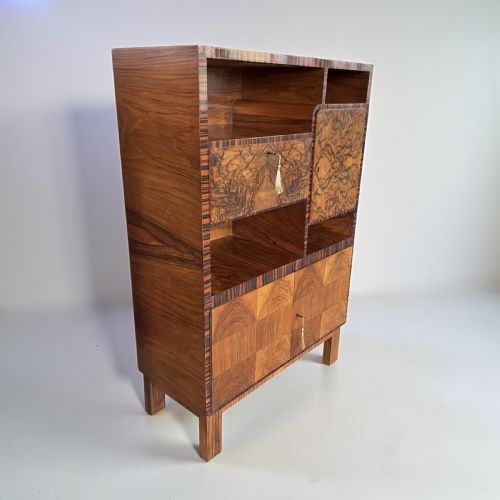
A walnut marquetry display stand brings together multiple tiers, cabinets, or corner shelves designed to showcase ornaments, books, and small collections. When searching for a walnut marquetry display stand, buyers encounter tiered etagere forms, standing cabinets, and corner units originating predominantly from the Victorian and Edwardian eras alongside French and Dutch continental influences.
The objects recorded in these listings span multi-tier whatnots, side cabinets, and glazed cupboards constructed primarily in burr walnut with contrasting floral and geometric veneer patterns. Many examples incorporate shaped shelves supported by slender uprights or brass mounts, offering both vertical presence and display surface.
Continental pieces often follow French Louis XV style curves or Dutch Baroque conventions, whereas English examples favour the structured tiers of the Victorian whatnot. Each variant provides an open or enclosed stage for domestic display.
Materials and construction methods
Makers built these pieces upon a foundation of walnut, frequently selecting burr walnut veneers for their swirling grain patterns and figuring. Craftsmen then applied marquetry inlay using contrasting timbers and occasionally pewter or brass to create floral, scroll, and pictorial motifs across the surfaces.
Structural embellishments relied upon cast ormolu mounts, brass galleries, and gilt metal fittings to accent corners, edges, and tier supports. French pieces integrated rosewood, satinwood, and kingwood alongside walnut within the marquetry panels, while ebonised wood details provided linear definition to cabinet frames.
Several stands double as music cabinets or miniature planters, proving Victorians liked their furniture to multitask.
Distinctions in craftsmanship and design
Quality separates simple production items from exceptional pieces through the precision of the marquetry cutting and the choice of veneer. Finer examples display tightly fitted inlay work with minimal filler, using deeply figured burr walnut across primary display surfaces rather than plain timber.
The integration of mounts and structural joins dictates overall execution. Superior pieces feature crisply cast ormolu or brass mounts that fit flush against the walnut structure, alongside stable tier supports and cleanly turned uprights that maintain rigidity across multiple shelves.
Donald Ross
The Walnut Marquetry Display Stand Glossary
- Marquetry inlay
- Decorative patterns formed by fitting together thin slices of various woods and other materials into a veneer ground. This technique creates pictorial or geometric designs across tabletops, cabinet doors, and shelf surfaces.
- Etagere
- A piece of furniture consisting of a set of open shelves for displaying small objects or ornaments. These tiered stands developed in France and became popular in various forms throughout the nineteenth century.
- Burr walnut
- Timber taken from the warted growth on a walnut tree, yielding highly decorative swirling grain patterns. Cabinet makers prized this wood for high-status veneer work on prominent surfaces.
- Whatnot
- A nineteenth-century multi-tiered piece of furniture designed for holding ornaments, books, or bric-a-brac. These stands range from open corner shelving units to enclosed cabinets with upper display tiers.
- Ormolu
- Gilded bronze ornamentation applied to furniture mounts, feet, and galleries. This technique adds metallic contrast and refined detailing to wood surfaces.
Walnut Marquetry Display Stand: Frequently Asked Questions
What is an etagere?
An etagere is a set of open shelves designed for displaying decorative objects, porcelain, or small collections.
These pieces feature multiple tiers supported by slender uprights, allowing items to be viewed from multiple angles within a room.
How were these stands used historically?
Historically, these stands served as prominent display furniture in Victorian and Edwardian drawing rooms and parlours.
Owners used them to exhibit valued ornaments, family mementos, small books, and decorative ceramics.
How do I care for burr walnut?
Burr walnut furniture requires stable indoor humidity levels and protection from direct sunlight to prevent veneer drying or fading.
Regular dusting with a soft, dry cloth maintains the polished surface without the need for heavy chemical polishes.
How do I distinguish Victorian from Edwardian stands?
Victorian stands typically exhibit heavier proportions, darker finishes, and structured multi-tier or corner configurations with rich burr walnut.
Edwardian pieces often display lighter construction, brighter French influence, and more delicate marquetry or ormolu mounts.