
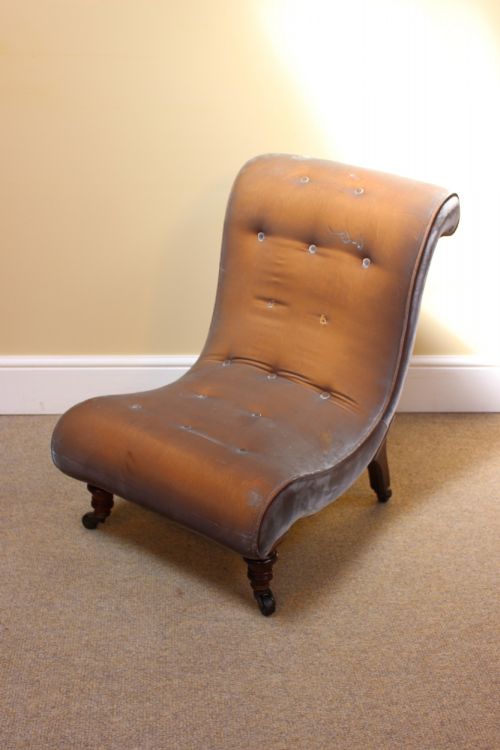


Walnut Low Bedroom Chair
A walnut low bedroom chair brings compact, elegant seating to a dressing room or parlour.
Walnut Low Bedroom Chair
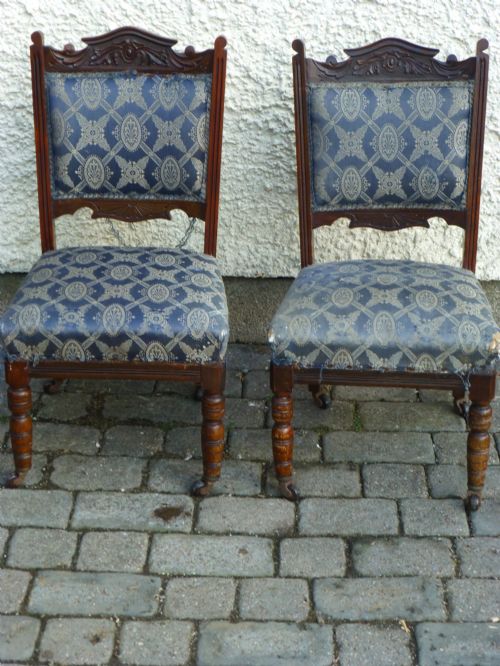
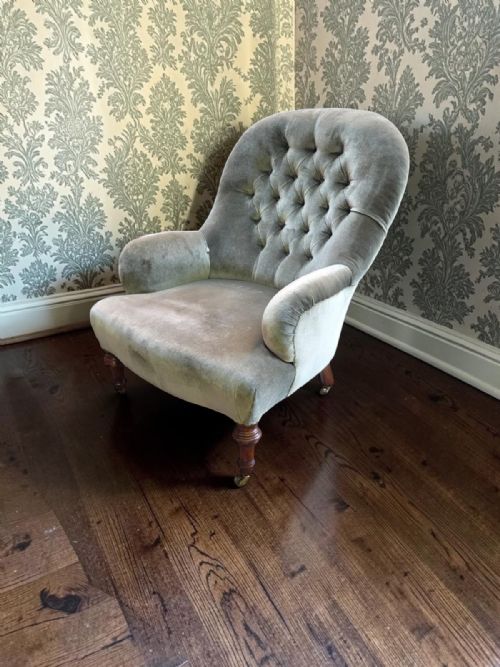
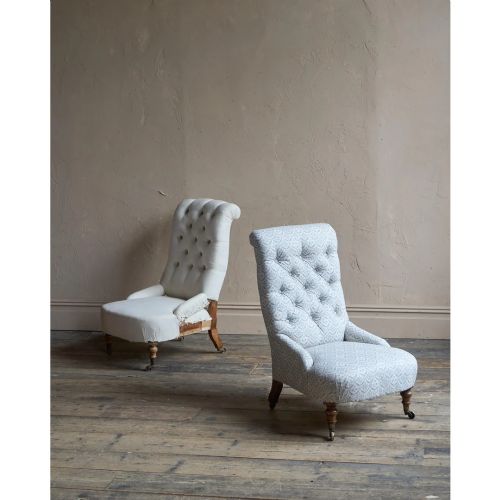
A walnut low bedroom chair is typically found in Victorian and Edwardian forms, designed for dressing rooms and private chambers where a lower seat height was preferred. You will frequently encounter nursing chairs, ladies chairs, and slipper chairs among these selections.
The pieces span the nineteenth century into the early twentieth century, incorporating styles such as Queen Anne Revival, Victorian Rococo Revival, and the Aesthetic Movement. These varied designations point to low-slung seating built for comfort and intimate domestic spaces.
What varies in quality
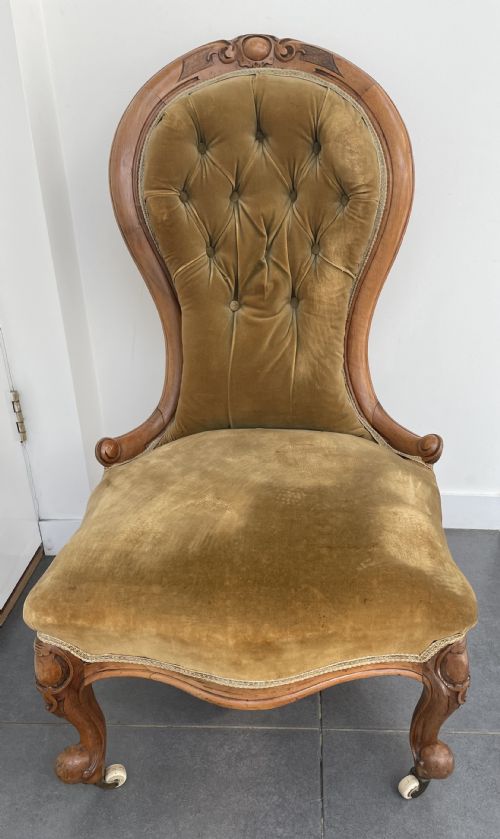
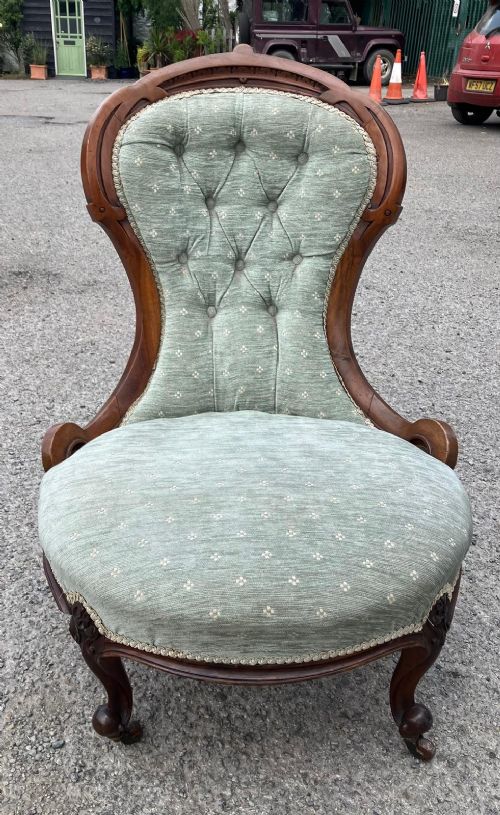
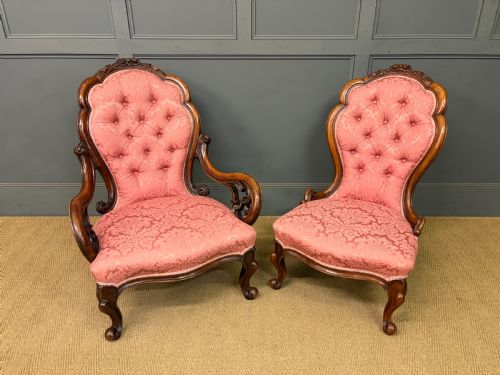
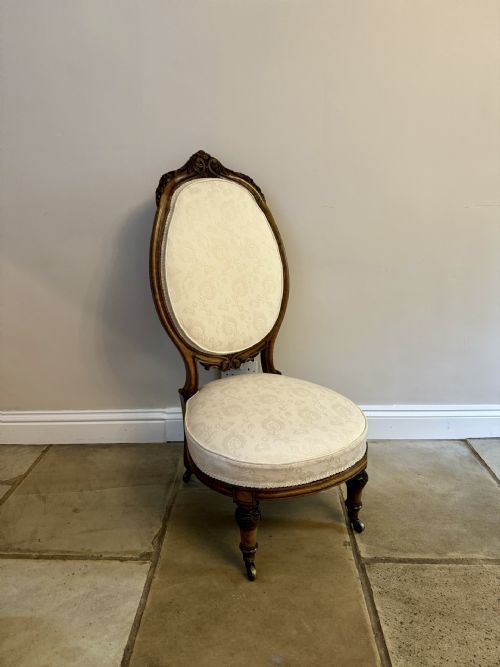
The refinement of the carved walnut woodwork largely defines the upper tiers of these chairs, distinguishing simple turned frames from deeply sculpted spoon-backs and balloon-backs. Crisp detailing on show wood indicates superior cabinet-making.
Proportion and scale also separate standard examples from finer commissions, particularly where low seating angles meet balanced frame geometry. The retention of original upholstery methods and supportive framing further influences the standing of individual pieces.
Listings demonstrate that walnut low bedroom chairs predominantly date from the Victorian period, frequently appearing as nursing chairs or ladies chairs.
Howard and Sons·Hindley and Sons
The Walnut Low Bedroom Chair Glossary
- Nursing chair
- A low-seated chair traditionally used in bedrooms or nurseries for feeding children and general dressing tasks. These pieces usually feature a short leg and an upholstered back.
- Slipper chair
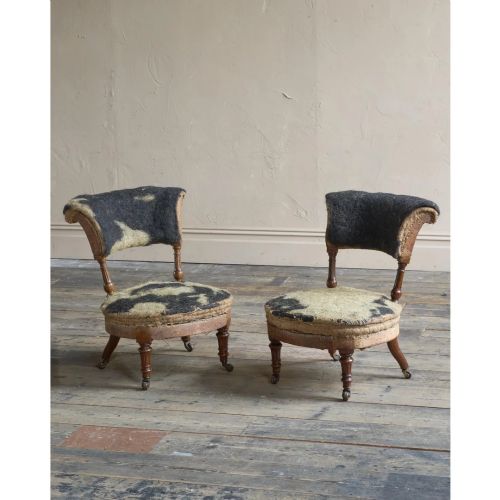
- An upholstered chair with a very low seat, originally designed for ladies' dressing rooms to assist with putting on shoes and slippers. They lack arms to allow full freedom of movement.
- Balloon back
- A rounded, oval-shaped chair back popular during the Victorian period. The curved wood resembles the silhouette of a balloon.
- Spoon back
- A padded chair back shaped like the bowl of a spoon, deeply recessed to fit the human form. This design is common on mid-Victorian parlour and bedroom seating.
- Barley twist
- A spiral turning technique applied to wooden chair legs and stretchers. It reflects seventeenth-century design elements revived in later Victorian furniture.
Walnut Low Bedroom Chair: Frequently Asked Questions
What is a walnut low bedroom chair?
A walnut low bedroom chair is a compact Victorian or Edwardian seat designed for private chambers, dressing rooms, and nurseries. These pieces feature low-slung frames intended for comfort during dressing or resting.
They appear in various styles such as nursing chairs, slipper chairs, and ladies chairs, often showcasing carved walnut or burr walnut frames with upholstered padding.
How were these chairs used?
These chairs served practical functions in domestic bedrooms, particularly for assisting with intricate Victorian attire, footwear, and childcare. Their low height made them suitable for private quarters rather than formal reception rooms.
Over time, they transitioned into decorative occasional seating for dressing tables, alcoves, and sitting rooms where space was limited.
How do I identify a Victorian walnut chair?
Victorian walnut chairs are typically identified by their rich timber grain, dark patination, and specific Victorian stylistic motifs like balloon backs or spoon backs. Many examples incorporate carved wooden frames and turned supports.
Construction methods, such as traditional joinery and period upholstery styles like buttoning, also help confirm the nineteenth-century origin.
Are these chairs suitable for daily use?
These antique chairs can be utilised in modern interiors, provided their internal frames and webbing remain sturdy. Many survive in solid structural condition after more than a century.
Buyers often place them in bedrooms, dressing areas, or quiet corners where their compact dimensions and historic character complement contemporary living spaces.