


Victorian Button Back Frame
When you want a victorian button back frame, you are looking for nineteenth-century seating built with deep upholstery and exposed timber structures.
Victorian Button Back Frame
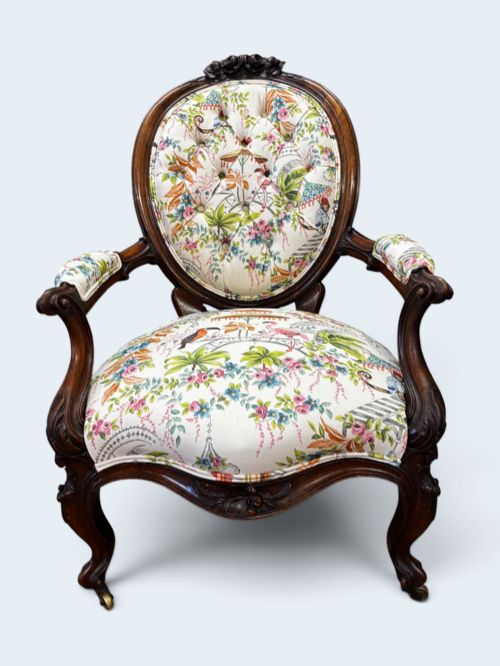
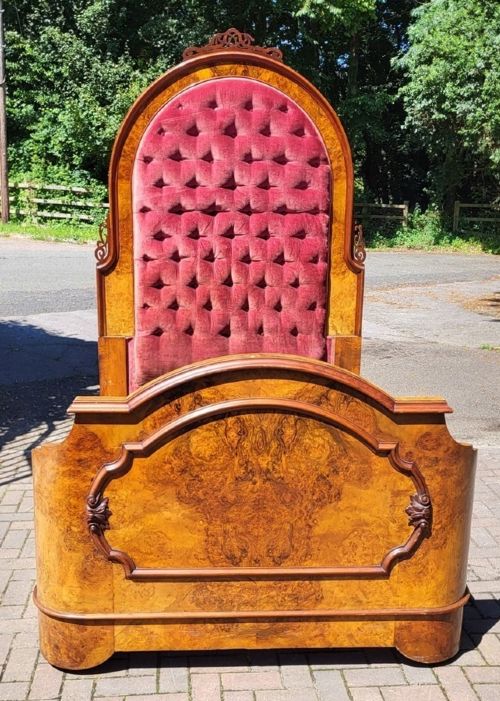
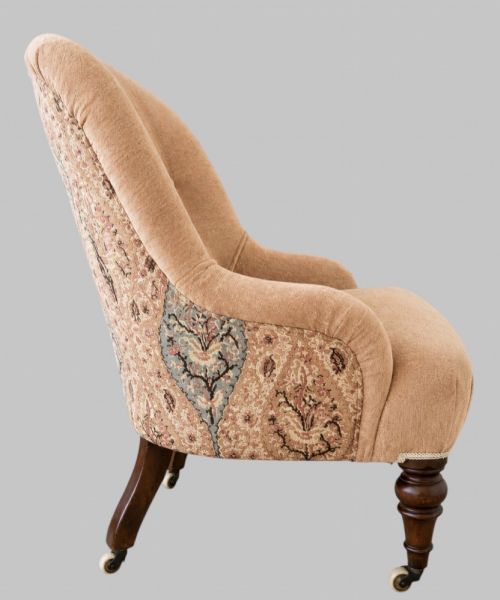
A victorian button back frame forms the structural skeleton for nineteenth-century sprung seating designed to hold tight tufted upholstery. You will most frequently encounter walnut, mahogany, and iron frames shaped into armchairs, nursing chairs, and larger settees.
The form developed across the nineteenth century to provide comfortable parlour seating with firm back support. Pieces range from small occasional chairs to large sofas and chaise longues built during the Victorian period.
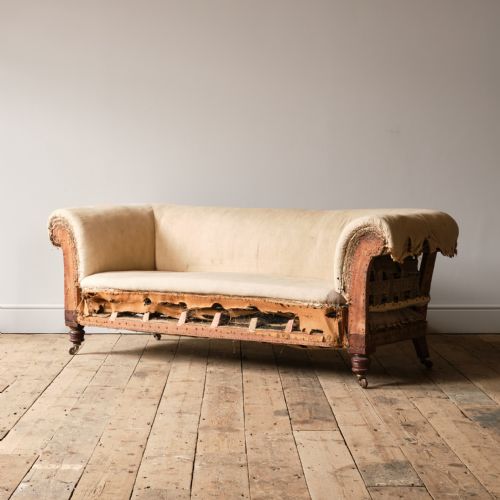
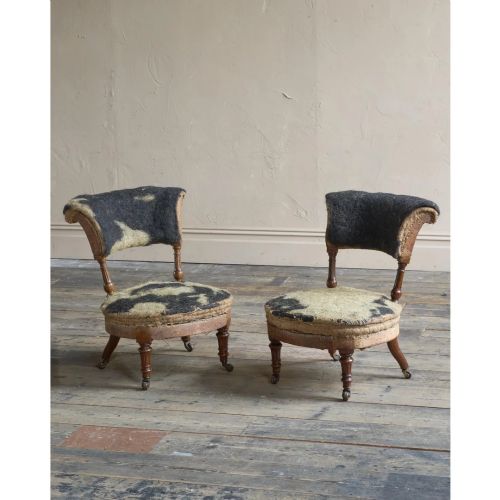
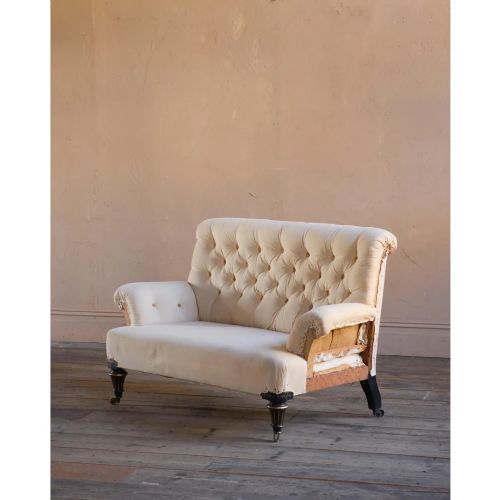
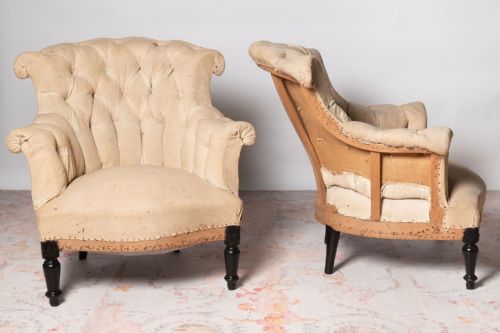
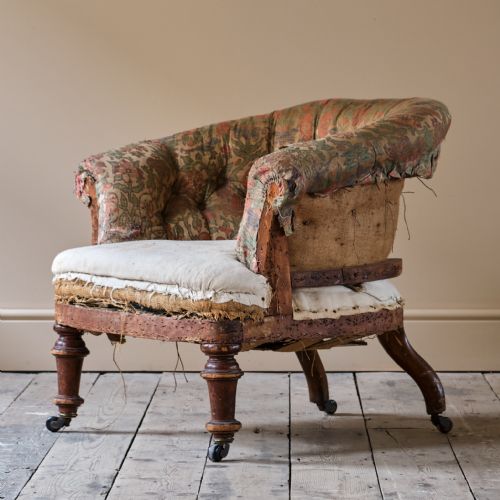
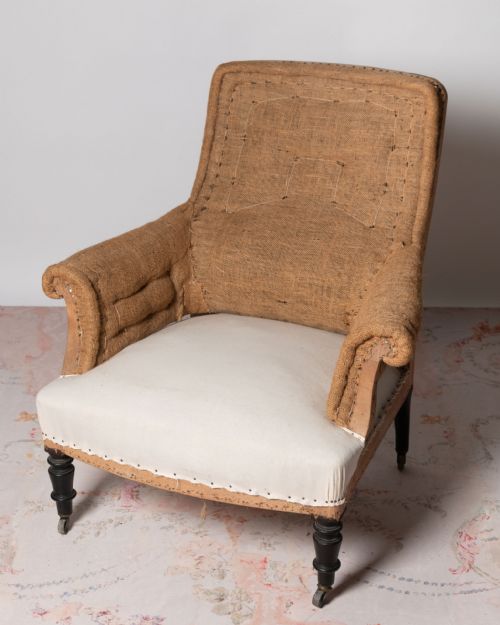
Makers utilised resilient timber skeletons that allowed upholsterers to pull fabric deep into the padding. These frames survive in various states, from original velvet to bare wood ready for new textile work.
Materials and construction
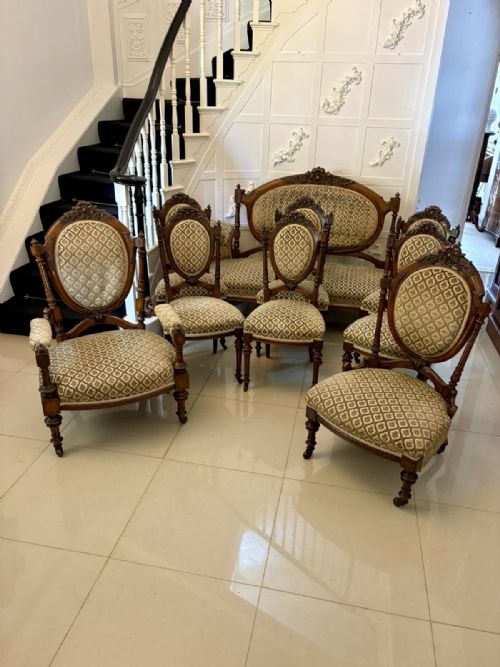
Cabinet makers shaped timber frames from dense hardwoods like walnut, mahogany, and oak, often carving decorative show-frames with floral motifs or spiral turnings. Iron internal frames also appeared frequently, providing rigid structural support for heavily sprung seats and tight buttoning.
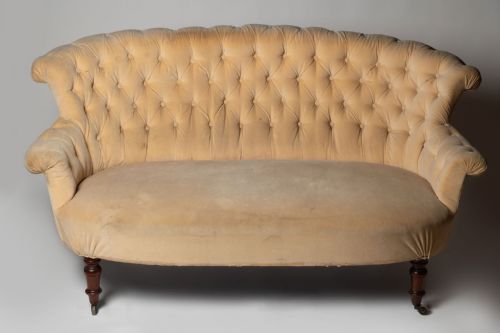
Upholsterers built up the padding using hessian foundations, horsehair stuffing, and coil springs before pulling the final fabric tight with linen twine. Deep tufting secured the padding to the frame, creating the signature dimpled surface characteristic of the period.
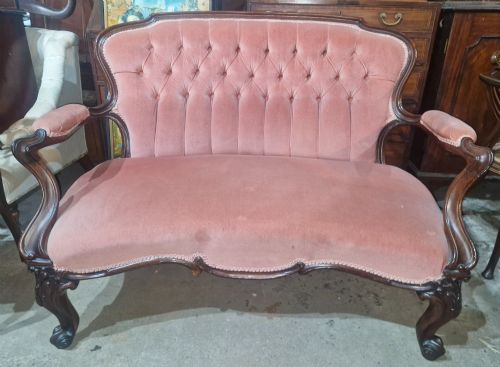
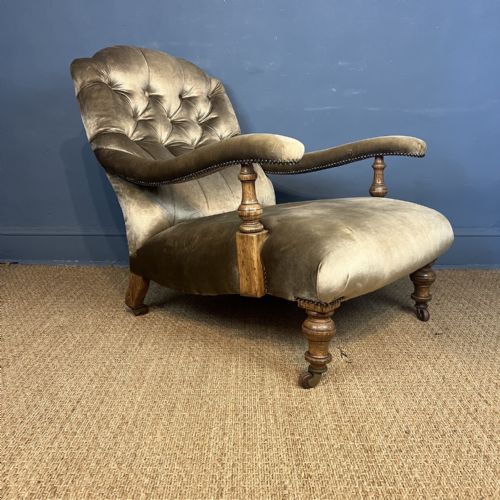
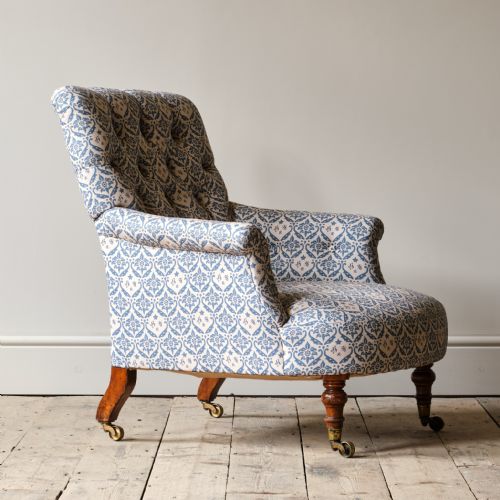
Listings feature walnut, mahogany, and iron frames upholstered in velvet, leather, and fabric across nineteenth-century periods.
Judging quality
Quality rests in the sculptural depth of the timber frame and the precision of the joinery hidden beneath the padding. Finer examples display crisp hand-carving along the show-wood, while simpler pieces rely on plain turned legs.
The weight of the frame indicates the density of the wood used by the cabinet maker. Heavier iron and hardwood skeletons provide superior stability compared to lighter contemporary alternatives.
Howard and Sons·Jackson and Graham·Cornelius V Smith·Gillows of Lancaster
The Victorian Button Back Frame Glossary
- Buttoning
- The technique of pulling upholstery tightly back to the frame using twine secured with buttons, creating deep geometric dimples in the padding.
- Show-frame
- The exposed polished timber portion of a chair or sofa surrounding the upholstered sections.
- Iron-frame
- A metal structural skeleton used inside nineteenth-century chairs to provide rigid support for tensioned upholstery.
- Cabriole leg
- A furniture leg that curves out in a convex shape and then tapers inward in a concave arc, frequently ending in a scroll or carved foot.
Victorian Button Back Frame: Frequently Asked Questions
How do I choose a Victorian chair for daily sitting?
Look for frames with sturdy joints and supportive sprung seats that suit your preferred seating height. Check the depth of the seat to ensure it matches your comfort requirements.
Consider whether the piece requires professional reupholstery before regular use. Many surviving examples retain antique fabric that may need replacing for modern living.
What is the difference between walnut and mahogany frames?
Walnut frames often feature warmer brown tones and finer grain patterns suited to ornate nineteenth-century parlour furniture. They frequently appear on pieces with delicate carvings and curved show-wood.
Mahogany frames offer a darker, heavier appearance with straight grain characteristics. These tend to support larger armchairs and robust library seating.
Are iron frame chairs heavier than wood?
Iron-backed chairs possess substantial metal internal structures that increase the overall weight significantly compared to standard timber frames. This metal skeleton provides exceptional rigidity for tight button upholstery.
Position these pieces carefully in a room, as their weight makes frequent rearrangement difficult. The metal construction ensures the frame remains stable over decades of use.
Can I reupholster a Victorian button back chair?
Upholsterers can rebuild these chairs using traditional materials like horsehair and hessian to maintain historical accuracy. The process requires specialist skills to replicate the original buttoning pattern.
Many frames survive awaiting new fabric selection, allowing you to choose modern textiles. Ensure the internal springs and webbing remain sound before starting upholstery work.